SALISBURY — The Planning and Zoning Commission concluded the public hearing on a proposed amendment to the town’s zoning regulations prohibiting vertical expansions of nonconforming structures in the entire town Tuesday, Sept. 20.Chairman Michael Klemens kicked off the two-and-a-half hour session by saying that after after talking to commission attorney Chuck Andres it was clear that the commission can issue special permits, that they are not variances. The next question, added Klemens, is whether expanding a nonconforming building increases nonconformity.Noting that the issue of the hearing is a change in the regulations eliminating such permits for the entire town, Klemens said he would like to “encourage a different dialogue” in the evening’s hearing.Klemens said the commission had heard a great deal of comment about rights of property owners versus the public interest, about large expansions of houses, about zones where nonconformity is the rule rather than the exception.And he posed this question: If the commission keeps the special permit process in place, should it consider zones where such permits may not be allowed?“We’re really good at saying yes or no,” said Klemens, adding he would like to discuss solutions that do not embrace one extreme or the other.He also said that after talking to attorney Andres, he felt the commission has the flexibility to modify the proposed regulation change to do less than a complete ban.Klemens then brought up the idea of using percentages of volume as a way of deciding whether vertical expansions are appropriate — for instance, 50 percent of the area below the expansion.Such a formula might inspire creativity in design, he said, and avoid the phenomenon of a second-story addition that essentially looks like a box placed on top of an existing building.The special permit process could wind up being “very prescriptive.”Planning and Zoning member Cristin Rich asked if it would be better to look at zoning changes rather than modifying the special permits.Rules versus enforcementOpening the comments from the public, Wendy Hamilton of Lakeville said she believes that results of special permit processes are “disastrous.”She brought documents from a 2009 expansion of a nonconforming house on South Shore Road, and said the end result was substantially bigger than what was approved.The problem wasn’t so much with the regulations as it was with enforcement, she said. Asked by Klemens for her general opinion about keeping the special permit process intact, she reiterated her opposition to the permits, adding, “I’m speaking generally, with an emphasis on the lake.”The commission then discussed the example Hamilton brought forth. Zoning Enforcement Officer Nancy Brusie said that an as-built survey and before and after calculations on impervious surfaces had been conducted, and Planning and Zoning member Alan Cockerline said if the as-built survey and the assessor’s documents are different, then it is a matter for the zoning enforcement officer.Salisbury’s planning consultant, Tom McGowan, suggested that the commission may have been voting on an addition to the nonconforming portion of the house, but added he couldn’t offer a solid opinion without reviewing the case thoroughly.Regs are unclear“It’s clearly confusing to the public,” Klemens said. “What Wendy is showing us is the kind of confusion that seems to be rampant.”Jeff Lloyd, speaking for himself and not as chairman of the Zoning Board of Appeals, said he hadn’t made up his mind about special permits. “I always thought you had to use what was there” when working on a nonconforming structure.“If you tore it down you couldn’t do anything new because nonconformities were eventually supposed to disappear.”Rich again suggested changing zoning, and Lloyd said he’d like to keep “the integrity of the neighborhood,” such as the side streets of Lakeville, when it includes several nonconforming houses.(This point was made by many speakers at the first public hearing, on Aug. 9.)Klemens, thinking out loud, said there could be unintended consequences if zoning regulations were relaxed to allow structures that are currently nonconforming to conform. “There would be a lot of buildable area; all of a sudden we could have people building big houses on small lots.“That’s why I’d like to see formulas” for expanding nonconforming buildings by volume.Lloyd said, “I’ll change hats. The ZBA is working with regulations we were told are antiquated. We need regulations that are clearer.”(Lloyd was referring to the 2009 review of the town’s land use regulations and procedures, prepared by consultant Donald Poland and known as “The Poland Report.”)Sticking to the rulesMartha Baer and Anne Marie Nonkin both took the position that the special permit process is unfair to existing property owners around Lake Wononscopomuc. Baer said, “I knew the rules when I bought the property,” and Nonkin said the special permit process “dilutes the zoning we already have. “Where is the protection we think we have when purchasing a home? The special permit opens the door to undo zoning we think protects us.”Klemens said it would perhaps be better to have specific, “prescriptive” language for special permits. “What would work in town would be different than the lake.”He expanded on the idea a little later, saying that if there was an expectation that a nonconforming structure could be expanded only by a percentage of the volume of the existing building, “it would force some creativity” when considering design, views and the wishes of neighbors.Bill Littauer, president of the Lake Wononscopomuc Association, reiterated his opposition to special permits in the lake zones.“They are unfair because if you have money you can hire attorneys.“Think of the person who buys a house and the agent says ‘Don’t worry, you can get a special permit.’ But can they? Whatever decision is made is subjective. You can have a special permit, narrowly defined, and it’s still subject to someone trying to fudge it. Whereas zoning says this and that.”Attorney Mark Capecelatro said he thought the first issue to be settled is whether or not increasing the volume of a nonconforming building increases the nonconformity, and said he thought the idea of fashioning a volume formula for expanding nonconforming structures “has merit, especially in the village centers.”The special permit process “has real positives,” he continued, using the example of small, modest lakeside homes (he used the term “repair challenged” in a tongue-in-cheek manner).To get a special permit to expand such homes, the applicant must take measures to ensure water quality, provide landscaping plans and submit to a public process in which neighbors have input, resulting in what Capecelatro considers a better overall situation than before.He expressed cautious interest in the volume formula idea. “It would take some study but it could give you flexibility in village centers and lake zones. The needs of the property owners can be met without stepping on the needs of the public.”To close or not to close?The commission then began discussing closing the hearing, with Klemens saying the commission had received a lot of information.Capecelatro urged the commission to continue the hearing. “If you close it, then what are you deciding?”Mary Ackerman, a Lake Wononscopomuc property owner, took advantage of a lull in the proceedings to state that she, her husband and at least two other families on the lake are in favor of keeping special permits.The commission then debated whether or not to close the hearing.“If we have to take action, then we shouldn’t close the hearing,” Klemens said. “Much as I hate to prolong the agony.”And Mike Flint said the public’s expectation, based on the notice of the hearing, was that testimony would be presented and a decision made.“Now you’re legislating in a public hearing. It’s becoming unclear what this hearing is about.”He suggested closing the hearing, voting on the regulation under discussion, and, if necessary, doing further research prior to a future hearing.Eventually the commission voted 4-1 to close the hearing, with commission member Dan Dwyer dissenting. Dwyer then suggested postponing a vote on the regulation until the next planning meeting.“Government’s a messy thing,” Dwyer said. “It’s not black and white. The notion that if we don’t vote tonight we don’t have the gumption to serve the public is baloney.”“The discussion has gone in many different directions,” Cockerline said. “I’d like to mull it.”The commission voted 3-2 to postpone further discussion and a possible vote to the next planning meeting, with Dwyer, Cockerline and Rich in favor and Klemens and Fred Schmidt against.
Latest News
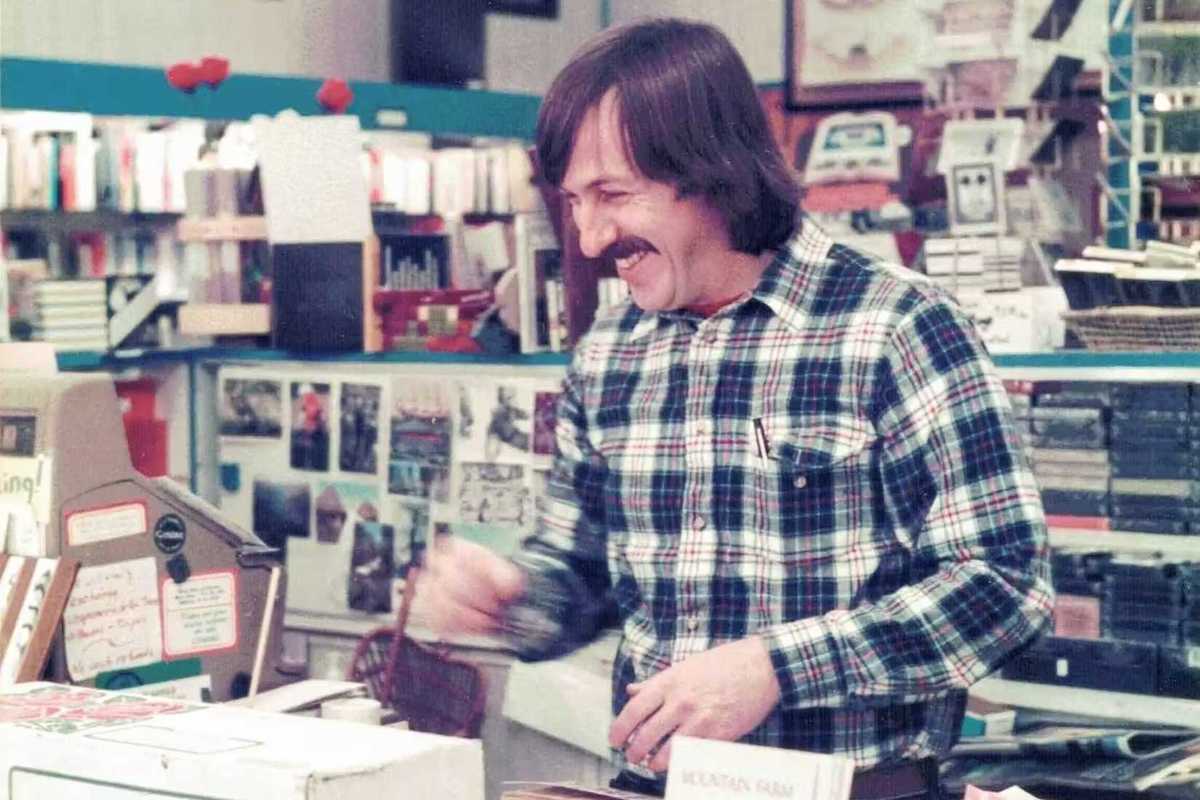
Dick Hermans in the Oblong Bookstore on Millerton\u2019s Main Street in 1985.
Provided
For Hermans, the award has prompted some reflection about why he has spent so much of his life involved in community projects.
“I was thinking about it this morning: Why do I do what I do?” he said. “And I think no matter what I’ve done, whether it’s been school board or rail trail, I’m trying to be useful to the communities I’m associated with.”
Hermans is perhaps best known as the longtime co-founder and steward of Oblong Books in Millerton, a business that began almost by accident. He and his former partner, Holly Nelson, were living in Millerton and looking for something to do during the winter. They had been painting houses, including the Grange Hall in Millerton, a job Hermans got through his aunt, who belonged to the Grange.
At the time, Hermans was also working in insurance for his father, doing collections.
“It was fine except I was doing collections, and it really kind of left me cold,” he said.
He and Nelson began thinking about what they might do together. Nelson was an avid reader, while Hermans had studied journalism and had worked in a record store. They noticed a chain of book and record stores operating elsewhere in the Hudson Valley and decided to follow that model.
And so Oblong was born.
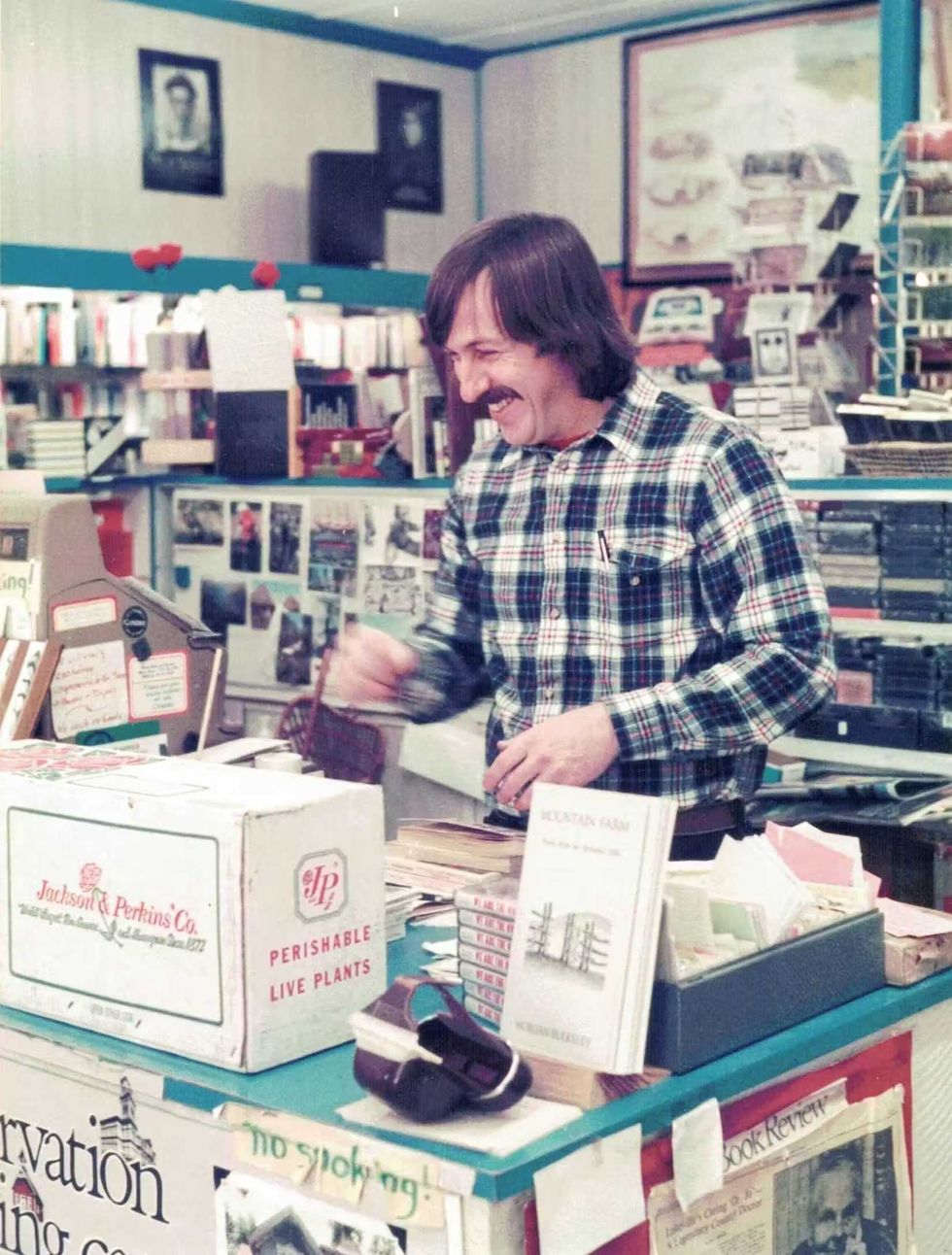 Dick Hermans in the Oblong Bookstore on Millerton’s Main Street in 1985.Provided
“We really learned it by the seat of our pants,” Hermans said.
The business would eventually become a beloved and integral part of Millerton’s commercial life. But although Hermans may have learned the book business as he went, his affinity for retail — and for the connections that happen across a counter — had begun much earlier.
As a child, his second-grade teacher operated a little cardboard pencil shop in the classroom, and Hermans still remembers the satisfaction of selling a pencil for a nickel.
“I really liked selling somebody a pencil for a nickel,” he recalled. “I can remember that experience, and it was so pleasant.”
Later, while living in Arizona, he helped establish a food co-op and worked at the counter.
“I kind of knew that I liked doing that kind of thing,” he said. “It’s a nice way to be pleasant with people, but without making too much commitment to them.”
His relationship with Millerton also predates Oblong. His grandparents lived in the village, and he first came to Millerton as a baby. Over the years, he has watched the town change through several generations.
He remembers a Millerton with a much broader array of businesses, when stores such as Delson’s, the Main Street department store that stood for nearly 40 years in what is now Millerton’s Antiques Center, seemed to carry almost everything a resident might need.
“You could find everything from a set of dishes to a shotgun,” he recalled.
The rise of shopping malls changed that kind of downtown retail, he said, but Millerton has remained a lively commercial village.
“For us, it’s been a great place to have business,” Hermans said. “It’s a busy village.”
For Hermans, running a store was never simply about selling books and records. It was a way of being part of a place.
Music has remained another constant. Hermans continues to sell music at Oblong and hosts the radio program “New Harmony” on WKZE. The business of selling music has changed dramatically over the years, particularly with the rise of streaming, but Hermans has adapted.
He was initially reluctant to bring vinyl records back into the store because of their expense. But about four or five years ago, he began stocking LPs again, and they have become the main form of music the store sells.
He finds that many of the customers buying them are reconnecting with music they loved years ago.
“I do best with classic albums that people may have had when they were young,” he said. “And now that they’re retired, they want to hear it again.”
Hermans still reviews between 700 and 1,200 new music releases each week through the store’s distributor, Alliance Entertainment, carefully deciding what belongs on Oblong’s shelves.
That same commitment to place has led Hermans into a wide range of community projects. His work with the Harlem Valley Rail Trail is among the efforts he mentions when reflecting on his years of civic involvement. He has also served on the school board and has been involved with the Millerton Business Alliance and the Irondale Schoolhouse. He is now involved with The New Pine Plains Herald, which he sees as complementary to the work of The Millerton News and The Lakeville Journal.
“I really think that the important thing about this award is that people understand what a newspaper does to connect them to their community,” he said. “And if that means anything to their lives, they gotta support it.”
Hermans knew Mary Lou and Robert Estabrook and remembers them as people who were deeply conscious of their responsibilities to the community.
“They were really nice folks,” he said. “They were very conscious of what their role in the community was.”
There is, in fact, still plenty on his plate. Hermans admits he needs to scale back because he has taken on more than his current abilities can comfortably accommodate.
“To be given this award is very special,” he added. “But I don’t feel like I’m done.”
This article has been changed to reflect that Hermans and Nelson were partners. A prior version states that they were married.


Want more of our stories on Google? Click here to make us a Preferred Source.

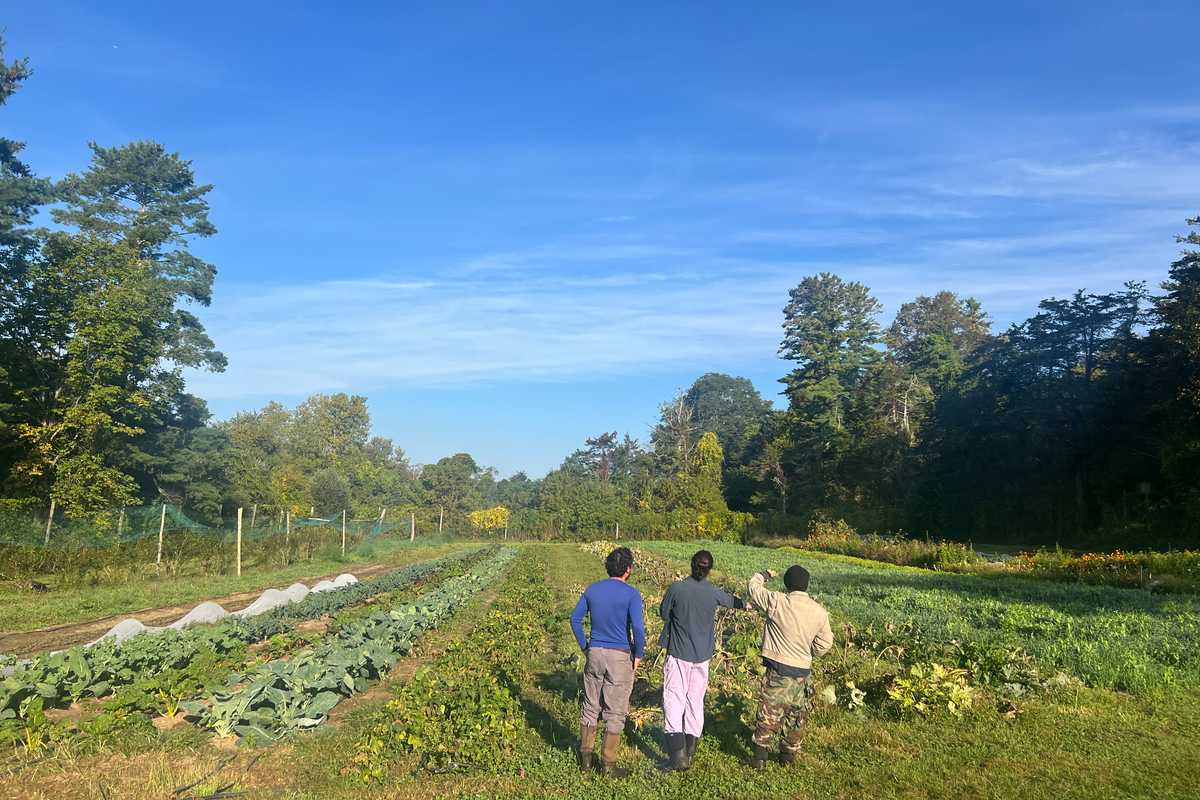
Adamah Farm crew members planning out the day’s tasks on a late September day.
Janna Siller
Over my 15 years of growing vegetables in Falls Village, I’ve exerted my will over all kinds of conditions, from drought to humidity to crows with a taste for cantaloupe. That’s what farming is all about. You zip around the field, hopping on and off tractors, moving hoses and chasing weeds, all in an effort to arrange conditions in favor of your crops. It is the crops’ job to gulp up sunlight and move water through their stems, to transform solar energy into your next pesto or ratatouille or butternut squash soup. It is the job of the farmer to irrigate just enough but not too much, to slice dandelion leaves without damaging delicate cabbage roots, to pander and pamper and stay in tune with what plants need to thrive.
The easy part of farming is trusting plants’ resilience. I have seen bright green shoots barrel ahead out of a plant torn to shreds by hail. I’ve watched wilty, heat-stressed seedlings turn rigid overnight and greet the next morning with vigor. The hard part is letting go of what you can’t control. As our crops lapped up Friday’s gentle sunshine and I considered the weekend forecast, I imagined roots holding tight to wet earth and branches supporting each other in sideways, pelting rain. I made sure all of our storage crops were already harvested and tucked away. I battened down the sides of our greenhouses and wished the remaining field crops good luck.
The nor’easter didn’t materialize too dramatically in our corner of New England. A few broken branches and debris blown about, nothing like the July Fourth storm that sent half a tree crashing onto the deer fence and left crates of fresh veggies in coolers without power.
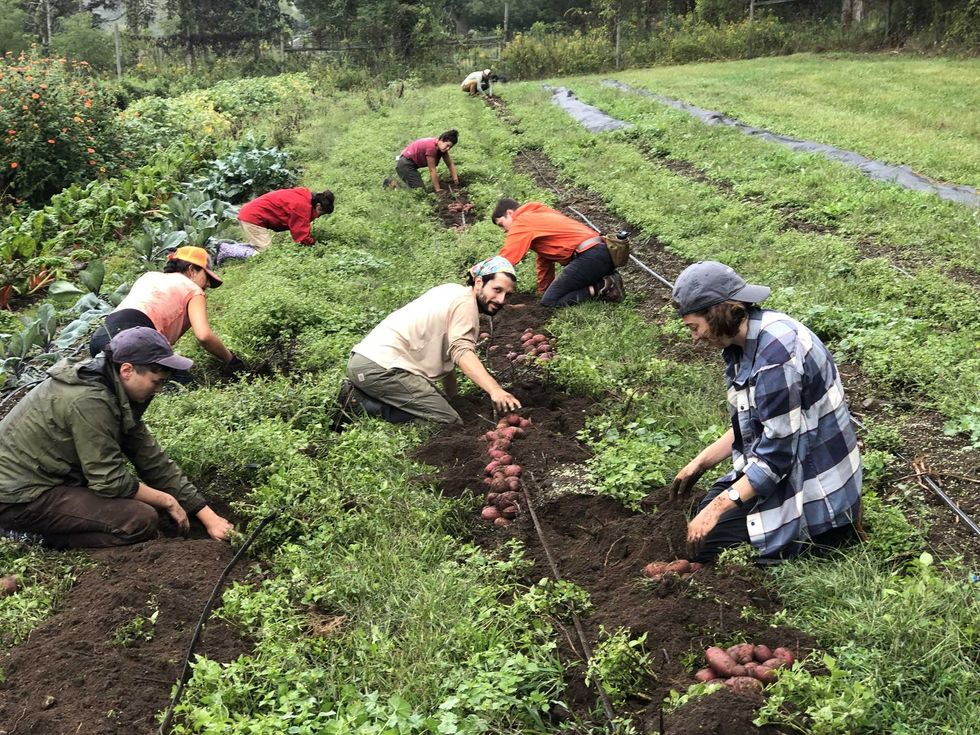 Fall storage crop harvests amid soil building cover crops at Adamah Farm in Falls Village. Janna Siller
Farming is an exercise in acceptance. To do it well and return year after year, you have to balance hubris and humility. The prize can often be a certain equanimity, a training in the art of moving into the next day even when the last one scrambled all your plans.
Epic change is not always about the unexpected. It also comes like clockwork on the seasonal calendar. As I type, the last of summer’s watermelons wait naively on the vine for a few hot days to finish ripening. Broccoli are holding their leaves wide as they did in June and July, only to find that the hours of sunlight decrease with each earlier sunset. Plants can’t pick up and go south or call the manager to order a bonus round of sunshine. Their growth slows and they get a resigned look to the hue of their leaves, so different from the frenzied growth of summer.
The release of fall is not tragic or gloomy. It is not an ending because so many fall tasks are about setting up for the new beginnings in spring.
We turn the vines that yielded thousands of pounds of fruit into the soil, where healthy microbes feast on their rotting stems. Then we plant cover crops — a mix of cereal grains like rye and oats and legumes like peas, vetch and clover. Cover crops hold the soil and its nutrients in place over winter, feeding the soil food web and adding organic matter that next season’s crops will need to grow.
We sort sprinklers and repair hoses. We inventory tarps. We take notes about which plants did well where and how we might try a new approach for this or that. We stack crates of cured garlic and onions and winter squash in a cool, dark room.
We save seeds from tomatoes and beans and lettuce, carefully labeling each variety for next season’s long, sunny days.
Janna Siller is the farm director at Adamah, a community farm in Falls Village offering CSA shares, educational programs and a food access program.

Want more of our stories on Google? Click here to make us a Preferred Source.