Norfolk celebrates midwinter

Norfolk celebrates midwinter

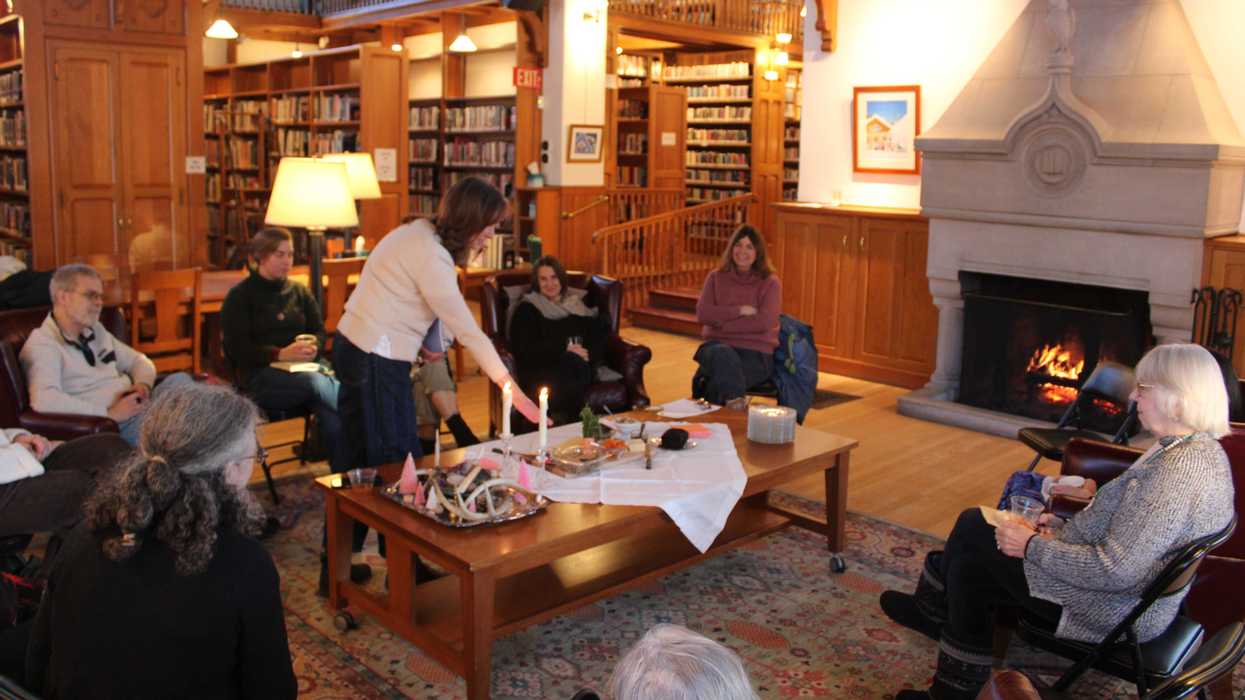
Library Events Coordinator Eileen Fitzgibbons explained the symbolism of the spread of nuts, seeds, cheeses and more she had prepared for the occasion.

Alec Linden

NORFOLK — With a foot or more of snow on the ground and below-zero wind chills outside, spring felt far off in the Northwest Corner on Saturday. Inside Norfolk Library, however, a small group gathered for a discussion and reflection on the ancient Celtic holiday of Imbolc — a celebration marking the gradual return of light and life at winter’s midpoint.

Norfolk Library staffers Eileen Fitzgibbons and Bina Thomson introduced the holiday during the program on Saturday, Jan. 31, inviting about 10 attendees to meditate on the quiet calm of winter and the imminent vitality of spring.

Now synonymous with the feast day of Ireland’s patroness saint, St. Brigid — a bank holiday in Ireland as of 2022 — Imbolc is one of the four traditional Gaelic festivals originating in pre-Christian Ireland, Scotland and the Isle of Man. Falling roughly halfway between the winter solstice and spring equinox, the ancient Celts viewed the beginning of February as the beginning of the end of winter.

“[Imbolc] reminds us that growth starts long before it is visible,” Fitzgibbons explained to the attentive group as a fire roared in the Library’s ample fireplace.

She said the Gaelic origin of the holiday’s name, Imbolc, means “in the belly,” referencing the beginning of the lambing season in Ireland. Despite the cold, she said, the Celts understood this time of year as a season of “renewal” and “life returning.”

As they listened, guests munched on a spread of sheep’s cheese, seed crackers, nuts, dried apricots and fig jam prepared by Fitzgibbons, and sipped wine, herbal tea and a hibiscus cider punch made by Thomson. Fitzgibbons said each libation and refreshment reflected symbolic food and drink associated with the tradition, which draws on both the ancient festival and its Christianized version, St. Brigid’s Day.

St. Brigid is thought by scholars to correlate with a pagan Irish deity of the same name, associated with metalwork, fire, fertility and midwifery — symbols that remained attached to the saint. Fitzgibbons said the image of both the goddess and saint reconciles the harshness of winter with the gentle promise of spring. “She’s quite a gal,” Fitzgibbons said, drawing laughs from the group.

Both Fitzgibbons and Thomson said they have observed the holiday in their own ways for some time, and that the gathering offered an opportunity to share what they had learned.

Thomson said the practice has helped her “learn how to winter properly.” At the midpoint between the winter solstice and spring equinox, she said, it is a good moment to pause and reflect: “Ok, we’ve made it this far.”.

Norfolk resident Kristin Mudge, who was attending without prior knowledge of the holiday, said she appreciated the perspective. “I love the idea that something is sort of simmering below the surface, and there sure is a lot of surface out there right now,” she said, gesturing at the snowbanks towering outside the window.

After a brief candle-making workshop – candles are another symbol of the holiday – the group regathered to exchange poems. Fitzgibbons and Thomson explained that the holiday is one of introspection and reflection, and that things like exchanging poems, walks in the woods and quality time with friends and family are all suitable “celebrations.”

Thomson led the poetry circle with a composition of her own, a “poem/not-poem” called Imbolc Musings:

“We do not need to rush, we do not need to run. We just need to stop and take notice.”

Latest News

A new life for Barrington Hall

A new life for Barrington Hall

Dan Baker, left, and Daniel Latzman at Barrington Hall in Great Barrington.

Provided

Barrington Hall in Great Barrington has hosted generations of weddings, proms and community gatherings. When Dan Baker and Daniel Latzman took over the venue last summer, they stepped into that history with a plan not just to preserve it, but to reshape how the space serves the community today.

Barrington Hall is designed for gathering, for shared experience, for the simple act of being together. At a time when connection is often filtered through screens and distraction, their vision is grounded in something simple and increasingly rare: real human connection.

Keep ReadingShow less

Gail Rothschild’s threads of time

Gail Rothschild’s threads of time

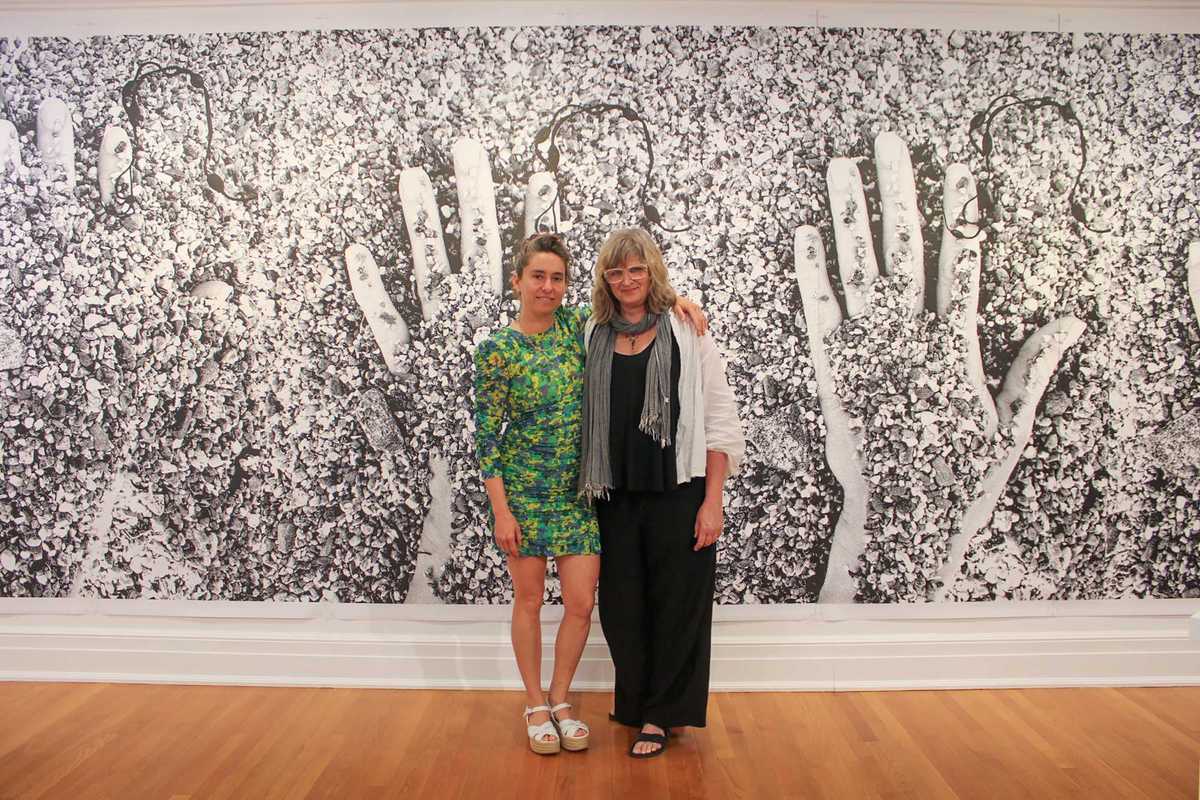
Gail Rothschild with her painting “Dead Sea Linen III (73 x 58 inches, 2024, acrylic on canvas.

Natalia Zukerman

There is a moment, looking at a painting by Gail Rothschild, when you realize you are not looking at a painting so much as a map of time. Threads become brushstrokes; fragments become fields of color; something once held in the hand becomes something you stand in front of, both still and in a constant process of changing.

“Textiles connect people,” Rothschild said. “Textiles are something that we’re all intimately involved with, but we take it for granted.”

Keep ReadingShow less

Sherman Players celebrate a century of community theater

Sherman Players celebrate a century of community theater

Cast of “Laughter on the 23rd Floor” from left to right. Tara Vega, Steve Zerilli, Bob Cady (Standing) Seated at the table: Andrew Blanchard, Jon Barker, Colin McLoone, Chris Bird, Rebecca Annalise, Adam Battlestein

Provided

For a century, the Sherman Players have turned a former 19th-century church into a stage where neighbors become castmates, volunteers power productions and community is the main attraction. The company marks its 100th season with a lineup that blends classic works, new writing and homegrown talent.

New England has a long history of community theater and its role in strengthening civic life. The Sherman Players remain a vital example, mounting intimate, noncommercial productions that draw on local participation and speak to the current cultural moment.

Keep ReadingShow less
google preferred source

Want more of our stories on Google? Click here to make us a Preferred Source.

Reimagining opera for a new generation

Reimagining opera for a new generation

Stage director Geoffrey Larson signs autographs for some of the kids after a family performance.

Provided

For those curious about opera but unsure where to begin, the Mahaiwe Theater in Great Barrington will offer an accessible entry point with “Once Upon an Opera,” a free, family-friendly program on Sunday, April 12, at 2 p.m. The event is designed for opera newcomers and aficionados alike and will include selections from some of opera’s most beloved works.

Luca Antonucci, artistic coordinator, assistant conductor and chorus master for the Berkshire Opera Festival, said the idea first materialized three years ago.

Keep ReadingShow less
BSO charts future amid leadership transition and financial strain

Aerial view of The Shed at Tanglewood in Lenox, Massachusetts.

Provided

The Boston Symphony Orchestra is outlining its path forward following the announcement that music director Andris Nelsons will step down after the 2027 Tanglewood season, closing a 13-year tenure.

In a letter to supporters, the BSO’s Board of Trustees acknowledged that the news has been difficult for many in its community, while emphasizing gratitude for Nelsons’ leadership and plans to celebrate his final season.

Keep ReadingShow less
A tradition of lamb for Easter and Passover

Roasted lamb

Provided

Preparing lamb for the observance of Easter is a long-standing tradition in many cultures, symbolizing new life and purity. For Christians, Easter marks the end of Lenten fasting, allowing for a celebratory feast. A popular choice is roast lamb, often prepared with rosemary, garlic or lemon. It is traditional to serve mint sauce or mint jelly at the table.

The Hebrew Bible suggests that the last plague God inflicted on the Egyptians, to secure the Israelites’ release from slavery, was to kill the firstborn son in every Egyptian home. To differentiate the Israelites from the Egyptians, God instructed them to mark their doorposts with the blood of a lamb. Today, Jews, Christians and Muslims generally believe that God would have known who was Israelite and who was Egyptian without such a sign, but views of God’s omnipotence in the Abrahamic faiths have evolved over the millennia.

Keep ReadingShow less
google preferred source

Want more of our stories on Google? Click here to make us a Preferred Source.

google preferred source

Want more of our stories on Google? Click here to make us a Preferred Source.