Norfolk Library unveils teen lounge

Carter Nadeau, Liam Heller and Wilson DeShazo at The Owl Cove.
Jennifer Almquist

Carter Nadeau, Liam Heller and Wilson DeShazo at The Owl Cove.
NORFOLK — To meet the need for more activities and a greater sense of community for the region’s teenagers, Norfolk Library has created a welcoming space called the Owl Cove.
Ann Havemeyer, Norfolk Library executive director, said, “The board of trustees and I felt that creating a dedicated space for teens was a crucial step towards building a sense of belonging. It sends a strong message that they are valued and welcome.”
The idea was hatched in 2021 after community discussions of teen mental health revealed that young people did not feel a sense of belonging in the town. To begin the creation of a teen-friendly space within the historic library, designer Deanna Dewey was given the task of giving life to the vision.
Havemeyer and Dewey worked closely with Leslie Battis, assistant director of the library, to learn what the teens’ needs were, determine the location of the space, choose furniture, define technology needs and decide what color to paint the walls. Renovations began with the removal of existing oak shelves and cupboards to make space for a technology cyber bar where the youths can plug in and work on their laptops. A large screen with Roku was installed on the wall, and a HP color laser printer.
Entering the hushed silence of the Norfolk Library, the elegant architecture of the vast space, designed by George Keller in 1888, invokes awe. Past the oak library tables, the stone fireplace used on certain evening embers of silent reading, and the soft Persian carpets, there are two alcoves at the north end of the Great Hall opening to the left and right. The walls of one alcove now glow with a deep saffron color, wobble stools with orange seats were added for some extra punch, there are low floor-rocker seats, and across the way, surrounded by bookshelves is a worktable with four blue chairs.
A sign stating “Seating is reserved for teens — thank you” stakes out the turf. Colorful student artwork, and poems are displayed on a bulletin board.
Above each alcove there is a welcoming sign — a clever graphic design logo created by art director Jill Chase of a winking owl and the words “Owl Cove, our place to meet up, do homework, hang out.”
Chase came up with the name. The owl was first introduced as a logo by Norfolk Library founder Isabella Eldridge, who included an owl standing on an open book in the invitation to the opening March 6, 1889. Architect Keller perched a terra cotta owl created by sculptor Albert Entress above the porch entrance, and another Entress stone owl above the mantel of the large fireplace in the Great Hall. The library motto, “Inter Folia Fructis” or “Fruit Among the Leaves,” is carved into the stone.
The Owl Cove is a contemporary oasis for young people in the town of Norfolk.
“Within days of opening, teens started showing up. They say it feels comfortable, homey and relaxing,” according to Havemeyer, who continued, “We are so pleased to find teens using their space and look forward to their participation in customizing the Owl Cove to reflect their needs and interests.”
In addition, the library has created a Teen Advisory Council (TAC) to connect with teens and define what programs they would like to have at the library. The TAC consists of six Norfolk teens in ninth through 12th grades, who are expected to engage with their peers on behalf of the library. TAC members are paid a monthly stipend as consultants, and responsibilities include attendance at monthly meetings, planning teen programs and reaching out to friends.
The young folks come from the five area towns represented by Northwestern Regional High School, and some have come to events from Litchfield. Plans include game nights, pizza parties, a possible craft fair for teens, classes in bookbinding, and maybe cell phone photography or a photo contest. On Friday, Feb. 9, a total of 22 teens gathered to enjoy a teen-only pre-Super Bowl food party.
Sometimes the students gather to do their homework together. The library has worked hard to give the teenagers autonomy and clearly is showing them respect. The Owl Cove welcomes area teenagers to join its community. The TAC is full at present, but applications for openings will be on the website after the school year ends. Battis is the Owl Cove advisor. Check the Norfolk Library website for library hours and announcements from the Teen Advisory Council and the Owl Cove.
Elena Spellman
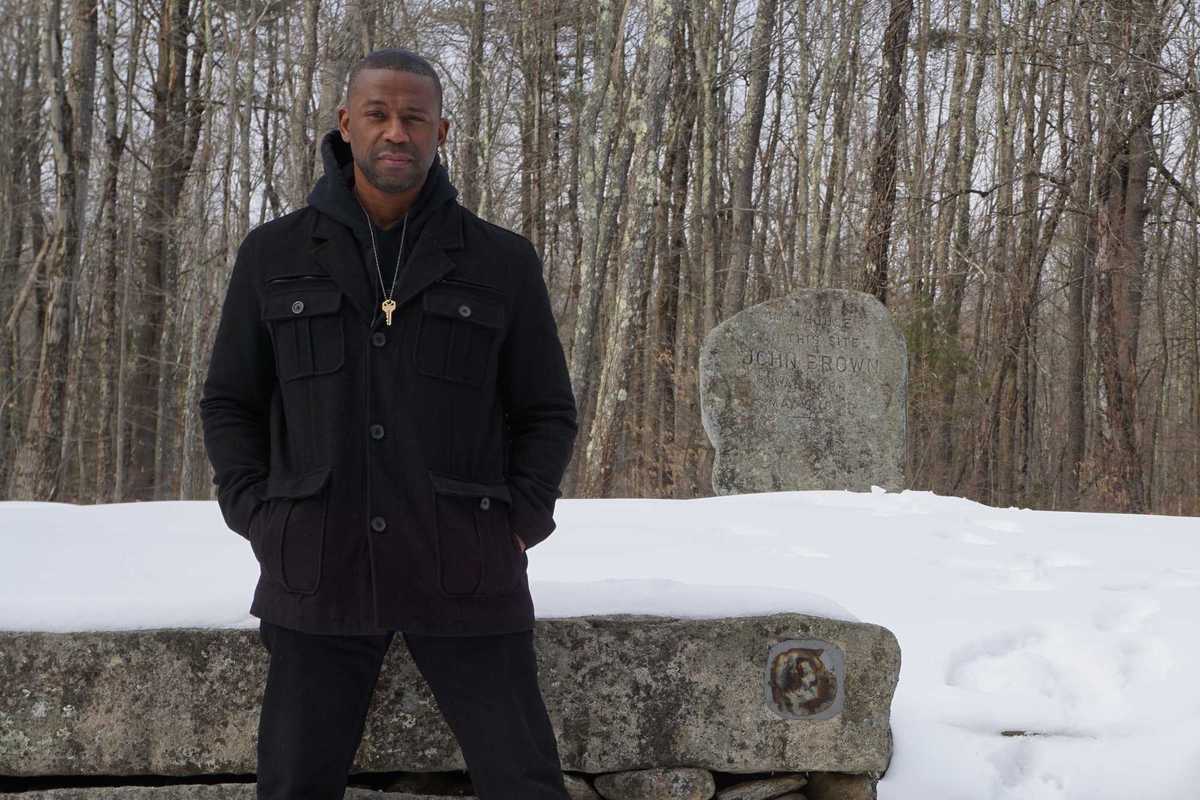
Dan Baker, left, and Daniel Latzman at Barrington Hall in Great Barrington.
Barrington Hall in Great Barrington has hosted generations of weddings, proms and community gatherings. When Dan Baker and Daniel Latzman took over the venue last summer, they stepped into that history with a plan not just to preserve it, but to reshape how the space serves the community today.
Barrington Hall is designed for gathering, for shared experience, for the simple act of being together. At a time when connection is often filtered through screens and distraction, their vision is grounded in something simple and increasingly rare: real human connection.
The partnership behind Barrington Hall began long before the building itself. Both Baker and Latzman grew up on Long Island, spent more than a decade in New York City, and eventually found their way to the Berkshires, drawn by the desire for something different. What they didn’t realize at first was just how closely their lives had already mirrored one another.
They were born in the same hospital, a year apart. Their families had distant connections. They even played on the same soccer team — never meeting, but moving through the same spaces. It wasn’t until they became neighbors in Egremont about five years ago that those parallels came into focus.
“In hindsight, it feels inevitable,” Latzman said. “But it was actually extremely random that we ended up here.”
From the beginning, Barrington Hall was meant to be a place people return to, not for any one event, but for the experience of being there. On any given week, the space might host a jazz performance, a dance party, a songwriter circle or a children’s event. Some nights bring in touring acts. Others highlight local creatives. The variety is intentional and so is the atmosphere.
“It’s about people,” Baker said. “It’s about being present.”

Baker and Latzman are keenly aware of the world outside with its constant barrage of information, political conflicts, a culture that pulls people deeper into their screens. Barrington Hall offers a way out of that noise.
“A little bit of a bubble,” Latzman said. “A place to step away from everything else.”
During a recent event, they noticed something telling: a full room of people dancing, talking, engaged — and almost no one on their phone.
“That’s when you know something is working,” Baker said.
Taking over a beloved local space comes with responsibility, one Baker and Latzman have met by honoring the building’s traditions while also expanding them.
“We didn’t feel obligated,” Latzman said. “We felt honored.”
Part of what makes the space distinct is its versatility. Large enough to host more than 250 people, yet intimate enough to feel personal, it fills a gap in the local landscape, serving a wide range of people and bringing different groups together in the same space.
“We want people to feel like, if something’s happening here, it’s worth checking out,” Latzman said.
They are carefully balancing community access with the realities of running a business, with an eye toward the long term.
“We want this to be here in 20 years,” Latzman said.

That vision extends beyond the building itself — future collaborations, expanded programming, a growing role in shaping the cultural life of the Berkshires. But at its core, the mission remains simple: to create a place where people can gather, a place that feels alive.
And perhaps most importantly, to create a place where, if only for a few hours, people can step away from the noise of the world and enjoy being together.
When asked who they’re most excited to host next, their answer was immediate: The Mammals on April 10 and Lee Ross, a one-man party band from Massachusetts, scheduled to perform on May 1.
For more information and tickets, visit
barringtonhallgb.com
Natalia Zukerman
Gail Rothschild with her painting “Dead Sea Linen III (73 x 58 inches, 2024, acrylic on canvas.
There is a moment, looking at a painting by Gail Rothschild, when you realize you are not looking at a painting so much as a map of time. Threads become brushstrokes; fragments become fields of color; something once held in the hand becomes something you stand in front of, both still and in a constant process of changing.
“Textiles connect people,” Rothschild said. “Textiles are something that we’re all intimately involved with, but we take it for granted.”
Her work begins, often, with something small: a scrap of linen from the Judean desert, dating “to a time before the notion of ‘Israel’ or ‘Palestine;’” a fragment so diminished it barely registers as an object; or a rare indigo-dyed child’s head cloth from Tutankhamen’s tomb.
“I call them portraits of ancient linen,” she said.
Rothschild grew up in Greenwich and studied drawing and painting at Yale University. “That was kind of my first love,” she said. But she quickly veered toward something more collective, working with Peter Schumann at the Bread and Puppet Theater, building papier-mâché puppets and participating in a kind of performance-based activism that blurred art and politics.
“After Yale, I got out of school and thought‘Wait a second. I don’t want to paint anymore. I need to work with people in communities and make things.’”
She moved to Brooklyn and began working in public schools, developing projects rooted in collaboration and local history. The projects were ambitious, research-driven, and often confrontational. At the University of Massachusetts, she recalled asking students: “Did you know that Amherst was named for Jeffrey Amherst, who was responsible for giving blankets infected with smallpox to Native Americans? Why don’t we look into that?’”
There were sculptures, letters to watchdog groups, installations. She worked on four such projects a year, she said, until the pace became unsustainable. “At some point I just said, ‘I’m exhausted. I’m going back to the studio.’”
What brought her back was a book, “Prehistoric Textiles ” by Elizabeth Wayland Barber. Inside, she encountered an image of a 7,000-year-old textile, unraveling.
“It said to me, ‘this could be a great big abstract painting’,” she said. “What does it mean that this textile, this thing that used to be a Cartesian grid and over time has gone back to nature?”
That question became a kind of axis for her work. “There is this cusp between nature and culture,” she said. Early on, she avoided textiles with imagery, drawn instead to the raw language of fiber itself. But eventually, even that boundary softened. A project with the Godwin-Ternbach Museum introduced her to Egyptian textiles — Christian, pagan, Greek, Roman influences colliding in woven form.

What followed was a deepening relationship with museums and, crucially, with conservators. Institutions like The Metropolitan Museum of Art and collections in Berlin and Paris began sending her images of textile fragments, sometimes pieces she has still never seen in person.
“It’s almost easier for me to transform it when I haven’t seen it,” she said.
Her process is both precise and intuitive. She grids the canvas and the source image, drawing freehand to “honor what the object is.” For a time, she works closely from the photograph. Then something shifts. “At some point I’ll say, ‘It’s a painting. It’s got to talk to itself,’ and then I stop looking at the photograph.”
What emerges is layered, luminous and muscular. “Sometimes people say, ‘Do you miss making sculpture?’ and I say, ‘I never stopped.’”
You feel that in the surfaces: the tension of threads pulling apart, the sense that something is both forming and dissolving at once. Even the backgrounds — often ambiguous, atmospheric — are not neutral. “It’s really more about feeling the space around the object,” she said, especially as she considers how ancient fragments are mounted on modern fabrics. “I get to invent an entirely other language.”
Some of her most arresting work is on the monumental textiles of The Met Cloisters, where medieval tapestries, some towering more than a dozen feet, are slowly, painstakingly conserved. It’s in the conservation labs that Rothschild has observed the physical reality of these works: their own weight pulling them apart, threads breaking under centuries of strain. Conservators insert new threads to stabilize them and Rothschild documents this process. “There’s a kind of poignancy to their work,” Rothschild said, “because as hard as we work to conserve the objects of our past, in the greater cosmic scheme of time, it’s only temporary. There’s something beautiful about that.”
Time operates on multiple levels in Rothschild’s work. There is the time of the object —thousands of years, in some cases — and the time of the painting, which unfolds over months. “Once I start working on something, I can’t stop,” she said. “But then it’ll rest for a while and I may change it, add layers.”
And then there is the time of attention itself, the way looking can tip into obsession, into pattern-seeking that doesn’t quite turn off. Rothschild is aware of that edge.
“I have to make myself stop or I just see patterns everywhere and I can’t stop, really,” she laughed. “That’s why I’ve built in other things I need to do in my life like take the dogs for a hike or, you know, volunteer at the Sharon Land Trust… otherwise I go a little nuts. And it wouldn’t be good painting either.”
A painting session, for her, has its own its own arc. “There’s kind of a trajectory for every work session. I might be repeating something and suddenly it looks linear. The language I started painting with may change by the end and I think, ‘Oh God, I’m gonna have to go back and repaint that.’”
But then, she said, there is a pause.
“I kind of step back and say, ‘No, this painting can hold both. That’s part of its history. There’s the history of the object but then there’s the history of the painting.’”
Richard Feiner And Annette Stover
Cast of “Laughter on the 23rd Floor” from left to right. Tara Vega, Steve Zerilli, Bob Cady (Standing) Seated at the table: Andrew Blanchard, Jon Barker, Colin McLoone, Chris Bird, Rebecca Annalise, Adam Battlestein
For a century, the Sherman Players have turned a former 19th-century church into a stage where neighbors become castmates, volunteers power productions and community is the main attraction. The company marks its 100th season with a lineup that blends classic works, new writing and homegrown talent.
New England has a long history of community theater and its role in strengthening civic life. The Sherman Players remain a vital example, mounting intimate, noncommercial productions that draw on local participation and speak to the current cultural moment.
Sherman Players President Missy Alexander is an enthusiastic champion of the group’s history and collaborative spirit, which engages amateurs and professionals alike “to see what fun we can have” in bringing theater to all audiences. Everyone pitches in — from sets and costumes to administrative work — to bring each production to life. She calls it the “extra special sparkle” that has defined the company since its first performances in their historic church home in 1926.
The season opens in April with Neil Simon’s “Laughter on the 23rd Floor,” a comedy set in the 1950s television writers’ room during the McCarthy era. In June, the company will present a production (with live music) of the classic Broadway musical “Bye, Bye Birdie!” one of the first shows that highlighted the Baby Boomer generation and our “Kids are King” culture.
In July, The Sherman Players will debut “Restored to Reason,” a new work by local writer Elizabeth Young about Mary Todd Lincoln. Developed through the theater’s Cold Lemonade reading series, the work marks the first time the company has taken a piece from staged reading to full production, a memorable milestone in the group’s historic mission.
September brings a timely revival of the historic American courtroom drama, “Inherit the Wind.” The Sherman Players last presented this riveting account of the infamous Scopes “monkey trial” in 1966. The season concludes with a special holiday presentation of “An American Christmas Carol,” an original adaptation of the Dickens classic, written by Artistic Director Robin Frome, directed by Jane Farnol.
Alexander is quick to acknowledge that The Sherman Players is committed to supporting the broader regional arts community. “We’re closer than you think, and we all draw on the same talents and resources,” she said. “We all see and support each other’s work.”
This dedication is helping to enrich the theater-going experience for everyone, from long-established generational Sherman Players patrons to new, younger audiences looking for community connection.
The Sherman Playhouse is located at 5 Route 39 N, Sherman, Connecticut. For tickets, subscriptions and more information, visit shermanplayers.org.

Want more of our stories on Google? Click here to make us a Preferred Source.
Graham Corrigan
Stage director Geoffrey Larson signs autographs for some of the kids after a family performance.
For those curious about opera but unsure where to begin, the Mahaiwe Theater in Great Barrington will offer an accessible entry point with “Once Upon an Opera,” a free, family-friendly program on Sunday, April 12, at 2 p.m. The event is designed for opera newcomers and aficionados alike and will include selections from some of opera’s most beloved works.
Luca Antonucci, artistic coordinator, assistant conductor and chorus master for the Berkshire Opera Festival, said the idea first materialized three years ago.
“This production is one of the highlights of the off-season,” he said.
“Opera is all about telling stories through music, which makes the concert a hit with people of all ages,” he added. “Every story has something to tell us about the human experience.” He pointed to the range of material covered in the program. “From the beautiful ornamentation of Baroque operas to the majesty of Mozart, to the gripping emotions of Verdi and Puccini … up to the modern-day stories of today’s operas by composers like Huang Ruo, Missy Mazzoli and so many others.”
The event features three singers from the Berkshire Opera Festival: soprano Juliet Schlefer, mezzo-soprano Abbegael Greene and tenor Maximillian Jansen. All three are still early in their careers, a class of rising vocal talent carrying the torch for the next generation. They will be accompanied by pianist Charles Tsui.
“I think that opera is especially exciting for families and young children precisely because it is all about storytelling,” Antonucci said. “Adding costumes, sets, props and the incredible power of operatic voices to the mix makes it one of the few types of experiences where all the arts come together.”
This year, the production reimagines some of those legendary stories in present-day Massachusetts. As always, “Once Upon an Opera” promises to be an interactive affair, encouraging audience participation throughout its hourlong runtime. While the event is free, reservations are encouraged due to limited seating.
Tickets are available at berkshireoperafestival.org/onceuponanopera.
Natalia Zukerman
Aerial view of The Shed at Tanglewood in Lenox, Massachusetts.
The Boston Symphony Orchestra is outlining its path forward following the announcement that music director Andris Nelsons will step down after the 2027 Tanglewood season, closing a 13-year tenure.
In a letter to supporters, the BSO’s Board of Trustees acknowledged that the news has been difficult for many in its community, while emphasizing gratitude for Nelsons’ leadership and plans to celebrate his final season.
The orchestra also pointed to broader challenges facing the institution and the field at large. Attendance has declined over the past two decades, while operating costs have risen. The BSO has relied on more than $100 million in reserve funds beyond standard endowment draws to cover ongoing deficits, and key facilities — including venues at Tanglewood — require significant upgrades.
In response, the organization is advancing a long-term strategy centered on three priorities: programming, partnerships and place. Plans include rethinking how concerts reach contemporary audiences, strengthening ties across Boston and the Berkshires, and investing in major performance spaces such as Symphony Hall and Tanglewood.
The board emphasized that while the BSO remains committed to artistic excellence and its core repertoire, adapting to changing audience habits will be critical to its sustainability. Leaders say ongoing conversations with musicians, staff and community partners have helped shape the new direction.
Despite financial pressures and leadership changes, trustees expressed confidence in the orchestra’s future, underscoring the role of audiences, donors and artists in sustaining one of the country’s oldest cultural institutions.
Leila Hawken
Roasted lamb
Preparing lamb for the observance of Easter is a long-standing tradition in many cultures, symbolizing new life and purity. For Christians, Easter marks the end of Lenten fasting, allowing for a celebratory feast. A popular choice is roast lamb, often prepared with rosemary, garlic or lemon. It is traditional to serve mint sauce or mint jelly at the table.
The Hebrew Bible suggests that the last plague God inflicted on the Egyptians, to secure the Israelites’ release from slavery, was to kill the firstborn son in every Egyptian home. To differentiate the Israelites from the Egyptians, God instructed them to mark their doorposts with the blood of a lamb. Today, Jews, Christians and Muslims generally believe that God would have known who was Israelite and who was Egyptian without such a sign, but views of God’s omnipotence in the Abrahamic faiths have evolved over the millennia.
This tradition, celebrated at Passover, has made lamb a first choice for Jewish families commemorating freedom from Egyptian slavery. Christians have continued the tradition, naming Jesus the Lamb of God, whose death serves as atonement for the sins of the world. For them, the dietary restrictions of Lent have ended, allowing a return to eggs, sweets and meat.
2 or more cloves garlic, thinly sliced
Good-quality olive oil
Rosemary
Salt and pepper to taste
Preheat oven to 450 degrees. Trim fat from lamb as desired. Using a sharp knife, cut small gashes in the meat and insert a slice of garlic into each cut. Rub the roast with olive oil, then season with rosemary (some cooks also add thyme), salt and pepper.
Place the meat on a rack in a shallow roasting pan and put it in the preheated oven. After 15 minutes, reduce heat to 350 degrees. Roast for 25 minutes per pound for rare or 30 minutes per pound for well-done. Well-done lamb will be less juicy and less tender. If garlic is not desired, substitute lemon or additional rosemary.
When the roast is done, carve by slicing parallel to the bone, rotating as needed.
Variations: Some recipes substitute lemon juice for olive oil. You may also use salad oil instead of olive oil and add a bit of powdered ginger, a bay leaf, sage and marjoram. Soy sauce is also used.
To make gravy:
After removing the roast to rest, place the roasting pan on the stovetop over heat. Add flour and stir for one minute, until a paste forms. Add beef stock or water to reach the desired consistency. Mash any garlic pieces, if used, to enhance flavor. Strain and serve.

Want more of our stories on Google? Click here to make us a Preferred Source.

Want more of our stories on Google? Click here to make us a Preferred Source.