Tom Levine

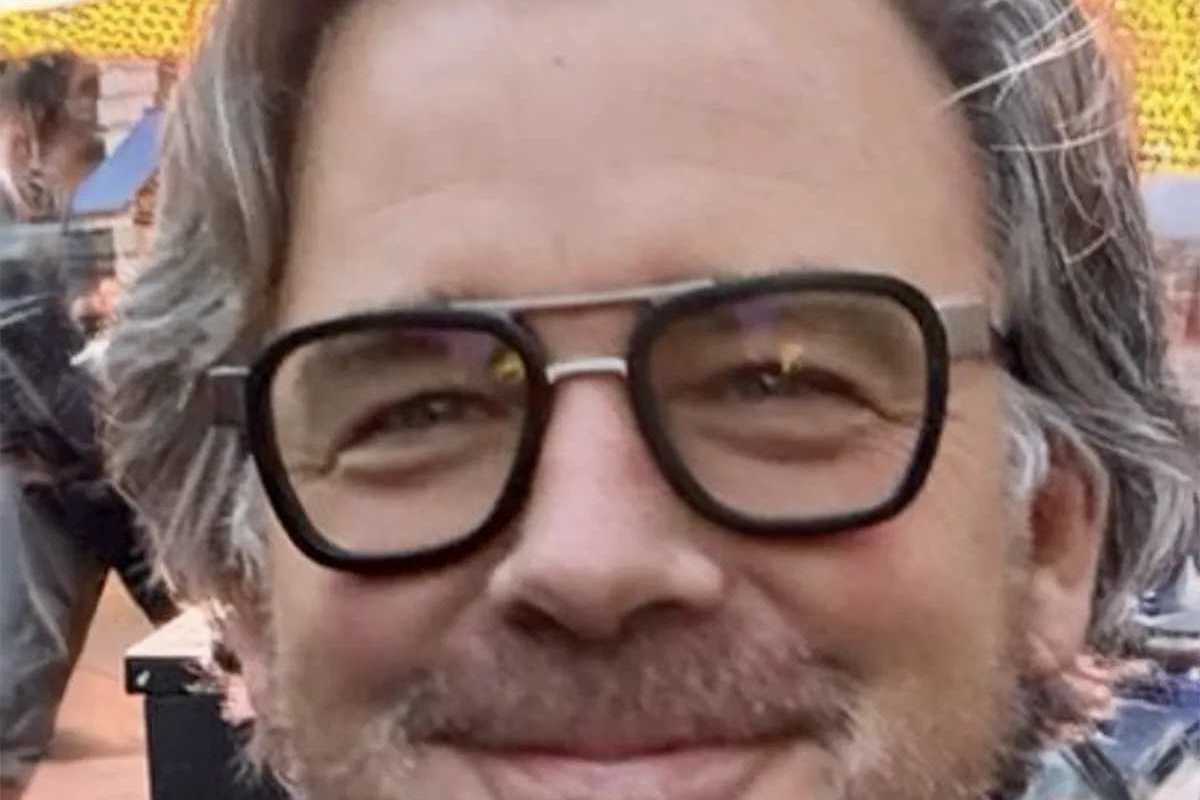
SHARON — Artist Tom Levine, of Sharon (formerly Salisbury), died from complications of leukemia on April 4, 2020. 

Mr. Levine was born and raised in Cincinnati, Ohio. He received a BA in English from Miami University (Oxford, Ohio); a master’s degree in psychology from The University of Denver; and an M.F.A. in art history from the University of Cincinnati. It was at Miami University, under the guidance of Prof. John Weigel, that Mr. Levine was encouraged to paint his senior thesis rather than write it. 

This led him to pursue painting, at first imitating the abstract expressionist Jackson Pollock, working in a dilapidated warehouse in downtown Cincinnati. Mr. Levine moved to New York in 1974 into a fourth-floor walkup on Greene Street in SoHo, sustaining himself by waiting tables. After his shift ended, he would paint into the early morning hours. 

His work, often compared to the minimalist Agnes Martin, exhibits a reductivist style. But he went beyond minimalism to convey a kind of hidden language, an abstracted, perhaps primitive mode of communicating through paint. Muted colors, repetitive patterns, sensual recurring shapes, convey a language that the viewer struggles to understand. 

Mr. Levine once told a friend, “My mother worked with the National Braille Association, and I would look at the text books for the blind students, and think about those dots, those patterns, how they communicate words without sight. I think what impresses us when we are young, is revealed when we are grown.” 

Mr. Levine’s work may be seen in the collections of the Museum of Modern Art, New York; National Gallery of Art, Washington, D.C.; Metropolitan Museum of Art, New York; and The Whitney Museum of American Art, New York as well as several museums in Europe.

 He is survived by his brother, James Levine; and sister, Janet Levine; and several friends. A celebration of his life will be held later this year.

Latest News

Classifieds - February 26, 2026

Classifieds - February 26, 2026

Help Wanted

PART-TIME CARE-GIVER NEEDED: possibly LIVE-IN. Bright private STUDIO on 10 acres. Queen Bed, En-Suite Bathroom, Kitchenette & Garage. SHARON 407-620-7777.

The Salisbury Association’s Land Trust seeks part-time Land Steward: Responsibilities include monitoring easements and preserves, filing monitoring reports, documenting and reporting violations or encroachments, and recruiting and supervising volunteer monitors. The Steward will also execute preserve and trail stewardship according to Management Plans and manage contractor activity. Up to 10 hours per week, compensation commensurate with experience. Further details and requirements are available on request. To apply: Send cover letter, resume, and references to info@salisburyassociation.org. The Salisbury Association is an equal opportunity employer.

Keep ReadingShow less
To save birds, plant for caterpillars

Fireweed attracts the fabulous hummingbird sphinx moth.

Photo provided by Wild Seed Project

You must figure that, as rough as the cold weather has been for us, it’s worse for wildlife. Here, by the banks of the Housatonic, flocks of dark-eyed juncos, song sparrows, tufted titmice and black-capped chickadees have taken up residence in the boxwood — presumably because of its proximity to the breakfast bar. I no longer have a bird feeder after bears destroyed two versions and simply throw chili-flavored birdseed onto the snow twice a day. The tiny creatures from the boxwood are joined by blue jays, cardinals and a solitary flicker.

These birds will soon enough be nesting, and their babies will require a nonstop diet of caterpillars. This source of soft-bodied protein makes up more than 90 percent of native bird chicks’ diets, with each clutch consuming between 6,000 and 9,000 caterpillars before they fledge. That means we need a lot of caterpillars if we want our bird population to survive.

Keep ReadingShow less
Stephanie Haboush Plunkett and the home for American illustration

Stephanie Haboush Plunkett

L. Tomaino
"The field of illustration is very close to my heart"
— Stephanie Plunkett

For more than three decades, Stephanie Haboush Plunkett has worked to elevate illustration as a serious art form. As chief curator and Rockwell Center director at the Norman Rockwell Museum in Stockbridge, Massachusetts, she has helped bring national and international attention to an art form long dismissed as merely commercial.

Her commitment to illustration is deeply personal. Plunkett grew up watching her father, Joseph Haboush, an illustrator and graphic designer, work late into the night in his home studio creating art and hand-lettered logos for package designs, toys and licensed-character products for the Walt Disney Co. and other clients.

Keep ReadingShow less
google preferred source

Want more of our stories on Google? Click here to make us a Preferred Source.

Free film screening and talk on end-of-life care
‘Come See Me in the Good Light’ is nominated for best documentary at this year’s Academy Awards.
Provided

Craig Davis, co-founder and board chair of East Mountain House, an end-of-life care facility in Lakeville, will sponsor a March 5 screening of the documentary “Come See Me in the Good Light” at The Moviehouse in Millerton, followed by a discussion with attendees.

The film, which is nominated for best documentary at this year’s Academy Awards, follows the poet Andrea Gibson and their partner Megan Falley as they are suddenly and unimaginably forced to navigate a terminal illness. The free screening invites audiences to gather not just for a film but for reflection on mortality, healing, connection and the ways communities support one another through difficult life transitions.

Keep ReadingShow less

The power of one tray

The power of one tray

A tray can help group items in a way that looks and feels thoughtful and intentional.

Kerri-Lee Mayland

Winter is a season that invites us to notice our surroundings more closely and crave small, comforting changes rather than big projects.

That’s often when clients ask what they can do to make their homes feel finished or fresh again — without redecorating, renovating or shopping endlessly. My answer: start with one tray.

Keep ReadingShow less

Tangled specks: tiny flies, big ambitions

Tangled specks: tiny flies, big ambitions

Here is a sample from a recently purchased assortment of specks. From left: Black speck, Parachute Adams dry fly speck, greenish sparkly speck.

Patrick L. Sullivan

I need to get my glasses checked

My fingers fumbling like heck

Keep ReadingShow less
google preferred source

Want more of our stories on Google? Click here to make us a Preferred Source.

google preferred source

Want more of our stories on Google? Click here to make us a Preferred Source.