Quinoa: Just give it a try

Quinoa takes a little getting used to, but as a wheat-free grain and a good substitute for couscous, it’s worth the effort.

Here’s what’s odd about quinoa. It’s not the taste; it tastes kind of crunchy and nutty and mild, and has a nice flavor.

But it looks a little like a biology class experiment. The grains as they come out of the box are tiny white nuggets. But when they’re cooked, they expand and turn translucent — except for a thin thread that runs along the inside edge.  It looks a little weird. But not so weird that you can’t get used to it.

The good thing about quinoa is that it can be a nice side dish, and it isn’t just pasta disguised as a grain. I love couscous, but really you might as well eat a plate of spaghetti as eat those minute little grains of pasta.

And of course there are many interesting kinds of rice, but most are processed and give you a fairly high dose of carbohydrate. One of the reasons why people say they feel hungry an hour after they eat Chinese food: the white rice. It races through the digestive system and leaves an empty feeling in the stomach.

Quinoa shouldn’t do that, since it’s a pure grain and is full of nutrients and minerals. Vegans and vegetarians, or people who just don’t like meat, should learn to love quinoa.

It’s a complete protein, which means it contains all the essential amino acids, the ones that your body would probably get from eating a nice juicy steak.

Quinoa is especially loaded with lysine, which helps your body absorb calcium and build strong muscles. It also seems to strengthen your immune system.

It has some iron in it, which makes it a doubly good substitute for red meat. And it has a  healthy amount of manganese (about 50 percent of your daily recommended dose) and magnesium (25 percent of your daily dose). Manganese strengthens your bones and helps regulate your cholesterol and blood sugar. Magnesium is also good for your bones, and it helps calm your nerves, keeps your heart beating in a smooth, steady beat and lowers your blood pressure and prevents headaches.

Once you get used to eating quinoa, perhaps you’ll be happy to see a little mound of it on the side of your plate at dinner. I’m not sure I’m there yet; but I did like it this weekend when I substituted quinoa for bulgur or couscous in a recipe for tabbouleh. Feel free to substitute any fresh herbs you have in your garden. Thin-sliced fresh radish is good, too.

                                                                                                       Tabbouleh

Makes two to four servings

1/3 cup quinoa, uncooked;  1 cup water or chicken stock;  pinch of salt;  1/2 cup each chopped fresh parsley and mint leaves;  1/2 tomato, seeded and chopped;   1 tablespoon chopped onion;  1 tablespoon chopped scallion;  2 tablespoons olive oil;  1 tablespoon fresh lemon juice;  coarse salt and freshly ground pepper

Rinse the quinoa in a fine-mesh strainer until the water runs clear. Bring the water or stock to a boil, add the quinoa and salt, bring back to a boil, reduce heat to low and simmer for 15 minutes or until the grains are tender and translucent and you can see the little thread around the inside edge of each one.

Drain and return the quinoa to the pan. Cover the pan with a clean dishtowel and the pot lid, and let it sit for 10 minutes.

Next, combine the quinoa with the herbs, onion, scallion and tomato. Whisk together the olive oil and lemon juice and toss with the quinoa and herbs. Season with salt and pepper. Serve at room temperature.

This type of salad usually improves if the ingredients are allowed to sit for a half hour or so.
   

Latest News

Living art takes center stage in the Berkshires

Contemporary chamber musicians, HUB, performing at The Clark.

D.H. Callahan

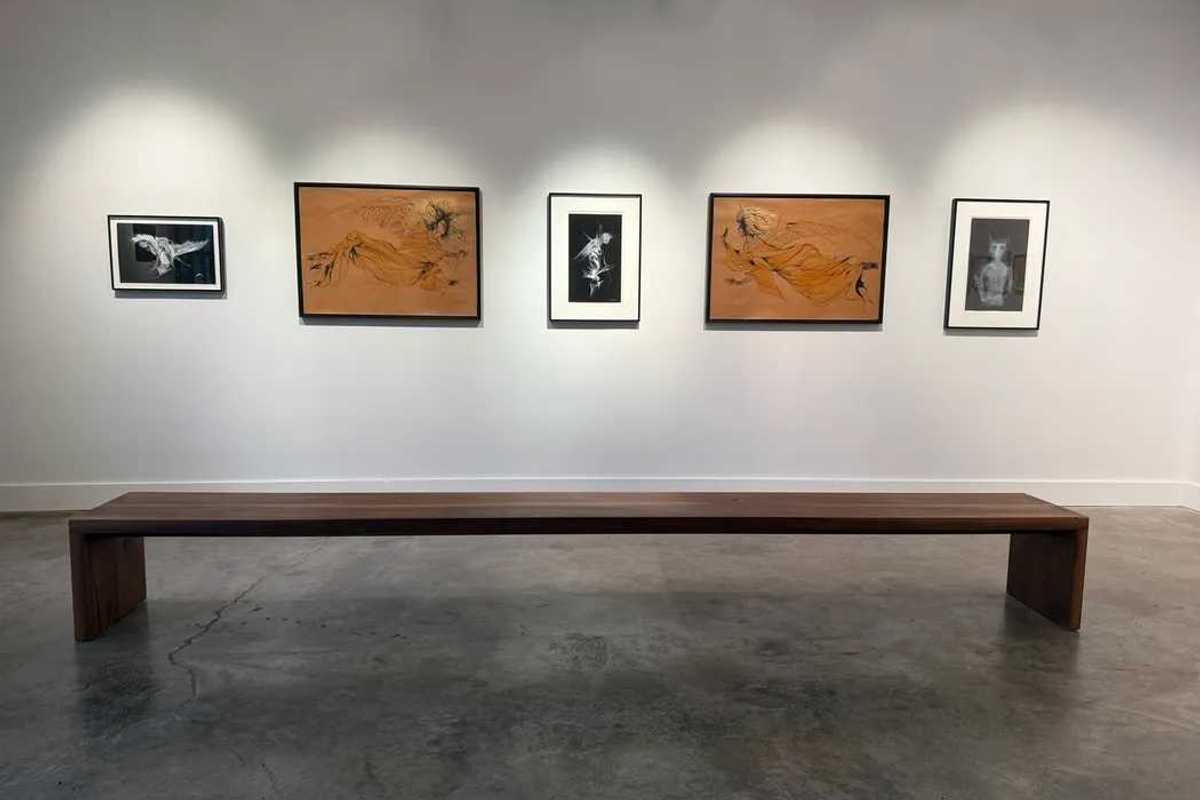
Northwestern Massachusetts may sometimes feel remote, but last weekend it felt like the center of the contemporary art world.

Within 15 miles of each other, MASS MoCA in North Adams and the Clark Art Institute in Williamstown showcased not only their renowned historic collections, but an impressive range of living artists pushing boundaries in technology, identity and sound.

Keep ReadingShow less
Persistently amplifying women’s voices

Francesca Donner, founder and editor of The Persistent. Subscribe at thepersistent.com.

Aly Morrissey

Francesca Donner pours a cup of tea in the cozy library of Troutbeck’s Manor House in Amenia, likely a habit she picked up during her formative years in the United Kingdom. Flanked by old books and a roaring fire, Donner feels at home in the quiet room, where she spends much of her time working as founder, editor and CEO of The Persistent, a journalism platform created to amplify women’s voices.

Although her parents are American and she spent her earliest years in New York City and Litchfield County — even attending Washington Montessori School as a preschooler — Donner moved to England at around five years old and completed most of her education there. Her accent still bears the imprint of what she describes as a traditional English schooling.

Keep ReadingShow less
Jarrett Porter on the enduring power of Schubert’s ‘Winterreise’
Baritone Jarrett Porter to perform Schubert’s “Winterreise”
Tim Gersten

On March 7, Berkshire Opera Festival will bring “Winterreise” to Studio E at Tanglewood’s Linde Center for Music and Learning, with baritone Jarrett Porter and BOF Artistic Director and pianist Brian Garman performing Franz Schubert’s haunting 24-song setting of poems by Wilhelm Müller.

A rejected lover. A frozen landscape. A mind unraveling in real time. Nearly 200 years after its premiere, “Winterreise” remains unnervingly current in its psychological portrait of isolation, heartbreak and existential drift.

Keep ReadingShow less
google preferred source

Want more of our stories on Google? Click here to make us a Preferred Source.

A grand finale for Crescendo’s 22nd season

Christine Gevert, artistic director, brings together international and local musicians for a season of rare works.

Stephen Potter

Crescendo, the Lakeville-based nonprofit specializing in early and rarely performed classical music, will close its 22nd season with a slate of spring concerts featuring international performers, local musicians and works by pioneering composers from the Baroque era to the 20th century.

Christine Gevert, the organization’s artistic director, has gathered international vocal and instrumental talent, blending it with local voices to provide Berkshire audiences with rare musical treats.

Keep ReadingShow less

Leopold Week honors land and legacy

Leopold Week honors land and legacy

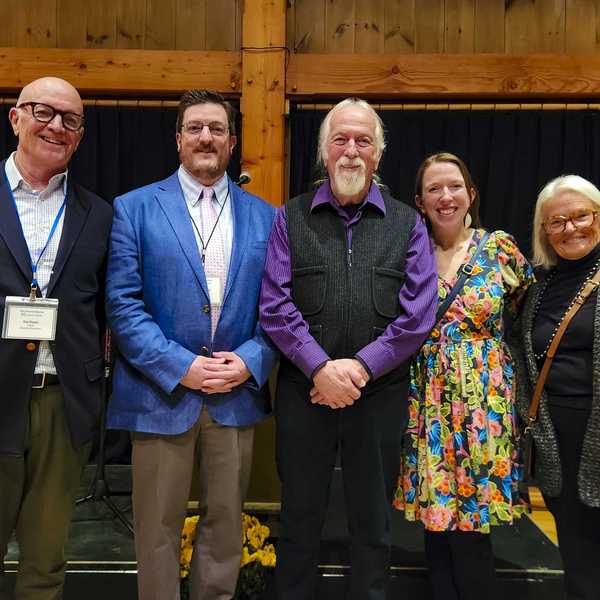
Aldo Leopold in 1942, seated at his desk examining a gray partridge specimen.

Robert C. Oetking

In his 1949 seminal work, “A Sand County Almanac,” Aldo Leopold, regarded by many conservationists as the father of wildlife ecology and modern conservation, wrote, “There are some who can live without wild things and some who cannot.” Leopold was a forester, philosopher, conservationist, educator, writer and outdoor enthusiast.

Originally published by Oxford University Press, “A Sand County Almanac” has sold 2 million copies and been translated into 15 languages. On Sunday, March 8, from 3 to 5 p.m. in the Great Hall of the Norfolk Library, the public is invited to a community reading of selections from the book followed by a moderated discussion with Steve Dunsky, director of “Green Fire,” an Emmy Award-winning documentary film exploring the origins of Leopold’s “land ethic.” Similar reading events take place each year across the country during “Leopold Week” in early March. Planning for this Litchfield County reading began when the Norfolk Library received a grant from the Aldo Leopold Foundation, which provided copies of “A Sand County Almanac” to distribute during the event.

Keep ReadingShow less

Erica Child Prud’homme

Erica Child Prud’homme

WEST CORNWALL — Erica Child Prud’homme died peacefully in her sleep on Jan. 9, 2026, at home in West Cornwall, Connecticut, at 93.

Erica was born on April 27, 1932, in Doylestown, Pennsylvania, the eldest of three children of Charles and Fredericka Child. With her siblings Rachel and Jonathan, Erica was raised in Lumberville, a town in the creative enclave of Bucks County where she began to sketch and paint as a child.

Keep ReadingShow less
google preferred source

Want more of our stories on Google? Click here to make us a Preferred Source.

google preferred source

Want more of our stories on Google? Click here to make us a Preferred Source.