Latest News

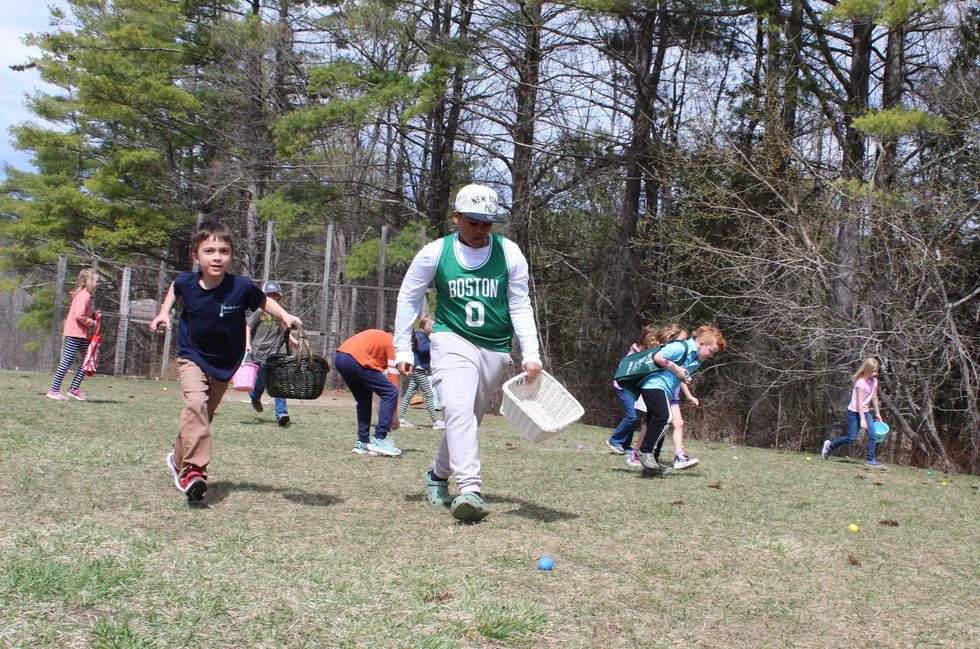
Children swoop and dive for Easter eggs during the annual Falls Village egg hunt.
Patrick L. Sullivan
Matt Gallagher, director of programs and operations for Great Mountain Forest Corporation, delivered instructions through a bullhorn. “Take your marks, get set, GO!”
And they went.
 Patrick L. Sullivan
In a whirlwind of activity, children ages six and up swooped and dove across the field to grab the plastic eggs filled with candy.
Younger participants between the ages of three and five had their eggs hidden on the playground, while the toddlers had theirs in the sandbox.
Recreation Commission head Melissa Lopes said the set-up ensures younger children have a fair chance without being overrun by older participants.
 After collecting their candy, children placed the plastic eggs in a bin for use next year. Patrick L. Sullivan
Three “golden eggs” were hidden, with lucky finders winning larger prizes, including a big candy bar and a couple of gift baskets with toys.
The main event on the ball field lasted about five minutes.
Afterward, the Easter Bunny mingled with the crowd, and the children removed their candy from the plastic eggs and deposited the latter in a bin for use next year.



Want more of our stories on Google? Click here to make us a Preferred Source.
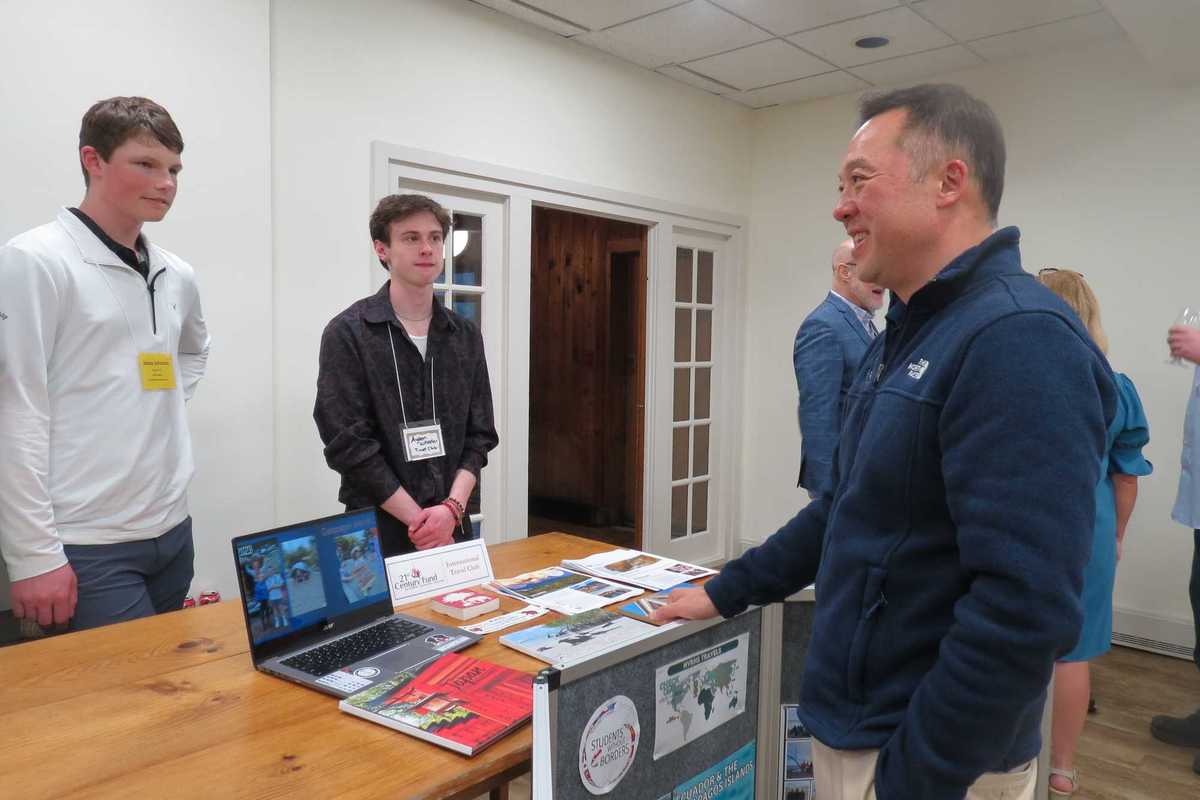
Connecticut Attorney General William Tong talks with students Jonas Johnson (left) and Ayden Wheeler at the 21st Century for HVRHS event held at the Interlaken Inn on March 31.
Ruth Epstein
Founded in 1994, the fund was the brainchild of the late Jack Mahoney, a longtime teacher and principal at the school. While on a sabbatical, he visited other high schools across the country and learned that many had established organizations to fund student and teacher projects outside the annual budgets. He brought the idea back, paired up with Salisbury resident, the late Diane Hewat, and in 1994, the 21st Century Fund for HVRHS was born. It has since raised and distributed close to $1 million to the HVRHS community.
The fund supports projects that allow students and teachers to expand learning beyond the classroom, encouraging creativity, exploration and real-world experience. The fund also supports the high school journalism program with the Lakeville Journal.
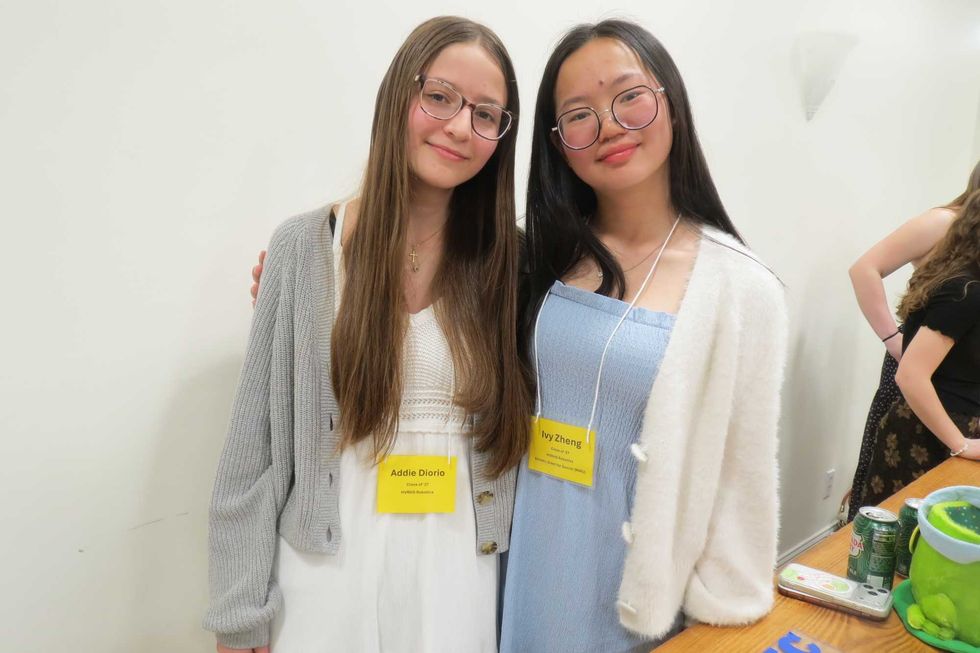 HVRHS Robotics Club members Addie Diorio, left, and Ivy Zheng explain the club’s purpose during the March 31 event showcasing the 21st Century Fund for HVRHS. Ruth Epstein
Students lined the room with their displays. Addie Diorio and Ivy Zheng of Canaan, members of the Robotics team, explained how they have to build a robot from scratch and program it to participate in two competitions a year. “You have to make a commitment,” said Diorio. “From January to March, we worked on it six days a week.” The 13 members are mentored by Devin Rout and Ben Lesch.
Both students said the experience has opened their eyes to the field of engineering, which they may pursue. They, like the others, expressed their deep gratitude for the assistance given by the fund. “It costs a lot of money for parts and competition fees,” Diorio said. “The 21st Century Fund has given us a lot of grants.”
Logan Padelli of Canaan and brothers Owen and Alastair Schnepf of Wassaic, NY, were at the Envirothon booth. That club’s members, which has teacher David Moran as its advisor, aim to improve the environment and ecosystem.
“We like to spend time in nature,” said Owen Schnepf.
This year, students will compete in New Haven on May 21, where they will be tested in five areas: wildlife, forestry, soils, aquatics and current issues, the latter of which changes every year. This year, the topic is non-point soil solutions.
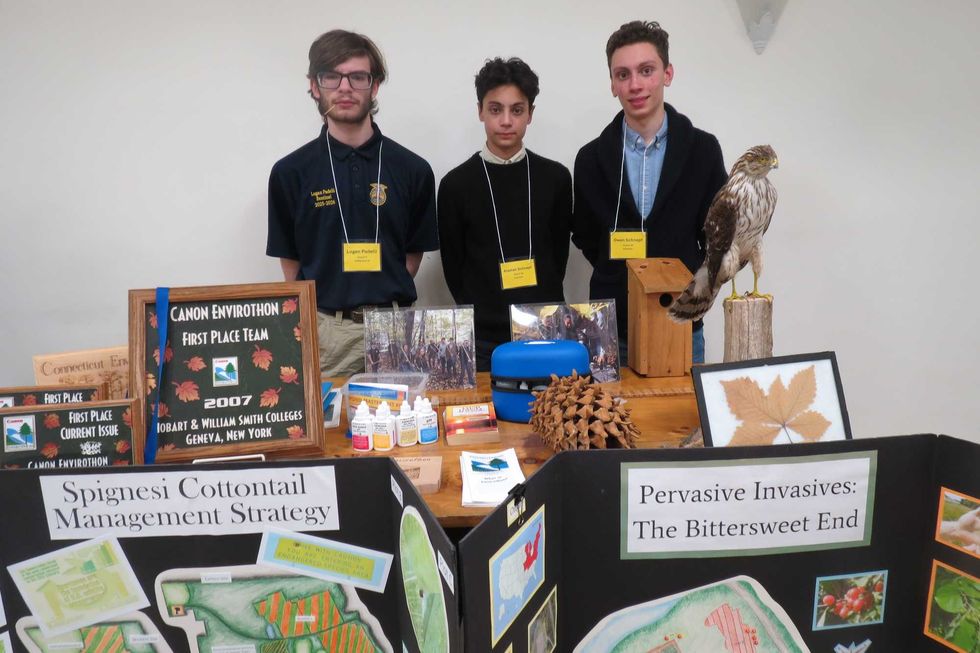 From left, Logan Padelli, Alastair Schnepf and Owen Schnepf are members of the Envirothon team at Housatonic Valley Regional High School.Ruth Epstein
They are appreciative of the fund that, among other things, paid for soil kits and allows them to travel to competitions.
Chris Crane of Canaan and Michael Gawel of Sheffield, Mass., were at the vo-ag table, where they described the lab land, a two-acre parcel just down the road from HVRHS that the school is leasing from Eversource. Students are learning how to monitor irrigation practices at the nearby Housatonic River and will be installing gardens to provide fruits and vegetables for the school cafeteria.
“Everything is student-driven,” said Crane, “and we get industry leaders to guide us.” They both remarked how much help the project has received from the fund.
International Travel Club teachers Danielle Melino and Letitia Garcia-Tripp said they have sent 300 students around the world on service trips to places such as Japan, Thailand, Italy, Greece, Ireland, Scotland, Iceland and the Galápagos Islands. Students visited schools and interacted with children, planted gardens and worked at an elephant sanctuary.
While the teens have to help fundraise for such trips, financial barriers were reduced given the help of the 21st Century Fund. One student showed a video of a trip she’d taken, using it as her capstone project.
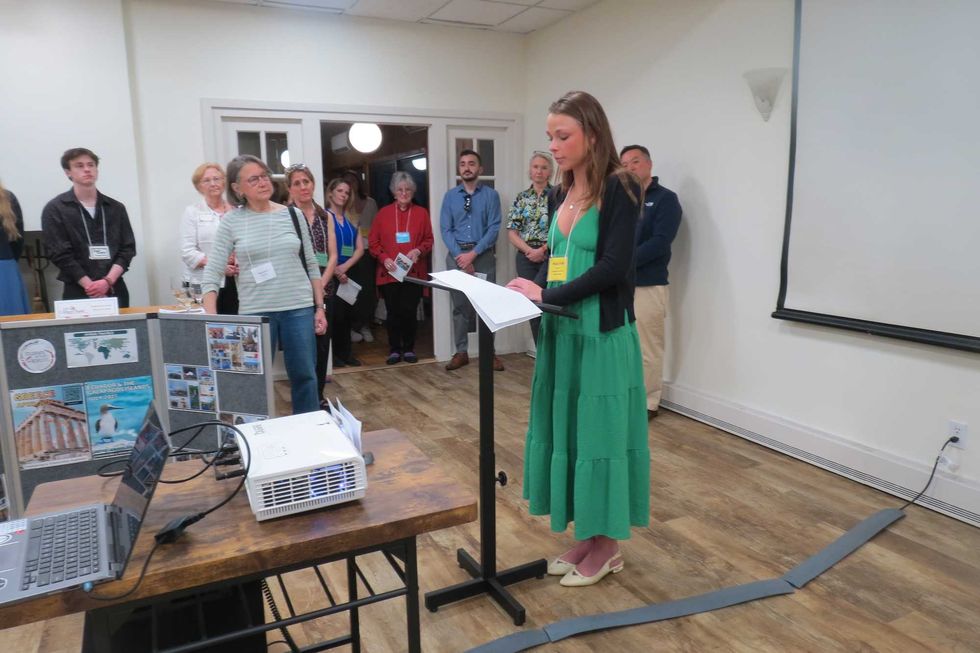 Mollie Ford describes her week-long summer program on international relations and American politics at Georgetown University.Ruth Epstein
Among those who addressed the audience was state Rep. Maria Horn, D-64, of Salisbury, who said nonprofits are facing uncertainty because of federal funding cuts. She praised Mahoney and Hewat for their foresight in establishing the fund to “widen students’ horizons and let them pursue new ideas. There are so many in this community who support our kids.”
Connecticut Attorney General William Tong, who was in attendance, said he was so impressed by the projects he saw and, even though it sounds like a cliché, noted that education is the answer. He touched on some of the issues his office is working on and then mentioned the Birthright Clause now before the Supreme Court, something of which he, as the son of immigrants, has great interest.
Tong said he still marvels that someone who once worked in his parents’ Chinese restaurant could grow up to become Connecticut’s 25th attorney general. “My life was only possible here and no other place in the world,” he said.
Want more of our stories on Google? Click here to make us a Preferred Source.