Salisbury prepares for launch of 100th Jumpfest

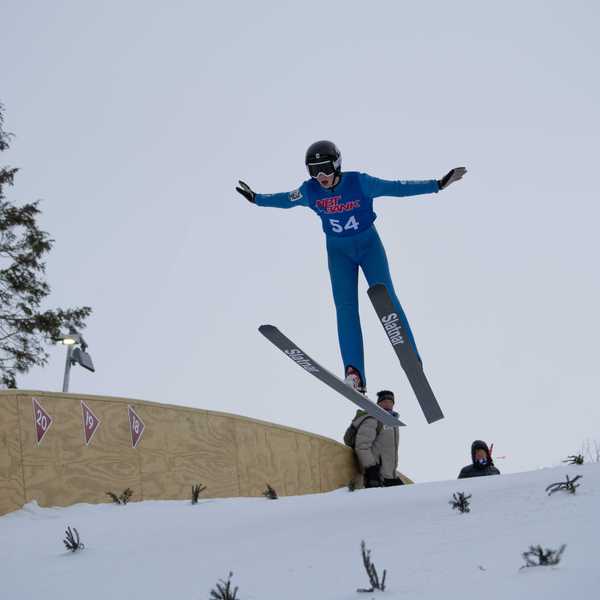
Henry Loher flew farther than any other competitor at Jumpfest 2025
Randy O'Rourke

Henry Loher flew farther than any other competitor at Jumpfest 2025
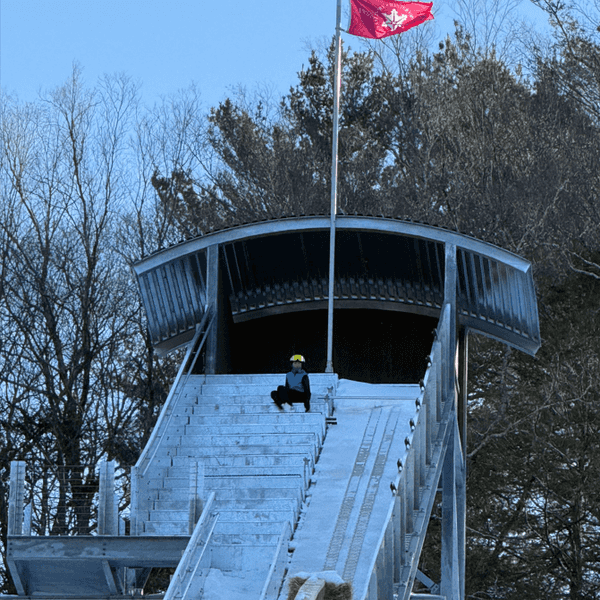
SALISBURY — Salisbury’s longstanding tradition of ski jumping is reaching new heights this year with the 100th annual Jumpfest, scheduled for Feb. 6–8 at Satre Hill.
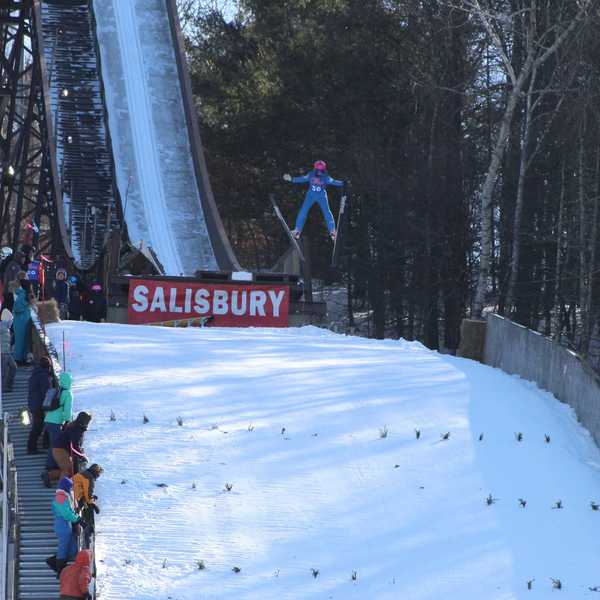
The weekend-long celebration begins with a community night on Friday, Feb. 6, followed by youth ski jumping competitions and the Salisbury Invitational on Saturday, and culminates Sunday with the Eastern U.S. Ski Jumping Championships.
While spectators look skyward to watch the high-flying athletes, Jumpfest will also invite the community to look back on Salisbury’s deep-rooted ski jumping history.
Ski jumping originated in Norway in the 19th century and is a tradition familiar to most Nordic children. That was the case for the five Satre brothers — John, Magnus, Ottar, Sverre and Olaf — who grew up competing in ski jumping and cross-country skiing.
When John Satre moved to Salisbury in 1923 to work as a chauffeur, he brought the tradition with him. The rolling hills and heavy winters of the Northwest Corner resembled those of Norway, allowing John to seamlessly integrate his passion into his new community.
Within a year, his brothers followed. In 1926, John Satre captivated roughly 200 spectators by skiing off a snow-covered barn roof.
The brothers soon formed the Salisbury Outing Club — now known as the Salisbury Winter Sports Association (SWSA) — and began construction of a permanent ski jump in the same location it sits today: Satre Hill.
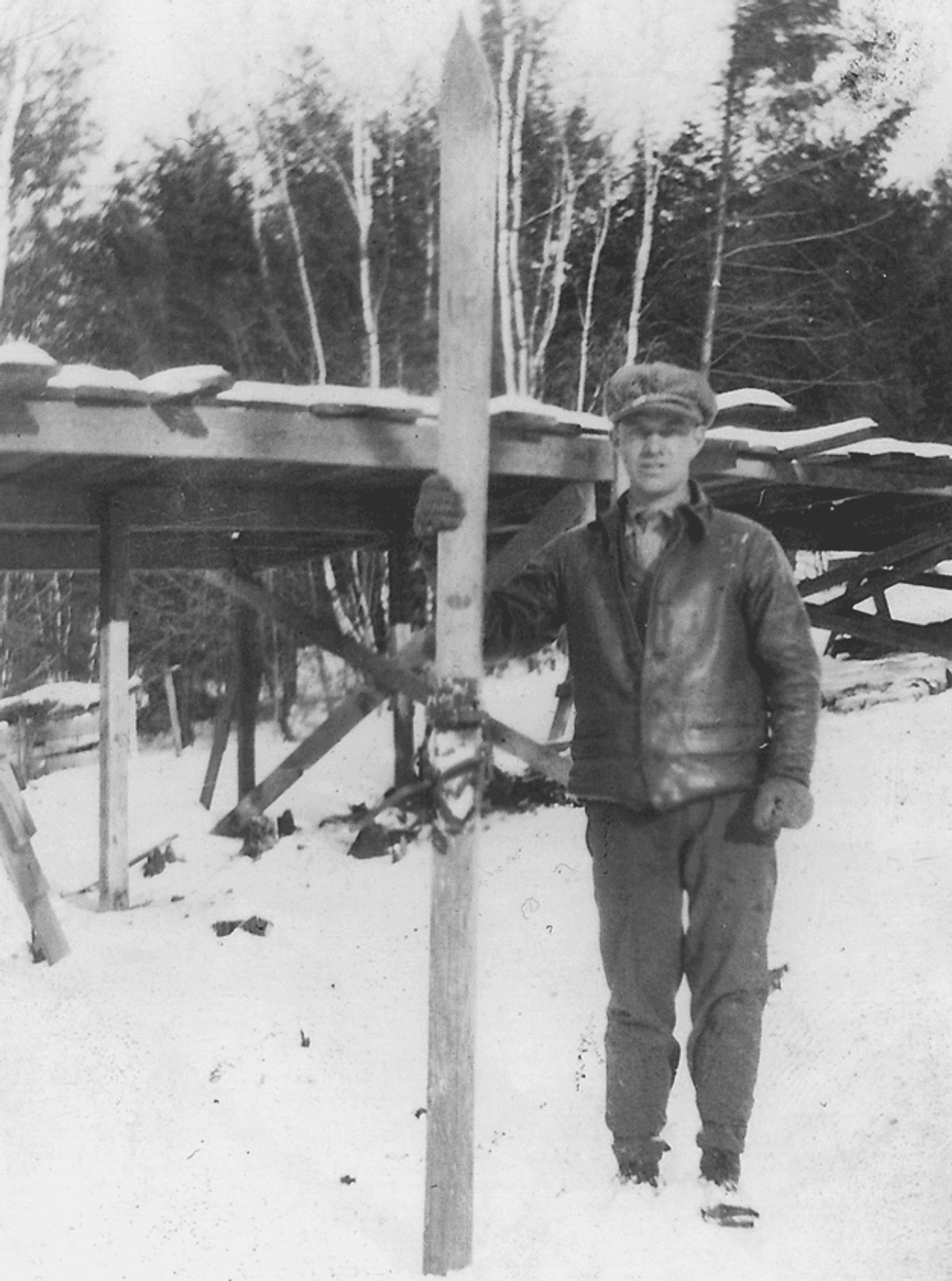
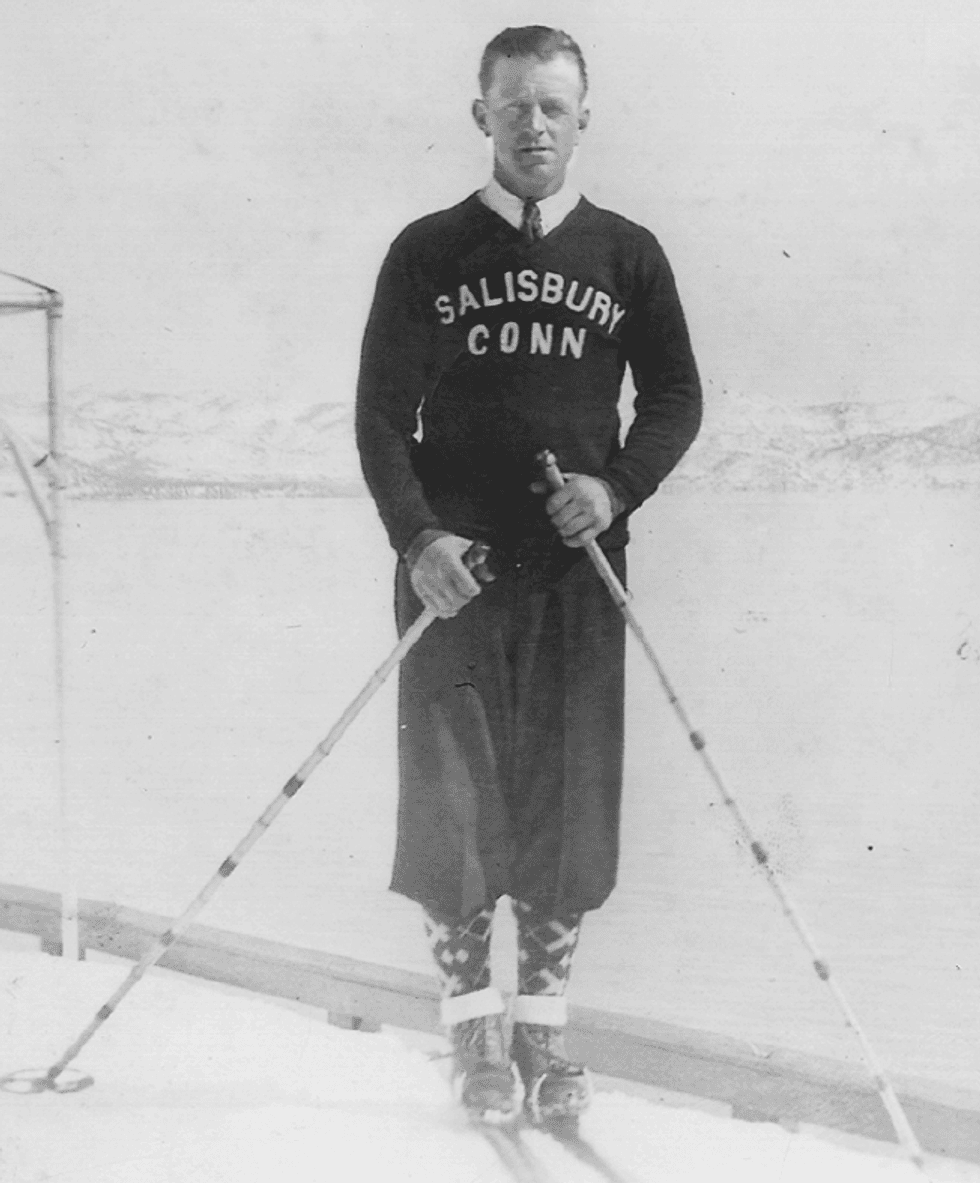
By 1933, the Satre brothers had won numerous championships and helped popularize the sport across the United States. Salisbury hosted the U.S. Olympic Trials in 1932, and the following year hosted the National Championships.
Tragically in 1934, at the age of 40, John Satre was killed in a car accident. The New York Times hailed him as a pioneer in U.S. skiing and his legacy is carried on in the winter sports culture that is nurtured in Salisbury today.
During this time, local children were introduced to the sport, creating makeshift jumps in their backyards out of crates and hay bales. One of these children was Richard Parsons, who became the first Salisbury resident to earn recognition for cross country skills. He earned a spot for the 1932 Lake Placid Winter Olympic Games and in 1936 competed in the Winter Olympics in Garmisch, Germany, where he was the leading American-born cross-country skier.
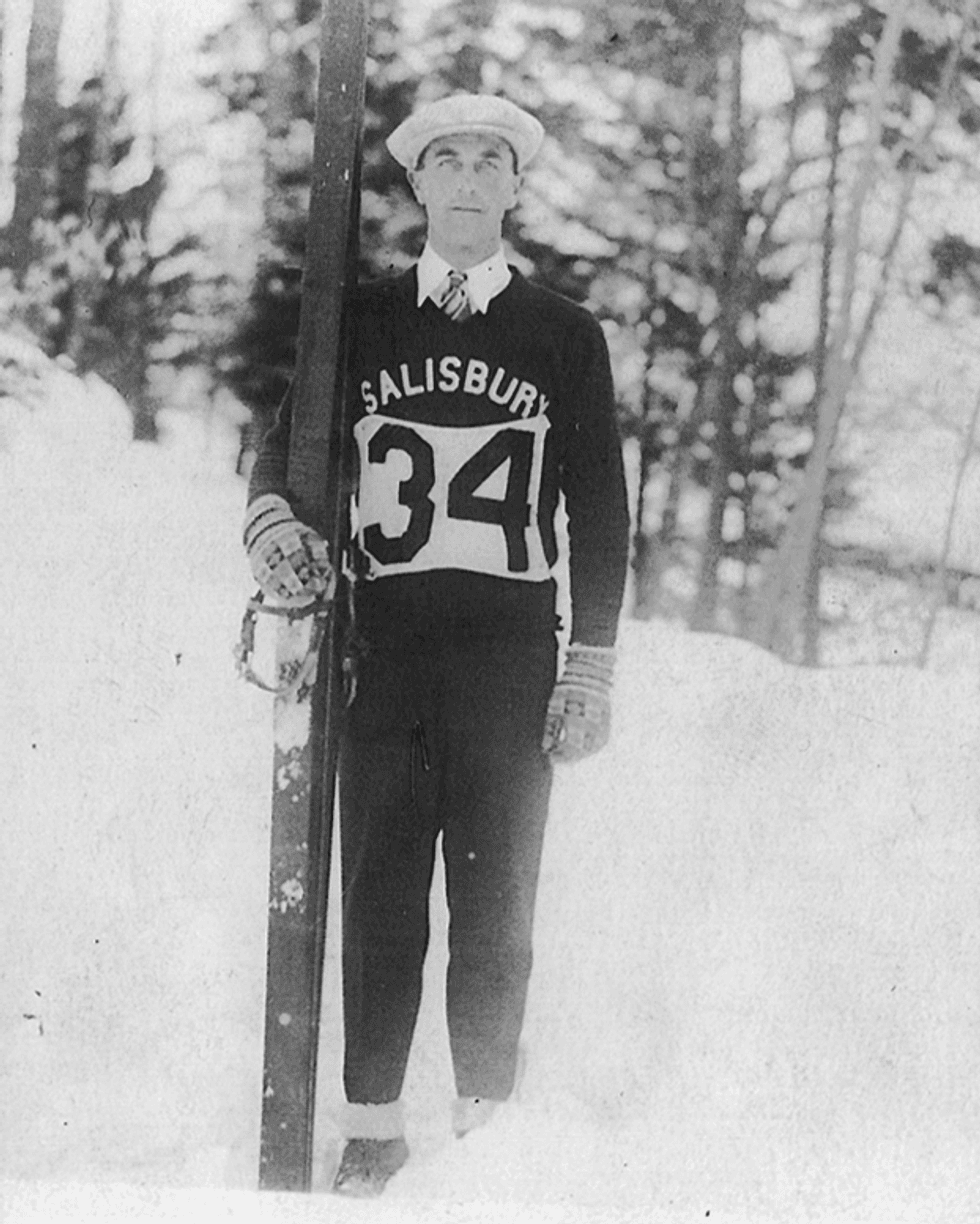
During World War II, young athletes who would have normally been jumping were enlisted in the service, causing a lull in the sport and deterioration of the jump itself. After the war, however, community members eagerly worked to rebuild the jump, and another Salisbury athlete emerged.
Roy Sherwood was first introduced to ski jumping when his father built him and his brother their own ski jump in their backyard. Sherwood quickly gained ground, earning himself the title of “hometown hero.” By 1954, Sherwood was offered a spot on the U.S. Olympic Team for the 1956 games in Cortina, Italy.
Sherwood’s path to the Olympics was far from easy. A year before the Games, he was diagnosed with polio, threatening his ability to compete. He recovered enough to travel to Italy, only to hit an icy patch during a practice run.
Sherwood rebounded and competed the next day, placing 36th out of 51 — the second-highest finish by an American — and was later inducted into the U.S. Ski & Snowboard Hall of Fame.
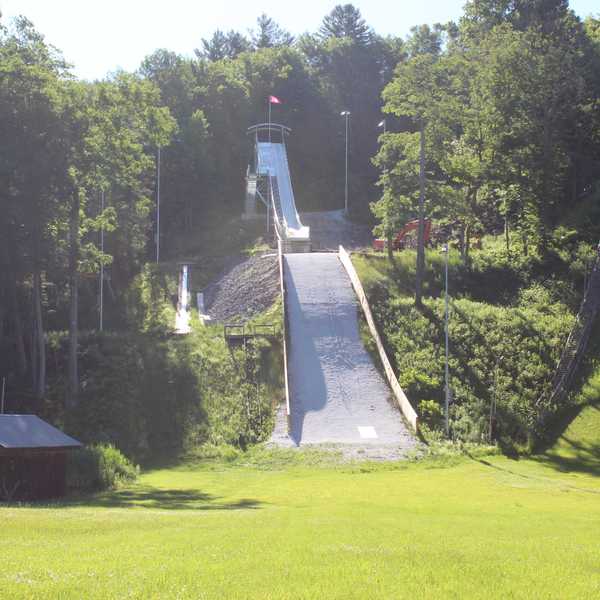
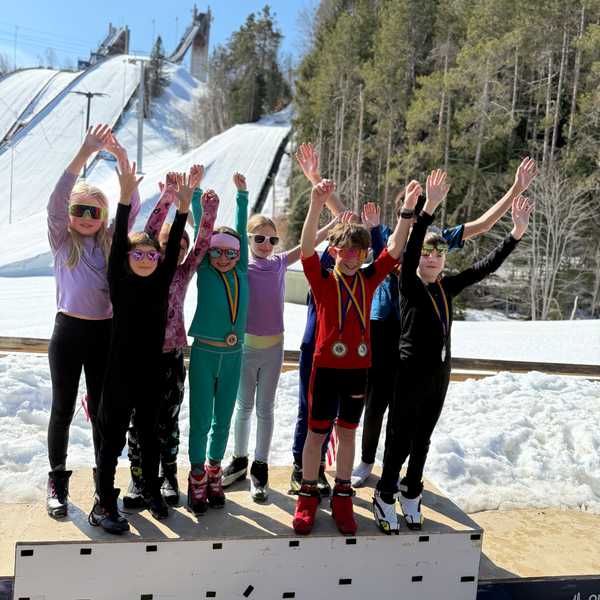
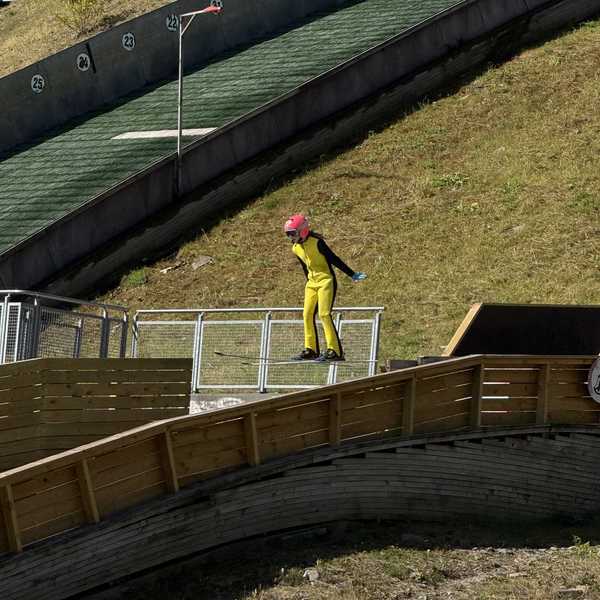
Today, four jumps line Satre Hill — K10, K20, K30, and K65. The 65-meter jump is used for competitions, and the smaller jumps are used to teach local youth during winter camps.
Islay Sheil, a Housatonic Valley Regional High School student and Lakeville resident, is the current SWSA athlete on the rise in ski jumping today. Her passion for the sport emerged during one of the SWSA winter camps, and last March earned gold in the Junior National Championships. The next Junior National Championships will be hosted in Salisbury in 2027.
While Salisbury celebrates the 100th anniversary of its own ski jump this year, the Olympic Games will be held in Milan and Cortina, Italy, the same place that Sherwood gained global recognition.
To honor the town’s remarkable history and tradition of ski jumping, Jumpfest will begin early with a Winter Warmer on Jan. 31 between 5:30 to 8 p.m. It will be at the home of Salisbury First Selectman Curtis Rand. Small plates and drinks will be served. Limited tickets are available for $50 and more details can be found at Jumpfest.org/100years/
On Feb. 1, a double feature screening of On the Hill and Downhill Racer will be held at The Moviehouse in Millerton, followed by a panel discussion on winter sports and SWSA’s role in Salisbury’s history. There will also be a raffle and SWSA merchandise for sale.
Tickets for the showing are $16 and details can be found at Jumpfest.org/100years/.
On Friday, Feb. 6, Jumpfest will host community night at Satre Hill. SWSA will offer free admission for the night. Gates open at 6 p.m. and “Target Jumping Under the Lights” will begin at 7 p.m. There will be fireworks sponsored by NBT Bank, bonfires, and food and drinks available for purchase. The Human Dogsled Race is set for 8:30 p.m. Teams of five can register at Jumpfest.org
On Saturday, Feb. 7, the Junior Competition on K20 jump will begin at 9 a.m. The Salisbury Invitational Ski Jumping Competition will practice from 11 a.m. to noon and compete at 1 p.m. Community members are invited to the Snow Ball at the Lakeville Town Grove at 8 p.m. Dancers will be accompanied by live music from the Steve Dunn Band. Entrance to the Ball is $20 with children 12 and under free of charge.
On Sunday, Feb 8, Satre Hill will hold the Eastern U.S. Ski Jumping Championships. Athletes will practice between 11 a.m. to noon and compete at 1 p.m.
When describing the community that surrounds the ski jumps, Willie Hallihan of SWSA explained that the length of time and number of people involved on an emotional level has made the sport “iconic to Salisbury.”
Hallihan recounted in the PBS documentary “The Jump” that the ski jumps are “like a family member to a lot of people”.
Debra A. Aleksinas
Cornwall highway department foreman James Vanicky, left, and David Dwyer from Seymour Sealing Service of Wallingford, check the viscosity of a layer of crack sealer during a 1.5-mile road resurfacing project on Dibble Hill Road last Friday.
After 38 years, you kind of know what’s under the roads. It’s like tree rings. You can track its history.
CORNWALL — Local road crews are tackling winter damage across the Northwest Corner, but with tight budgets, small staffs and rising costs, towns are feeling the strain as the spring repair season begins.
On a steep, narrow stretch of Dibble Hill Road, the smell of hot oil hung in the spring air as a crew worked methodically along the winding route, sealing over a winter’s worth of cracks and scars left behind by snowplows, ice and relentless freeze-thaw cycles.
Last week, working alongside private contractors, Cornwall highway department crews began resurfacing sections of the roughly 1.5-mile scenic road, applying a thick base layer of asphalt to damaged pavement before coating it with stone chips and compacting the surface — a process known as chip sealing.
Road foreman James Vanicky, who has spent more than 38 years on the job, coordinated the multi-step resurfacing process on Dibble Hill Road as crews and outside contractors worked along the hilly, winding terrain.
Vanicky said that while potholes have been relatively minimal this season, the problem has been extensive cracking on roads due to frost heaves.
“When the frost heaves settle down, salt water seeps under the pavement making it soft, and then you have traffic pounding on it, and it creates cracks,” Vanicky said.
The scale of the work is compounded by limited staffing with 62 miles of roads and only three employees.
Budget pressures are also mounting as towns move from winter operations into repair season.
“This year our numbers came in at about $75,000 for winter,” said Vanicky.“For the amount of miles that we have, that number was actually comparable to past years. But we’re kind of running on fumes right now until July 1, when the new fiscal year begins,” he said.
Even so, careful planning helped stretch limited resources.
Experience, he added, plays a critical role in deciding where to focus limited funds. “After 38 years, you kind of know what’s under the roads,” he said. “It’s like tree rings. You can track its history.”
In neighboring Canaan, road foreman Tim Downs described similar conditions and budget challenges.
“The dirt roads took quite a hit this winter,” Downs said, as did his equipment. “We had a lot of truck problems and spent a lot on repairs. At one point, we were down two trucks during a heavy storm.”
In North Canaan, which has 33 miles of town roads, road officials report widespread cracking caused by frost and freeze-thaw cycles.
“This winter was pretty tough,” said Mike Simmons of the North Canaan Highway Department. “We had a lot more freezing underneath the roads, and some of them cracked quite a bit.”
Rising material costs are compounding the challenge. Salt usage alone pushed the town beyond its planned budget, Simmons said.
“Asphalt went up $5 a ton,” he added.
Crews have begun patching roads as conditions allow, but larger repairs loom ahead, including work on Sand Road and Tobey Hill Road.
“The roads took a beating. Some of the paint is coming off the roads,” said Simmons, who noted that line repainting is sorely needed.
State roads, too, have seen widespread pavement damage.
According to the Connecticut Department of Transportation (DOT), as of late March, the state has seen a sharp increase in pothole reports, with 101 reported to the DOT in the first 16 days of March, surpassing the total from the entire month of March 2025.
As towns move deeper into the spring repair season, officials say the full extent of winter damage, and its financial toll, will continue to unfold.
“We have a lot of repairs to make,” said Downs.
And, as repair work ramps up, officials warn that spring is also one of the most dangerous times of year for road crews.
Gov. Ned Lamont recently urged drivers to slow down and stay alert.
“A moment of distraction can have serious consequences,” he said.
Ruth Epstein
Akhil Reed Amar, the speaker at Friday’s Salisbury Forum, handsout complimentary copies of his book ‘Born Equal, Remaking America’s Constitution, 1840-1920’ to audience members.
SALISBURY – Akhil Reed Amar urged a crowd of about 400 to rethink long-held assumptions about American history during a Salisbury Forum talk Friday, April 24, at The Hotchkiss School.
Amar, a professor of constitutional law and political science at Yale University, spoke on “America at 250,” centering his remarks on the idea that all men are created equal.
“What we all have in common is history,” he told the audience, which marked a record turnout for the Forum. “What we have in common is the Constitution and the Declaration of Independence.”
Amar lamented that children, including his own, are not reading history books. He quizzed the audience on when the Declaration of Independence was signed, correcting those who answered July 4, 1776. Independence was declared on July 2, the language of the document was agreed upon on July 4, and it was signed in August of that year.
He then asked the audience what they felt was the most important sentence in the Declaration. Numerous answers were called out, but Jonathan Costa, director of EdAdvance, identified it as “...that these United Colonies are, and of right ought to be free and independent states.”
“That’s the key – to be sovereign,” Amar said.
After declaring independence, members of the Second Continental Congress “pledged their lives and sacred honor to the cause,” said Amar, and if they lost, they were signing their death warrants.
From the British perspective, the colonists were committing treason.
“All wars are supposed to have a purpose,” Amar said, which was met with snickers from crowd members reflecting on the present-day wars.
“Just wars have just purposes,” Amar clarified. “Reducing the ground to rubble is not winning a war.”
The professor also challenged assumptions about the Declaration’s authors. Jefferson, Franklin and Adams were not the only ones responsible for writing the Declaration of Independence, he said.
“People lied,” he added. “Thomas Jefferson lied more than most politicians – to friends, to Washington himself.”
Amar moved ahead to 1863 and Abraham Lincoln’s Gettysburg Address, describing the 16th president as “an originalist” who rooted his argument in the Declaration of Independence and the idea that “all men are created equal.”
Touching on the subject of slavery, Amar said its abolition was first conceived by the Quakers in Philadelphia in 1775.
“Don’t believe it was the British who first wanted to end slavery; it was the Americans,” he said. “We need to know what Americans did in its origins.”
Birthright citizenship is of special interest to Amar, having worked on several court cases on the issue. He praised U.S. Supreme Court Justice Hugo Black – who served on the court from 1937 to 1971 and presided over several landmark cases involving equality – calling him an originalist. Amar also described himself as an originalist and held up a pocket copy of the Constitution that he always carries with him.
Amar closed by pointing to the constitutional amendments that abolished slavery, established birthright citizenship and expanded voting rights to women and Black Americans, reinforcing his central theme that equality is rooted in shared humanity.
Amar is the author of several books. His second in a series of three is titled “Born Equal: Remaking America’s Constitution, 1840-1920.” Complimentary copies were given out to the audience.
Patrick L. Sullivan
Lev Sadeh (left) and Eli Sher read Shel Silverstein’s ‘It’s Dark in Here,’ at the Hunt Library Friday, April 24.
FALLS VILLAGE — Nearly a dozen students from Lee H. Kellogg School crossed the lawn to the David M. Hunt Library on Friday, April 25, to celebrate National Poetry Month with readings of published and original works. Adults joined students for the all-ages event.
Library director Meg Sher welcomed attendees with a reading of Wendell Berry’s “Peace of Wild Things.”
Among the student presenters, Lev Sadeh and Eli Sher delivered a crowd-favorite and spirited performance of Lewis Carroll’s “Jabberwocky,” a nonsense poem from “Through the Looking-Glass.”
Eli followed with Shel Silverstein’s “Sick.”
A group of students then shared their own short poems, touching on subjects ranging from school, a red squirrel, to imagining life as a wolf.
Kent Allyn, a 1961 graduate of Lee H. Kellogg, delivered a poem he wrote about a decade after leaving the school. The untitled poem was about the sights and sounds of nature. In it, he asked readers if they had experienced moments like“water of a splashing brook laughing.”
The poem concluded:
“Listen and you will hear
Touch and you will feel
Look and you will see.”
Community member Mark Gozonsky read his own poem, “I’m Sorry I Killed You,” about an unsuccessful attempt to grow squash.
John Holland, also a member of the community, recited William Carlos Williams’ “The Red Wheelbarrow” and Ezra Pound’s “In a Station of the Metro.”
Near the end of the program, Lev and Eli returned with a trick up their sleeves. They returned to the stage, barely suppressing grins, and read another Silverstein poem, “It’s Dark in Here.”
The twist was the boys read it with each taking every other word.
Anna Pattison, the children’s librarian, wrapped up with her own poem, which she said came to her in the shower.
It was a catalog of interesting things, ending with “all can be found at the library.”

Want more of our stories on Google? Click here to make us a Preferred Source.
Christine Bates
Christine Bates
NORTH CANAAN – The 12-month trailing median price for a single-family home, excluding condos, in North Canaan was $340,000 for the period ending March 31, 2026.
This figure marks a 13% increase from the $300,000 median recorded for the 12 months ending March 31, 2025, and a 38% increase from $245,500 for the comparable period ending March 31, 2024.
Single-family home sales in North Canaan, measured on a 12-month rolling basis, remained within the historic range of 14 to 30 homes sold annually. A total of 25 single-family homes were sold in the 12 months ending March 31, 2026, compared with 14 sales in the period ending March 31, 2025, and 17 sales for the 12 months ending March 31, 2024.
Inventory remained low in North Canaan as of April 25, 2026. Only three single-family homes were listed for sale, none below the median price of $340,000, along with two parcels of vacant land. Rental availability was similarly tight, with only two homes listed for rent.
January Transfers
33 Granite Avenue – 5 bedroom/2 bath home on 0.46 acres sold by Michael Gershon to Tule River Homebuyer Earned Equity Agency for $475,000
31 Railroad Street – Apartment building on 0.4 acres sold by Connor Rose Realty Canaan LLC to 1 A&M Realty LLC for $1,850,000
February Transfers
246 Ashley Falls Road – 4 bedroom/2 bath home built in 1800 sold by Charles Bell to Sabrina Zheng for $280,000
March Transfers
East Canaan Road – 97 acres of residential agricultural land sold by William J Linkovich to William F Linkovich for $50,000
70 Church Street, D6 – 2 bedroom/1.5 bath condo sold by Daniel Hare to Ryan Yarde for $175,000
182 Church Street – 3 bedroom/1.5 bath home sold by Howard Moore to Ryan Long for $300,000
70 Church Street, D1 – 2 bedroom/1.5 bath condo sold by Estate of Debra Ann Whitbeck to 32 Railroad LLC for $95,000
75 Main Street – Former train station sold by Connecticut Railroad Historical Association to Canaan Station LLC for $800,000
34 Old Turnpike North – 3 bedroom/3 bath home built in 2024 on 6.1 acres sold by Andrew Pelletier to Steven Milanowycz for $1,050,000
* Town of North Canaan real estate transfers recorded as sold between January 1, 2026, and March 31, 2026, provided by North Canaan Town Clerk. Transfers without consideration are not included. Current market listings from Smart MLS and market statistics from Infosparks. Note that recorded transfers frequently lag sales by a number of days. Compiled by Christine Bates, Real Estate Salesperson with William Pitt Sotheby’s International Realty, Licensed in CT and NY.
Lakeville Journal
The following information was provided by the Connecticut State Police at Troop B. All suspects are considered innocent until proven guilty in a court of law.
Stop sign accident
Just before 7 a.m. on April 20, Douglas Mitchell, 64, of Winsted was driving west on Route 44 in North Canaan passing the intersection with Deely Road when another vehicle, a BMW X3 driven by Kelley Sue Babbin, 58, of North Canaan collided with his Ford F150 on the rear driver’s side. There were no injuries, but Mitchell’s vehicle was disabled in the incident. Babbin was found at fault and was issued an infraction for failure to obey a stop sign.
Parking lot pillar hit and run
At an unknown date and time, a vehicle struck a concrete pillar in the Cornwall Post Office parking lot. Anyone with information regarding the incident is asked to contact Troop B at 860-626-1821.
Single vehicle accident on Route 44
At about 1 a.m. on April 22, Josephine Trinchillo, 24, of New Fairfield got into a vehicular accident on Route 44 in Salisbury near the intersection with Twin Lakes Road. The driver stated she had attempted to turn around in the roadway and in doing so struck an unknown object, however the trooper on scene determined that she had lost control of the vehicle while negotiating a turn and collided with a tree. The Volkswagen Jetta she was driving was disabled in the incident, and she was transported to Sharon Hospital for possible injuries. Trinchillo was issued a written infraction for failure to maintain lane.
The Lakeville Journal will publish the outcome of police charges. Send mail to P.O. Box 1688, Lakeville, CT 06039, Attn: Police Blotter, or email editor@lakevillejournal.com.
Ruth Epstein
From left in rear: Averi Spencer, Abigail Choi, Maya Gennings, Ashton Fodor and Logan Miles; Front: Nami Kahn, Piper Polley and Jacob Zylstra
Several Kent Center School students received honorable mentions in the Housatonic Resources Recovery Authority’s 19th annual billboard design contest.
This year’s theme was “Don’t Trash Textiles,” and students were tasked with creating billboard ads to teach residents that textiles don’t belong in the trash. Local students created art that educated the public that clothing can be reused, repurposed, repaired or recycled separately at a designated collection site.
Third grader Jacob Zylstra, seventh grader Abigail Choi and eighth grader Averi Spencer received honorable mention awards for their designs.
The school also held its own contest, and a group of first-place winners received ribbons and gift certificates to 45 on Main.

Want more of our stories on Google? Click here to make us a Preferred Source.

Want more of our stories on Google? Click here to make us a Preferred Source.