


Thank you!
Your support is sustaining the future of local news in our communities.

Segregation in This Country Is Here To Stay


Race relations are fraught with irony. In 1954, the Supreme Court ruled that the Constitution prohibits governments from requiring schools to be segregated.

In 2007, it may well prohibit governments from requiring that those same schools be integrated. Sounds pretty even handed, no? Well ... no.

The practical outcome is plain. Here in Connecticut, where school districts follow town lines and are consequently small, concerned white folks in a mixed town can move across the border to escape blacks. But if the court rules for the plaintiffs, even that move may no longer be necessary. Busing for integration would be outlawed, so towns could segregate themselves more than they do today, by use of zoning and differential housing prices. Neighborhood schools would be the rule.

In states with bigger (countywide) school districts, the impact would be greater. Major busing often goes on in those places, so that today’s fleeing whites often have to move long distances to escape black faces. No more. Most could then stay in their old neighborhoods and let schools resegregate themselves as God intended.

Big loser in such a realignment, would be private schools. A hefty percentage of their enrollment, especially in the South, derives from folks who want segregated education but don’t want to bother moving. Thus with towns no longer able to bus for integration, the public schools would gradually resegregate themselves to an acceptable level, and parents could save a bundle by not having to move. That’s the bad news for private schools.


u u u


It’s all bad news for the blacks. The great crusade for integration culminated in 1964 with the Civil Rights Act. The aftermath of that national groundswell for equality carried on for several decades. It established itself in statute, regulation, ordinance, corporate practice and affirmative action. Enthusiasm has waned. Other segregating social forces have gained in prominence.

Dominant among these is money. White median family income is $50,000 per year; black median income, $30,000. The segregating implications of that disparity are huge: home ownership, neighborhood, health care, school quality, education level, playmates, savings and net worth. These impinge on the ability of blacks, and to a lesser degree Latinos, to compete in America’s white-designed economic race. For example, if the home mortgage system is stacked against you, it is very hard to build a family base of wealth.

To make matters worse, historically the working class mostly rose to the middle class through manufacturing jobs, now largely lost overseas. Workers in the ‘50s and ‘60s used that income to climb to the owning class with FHA and VA mortgages, largely denied to blacks. The lingering effects of such prejudice, much like the effects of slavery, still today make it very hard to pull yourself up by your bootstraps.

Impeding self-help has been the steady erosion of Pell Grants, originally designed to bolster the poor through college. Their decline matches a steady rise in tuition.Nor is racial equality enhanced by uneven law enforcement, especially for drugs. Suspicion, enforcement and sentencing are all heavily weighted against blacks.

The Supreme Court is being asked to further consolidate the racial separation our forefathers visited upon us 10 generations ago. The Bible may have to be rewritten to increase its estimate of the length of our punishment. Ten generations may be a drop in the bucket.


Bill Collins is a former state representative and mayor of Norwalk.


town lines and are consequently small, concerned white folks in a mixed town can simply move across the border to escape blacks. But if the court rules for the plaintiffs, even that little move may no longer be necessary. Busing for integration would be outlawed, so towns could internally segregate themselves even more than they do today, simply by use of zoning and differential housing prices. Neighborhood schools would be the rule.

In states with bigger (countywide) school districts, the impact would be greater. Major busing often goes on in those places, so that today’s fleeing whites often have to move long distances to escape black faces. No more. Most could then stay right in their old neighborhoods and let the schools resegregate themselves as God intended.

One big loser in such a realignment, however, would be private schools. A hefty percentage of their enrollment now, especially in the South, derives from folks who want segregated education but don’t want to bother moving. Thus with towns no longer able to bus for integration, the public schools would gradually resegregate themselves to an acceptable level, and parents could save a bundle by not having to move. That’s the bad news for private schools.


u u u


But it’s all bad news for the blacks. The great crusade for integration culminated in 1964 with the Civil Rights Act. The aftermath of that national groundswell for equality carried on for several decades. It established itself in statute, regulation, ordinance, corporate practice and affirmative action. But that enthusiasm for integration has waned, and other segregating social forces have gained in prominence.

Dominant among these is money. White median family income is $50,000 per year; black median income, $30,000. The segregating implications of that disparity are huge: home ownership, neighborhood, health care, school quality, education level, playmates, savings and net worth. All these impinge on the ability of blacks, and to a lesser degree Latinos, to compete in America’s white-designed economic race. For example, if the home mortgage system is stacked against you, it is very hard to build a family base of wealth.

To make matters worse, historically the working class mostly rose to the middle class through manufacturing jobs, now largely lost overseas. Workers in the ‘50s and ‘60s used that steady income to climb to the owning class with FHA and VA mortgages, then largely denied to blacks. The lingering effects of such prejudice, much like the lingering effects of slavery itself, still today make it very hard to pull yourself up by your bootstraps.

Also, impeding self-help has been the steady erosion of Pell Grants, originally designed to bolster the poor through college. Their decline matches a devastating steady rise in tuition.

Nor is racial equality enhanced by uneven law enforcement, especially for drugs. Suspicion, enforcement and sentencing are all heavily weighted against blacks. Unless they have a great jump shot.

So now, the Supreme Court is being asked to further consolidate the racial separation that our forefathers visited upon us 10 generations ago. As yet, no end is in sight. Thus, it seems that the Bible may have to be rewritten to increase its estimate of the length of our punishment. Ten generations may just be a drop in the bucket.


Columnist William A. Collins is a former state representative and a former mayor of Norwalk, Conn.

Latest News

Fallen tree downs power lines, blocks Route 112

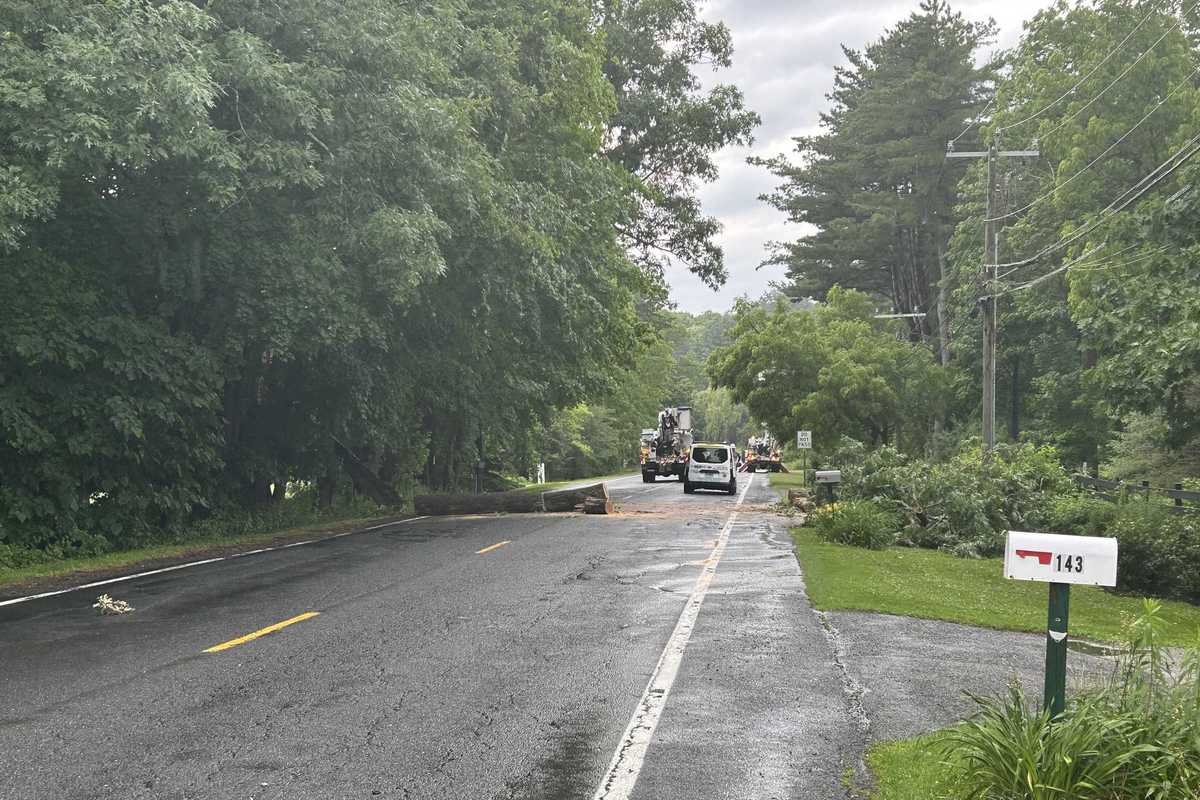
Eversource crews work to repair damaged power lines after a tree fell near onto Route 112 just north of the Interlaken Inn on Monday, June 22.

Photo by Nathan Miller

LAKEVILLE — A tree fell on Route 112 Monday, June 22, downing power lines and blocking traffic north of Route 41 near the Hotchkiss Four Corners.

Eversource crews on scene at 4:45 p.m. said power lines were being repaired and utility service had been restored to customers in the area.

Keep ReadingShow less

Francis Lynehan

Francis Lynehan

DOVER PLAINS — Francis “Butch” Lynehan, 75, a twenty-year resident of Dover Plains, New York, formerly of Sharon, passed away unexpectedly on Thursday, May 7, 2026 at Vassar Bros. Medical Center in Poughkeepsie, New York.

Born Aug. 29, 1950, in Sharon, he was the son of the late William W. and Nellie (Kluun) Lynehan.

Keep ReadingShow less

Richard McGriff

Richard McGriff

TACONIC — Richard McGriff died unexpectedly on May 16, 2026. This is a collection of loving reminiscences.

With a smile like that and a laugh like that and a soul like that, how could you not love him? Macey Levin and Gloria Miller

Keep ReadingShow less
google preferred source

Want more of our stories on Google? Click here to make us a Preferred Source.
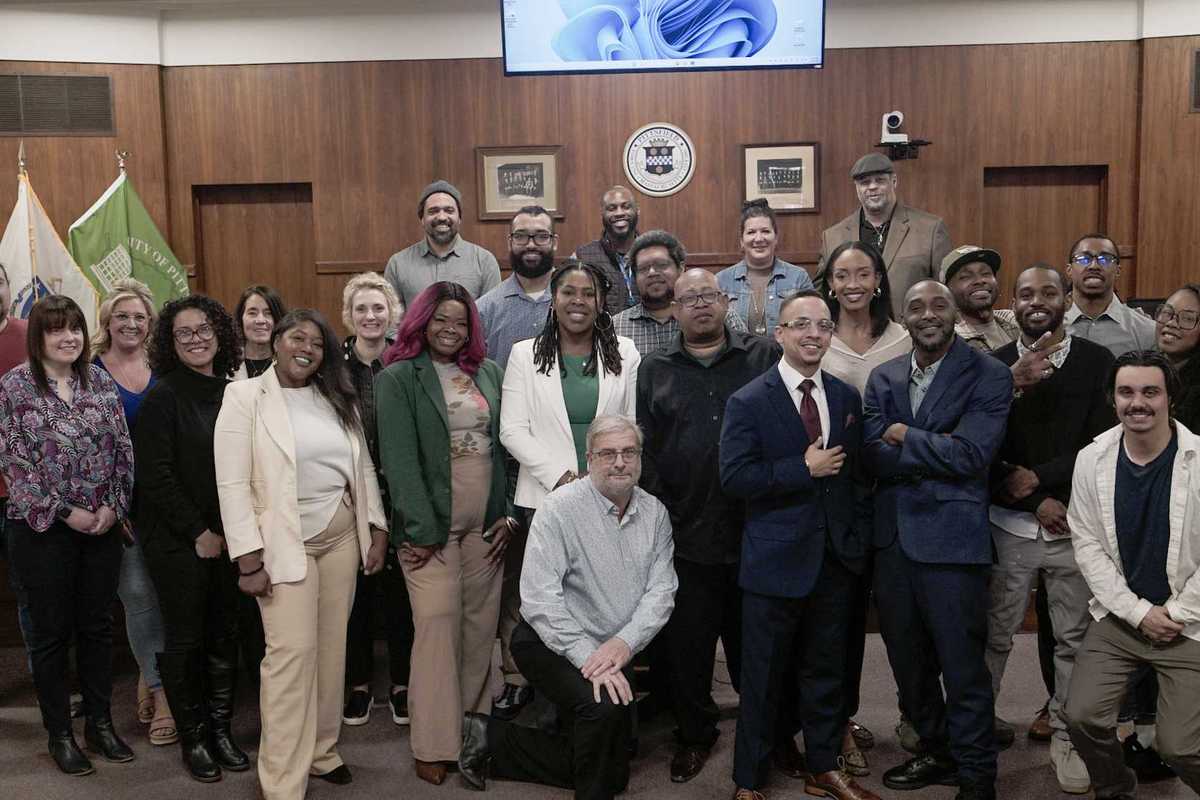
Juneteenth graduation celebrates Berkshire’s next generation of leaders

Cohort 2026 members Abigail Horace, Adam Liccardi, Adrian Lynch, Cameo Brown, Chauncey Dozier, Claudette Grant, Erline Saintilet, Harmony Edwards, Kamayue Gomes, Mackenzie Colvin, Otis West, Shadre Domingo, TJ West and Tyeesha Keele-Kedroe and Blackshires’ leadership team John Lewis, Patrick Danahey, Dubois Thomas and Julie Haagenson gather at the Blackshires City Hall Fishbowl alongside Mayor Peter Marchetti and city officials Michael Obasohan, Brandon Gill, Katherine VanBramer, Heather Brazeau, Justine Dodds and Jesse Tobin McCauley.

Provided

When designer Abigail Horace joined the Blackshires Leadership Accelerator, she was looking for support for her business, Casa Marcelo, which was founded in Salisbury in 2019. Through the Accelerator, she created the Black Berkshires Social Club, which creates culturally grounded social spaces for Black and BIPOC residents in the region. Throughout her experience, Horace found a community of peers invested in one another’s success.

“Finding Blackshires has been transformative,” Horace said. “Being a BIPOC founder in this region can feel isolating, and this community has changed that. They see my work, champion my business and have opened doors I couldn’t have opened alone.”

Keep ReadingShow less
Forged by curiosity: Art, craftsmanship and big fun with Izzy Fitch

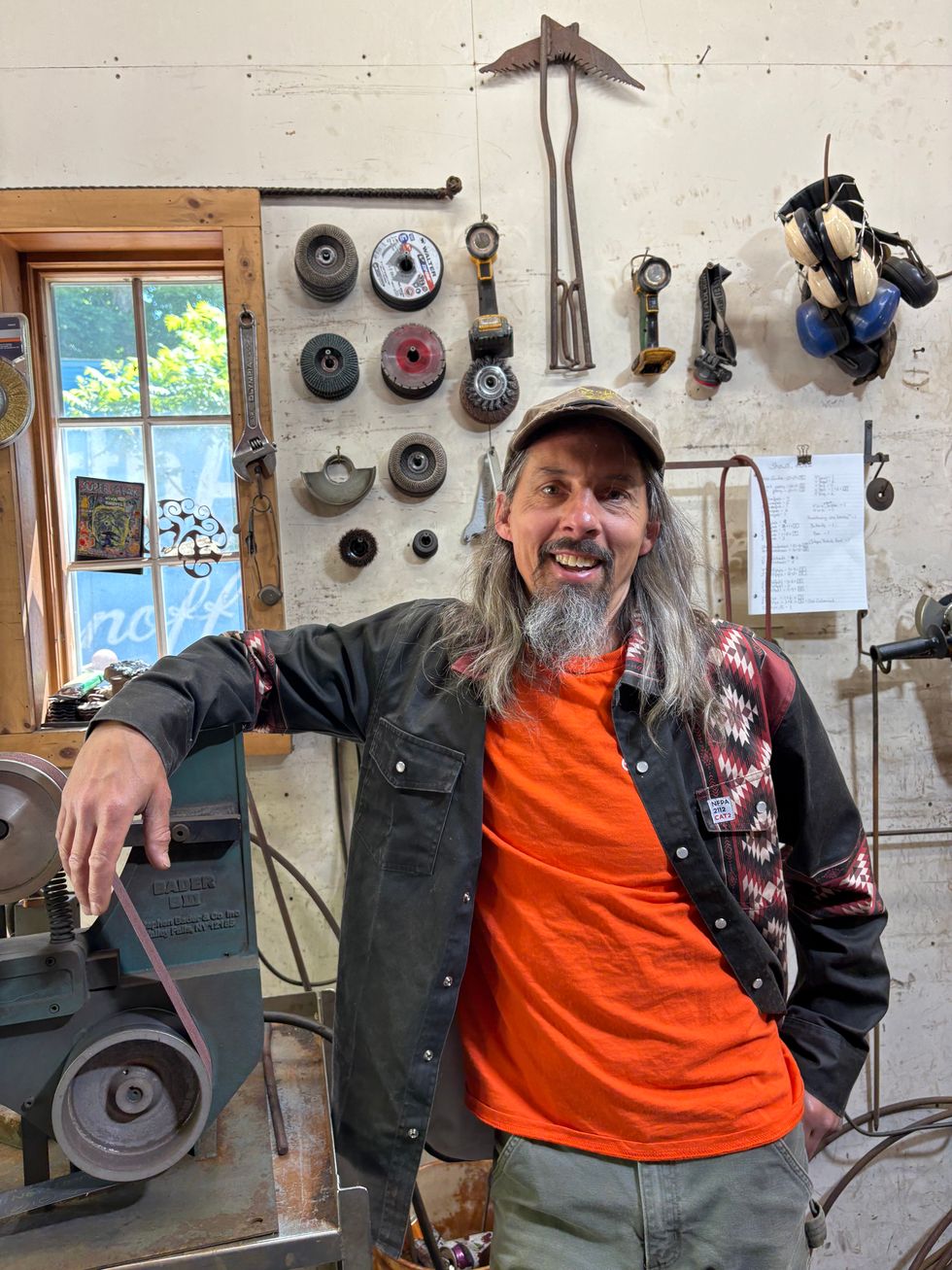
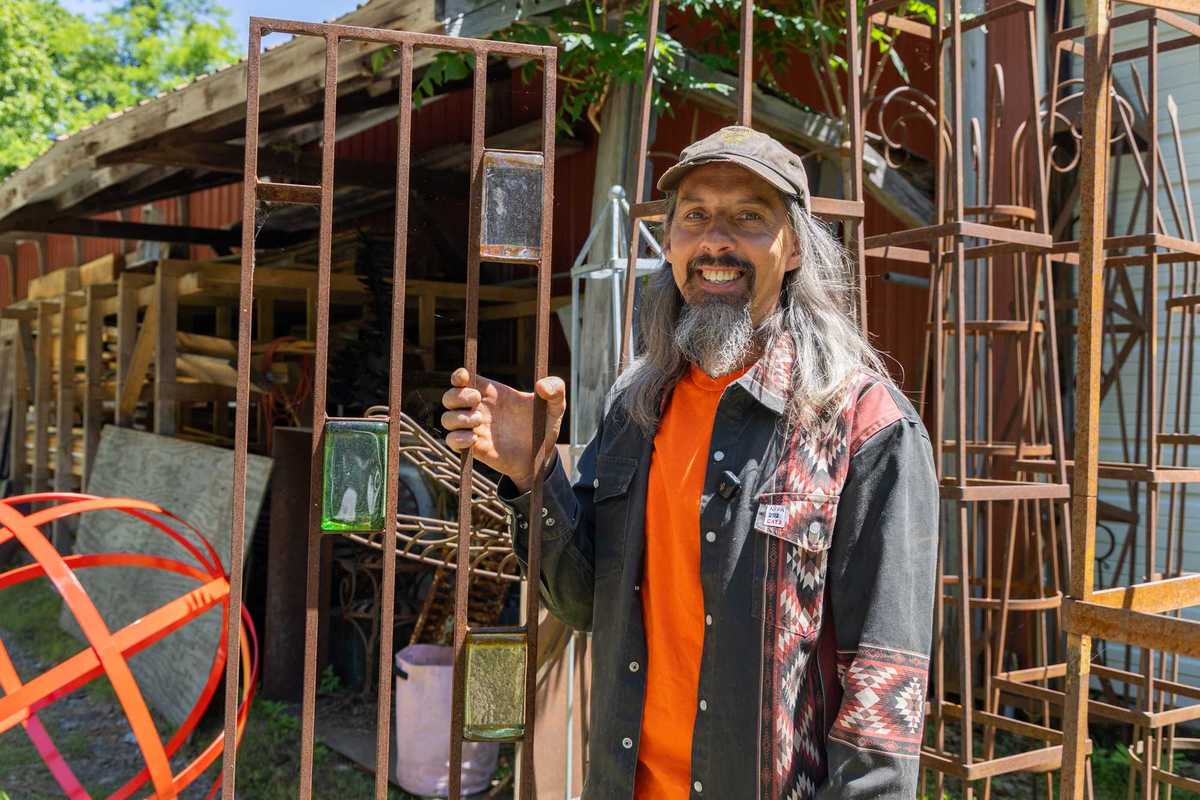
Izzy Fitch at Battle Hill Forge in Wassaic.

Madi Long
I’m not really inventing anything new. I just tweak it a little bit.— Izzy Fitch

A steel praying mantis stands among garden accents at Battle Hill Forge in Wassaic, its folded forelegs ready for prayer and mischief in equal measure.

“She’s very nice,” said blacksmith, sculptor and Battle Hill Forge owner Izzy Fitch, patting the giant insect affectionately. Then he added, “Just don’t go out to dinner with her.”

Keep ReadingShow less
Unexpected subjects, familiar beauty in new Kent exhibits
Millerton-based artist Alexis England with her flamingo and mandrill portraits at Peggy Mercury in Kent.
D.H. Callahan

Kent Barns was alive with art on Saturday, June 13, as three new shows opened at Peggy Mercury and Kenise Barnes Fine Art, featuring a variety of fascinating paintings and drawings from four local artists.

Peggy Mercury, which in just two years has earned a reputation for curating remarkable collections of fine beauty products and accessories, continues to find exciting art to complement its offerings. The new show, “Portraits,” features four pairs of paintings by Millerton-based artist Alexis England. The “portraits” she paints, however, feature some pretty unexpected sitters.

Keep ReadingShow less
google preferred source

Want more of our stories on Google? Click here to make us a Preferred Source.
google preferred source

Want more of our stories on Google? Click here to make us a Preferred Source.