Sharon Playhouse hosts ‘Play Soirée: Noises Off’

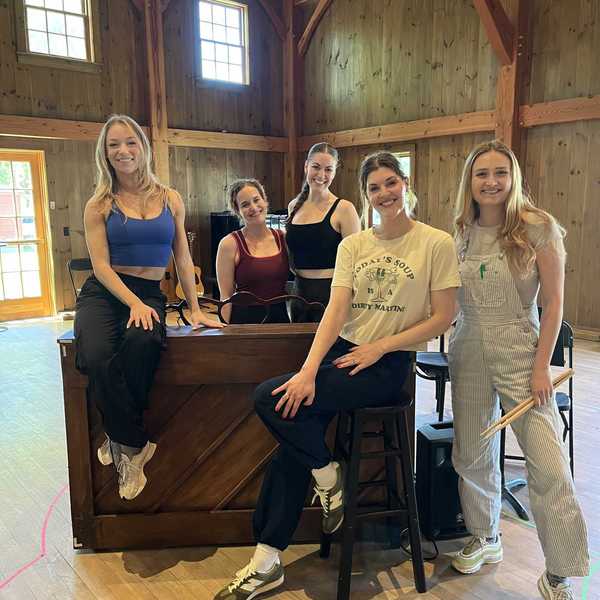
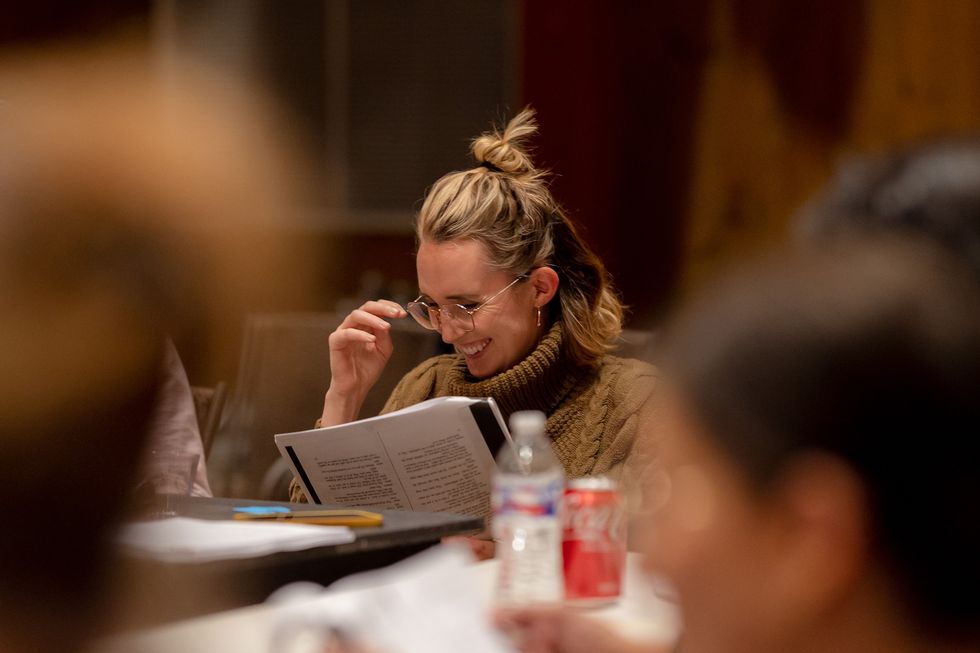
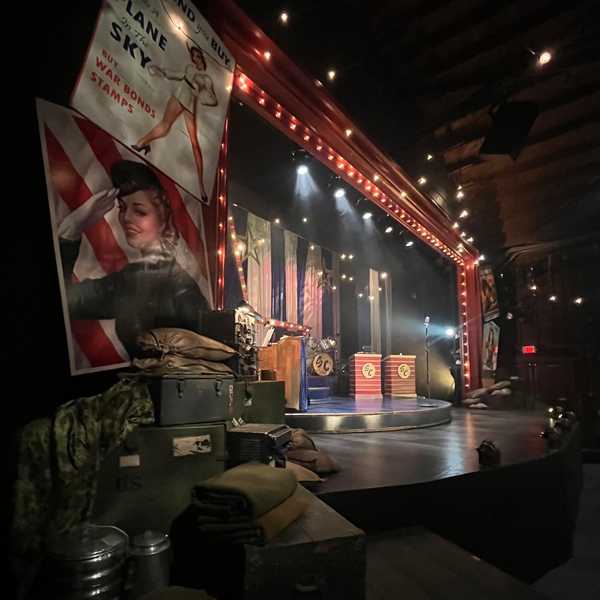
A table read at The Sharon Playhouse.
Photo by Aly Morrissey

A table read at The Sharon Playhouse.
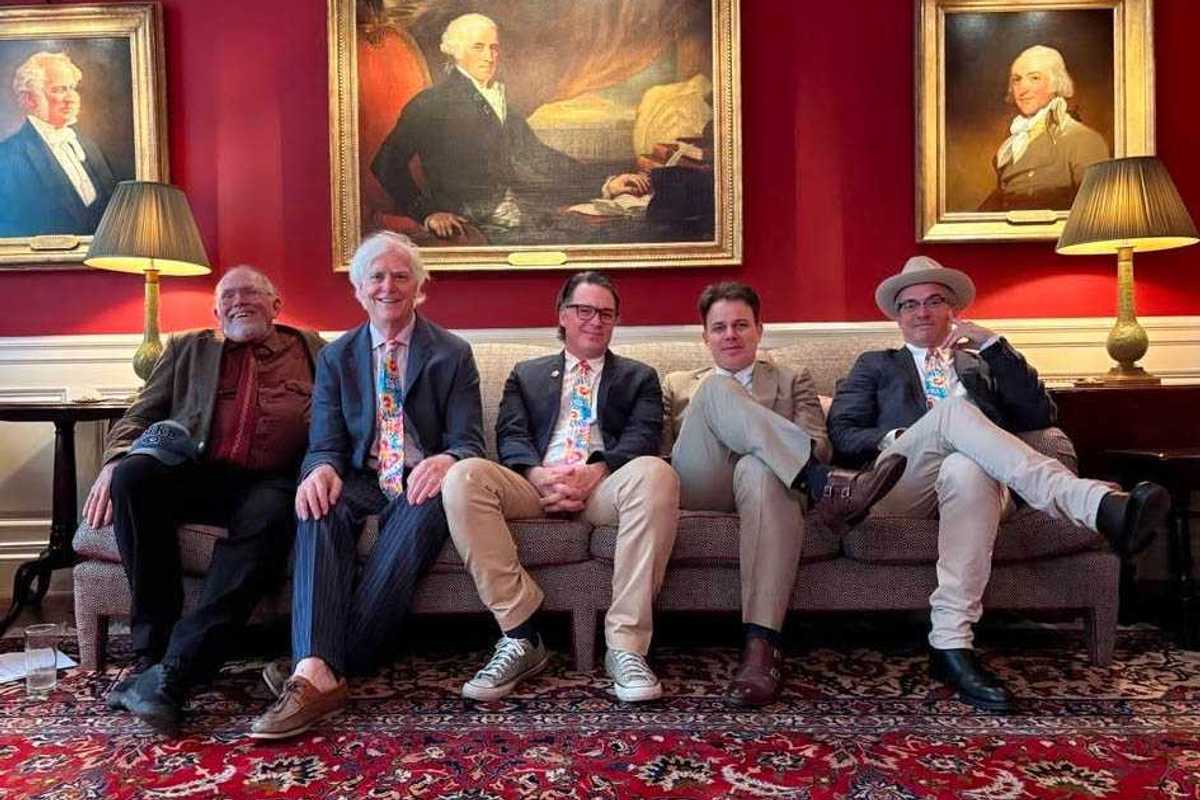
The Sharon Playhouse is throwing open its doors (and slamming them theatrically) for “Play Soirée: Noises Off,” a one-night-only romp through Michael Frayn’s hilariously catastrophic backstage comedy. On Friday, April 11 at 6:30 p.m., two local luminaries, Michael Kevin Baldwin and Andrus Nichols, will lead what promises to be an exquisitely unhinged reader’s theater experience.
If you’ve never experienced Frayn’s madcap maze of missed cues and sardines, this is your moment. “Noises Off” is the crown jewel of meta-farce: a play about a play going spectacularly, unrelentingly wrong. Doors open. Doors close. Lines are forgotten, feelings are bruised, and everything teeters on the edge of chaos. It’s a kind of theatrical Jenga, and every block teeters on the edge of collapse.
But for this production, the plot is almost beside the point. This evening is about the joy of being in a room, scripts in hand, drinks in glass. You don’t have to be an actor (though all levels are welcome) as roles are handed out on the spot. It’s democratic, it’s chaotic, it’s a little bit tipsy. In short, it’s theater as it ought to be — alive, messy, and fueled by community…and cabernet.
$20 gets you in, gets you a drink, and maybe even gets you a starring moment in one of the greatest backstage implosions ever penned. It’s part rehearsal, part party, and entirely unmissable.
Register now at sharonplayhouse.org/classes to secure your spot.
Roy Seelye, a project manager with Cardinal Engineering, shows diagrams of sidewalks slated for rehabilitation in Sharon during a community informational meeting Thursday, Jan. 15.
SHARON — Concrete or asphalt? That was the focus of much of the discussion at the community informational meeting Thursday, Jan. 15, about village sidewalks. Concrete appeared to be the material of choice.
Representatives from Cardinal Engineering appeared before an audience of approximately 40 residents to explain plans to rehabilitate sidewalks stretching primarily from the shopping center to Route 343 along Route 41, a distance of about two miles.
Roy Seelye, the senior project manager for the proposal, gave a detailed presentation, noting the town received $1.1 million from the state’s Transportation Rural Improvement Program (TRIP) for the sidewalk upgrade. The town would be responsible for $600,000 to cover the total cost.
The proposed upgrades call for 4-foot-wide sidewalks to replace existing sections that are in poor condition, with widespread cracking, breakage and uneven surfaces that in some areas sit below the roadway.
“Our aim is to maintain the historic character of the area,” Seelye said. “We’re rehabbing what we have. We’re not extending what we have.”
He outlined the method, which would involve excavating one foot down and filling in with bituminous (asphalt) material and crushed stone to prevent further root damage from surrounding trees that are causing the sidewalks to break. “We don’t want to remove any trees because that would have a negative impact.” He said the contractor has to hire an arborist as part of the program.
But Elizabeth Gall, who lives on Main Street, said she was concerned with the honey locust trees whose roots have cracked the sidewalks and asked why the trees aren’t going to be removed since there is a problem. “I have been injured twice on the sidewalk and I could sue. I sued last time,” she said.
First Selectman Casey Flanagan noted the sidewalks are in the state right-of-way, so if the trees die, it becomes the state’s problem. “We have to make sure the trees are OK.”
Seelye said the cost of removing a tree is $7,000.
The discussion then turned to the proposed materials, with several attendees questioning why bituminous asphalt was being recommended over concrete. Seelye said concrete would cost roughly twice as much and require a longer installation period. Using asphalt, he said, the project is expected to take approximately four months to complete.
Several echoed Meg Szalewicz’s sentiment when she said, “I’m very disappointed we’re not doing concrete.” Some suggested using concrete in the center of the Green and asphalt on the outskirts. Selectman Lynn Kearcher asked about the difference in maintenance. Seelye said it would be about the same for both.
Flanagan said the meeting was held so the selectmen could hear public comments, which they will now take into consideration before making any decisions.
The other project discussed was the replacement of the bridge on West Cornwall Road over Pine Swamp Brook. Estimated to be built around 1900, it was last inspected in 1991, said senior project manager Gary Giroux.
Because of its rating, the bridge is eligible to be a Department of Transportation state/local bridge project with the state paying half the cost of the replacement. The new span will be 7 feet wide and 50 feet long and consist of a 14-foot by 8-foot precast concrete rigid frame with a modern metal beam rail.
“It’s a tough site to construct,” said Giroux, “so we’re going to make sure it’s done quickly with minimal disruption.” Therefore, the road will be closed for a period of three to four months. He showed a drawing outlining the two routes of detours.
Indian Mountain School is located in Lakeville.
LAKEVILLE — Indian Mountain School cancelled classes on Tuesday, Jan. 20 due to an uptick in seasonal illness, according to a Monday evening announcement by Kyle Halloran, Assistant Head of School for Student Life.
According to the email, the decision was made to give students and faculty alike time to recover and rest. Halloran noted that the spike appears to be on trend with general virus rates in the state.
During a follow up call with The Lakeville Journal on Tuesday morning, Halloran said that the infections appeared to stem from a number of seasonal illnesses rather than one specific culprit, such as the flu.
He confirmed that classes are planned to resume Wednesday morning, Jan. 21.
The Region One boys basketball team huddles up during a break in the game against Northwestern Thursday, Jan. 15.
Middle school basketball players battled on the courts of Northwestern Regional High School in Winsted Thursday, Jan. 15. Region One’s boys and girls teams took on Region Seven in side-by-side games. Region One’s team includes players from Cornwall, Falls Village, North Canaan, Salisbury and Sharon. Region Seven includes Barkhamsted, Colebrook, New Hartford and Norfolk.
The boys game was won by Region One 62-41. The girls game was won by Northwestern 27-14.
Athletes in both games played with intensity and passion.

Canon Petero Sabune addresses the congregation at St. John’s Episcopal Church Sunday, Jan. 18.
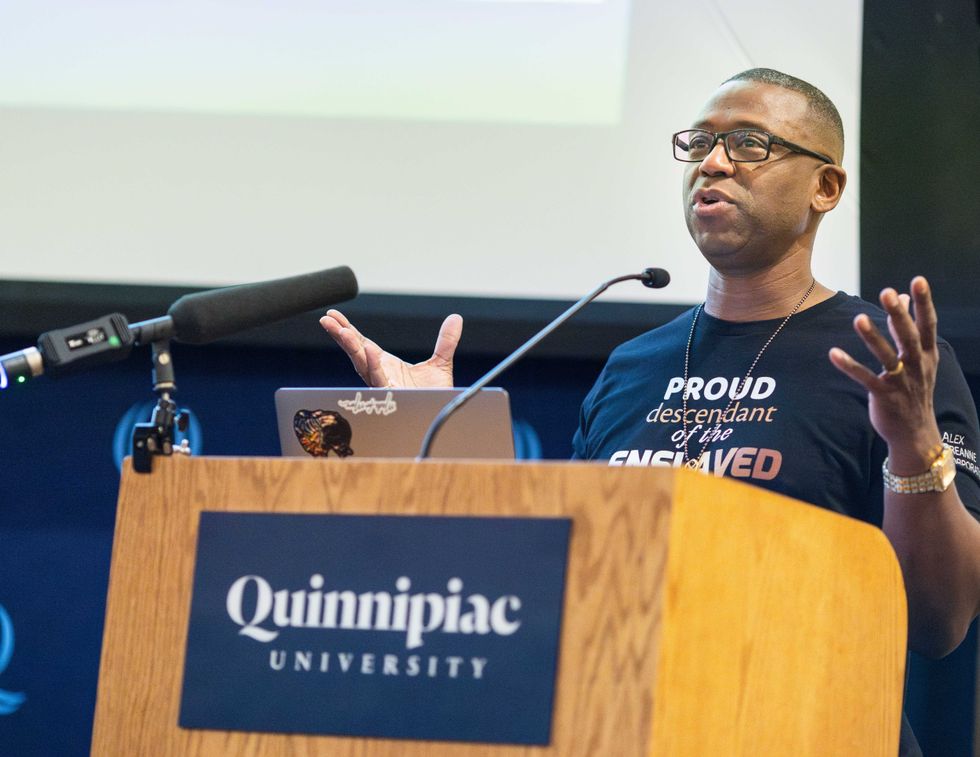
SALISBURY — St. John’s Episcopal Church marked the Martin Luther King Jr. holiday weekend by welcoming Canon Petero Sabune for a special service on Sunday, Jan. 18, followed by a visit to Salisbury School the next day.
King’s legacy and faith were central themes throughout the service. The first reading featured an excerpt from King’s final book, “Where Do We Go From Here: Chaos or Community?” including the oft-quoted passage: "Returning violence for violence multiples violence, adding deeper darkness to a night already devoid of stars. Darkness cannot drive out darkness: only light can do that. Hate cannot drive out hate: only love can do that.”
In his sermon, Sabune said that many accounts of King’s life and influence often “forget about his faith and convictions.”
“He was a baptized disciple of Jesus Christ,” Sabune said.
After the service, Sabune was asked about ongoing protests and controversy in Minneapolis. He noted that King’s philosophy of nonviolent resistance was shaped by Mahatma Gandhi, who in turn drew inspiration from the writings of Henry David Thoreau.
Sabune said civil rights workers and protestors in the 1950s and 1960s underwent formal training in nonviolence. “They taught people how to get hit and not respond, what [civil rights figure and congressman] John Lewis called ‘good trouble,’” he said.
Reflecting on more recent events, Sabune said that when considering the circumstances that led to the death of Renee Good at the hands of Immigration and Customs Enforcement agent Jonathan Ross, “I feel the pain, not just for Renee, but for Officer Ross.”
Music also played a prominent role in the service. The hymns were drawn from “Lift Every Voice and Sing II: An African-American Hymnal.” Among them was “Precious Lord,” which King requested be sung the night before his death.
“Sing ‘Precious Lord’ and sing it pretty,” King told a follower.
Sabune’s visit to Salisbury followed a long journey that began with a bus ride from Tucson, Arizona, to Phoenix on Saturday, Jan. 17, followed by an overnight flight. The Rev. Johan Johnson, priest-in-charge at St. John’s and chaplain at Salisbury School, picked him up at 7 a.m. Sunday.
The two men have known each other for so long they cannot recall exactly where or when they first met. During an interview, Sabune paused to greet Johnson’s youngest daughter, whom he baptized.
As he headed toward the reception, where parishioners were waiting to greet him, Sabune was asked one final question:
“You going to get a nap in today?”
“Yes!” he said emphatically over his shoulder as he hurried up the aisle.