So state union workers have approved their contracts, and most layoffs have been avoided, after much negotiation and wringing of hands. It’s probably safe to assume nobody really wanted their fellow Connecticut workers to lose their jobs. However, it has been difficult for those working in the private sector in this state, which has been struggling mightily over the past few years, to watch the circus that was the too-long discussion on the contracts for state workers. Few private sector employees have the same calibre of benefits, pay structure and job security that had been part of the state’s offer to its employees from the very beginning of this long process. And it’s those private sector workers whose taxes pay for the dearly held benefits of state workers — and yes, state workers pay taxes, too. It’s a bitter pill, though, for those private sector workers whose hours may have been cut or who have lost their jobs during the recession (which we must admit is not over yet in the Northeast) to see the kind of deal that state unions first declined, then finally accepted under the greatest duress. Only after the threat and clear guarantee of layoffs did the unions come back to approve the deal.If the economic initiatives undertaken by the Malloy administration (such as the “First Five” program, whereby incentives have been offered to employers to add 200 new jobs to their payrolls in the state) succeed long-term, it could be that the state will keep the number of jobs it currently maintains. The problem is that there are still layoffs happening in the private sector which will not be avoided by new contracts or raised taxes. It would be even better if jobs could be increased, not just maintained, making a more viable expanding economy in the state, with well-rounded positions including manufacturing jobs available to a range of workers. Connecticut needs to figure out the right long-term formula for not only keeping the old, but attracting more new jobs to the state by being supportive of both new businesses coming into the state and those businesses that have been trying their level best to stay here.
Latest News

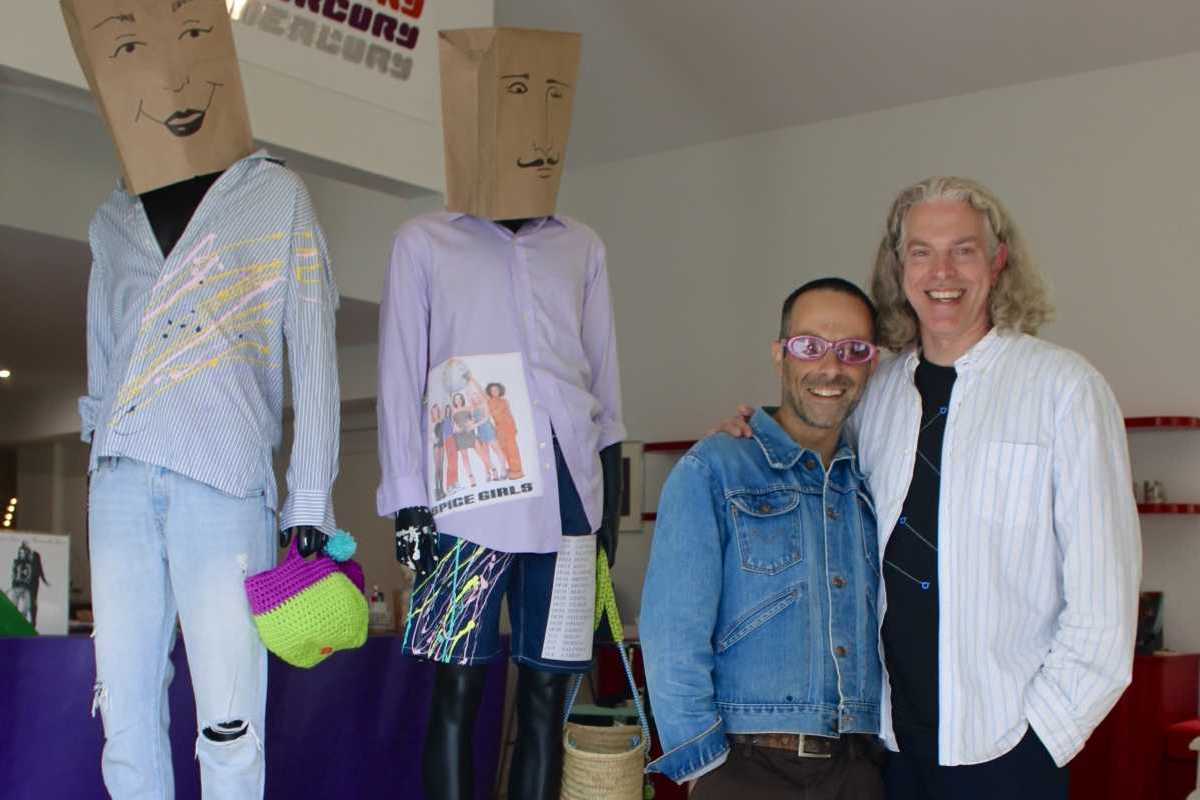
Greg Fricke and James Boehmer, co-owners of Peggy Mercury in Kent, recently launched their first fashion line, “Imaginary Concerts.”
Provided
Fricke and Boehmer are not there to stock their shelves with the same products customers find at standard makeup retailers. They’re there to help customers find what works for them. That usually means asking customers about themselves and learning about their beauty habits, skin, style and the way they like to present themselves. Fricke and Boehmer believe it’s their job to help customers bring out the qualities that suit them and determine what works best for their look.
So much of the Peggy Mercury world is about emboldening people to become more creative, and possibly bolder, versions of themselves. Some of this comes through the store’s creative collaborations with artists, designers and stylists.
It’s part of an ethos that encourages them and their friends to use the shop as a kind of laboratory, trying out new creative experiments without knowing how they might turn out. Whether in fashion, painting, fiber arts or photography, the projects almost always turn out marvelously.
A line of sterling silver charms they sell started as a small project by their friend Nolan Percival. In the beginning, the pieces were for close friends and loved ones. But Boehmer and Fricke encouraged Percival to get a little more serious about the project and create a whole line for the store. Today, it’s one of their top-selling collections.
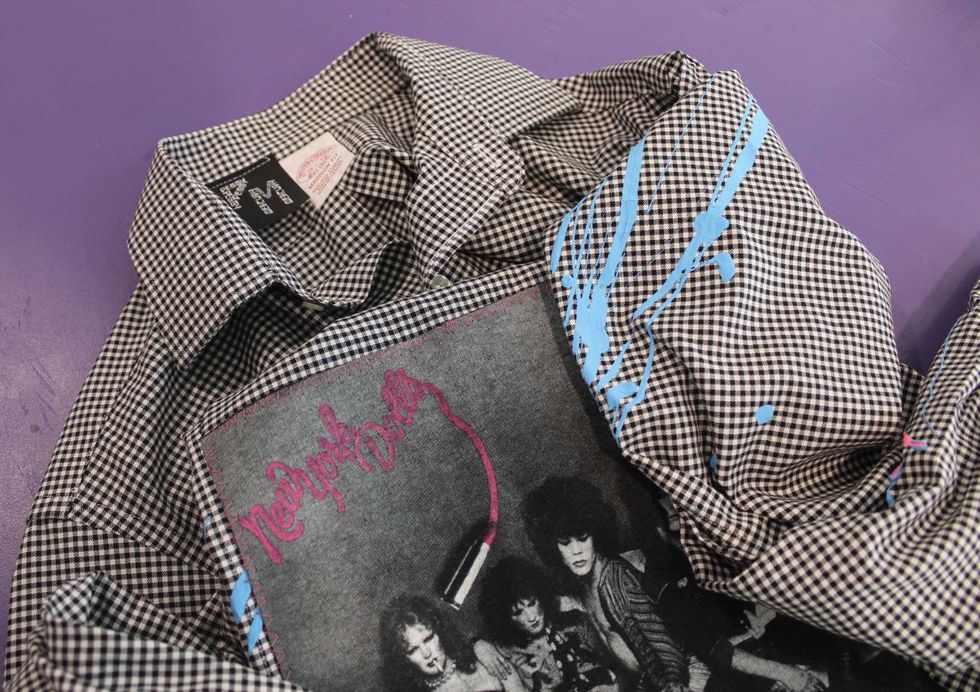 Classic styles, bold colors, and creative concerts make up the “Imaginary Concerts” line at Peggy Mercury.Provided
“Imaginary Concerts” has the duo taking their own advice.
The project started as a way for Boehmer to connect with his mother, who had been diagnosed with Alzheimer’s disease. Taking old concert shirts from his own collection, Boehmer and his mother began cutting out the graphics with the idea that they would make a quilt together. Unfortunately, she died before they could complete the project in 2025. The pieces, which were ready for production, were put on the back burner as Boehmer and Fricke dealt with their loss and the whirlwind of projects that never seemed to cease at Peggy Mercury.
But the harsh winter of 2026 presented an opportunity to take some time and focus on themselves. Part of that meant revisiting and redefining the concert T-shirt project. This time, instead of looking to the warmth and comfort of a quilt, they turned to another passion — fashion.
Taking a page from their own book, they wanted to create something that felt comfortable to them. They took two disparate loves — one rooted in simple preppy style, with clean lines and classic silhouettes, and the other in the nitty gritty worlds of punk rock and pop — and blended them together to create something entirely new. Pulling from the staples of vintage Brooks Brothers and Charvet collections, they applied the graphic elements with bold stitching reminiscent of punk jackets of the ‘70s and ‘80s, but with a much more sophisticated air.
But the remixing isn’t just the pairing of prep and punk. The pieces are not canon. They take liberties with the realities of concert tours, combining one band’s dates with another band’s logos, mixing them all up until the reality is lost and imagination is the only truth.
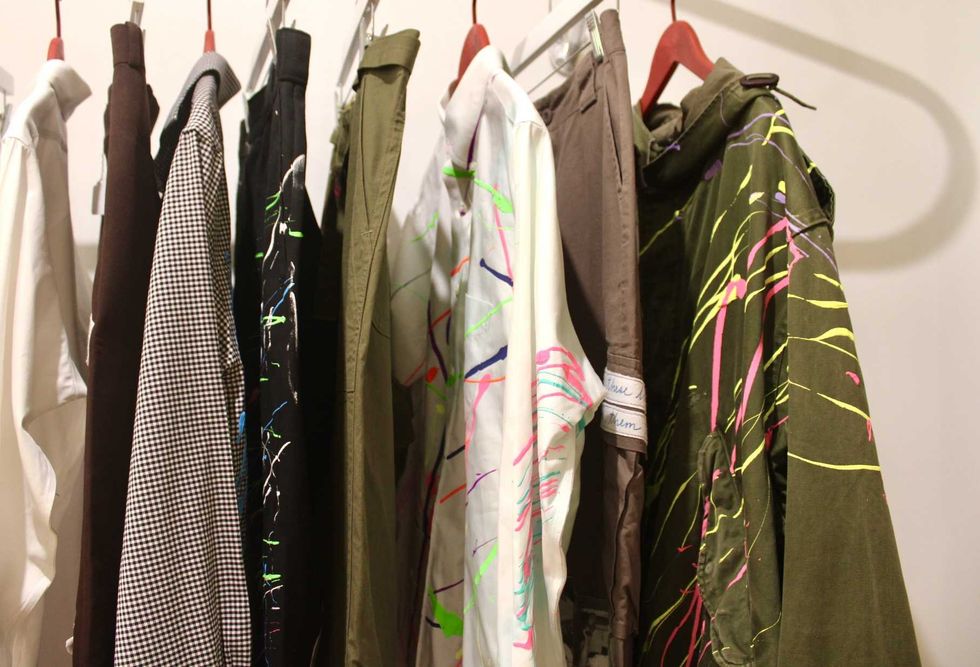 Shirts from Peggy Mercury’s first fashion line, “Imaginary Concerts,” hang on display.Provided
Adding to the mix is an element of perpetual creativity. Art can be messy, both figuratively and literally, and many of Fricke and Boehmer’s artist friends carry evidence of their work on them at all times. As a nod to these tireless creatives, the duo added haphazard splashes of bright color, giving the line an even more distinctive feel.
For them, “Imaginary Concerts” passes the “Peggy Test.” The mythical Peggy Mercury is a fictional figurehead for the company, a character who thrives on creativity and change. The name, much like the clothing line, is a mixture of interests: Mercury is a planet, a deity and an elusive, transformative element, while Peggy is the wonderfully stylish and boundary-pushing Peggy Guggenheim.
Everything Fricke and Boehmer put in their store has to pass this test: Would Peggy Mercury approve? For their first collection, the answer is a resounding yes.
Peggy Mercury is at 9 Maple St., Unit 2, Kent.


Want more of our stories on Google? Click here to make us a Preferred Source.