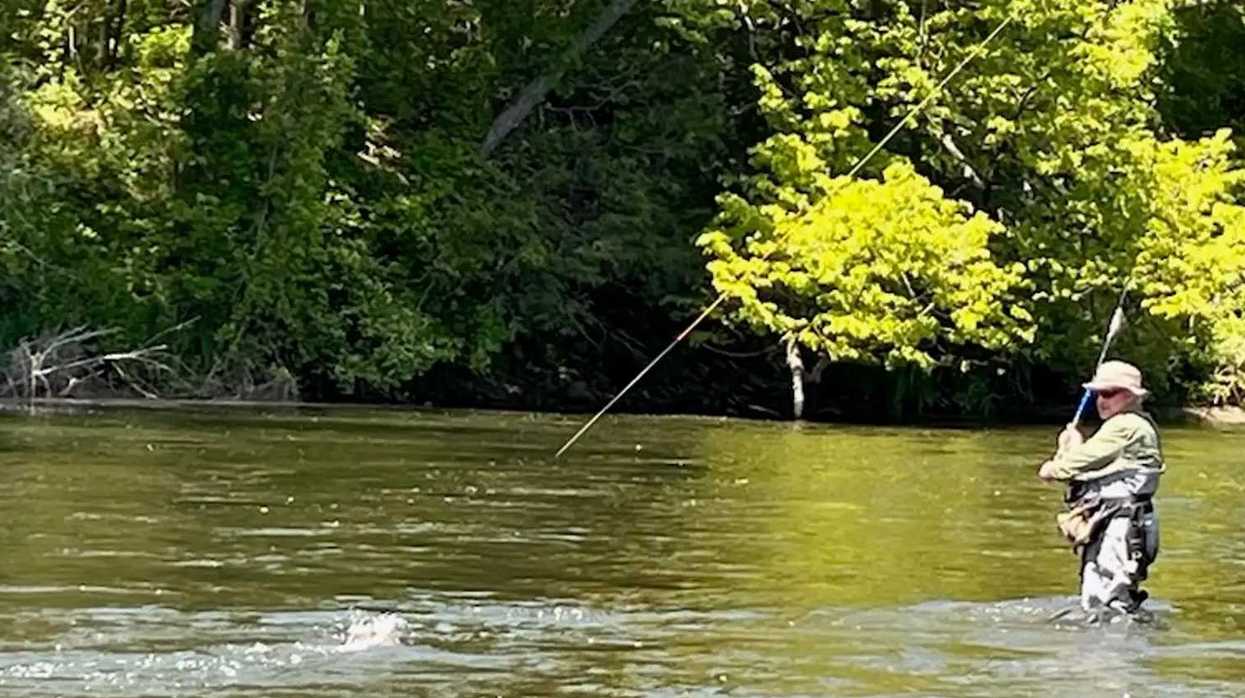
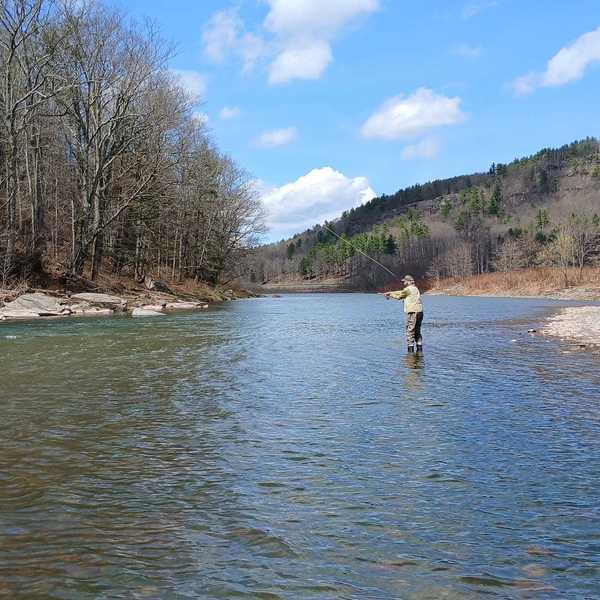
I have been fishing with tenkara rods for about 10 years now, ever since my cousin’s husband, Gilligan, sent me a weird rod that telescoped out and had no reel, or even a place to put one. That was in February, so I had to wait until summer for my little buddy to show me how it worked.
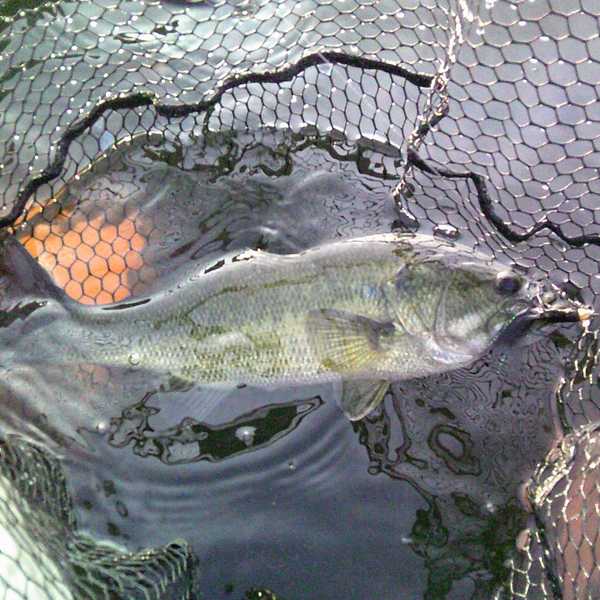
I was extremely skeptical until I caught a decent Housatonic rainbow on the thing.
It was not an exceptional fish, but the fight was a lot of fun, more than it would have been with a regular fly rod.
Tenkara is a Japanese word that does a lot of lifting in translation. “Fixed-line rod” is probably better, but it doesn’t sound as cool.
Your basic tenkara rod is about 12 feet long, weighs almost nothing and is two feet long or less when collapsed.
At the tip of the rod is a piece of cord or string called a lillian. I don’t know why it’s called that.
What most people do is tie an overhand knot near the end of the lillian to act as a stopper. Then they attach a line with a girth hitch and add tippet material and a fly to the other end of the line.
A good rule of thumb is to start out with a line that is as long as the rod, give or take a couple of feet, depending on whether you’re in a wide-open river or a squirrelly stream.
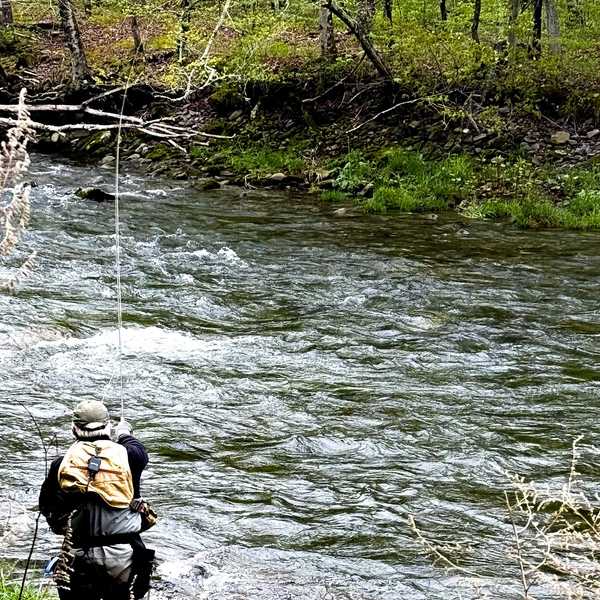
The casting motion is very similar to that of a fly rod, but because you’ve only got the fixed length of line plus the length of the rod to work with, you’ve got to fish with your feet.
This is the critical distinction.
As I got better at using the tenkara rod, I realized how lazy I had become with the Western fly rod. Rather than considering a section of stream and mapping out my moves like a golfer assessing an approach, I had gotten into the habit of chucking a longer line or adding a tricky mend.
These are legitimate tactics, but smarter wading often eliminates the need for a longer cast.
It’s also better exercise and keeps the pores open.
So naturally, I started amassing tenkara rods and now have several in different lengths and actions.
What I really like to do is carry both a Western fly rod and a tenkara rod, and with some of these things, that’s easy to do. I have one 10-footer that, when collapsed, is about a foot long. It literally fits in my pocket or in the waist pack I use these days.
When I get bored with one method, I switch to the other.
One question I get a lot, other than “what the heck is that thing,” is, “What happens when the fish bolts?”
Same thing that happens with a Western rig. Either the fish stops or the fish breaks off.
The hardest part of fixed-line fishing is landing the fish. For those of us who do not have five-foot Extendo Arms (as seen in “Master of the Flying Guillotine”), getting the fish into scooping distance of the net requires dexterity, exquisite cunning and, inevitably, grabbing the line by hand.
This is where bad things happen, because once you give up the leverage of the rod, the dynamic changes completely, and the fish — no fools — sense this immediately.
If this intrigues you, I recommend starting out with Dragontail Tenkara in Idaho. The proprietor, Brent Auger, runs a tight ship and responds quickly to emails.
I also advise starting out with a furled line, which feels more like a fly line. Once you’re comfortable with that, you can move into level lines and other esoterica.
People often say, “That’s just like a cane pole.” No, it isn’t. A good tenkara rod is a lightweight precision tool. A cane pole is a heavy, blunt instrument by comparison. Think conductor’s baton vs. an old, splintery broomstick.
A final note: What ultimately sold me on tenkara wasn’t the simplicity or the novelty. It was catching a decent fish with a tenkara rod, as noted above.
The rod sang. It made a high, humming sound as I struggled with the fish.
“Dang,” I said. (This is a family newspaper.) “You don’t hear that every day.”
But you’ll hear it often enough if you go down the fixed-line road.

 Models walk the organic runway at HVSFW. Ilan Harel
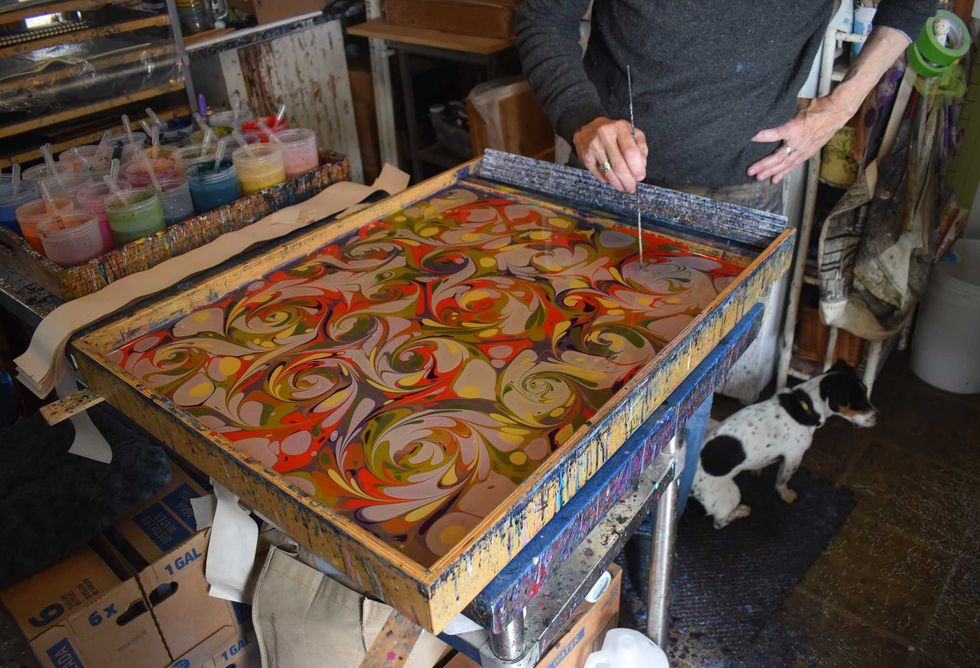 Susan Schneider, owner of Shandell’s, creates a variety of products with marbleized surfaces in her Ashley Falls studio.L. Tomaino



 Roger McKee naming the winners with the first place entry over his left shoulder. Patrick L. Sullivan
 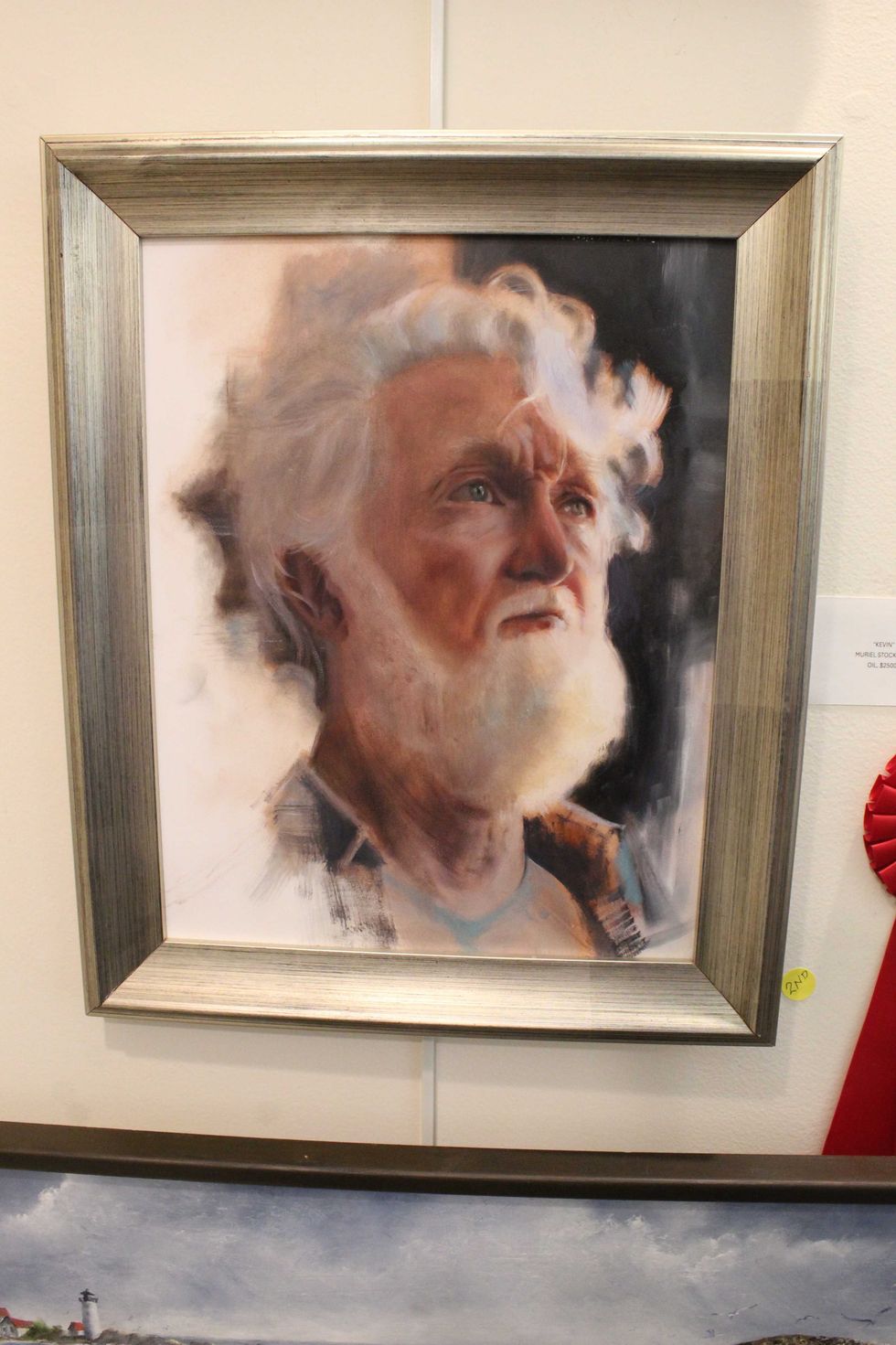 Muriel Stockdale’s “Kevin” took second place in the juried art show at Trinity Episcopal Church.Patrick L. Sullivan