When we were first told that the state employee unions required an 80 percent yes vote to ratify a contract, a union official proudly proclaimed we were witnessing trade union democracy in action. But since then, the 80 percent rule was magically reduced to a simple majority, without the advice and consent of all those trade union democrats.In more authoritarian societies, this sort of thing is known as the dictatorship of the proletariat, the proletariat being the industrial working class that is theoretically endowed with all the political power, but not really. I was introduced to trade union democracy at an early age while spending my college summers at an A&P grocery warehouse in Newark, N.J. There were two warehouse buildings. The main warehouse, with about a100 employees, was used to store the groceries, and the other, where I worked, held the empty cardboard boxes, baskets and crates the red A&P trucks collected from the supermarkets for what was then not known as recycling. Unloading the wet and smelly fish crates was a special treat on humid summer afternoons. In the summer, the small warehouse employed three bleeping college kids, as my part-time colleagues and I were constantly — but affectionately — referred to by the dozen or so full-time workers, friendly guys with nicknames like Wild Willie and Rumnose. We were all paid the same, $73 a week.During the summer of ’54, my fourth and last in the warehouse, we were unionized by the International Brotherhood of Teamsters, Chauffeurs, Warehousemen and Helpers, an event that came as something of a surprise because our small warehouse did not vote in the union election. Only the workers in the big warehouse voted. I guess they didn’t bother with us since we couldn’t change the outcome. But Rumnose and the others were pleased, as the Teamsters contract included a small raise, eroded just a bit by monthly dues of $5, as I remember after more than 50 years.The bleeping college kids became part of the union but not part of the small raise. We were, however, required to pay dues, which left us with a weekly salary of $71.75 as opposed to the $73 we received before enjoying the protection of union membership.When a Teamsters official came by to welcome us into the brotherhood, I protested our loss of income. He didn’t seem particularly interested until I asked, “Would Dave Beck approve of this?”Dave Beck was the union’s national president and the subject of a Time magazine cover story I had read, so I was able to drop his name and get the attention of the local official.“You know Dave Beck?” he asked with a new interest in me and our complaint. “Only that he’s a great union man and wouldn’t like what’s happening to us,” I said. The union rep promised to see what he could do, and I believe we were excused from paying dues until the contract would be renegotiated the following year. By then, I had left the warehouse, finished college and become a professional journalist, at a pay cut of only $21.25 a week.But before my final summer as a warehouseman had ended, I received another visit from the local official and an associate. I was struck by their resemblance to the union bosses in “On the Waterfront,” a big movie that summer about crime and corruption among the longshoremen in nearby Hoboken.I don’t remember the details, but the conversation included the offer of a job, which I declined with thanks, saying I had other career interests.Dave Beck became a celebrity of sorts later by taking the Fifth Amendment a record 117 times while being questioned by young Bobby Kennedy at a Senate hearing into union corruption. He went to jail and was succeeded by the “reformer” Jimmy Hoffa.I have sometimes thought about my good fortune in choosing journalism over an association with the Teamsters and Hoffa, who some believe rests not far from that Newark warehouse, under the old Giants Stadium in the Jersey Meadows. Simsbury resident Dick Ahles is a retired journalist. Email him at dahles@hotmail.com.
Latest News

Want more of our stories on Google? Click here to make us a Preferred Source.

The BD Canaan facility opened in 1961 with eight employees working in a 25,000-square-foot building and producing approximately 10 million syringes annually.
The anniversary celebration also included a $10,000 grant to the Community Health and Wellness Center (CHWC) in North Canaan, bringing BD’s financial support for the Federally Qualified Health Center since 2024 to $90,000.
CHWC CEO Joanne Borduas said the donation will help the organization’s health centers in Torrington, Winsted and North Canaan provide care to residents regardless of insurance status.
“We are deeply grateful for BD’s generous donation of $10,000,” Borduas said. “This contribution will go a long way in helping us to support our patients and local families as we carry out our mission of keeping our community well through providing access to quality health care regardless of insurance status.”
Several state and local lawmakers participated in the celebration, including state Rep. Maria Horn (D-64) and state Sen. Stephen Harding (R-30), who presented BD officials with an official citation from the General Assembly.
“BD has been an important part of northwestern Connecticut for 65 years, providing local jobs while manufacturing a product that supports patient care around the world,” the pair said in a joint statement.
Humble beginnings on Grace Way
The BD Canaan facility, located on Grace Way, opened in 1961 with eight employees working in a 25,000-square-foot building and producing approximately 10 million syringes annually.
Today, more than 500 employees work at the 385,000-square-foot facility, which produces more than 2 billion syringes a year.
More than 50 current BD employees at the Canaan site have worked for the company for at least 25 years, including 10 who have reached 40 years or more of service.
“The BD Syringe was invented here in Canaan as a breakthrough in patient safety and has become an essential part of care around the world, touching 80 patients every second,” said Eric Borin, worldwide president of Medication Delivery Solutions at BD.
“For 65 years, generations of employees have continued to improve how we manufacture while delivering the quality and precision clinicians count on,” Borin said. “This milestone is a testament to their dedication and the difference their work makes for patients every day.”
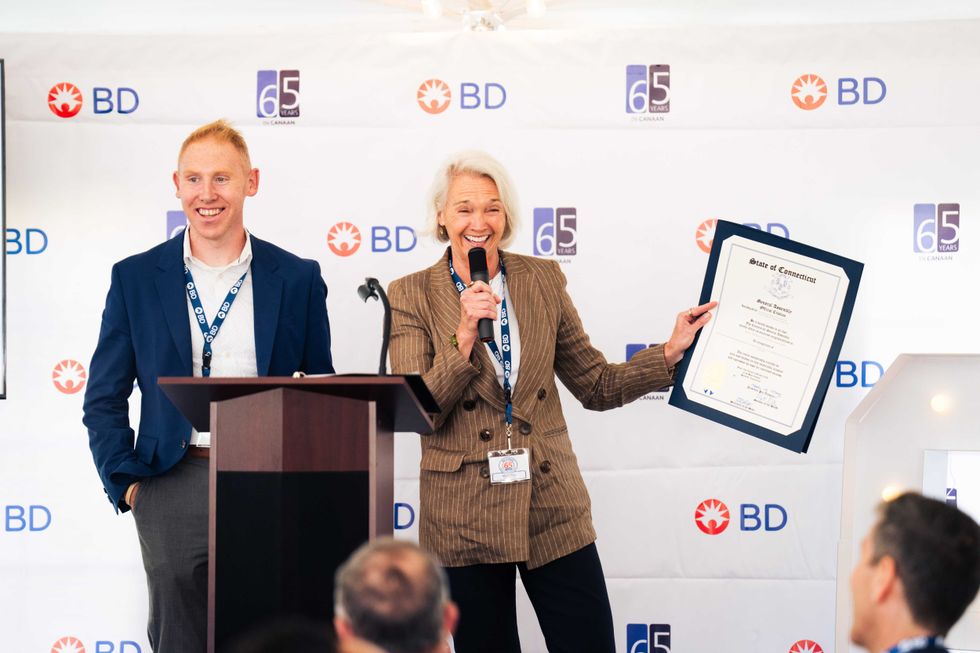 State Rep. Maria Horn (D-64) and state Sen. Stephen Harding (R-30), who represent the Northwest Corner, at BD’s 65th anniversary celebration on Oct. 6. The company was presented with an Official Citation from the Connecticut General AssemblyProvided by BD
More than $34 million invested in North Canaan site
The history of the North Canaan operation is closely tied to the development of the disposable plastic syringe.
The BD syringe was developed at the North Canaan facility as the medical industry moved away from reusable glass syringes. The change helped reduce the risk of disease transmission between patients and eventually made the disposable syringe a standard tool in medical care.
Over the decades, syringes manufactured in North Canaan have been part of major public health efforts, including smallpox eradication, H1N1 vaccination programs and the COVID-19 response.
“Connecticut has a proud history of turning innovation into products that improve people’s lives, and BD’s Canaan facility is a powerful example,” Gov. Ned Lamont said in a statement.
BD has invested more than $34 million in the North Canaan facility during the past five years, including three new syringe manufacturing lines and equipment upgrades designed to expand production capacity and modernize operations.
The investment comes as the company continues to emphasize domestic manufacturing and the importance of maintaining a reliable supply of medical products.
The North Canaan-made syringe has also earned recognition closer to home. It was the first product from the Northwest Corner selected for the Connecticut Business & Industry Association’s “Coolest Thing Made in Connecticut” competition.
CBIA representatives, including Chris DiPentima, the organization’s president and CEO, also attended the North Canaan festivities.
BD’s generosity, noted Borduas, “highlights the powerful impact that community-minded partners can make and we are very grateful for their support.”
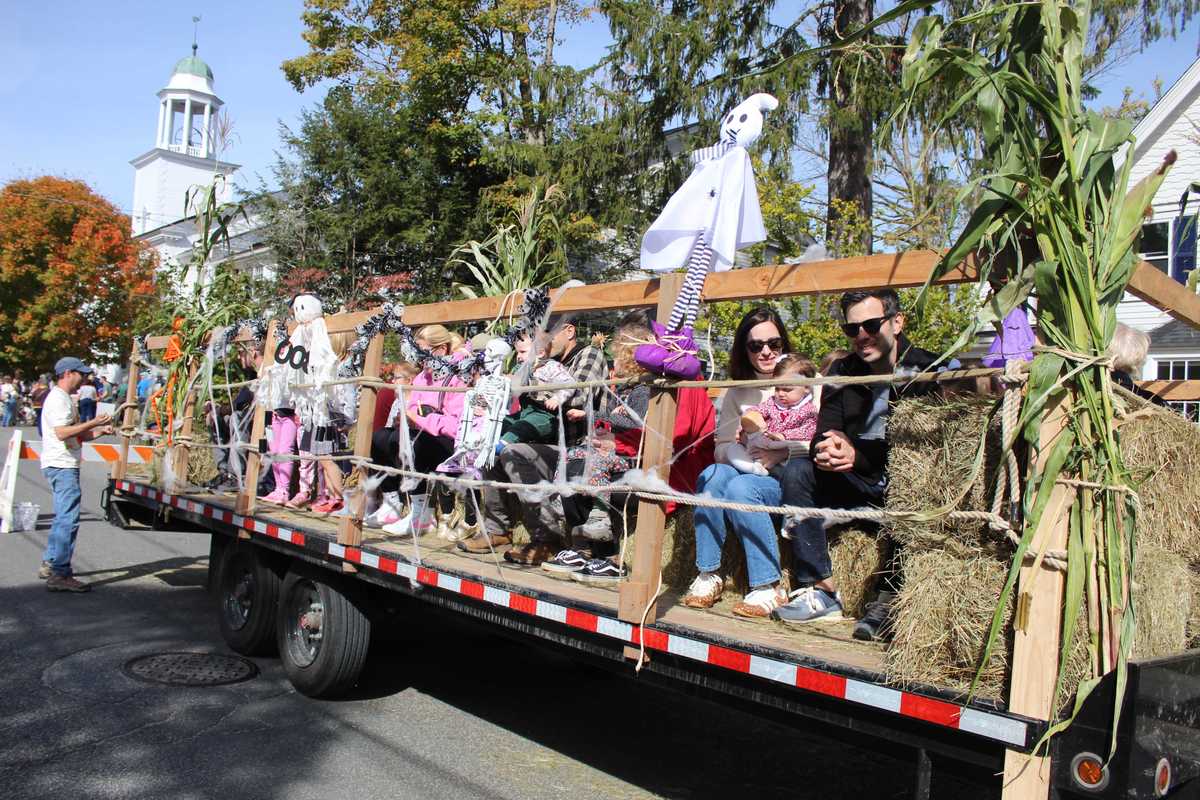
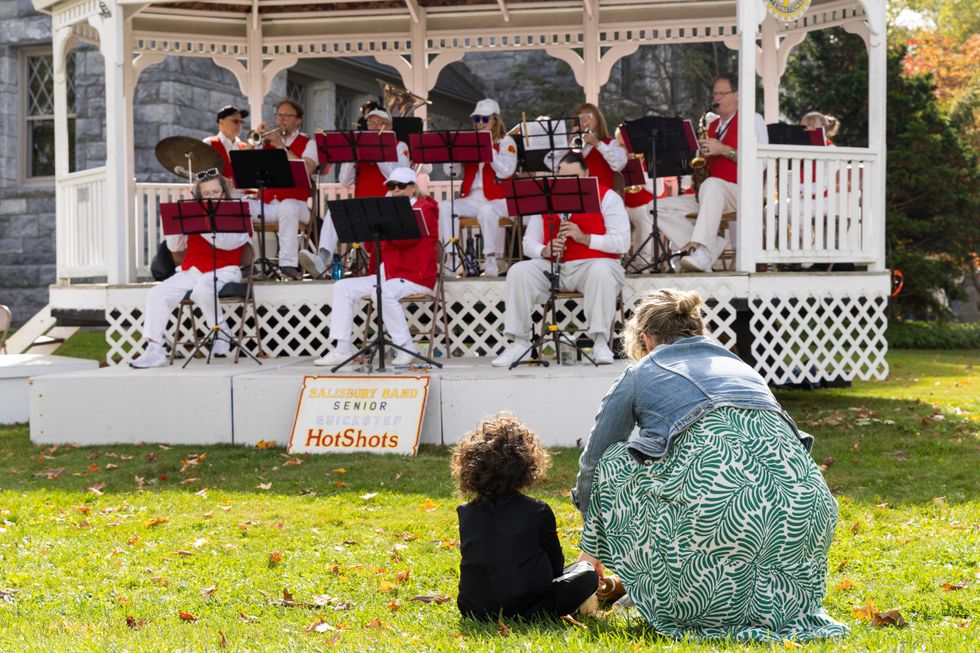
Children enjoy a hayride during Salisbury’s 69th Fall Festival Saturday, Oct. 10, as beautiful weather drew crowds downtown for activities, book sales and live entertainment.
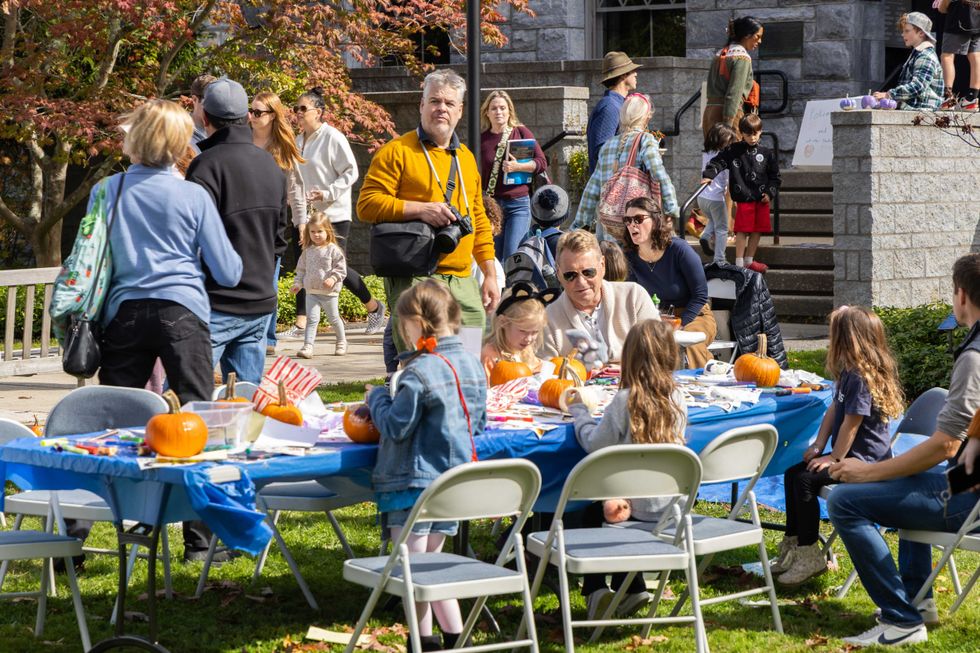
The library lawn was crowded with children decorating pumpkins and receiving temporary henna tattoos.
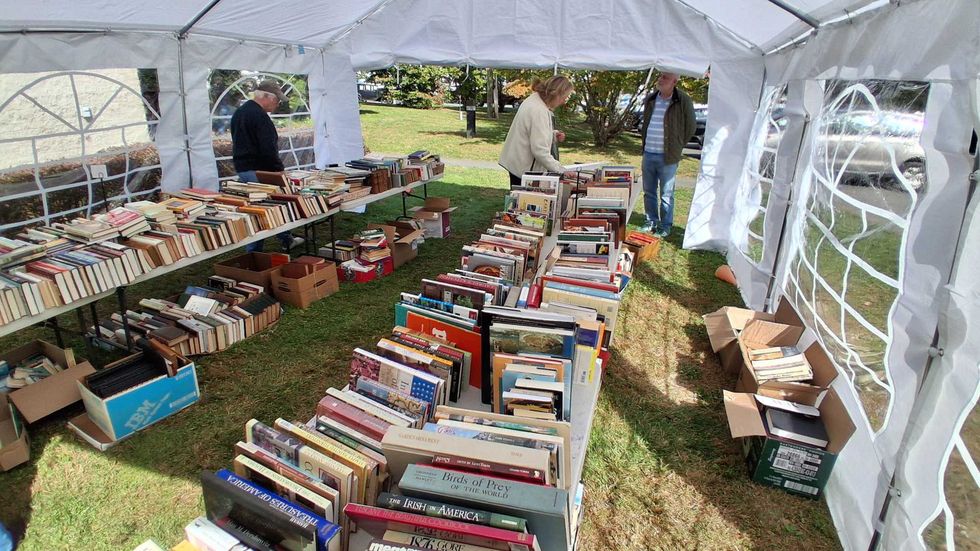
Inside and behind the library, book lovers browsed the Friends of the Scoville Library book sale. This year, the Friends added a tent behind the library for more display space.
Across Library Street, by the Congregational Church, magician Peter James wowed the crowd with illusions, including the “Chop-A-Lot,” which magically sliced carrots but not fingers.
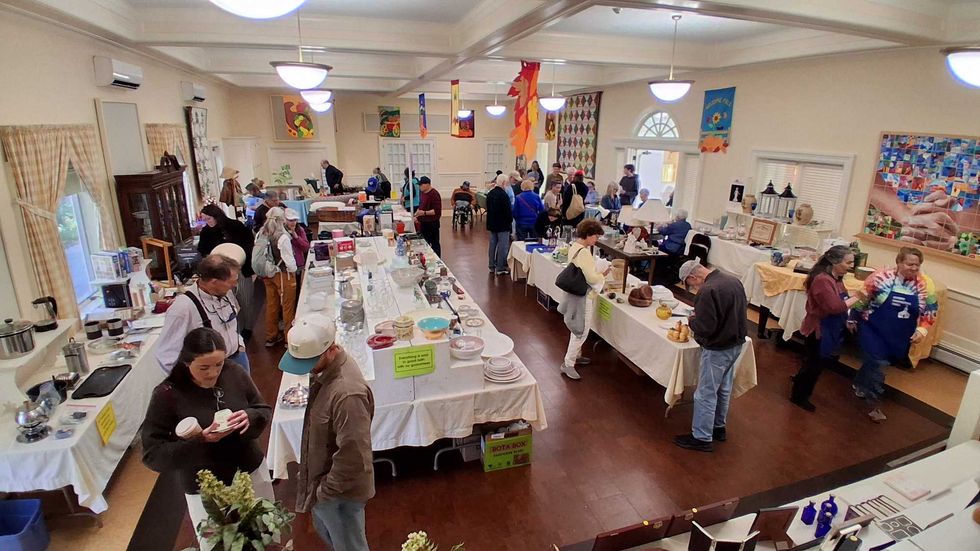
Inside the church was the annual quilt show in the worship space and a massive tag sale in the community room at the rear.
A highly arbitrary sample of items for sale: a fondue pot, an air purifier, assorted fabrics, baked goods of every description and a set of wooden salad bowls.
The quilts had also provided a backdrop Friday at noon for the church’s regular monthly musical performance. Solo cellist Jakob Nordlinger played an all-Bach program, surrounded by quilts hanging over the pews and from the railings.
Moving along Main Street, the church’s hot dog tent was doing brisk business, enlivened by stalwart parishioner Barbara Wiggins in a hot dog costume.
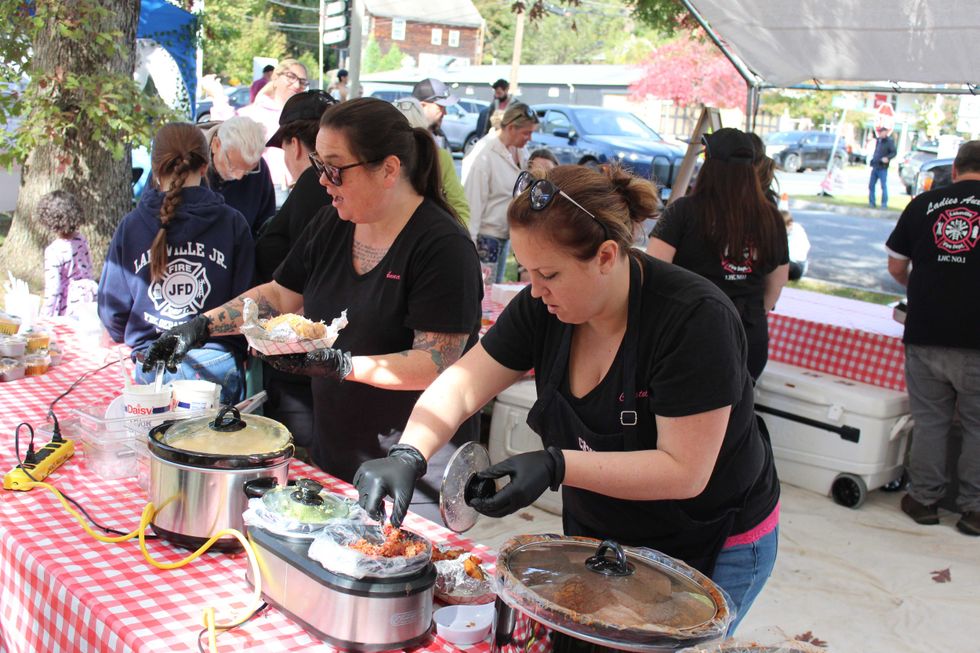
Next door, the Lakeville Hose Company Ladies Auxiliary tent was equally busy dishing out “comfort food,” mainly variations on chili and macaroni and cheese.
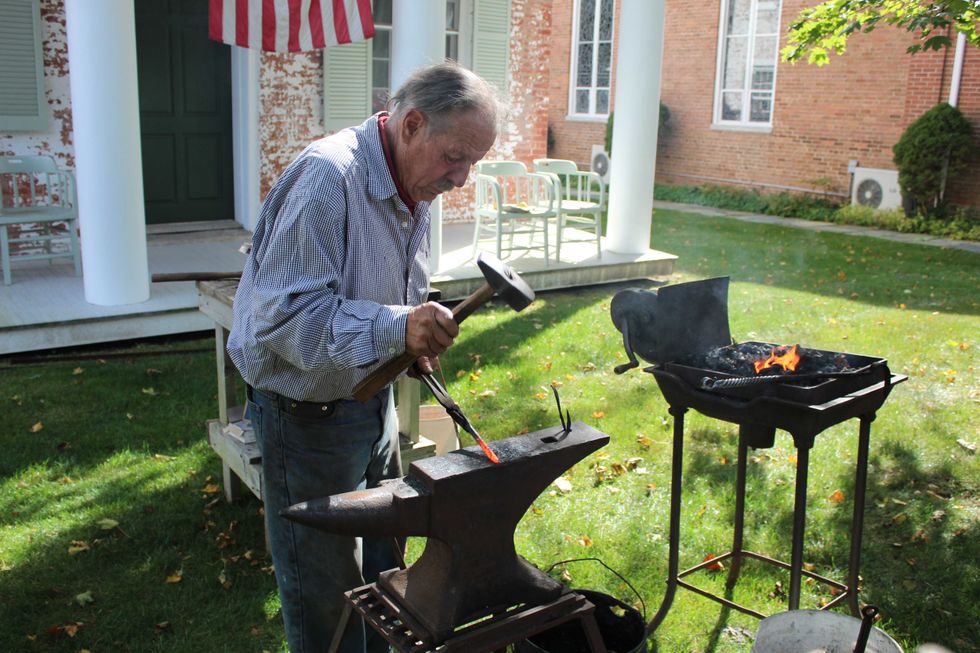
Next to St. John’s Episcopal Church, Will Trowbridge of Sharon provided visitors with an ongoing blacksmithing demonstration.
Someone asked if he was using coal.
“Yes, that’s coal,” said Trowbridge. “And you see where it’s fluffy? That’s coke.”
Coke, a fuel formed as coal heats, burns hot enough to heat iron for shaping.
The visitor asked whether the coke could be used to fuel the forge.
“Oh my yes,” replied Trowbridge, lifting a red-hot piece of iron out of the fire.
At the town green at the intersection of Undermountain Road and Main Street, protesters were holding a “No Kings” demonstration.
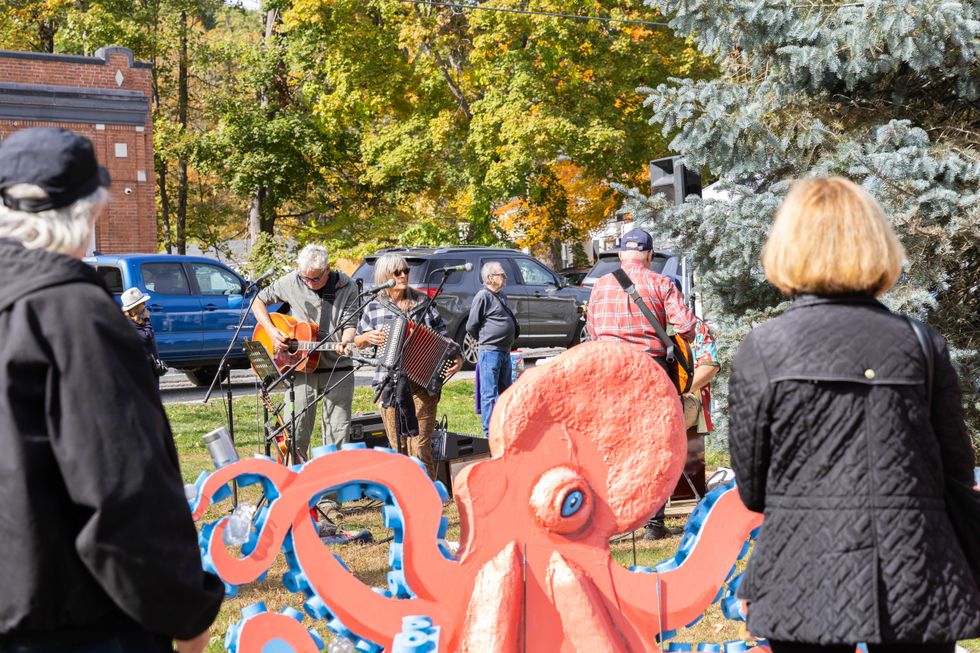
Nearby, the musical group The Joint Chiefs was setting up.
On the White Hart lawn, Salisbury Handmade artisans offered goods ranging from woolen shawls to ceramics and leather goods.
People sat at tables on the lawn enjoying lunch and the fine weather.
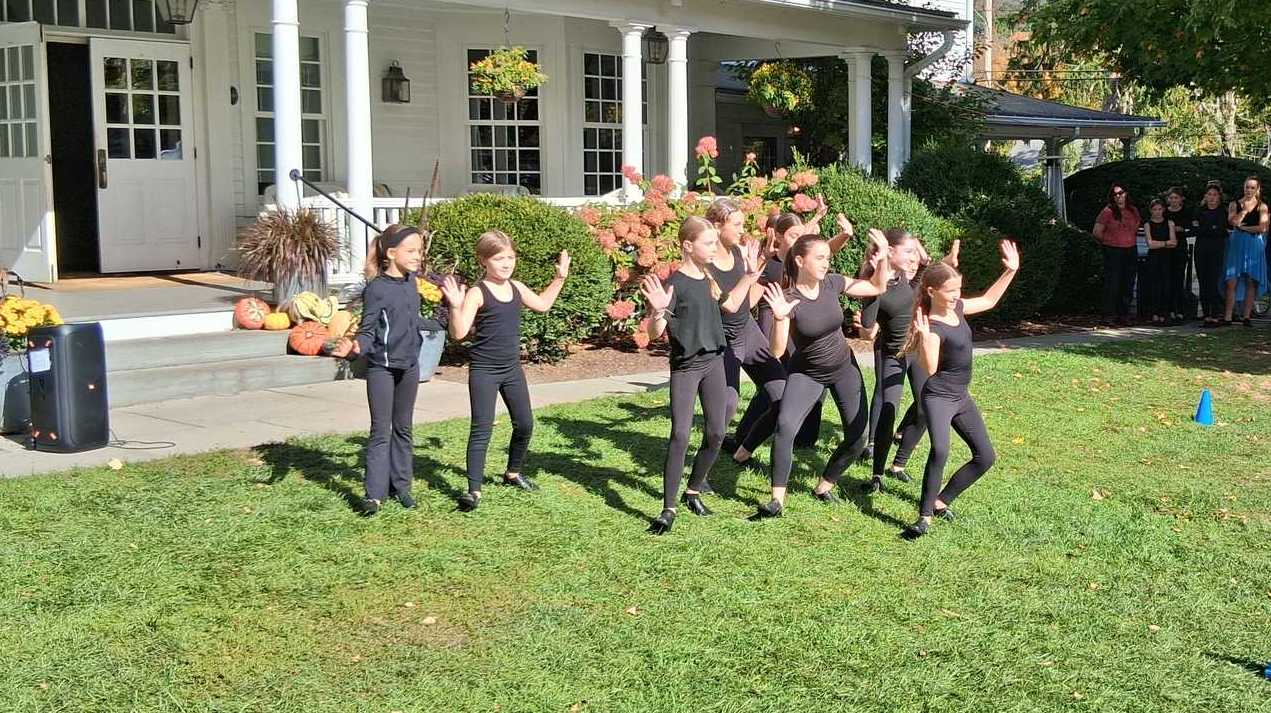
As the clock approached 2 p.m., Darcy Boynton and Amber Cameron of Blue Studio Dance politely asked diners to move their tables back a bit from the White Hart porch so a dance program could begin.
Everybody was agreeable, and most stuck around for the show.
Sunday dawned chilly and wet, forcing the cancellation of the Pet Parade in Lakeville.
But the Salisbury Winter Sports Association’s Brew Ski event at Satre Hill went ahead.
Attendees sampled beers and ales, including “Roadsmary’s Baby,” described by the brewer, Two Roads of Stratford, as a “rum barrel-aged pumpkin ale.”
Ethan Gee of Salisbury shook his head when told about the pumpkin ale.
“No. Pumpkin pie at Thanksgiving. That’s it.”
With the unpleasant weather, Main Street was largely deserted Sunday afternoon, but the Friends of the Scoville Library book sale was still going strong.
Lisa White of the Friends said sales were on track to beat the previous record set in 2024. The proceeds support library programming.
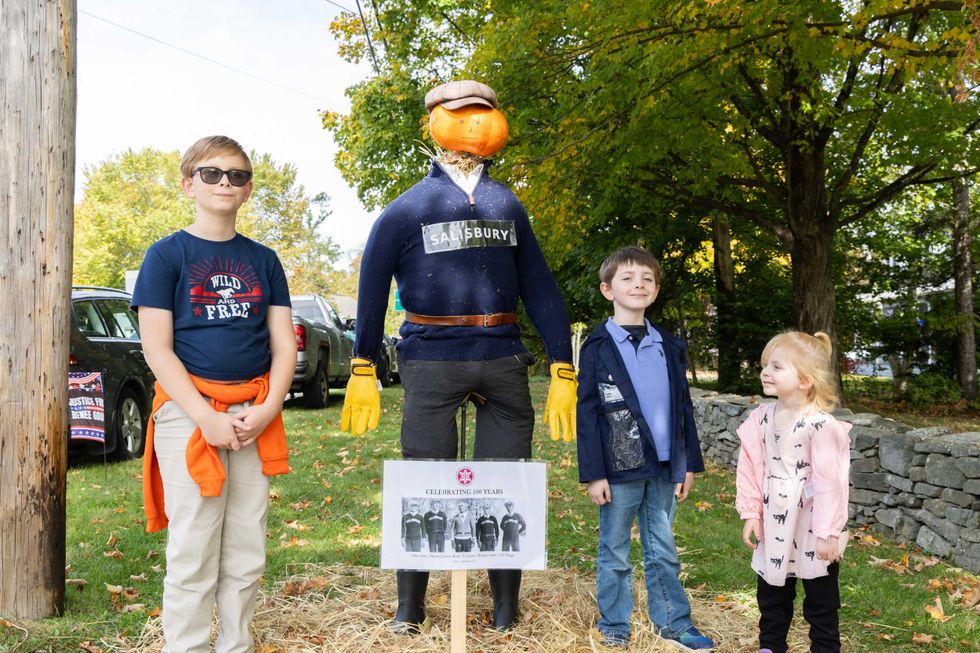
All weekend, everywhere one looked in Salisbury and Lakeville, there were scarecrows.
Some elaborate, some simple, some bearing messages, some just for fun. The winners of the scarecrow contest were announced on Monday.
Madi Long
Children enjoy pumpkin decorating on the lawn of the Scoville Memorial Library during the Salisbury Fall Festival Saturday, Oct. 10.
Want more of our stories on Google? Click here to make us a Preferred Source.