


Union’s agreement with Malloy ‘best in country’

HARTFORD — Workers around the country are envious of Connecticut state employees, according to their lead negotiator.Daniel Livingston, chief negotiator for the State Employee Bargaining Agent Coalition, said other unions want to learn how to imitate their success negotiating with Gov. Dannel Malloy.Livingston told a meeting of state employees June 4 he would be going to a national meeting of union leaders to teach them, according to three videos posted online by union officials.“I wasn’t invited there because of me. I was invited there because of you all and what this agreement stands for and what you all helped achieve,” he said. “It is unknown in this country. They want to know how we did it.”The tentative agreement, according to Malloy, contains $1.6 billion in union concessions. Legislative Republicans, the Office of Fiscal Analysis and others have called the value of the concession deal into question. The Malloy administration has only provided documents to support $1 billion of the total.Livingston, a lawyer with Livingston, Adler, Pulda, Meiklejohn & Kelly in Hartford, said the agreement was less than perfect, but also explained why Malloy had to make the tentative agreement sound worse than it is for state employees.He said the agreement stands out because of four years promised job security and 11 years of health care and pension guarantees, plus future wage increases. According to Livingston, the agreement also increases pensions for Tier II and Tier IIA employees and changes a rule that could have prevented workers from spiking their pensions.“Now we have an 11-year agreement. I wish it was still 20,” Livingston said. “But 11 years is still unheard of in the country. There’s no one else with an 11-year pension and health care agreement. You all, if you ratify this, have security that no other state worker in the country has, and I’d venture to say no other private sector workers.”Livingston said the negotiators refused to talk with Malloy without a promise of job security.“The agreement that you’re reviewing has four years job security. Nowhere else in the country will you find four years job security,” he said. “Nowhere else in the country will you find workers who know they won’t be laid off for four years no matter what happens. You don’t pick up the paper like we all did yesterday morning and say, ‘Oh my God, job growth is down to 54,000 for the entire country. They’re talking about a double dip recession. I wonder if I’m going to lose my job next month or next year.’ You guys don’t have to say that.”According to Livingston, the unions wanted to extend the SEBAC contract — a 20-year agreement dating back to 1997 — to avoid losing benefits when it expired. He said the agreement guarantees retiree health care — which would have ended in six years — until 2022.“That benefit was scheduled to disappear in 2017,” he said. “Retiree health care is the benefit that everybody has in this room that virtually nobody else in the country has. Retiree health care is the benefit that we were most afraid we would lose in 2017.”“Six years from now they can change pension benefits. Six years from now they could not even negotiate pension benefits if the Legislature changed the law as they’re doing in many states throughout the country,” Livingston said. “We said, ‘We’re not going to talk to you if only six years from now you can screw us.’“We wanted to change the health care structure somewhat,” Livingston explained. “And what we did with health care was all our idea. What the governor wanted to do was totally different.“But more importantly, in 2017, if anybody thinks that without this agreement we would be able to say to people in this room, ‘If you retire after 2017 you’re going to keep free retiree health care for life.’ I want to know what you were smoking in the ’60s — never mind,” Livingston said. “It wasn’t going to happen.”Livingston said the union leaders told Malloy, “We’re not signing up for wage freezes and then guessing about what’s going to happen next.”He said the agreement calls for no increase for the next two years and then 3 percent increases for the following three years.“Giving up the raise this year, that’s a sacrifice,” said Livingston. “Anybody who tells you it’s not a sacrifice is full of it. It’s a sacrifice. I get it. It sucks.“Giving up the raise next year, in the second zero, I think we all know in the room there wasn’t any raise next year except for one of our smallest units. Everybody else next year was going to get a zero from arbitrators in the middle of this economic and fiscal crisis. And then getting three threes in a row in the three out years, anybody who doesn’t think that’s a win, I don’t know what to say,” Livingston said. “Arbitrators around the country are ordering four zeros in many cases.”Livingston said the unions have been trying to fix a problem with the Tier II breakpoint since 1981, when it was first negotiated, and the tentative agreement accomplishes that goal.“And what it means is we’re actually going to improve pensions for current state workers starting in 2013,” he said. “Now, the governor doesn’t exactly report it that way in the press because of the whole shared sacrifice, etc.”Livingston said previous administrations violated the SEBAC agreement — to the benefit of state employees — by treating voluntary overtime the same way as mandatory overtime when calculating pensions.“They could have changed it at any moment, which means that the pensions of a lot of people in this room could have been lowered. So we got language included which will protect people in this room from that happening by raising that cap,” he said. “The bottom line is we changed things to prevent people in this room from having their pensions lowered unilaterally by the governor, because the governor could have done that and been in compliance with the agreement.”Livingston said the negotiators tried to make avoidable changes to health care and pensions. For example, state employees can avoid paying higher premiums if they join a wellness program and they can avoid increased pension penalties if they retire at the normal age.He said the pension changes were the most difficult.“It’s the part that we almost walked away from the table as late as the night we actually reached the framework,” Livingston said. “The governor wanted to raise everybody’s retirement age in this room three years — instantly — as of July 1. If you didn’t retire by July 1 everybody would have to work three years longer.”Livingston said the union negotiators also worked to remove incentives to privatize state jobs.“You all helped convince the governor that war with state employee unions was a path to mutually assured destruction and it’s a war he did turn away from, assuming that you all decide that the tentative agreement is something that you vote for,” Livingston said.“There are some people in this room mad at the governor,” Livingston said. “There’s nobody madder at Dan Malloy than I am and the other people sitting up on this platform.“And if this, if we were judging whether to talk to you all, whether to bring you a tentative agreement based on whether or not we were mad at Dan Malloy, we wouldn’t be here.”Livingston said he learned an important lesson from his dad, who was part of the union movement all of his life.“But he taught me that you never back down from a fight just because you’re afraid, but you never take a fight just ’cause you’re mad. It’s easy to take a fight just ’cause you’re mad. It’s not about whether you’re angry. It’s not about whether you’re afraid. It’s about what the right thing to do for the members that you represent.”Livingston said 14 of the 15 voting units within SEBAC have to ratify the agreement by majority vote for it to have effect. AFSCME approval is also required because it is large enough to veto the agreement even if it is the sole union opposed.“If this deal gets voted down there will be chaos, I will tell you that. There will not be a budget,” Livingston said. “It would take something like 12,000 to 15,000 layoffs to balance the budget.”Zachary Janowski is an investigative reporter for the Yankee Institute and writes for the Connecticut-based website Raising Hale (www.raisinghale.com).

Latest News

Roomful of Blues set for April 17 show at Infinity Hall in Norfolk
Photo provided

NORFOLK –Roomful of Blues, the Rhode Island-based band hailed by DownBeat magazine as being “in a class by themselves,” will bring its mix of blues, jump, swing, boogie-woogie and soul to Infinity Hall in Norfolk on Friday, April 17, at 8 p.m.

The long-running group, formed in 1967, is touring behind its Alligator Records album Steppin’ Out!, released in late 2025.

Keep ReadingShow less

Robert E. Stapf Sr.

Robert E. Stapf Sr.

MILLERTON — Robert E. Stapf Sr. (Bobbo), a devoted husband, loving father, grandfather, great grandfather, brother and friend to many, passed away peacefully on April 9, 2026, at the age of 77, happily at home surrounded by lots and lots of love and with the best care ever.

Bob was born Jan. 16, 1949, to the late Peter and Dorothy (Fountain) Stapf. He began working at an early age, met his forever love, Sandy, in 7th grade and later graduated from Pine Plains Central School.

Keep ReadingShow less

Michael Joseph Carabine

Michael Joseph Carabine

SHARON — Michael Joseph Carabine, 81, of Sharon, Connecticut, passed away on the morning of Friday, April 3, 2026, at Bryn Mawr Hospital in Bryn Mawr, Pennsylvania. He was the beloved husband of the late Angela Derrico Carabine and loving father to Caitlin Carabine McLean.

Michael was born on April 23, 1944, in Bronx, New York. He was the son of the late Thomas and Kathleen Carabine of New York.

Keep ReadingShow less
google preferred source

Want more of our stories on Google? Click here to make us a Preferred Source.
Chion Wolf brings ‘Audacious’ radio show to Winsted with show-and-tell event
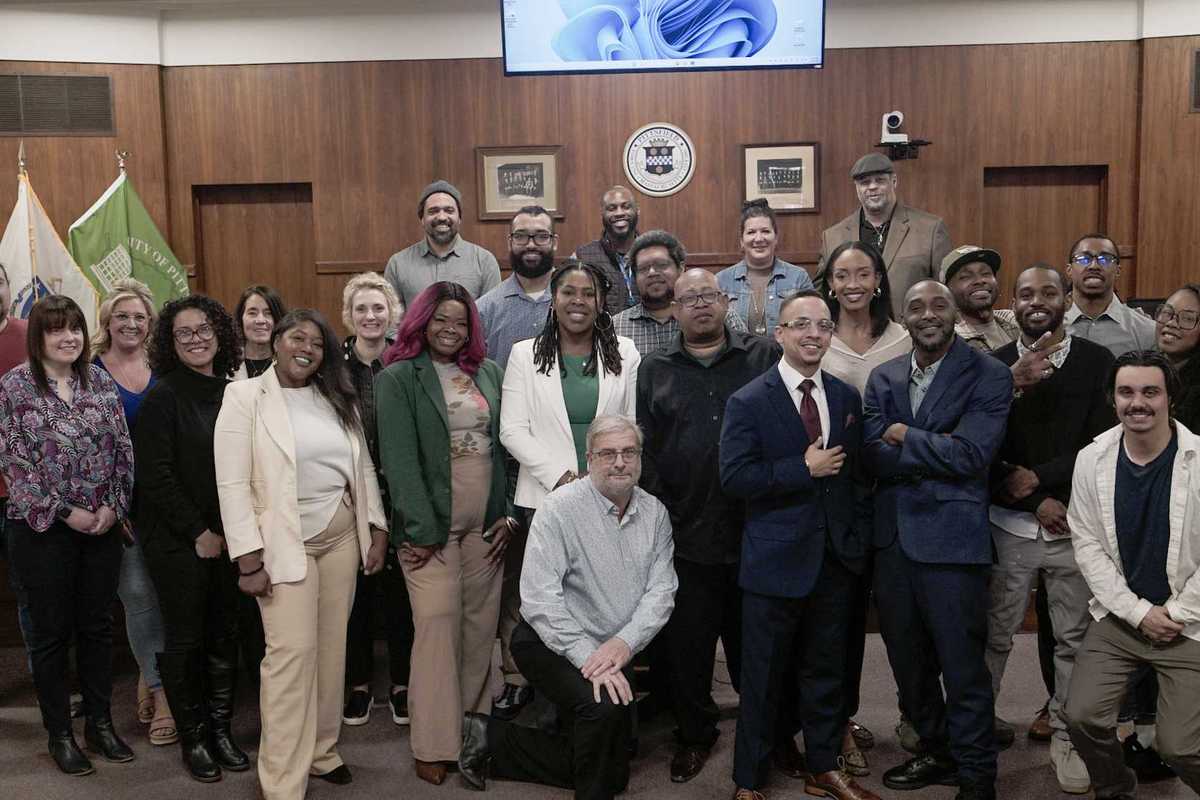
Nils Johnson, co-founder and president of The Little Red Barn Brewers in Winsted, hosted Chion Wolf and her Connecticut Public show “Audacious LIVE: Show and Tell,” which was broadcast on April 8, drawing a sold-out crowd.
Jennifer Almquist

The parking lot of The Little Red Barn Brewers in Winsted was full on Wednesday, April 8, as more than 100 people from 43 Connecticut towns — including New Haven and Vernon — arrived carrying personal treasures for a live taping of “Audacious LIVE Show & Tell.”

Chion Wolf, host and producer of Connecticut Public’s “Audacious,” and her crew, led by production manager Maegn Boone, brought the program to the packed brewery for an evening of story-driven conversation and shared keepsakes.

Keep ReadingShow less
Marge Parkhurst, the preservation detective

Marge Parkhurst with a collection of historic nails recovered from wall cavities during restoration work.

Photo courtesy of Marge Parkhurst/Cottage & Country Painting Company
Walls still surprise me. If you look hard enough, you can find buried treasure.
Marge Parkhurst

After nearly 50 years of painting some of Litchfield County’s oldest homes and landmark properties, Marge Parkhurst has developed an eye for the past—reading the clues left behind in stenciled vines, forgotten bottles and newspapers tucked into walls, each revealing a small but vivid piece of Connecticut history.

Parkhurst was stripping wallpaper in a farmhouse in Colebrook — the kind of historic home she has spent decades restoring — when she noticed something odd. Three layers of paper had already come off — each one a different era’s idea of decoration — and beneath them, just barely visible under dull, off-white plaster, a pattern emerged.

Keep ReadingShow less
Wings of Spring performance at the Mahaiwe Theater
Adam Golka
Provided

On Sunday, April 19, at 4 p.m., Close Encounters With Music (CEWM) presents On the Wings of Song at the Mahaiwe Performing Arts Center in Great Barrington.

The program focuses on Robert Schumann’s spellbinding song cycle Dichterliebe (“A Poet’s Love”), a setting of sixteen poems by Heinrich Heine that explores love, longing, and the redemptive power of beauty. Featured artists include John Moore, baritone; Adam Golka, pianist; Miranda Cuckson, viola; and Yehuda Hanani, cello.

Keep ReadingShow less
google preferred source

Want more of our stories on Google? Click here to make us a Preferred Source.

google preferred source

Want more of our stories on Google? Click here to make us a Preferred Source.