Thank you!
Your support is sustaining the future of local news in our communities.

Village renovation based on green building concepts

MILLERTON — Millerton has seen a lot of renovation during the past few years — numerous buildings have had exterior and interior makeovers, adding to the sense of sophistication and charm that exudes from village streets.

Add to the list 52 Main St., the former Rexall Pharmacy, which closed a couple of years ago when the late Dick Weinstein retired.

Since then, the storefront has remained vacant, a reminder of a bygone era, with the old soda counter on one side of the store and the bottle-lined pharmacy shelves on the other. Switch gears to today, when a very modern-thinking building owner is doing all he can to keep up with the times, and then some.

Meet Geoff Bundschuh, the forward-thinking landlord who “supports the principles behind green construction.� What’s more is he supports those principles through actions, and not just words.

Bundschuh has hired EcoBuild owner/contractor Don Najdek for the project. He’s also ordered that materials be recycled and renewed to make the old space new again. That’s the goal of both men, who have been collaborating on the renovation of the village property in the aim of creating two new spaces: one for Birch Brook Capital Partners, Bundschuh’s brokerage firm that will be located there, and another commercial space, which will go up for rent once completed.

The real news here is just how Bundschuh is approaching the project — from a very eco-friendly and conscientious perspective.

“We’re going to do everything possible to renew and reuse and recycle and it’s everything from recycling old ceiling panels, using reclaimed brick on the interior walls, to using soy-based insulation, it’s all very eco-friendly,â€� he said. “In terms of some of the existing insulation, we didn’t  throw any out because Fiberglass takes a long time to break down, so it will be reused.

“Really all of the steps have been at some degree of cost,� Bundschuh added. “It’s not a cost effective way to do it, but it’s certainly a way to keep waste down to a minimum. That’s really the focus of it.�

“The initial concept was to start with demolition and energy conservation — those are two of the biggest parts of construction that I try to focus on — waste reduction and energy conservation,� Najdek said, adding the project had about 6 tons of demolition that was able to be reused.

The drop ceiling tiles will be recycled, ground down and re-implemented and remade into new ceiling tiles. Old, clean framing lumber will be dismantled and either reused or cut up and stored for this year’s fuel consumption for fire wood. All florescent tubes filled with mercury are going to be recycled (one 8 foot long tube has enough mercury to pollute 1 acre of land and the project yielded roughly 350 tubes). The project is using reclaimed brick, which has come down considerably in price. Also, more windows and doors will be installed to try and make use of natural light.

“Geoff is very aware and conscious of the environment,� Najdek said. “He wants to continue doing not only this but future projects like this.�

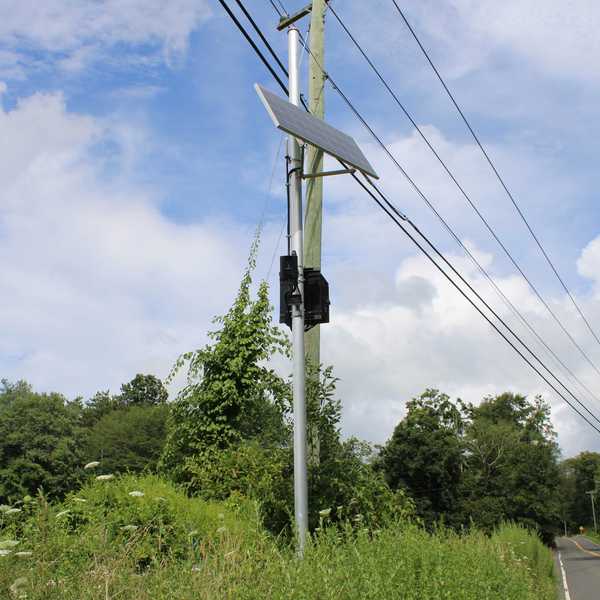
Najdek also has the environment on his mind. He operates his business, EcoBuild, through a mobile solar generator, through which all of his equipment is run.

“Throughout all of the old buildings in the village, the electrical systems are difficult to run high-powered equipment on, so I bring in my mobile solar generator,� he said. “I run my table saws, compressors, miter boxes, skill saws, drills — all necessary equipment to complete construction. One of the reasons I do it is yes, it’s interesting and nice advertising, but it’s really helpful to us because the old electrical system constantly pops breakers, and the down time in cooling off, this allows me not to have any issues. And it reduces my carbon footprint, which is obviously a big thing. Every little bit helps.�

It’s a popular phrase these days, and Najdek explained exactly what it means.

“I guess the best way to explain it, your carbon footprint is the lifecycle cost of energy to create a product for home or an office,� he said. “It’s the amount of energy it takes to create the electricity at a power plant that travels through a line that goes to whatever is being manufactured or made, including transportation of goods or services.�

“I think on a  broader scale you have to acknowledge that the country is certainly under President Obama’s administration to try to pursue the reduction in carbon footprints and energy efficiency and green developments across the board,â€� Bundschuh said. “Within that context I think small towns have no choice but to think about their futures this way ... and this will hopefully be available for homeowners in the future.â€�

“It’s nice to know that the impact and influence that you have is going to serve and provide energy reduction for many years to come,� Najdek added. “For example, going up and down Main Street, to know I was able to work on buildings such as Flood’s, Kamilla’s, Gilded Moon, Blue Star Gallery, Terni’s, and to constantly keep helping these historic buildings and not cripple the integrity of the buildings — many more people will be entering and looking and exiting these stores and buildings, so it will serve people. Now with Geoff, we can show people the benefit of future development and construction ... and it’s well worth it.�

Latest News

‘So Little to Do,’ so much to discover at James Barron Art

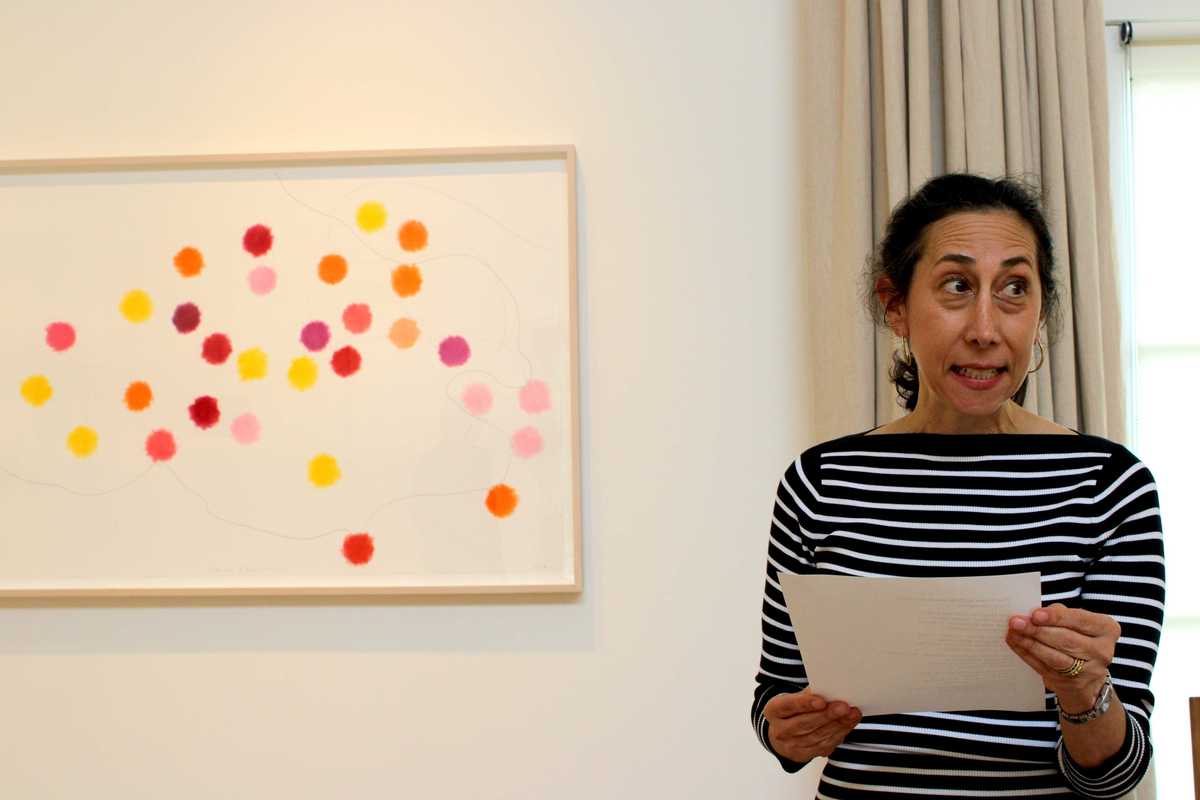
Curator Deborah Goodman Davis reads the Emily Dickinson poem “The Grass So Little Has to Do.” Spencer Finch’s “Following Three Bees (Zinnias)” buzzes in the background.

Photo by Natalia Zukerman

“The Grass Has So Little to Do,” on view at James Barron Art in Kent, takes its title from Emily Dickinson’s poem “The Grass So Little Has to Do,” written in 1862:

“The Grass so little has to do—
A Sphere of simple Green—
With only Butterflies to brood
And Bees to entertain—”

Keep ReadingShow less

Marina Kotchoubey is not a woodworker

Marina Kotchoubey is not a woodworker

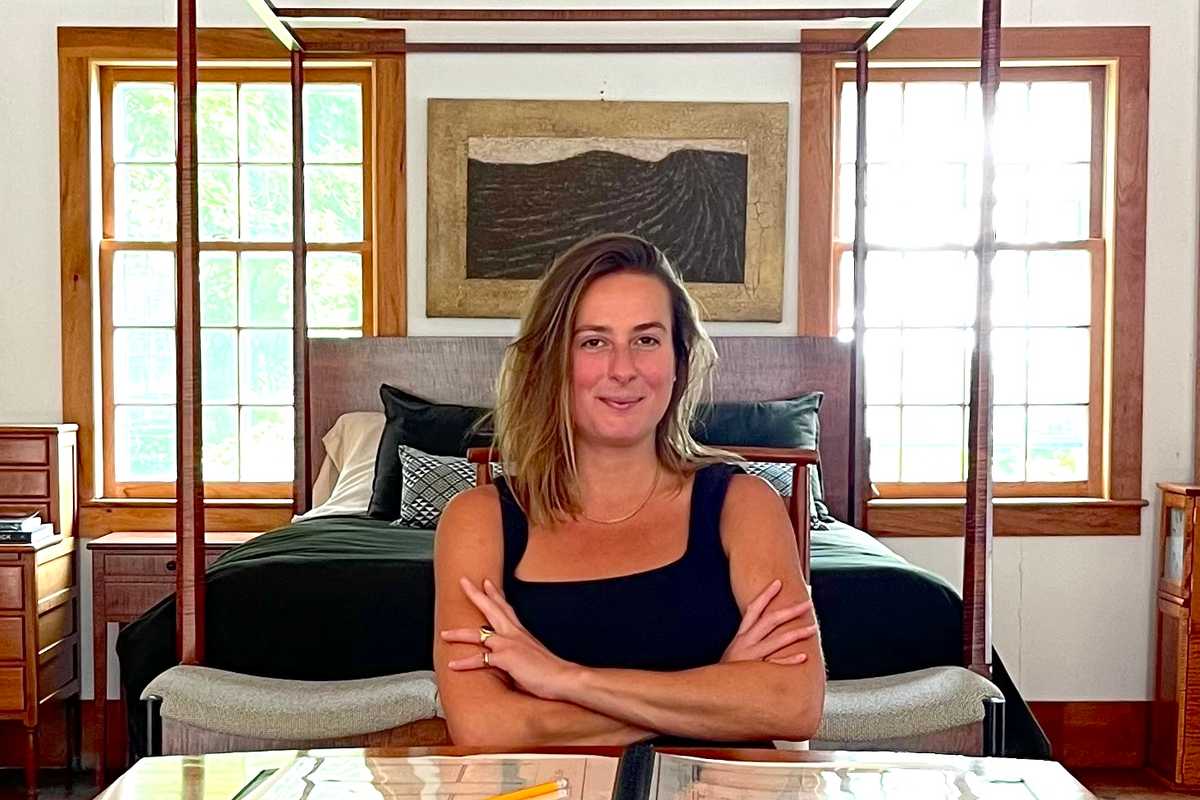
Marina Kotchoubey at the Ian Ingersoll Cabinetmakers showroom in West Cornwall.

Photo by D.H. Callahan

After 40-something years navigating the world of custom fine furniture, Ian Ingersoll was getting ready to retire. Starting off with a little dovetail stool that he sold at a shop in West Cornwall in the 1970s, he’d grown his skill and his business into something he — and the whole town — could be proud of. Shutting down that business was not an option.

Ingersoll built Ian Ingersoll Cabinetmakers, which produced mainly classical Shaker furniture, on passion: the passion he had to make a living through creative challenges and the passion of his employees, who all seem deeply in love with their craft.

Keep ReadingShow less
A legacy of giving at Norfolk Chamber Music Festival

One hundred and twenty years ago, Carl and Ellen Stoeckel commissioned New York architect E.K. Rossiter to design The Music Shed in Norfolk, Connecticut. After nearly a decade of entertaining their friends and neighbors with the finest music of the day, they built a permanent home for their beloved Litchfield County Choral Union.

The commission and full funding of the construction was not unheard of in an era when great fortunes led to public enrichment. Railroad tycoon John D. Rockefeller was instrumental in funding institutes of higher education. Steel baron Andrew Carnegie was building libraries all over the country, and famously said that a man who dies rich is a disgrace, challenging his peers to give their fortunes back to the people.

Keep ReadingShow less
google preferred source

Want more of our stories on Google? Click here to make us a Preferred Source.
Two unique exhibitions at Geary Gallery

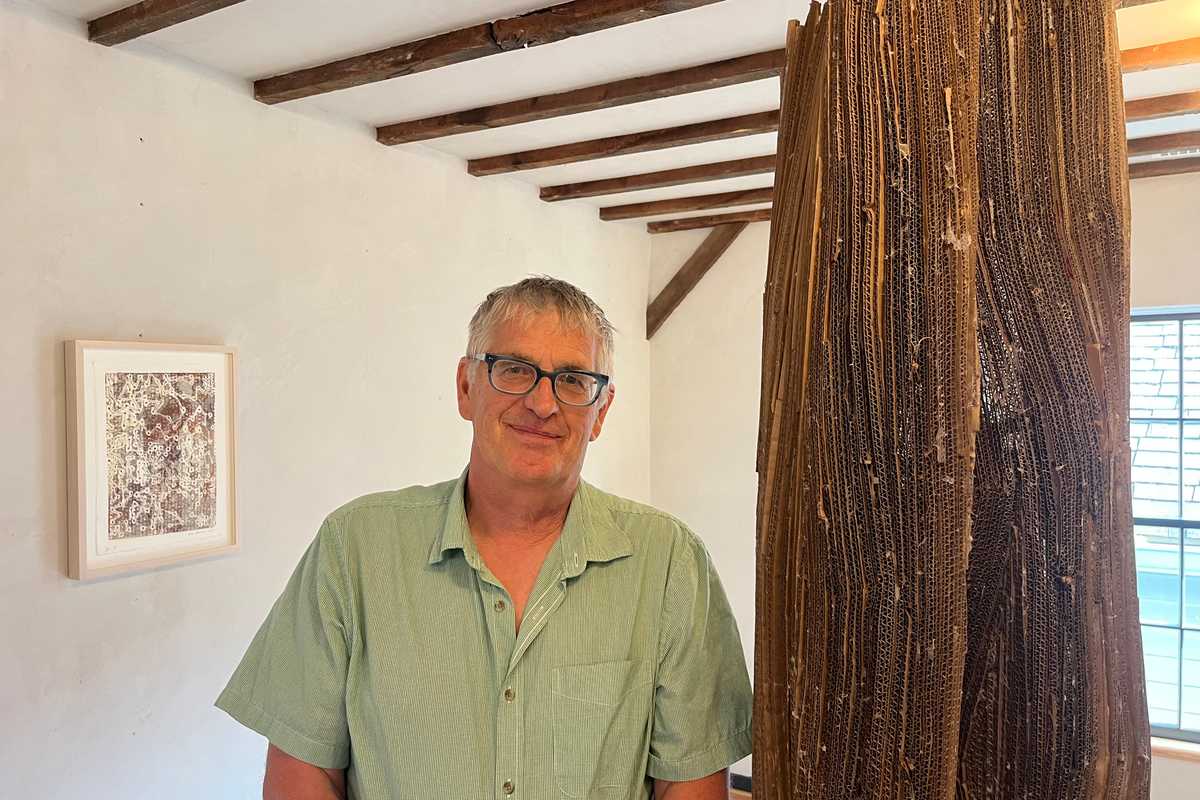
Henry Klimowicz with his sculpture, “Partial Pillar 1”

Photo by D.H. Callahan

On Saturday, Aug. 1, Geary Gallery opened its doors in Salisbury for two unique shows in its first- and second-floor gallery spaces. Art lovers flooded both floors over the course of the afternoon, giving the events a vibrant feeling that enhanced the importance of the art.

On the first floor is a show by Chicago-born, Colorado-based photographer Summers Moore, titled “Lobitos: Pueblo Fantasma,” or “Lobitos: Ghost Town.” The work centers around her daughter’s current hometown in Peru. Moore herself found a home away from home in Colorado in the mid-1980s and encouraged her children to seek out new places outside of their comfort zones.

Keep ReadingShow less

Writer’s retreat in the woods

Writer’s retreat in the woods

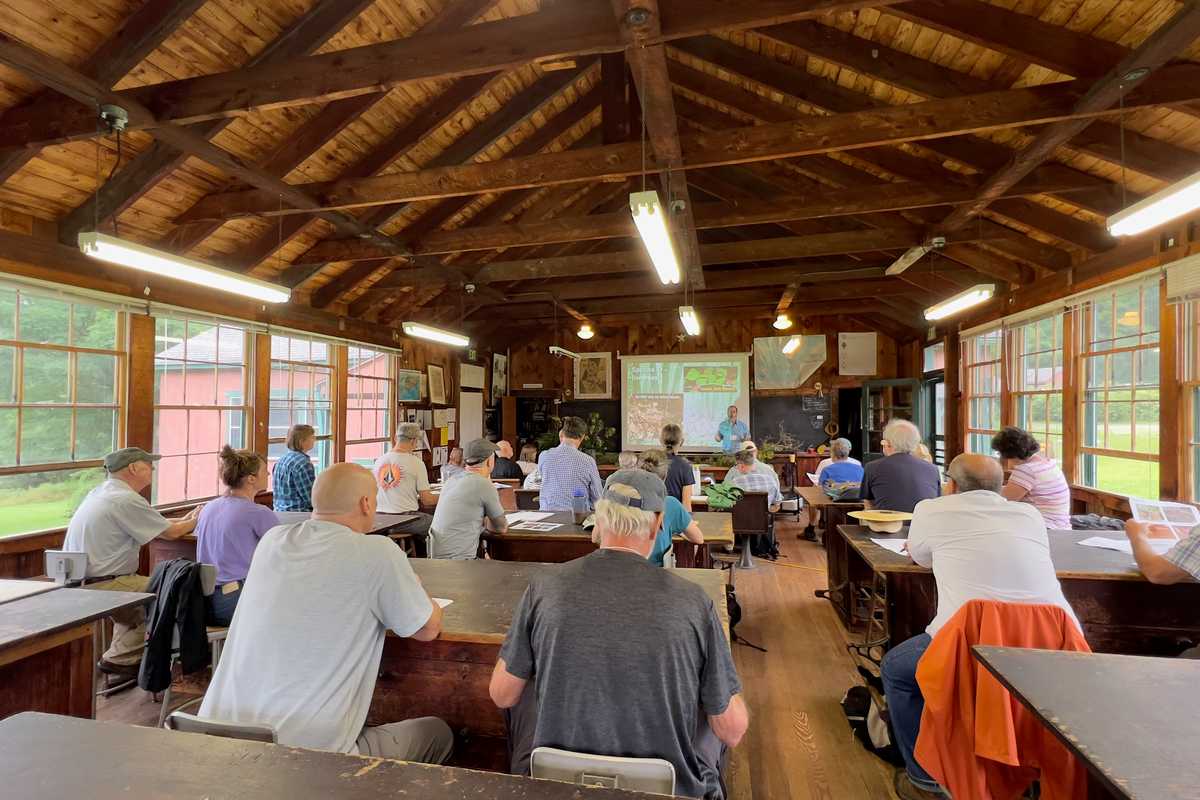
Participants in a 2024 Great Mountain Forest Woodland Academy workshop at Yale Camp.

Photo by Mike Zarfos

Great Mountain Forest (GMF) will host its first Nature Writing Retreat at the historic Yale Camp in Falls Village from Aug. 7-9, 2026. Writers of all levels are invited to draw inspiration from one of New England’s most notable forest landscapes. GMF envisions the retreat becoming an annual event celebrating writing, conservation and the relationship between people and forests.

This immersive three-day retreat reflects on the legacy of Hal Borland, the American writer and New York Times nature columnist whose work was deeply connected to this landscape. The retreat explores how wilderness shapes language, strengthens close observation and fosters environmental consciousness.

Keep ReadingShow less
From Cornwall to Rome, Adam Van Doren at Berkshire Botanical Garden

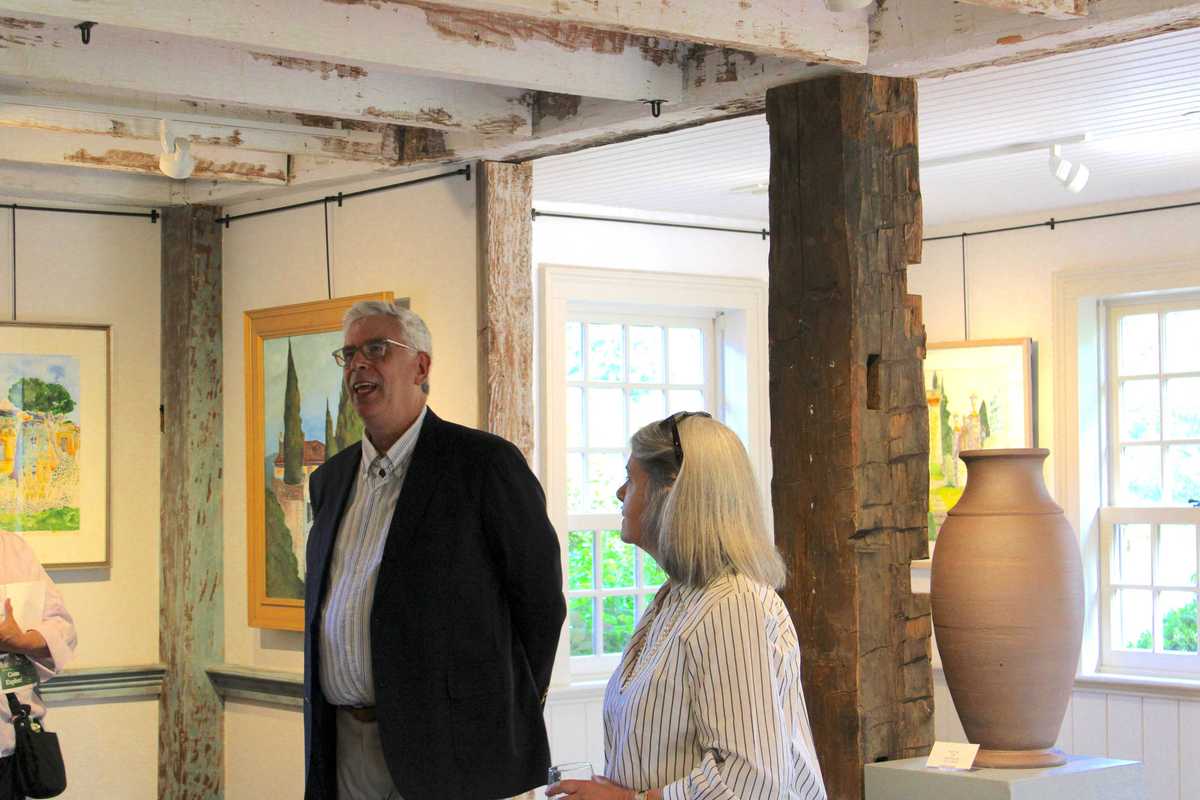
Artist Adam Van Doren and curator Donna Hassler talk to a group of visitors at the Berkshire Botanical Garden. A Stephen Proctor vessel sits to their left.

Photo by Natalia Zukerman

This summer, the Berkshire Botanical Garden in Stockbridge has hosted “Grounded in Nature: Paintings by Adam Van Doren,” an exhibition exploring the intimate relationship between architecture and the natural world.

On view for only a few more weeks in the Leonhardt Galleries, the exhibition features more than 35 watercolor and oil paintings by the New York-based artist, architect, author and Yale professor, curated by art historian Donna Hassler, director emerita of Chesterwood. The works span three distinct places that have shaped Van Doren’s artistic practice: New York City, Cornwall, Connecticut, and his travels throughout Europe.

Keep ReadingShow less
google preferred source

Want more of our stories on Google? Click here to make us a Preferred Source.
google preferred source

Want more of our stories on Google? Click here to make us a Preferred Source.