WINSTED — Two separate violent incidents near Highland Lake in the past month resulted in hospitalizations, one significant enough to require a LifeStar helicopter and recovery in a rehabilitation facility.Winchester Police Chief Robert Scannell confirmed this week that the department is investigating an incident that took place some time between Friday night, Oct. 28, and early Saturday, Oct. 29, in which a local resident, Brandon Gurtowsky, 27, was brutally assaulted, somewhere near Resha Beach. Gurtowsky suffered traumatic head injuries, facial fractures and shattered hands in the attack, and was reportedly dropped off at Charlotte Hungerford Hospital in Torrington by friends after the incident. Gurtowsky traveled by LifeStar helicopter to Hartford Hospital, where he spent a week in an induced coma with cerebral hemorrhaging.It wasn’t until noon on Saturday, Oct. 29, that the Winchester Police Department received a call from Torrington police indicating that the assault may have happened in Winsted.“We’re pretty sure it happened near the Resha Beach parking lot, however we’re no closer to an arrest,” Scannell said Tuesday. “But there has been very limited cooperation from the witnesses.”Gurtowsky was hospitalized at Hartford Hospital and is now recovering from severe facial fractures, a broken jaw and broken hands, according to his girlfriend, Amy Root. Root said in an interview Tuesday that Gurtowsky and two friends were traveling together in a friend’s car Oct. 28 and that she doesn’t know who attacked Gurtowsky.“For some reason his friends aren’t saying anything,” Root said. “Someone might have been trying to blame him for something that was stolen.”Root acknowledged that Gurtowsky has had some trouble in the past. “He’s from Winsted and he used to be a troublemaker,” she said. “The cops don’t really like him because when he was younger he was in a lot of trouble, but he’s grown up.”Chief Scannell said the department does not yet have suspects in the case and that the timing of the call, along with uncooperative witnesses, has made for a difficult investigation.“We were alerted at noon the following day by Torrington police, who told us the victim had been dropped at Charlotte at 2 a.m. [on Oct. 29],” he said. “They started an investigation and they determined the incident might have happened up here. They got in touch with us, but needless to say, some of the tracks were cold.”Root said she is concerned that Gurtosky’s friends have been unwilling to explain what happened. “Everyone is saying something different, and his friends won’t speak up,” she said. “They’re saying they don’t remember. I was home sleeping, and I got a phone call that he was being LifeStared to Hartford. I think someone wanted to kill him.”Gurtowsky remains in a rehabilitation facility in Hartford with his jaw wired shut and a tracheotomy in place. Root said he is expected to remain in rehabilitation for at least two weeks.In a separate case, Scannell said another fight occurred Oct. 14 near Highland Lake, in which an unidentified 17-year-old male resident of the Highland Lake area received numerous lacerations requiring hospitalization. “It appears that these are people who know each other,” the chief said regarding the victim and the suspects. The exact nature of the fight is not known, the chief said, but the department does expect to make arrests in the case. “We have identified suspects,” he said.Scannell said Highland Lake residents are not in danger and that the two violent incidents are coincidental and appear to involve people who know each other. He asked anyone with information about either incident to contact the Winchester Police Department at 860-379-2721.
Latest News

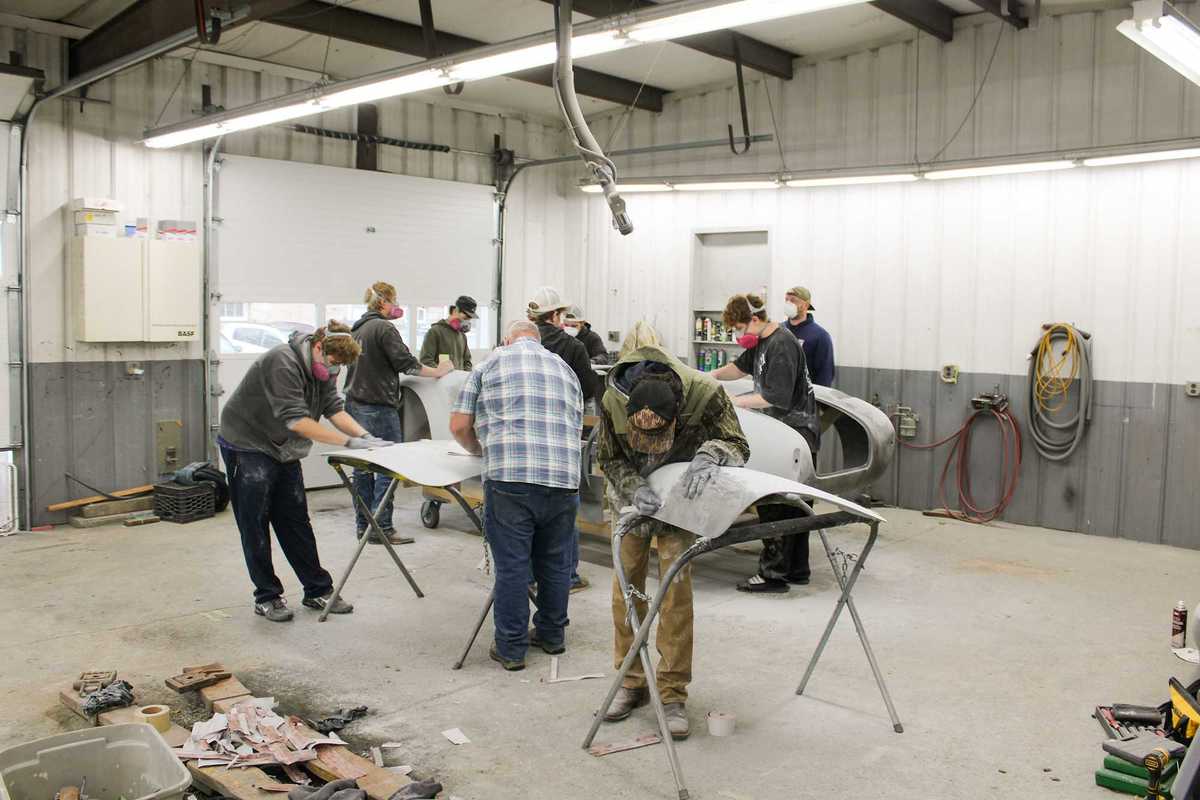
Pine Plains students prep race car at Sharon Auto Body Shop
“They’re trying to get a nice uniform surface,” said Benincasa. “Last year, a shop just did this part themselves. It looked great, but the kids didn’t understand what happened. This year they’re doing it themselves.”
This is the second year that Stissing Mountain seniors have participated in the Winners Circle Project, a New York-sponsored competition that teaches students how to build—and sell—a race car.
Under the watchful eye of Jim Benincasa, a teacher at Stissing Mountain Jr./Sr. High School, the teenagers will assemble a car from scratch.
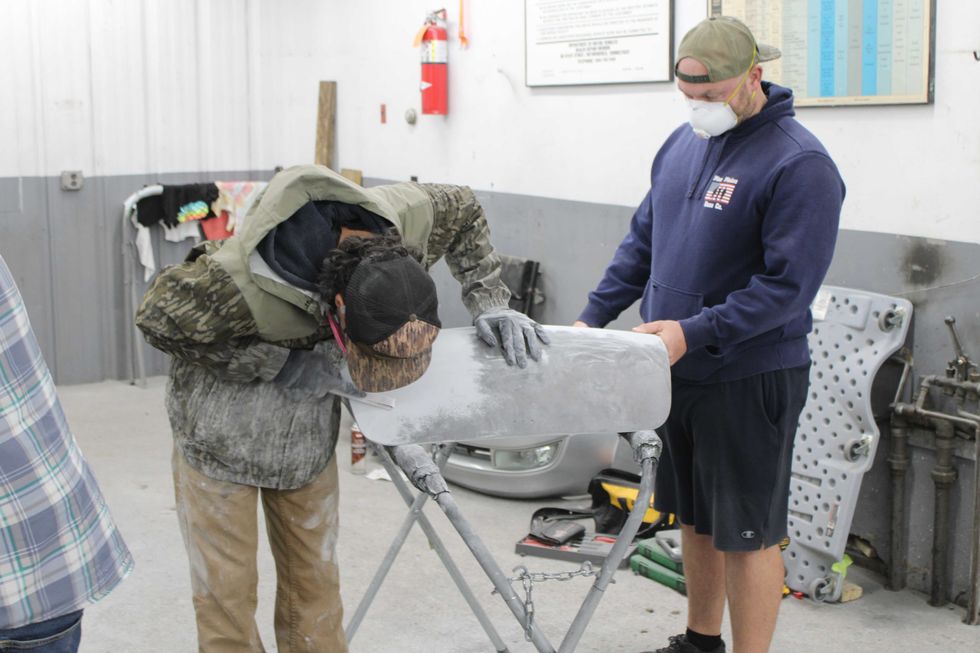 Students received help and advice from Sharon Auto Body employees and Stissing Mountain High School teacher Jim Benincasa.Graham Corrigan
On Nov. 12, the class convened at Sharon Auto Body Shop in Connecticut to smooth down the component parts.
About 10 students were scattered around the car’s component body parts.
“They’re trying to get a nice uniform surface,” said Benincasa. “Last year, a shop just did this part themselves. It looked great, but the kids didn’t understand what happened. This year they’re doing it themselves understand.”
Benincasa said the engine and chassis had recently arrived. They’ll install those parts in the coming weeks. But the build is only half of the project.
The Winners Circle Project also involves a marketing class that handles the promotion and sale of the car. They’ll document the car’s progress and create marketing materials to help advertise the car for its eventual sale.
The proceeds will go towards next year’s class. “Some of the marketing class is in the build class this year, and some of the build class is in the marketing class,” Benincasa said. “It definitely helps to have a better understanding of what both sides do.”
For their second year in the competition, the Pine Plains team is building a Ford Cobra model from a kit —the same car as last year. This time around, however, they’re painting it a charcoal gray instead of last year’s blue. Last year’s car sold for nearly $60,000.
In 2019, the Winners Circle Project started in Ithaca, and has since expanded to other areas of New York.

Want more of our stories on Google? Click here to make us a Preferred Source.
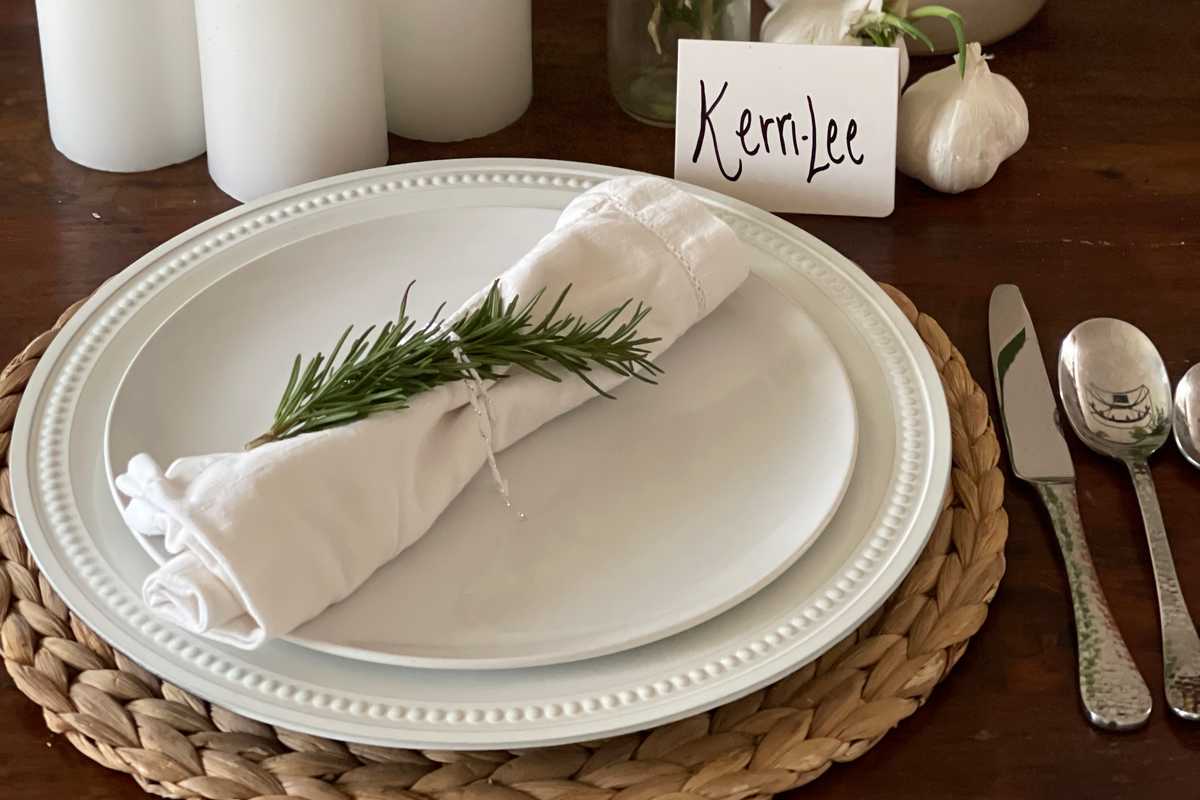
White plates for the win! The food will be the star while seasonal herbs make for fragrant decor.
Start with plain, inexpensive white plates. Think of them as the little black dress of your dining room. They never go out of style, work for every occasion (you don’t have to worry about breaking them) and make whatever you’re serving look that much more inviting. From colorful salads to a traditional holiday feast, white dishes allow the food to take center stage without competing with busy china patterns.
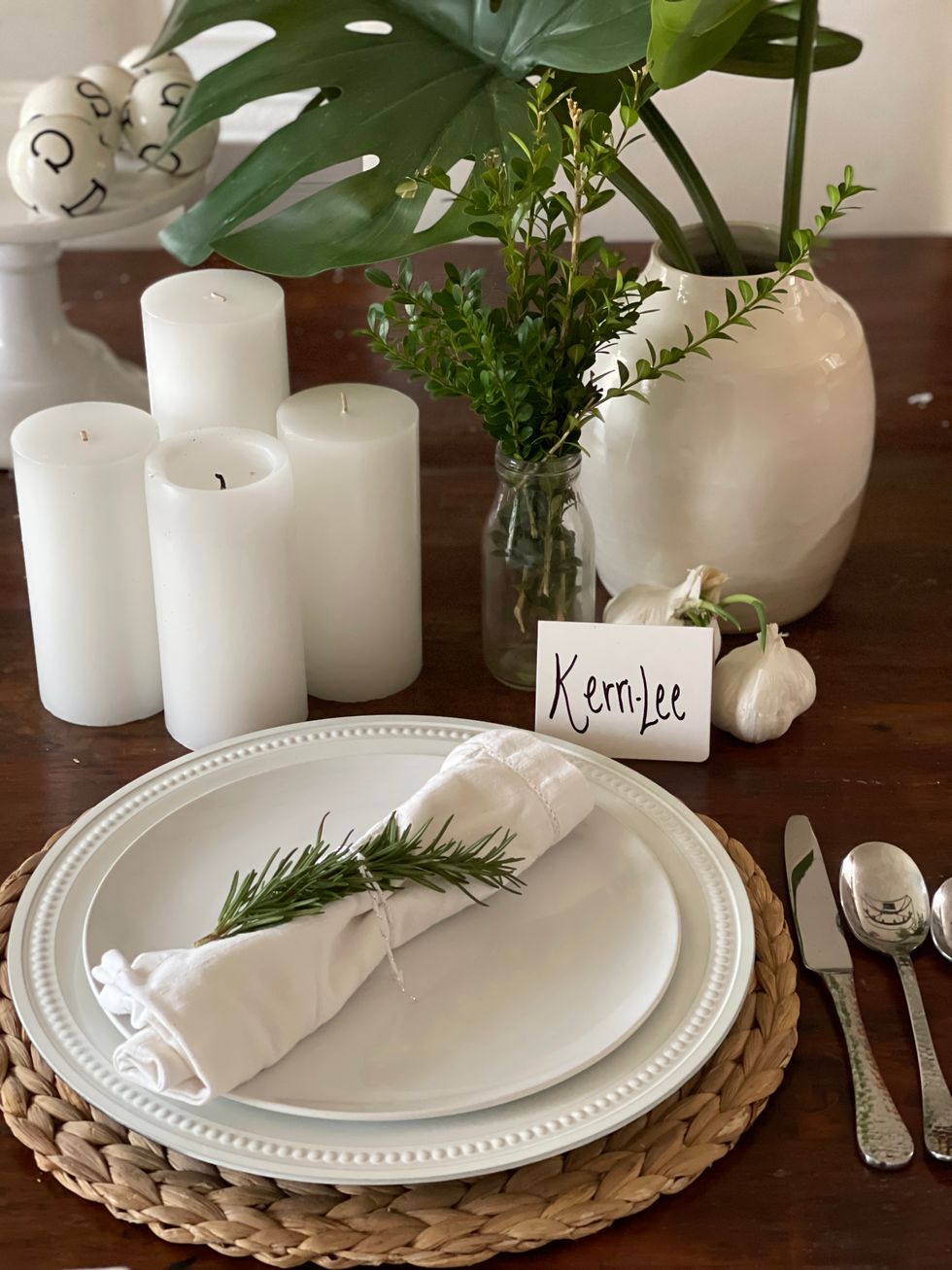 White plates for the win! The food will be the star while seasonal herbs make for fragrant decor.Kerri-Lee Mayland
If your plates do not match, that’s OK! Repeat something else, such as a napkin color or a drinking glass, to give the table a sense of connection. A collected table often feels warmer than one purchased all at once.
Before buying decorations, step outside.
A few fallen twigs in a pretty vase can create a graceful centerpiece. Pine cones, acorns and colorful leaves can be arranged down the middle of the table. Small evergreen clippings or herbs tucked into napkin rings bring in texture and a seasonal scent.
Keep in mind: Gather only where you have permission, check everything for insects and keep unfamiliar plants away from food, children and pets. Use little vessels to separate greenery from dishes, and keep anything dry safely away from candle flames.
The grocery store offers another decorating aisle: produce.
Pears in a wooden bowl, a line of apples, lemons in clear glasses or small pumpkins scattered among serving dishes can look wonderful. I have arranged produce down the entire length of a table and cooked with it as the holiday weekend went on. A centerpiece that becomes tomorrow’s lunch is a good investment.
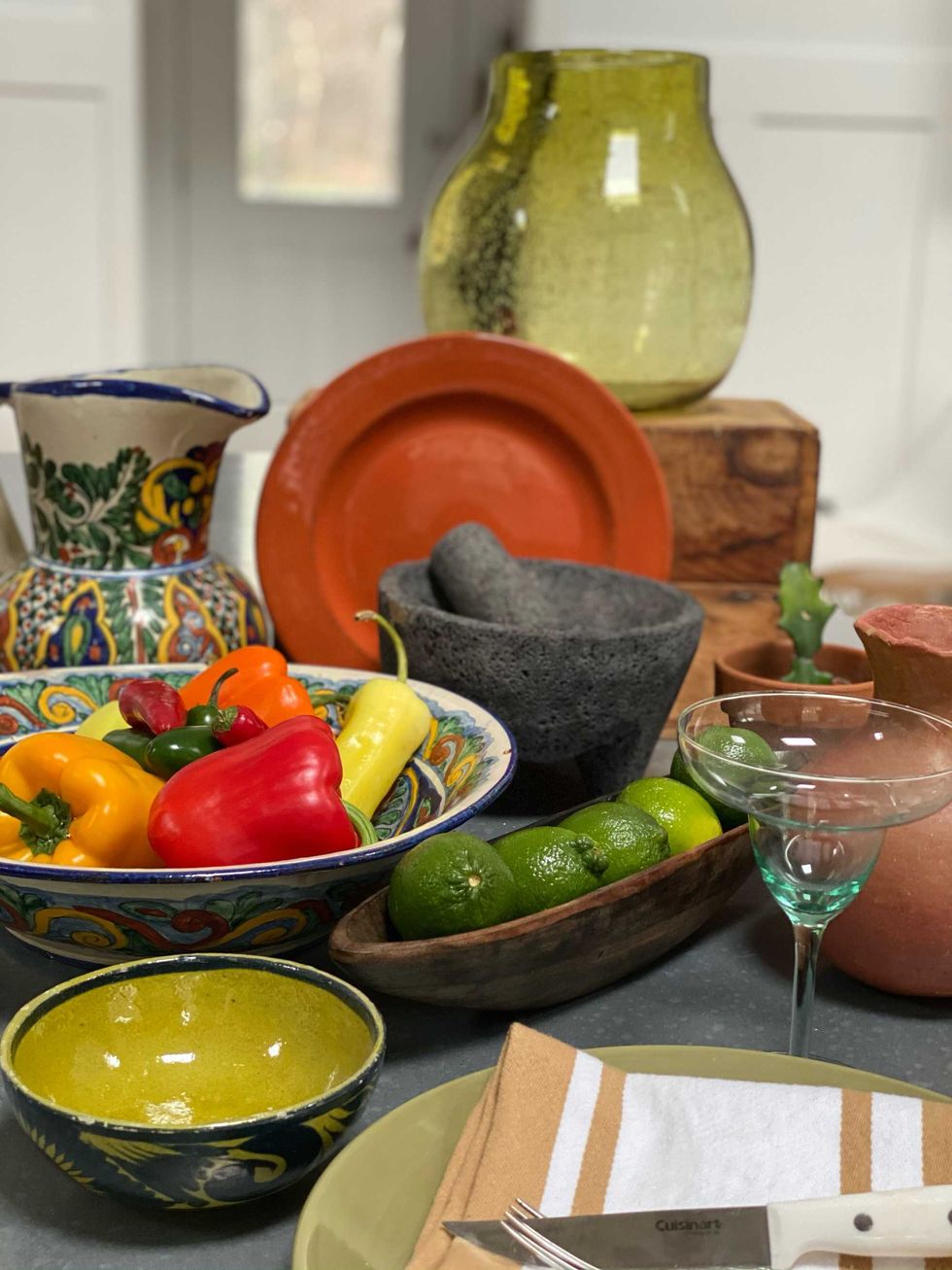 Shop the house! A favorite bowl or pitcher from your travels, a ceramic bowl your child made, use a wooden vessel for fruit that can become part of the centerpiece.Kerri-Lee Mayland
Then shop your own house. A scarf can become a runner. A cutting board can anchor a centerpiece. Little bowls, old bottles and pitchers can hold flowers, greenery or even candles. Turn a cake stand into a pedestal for fruit, giving the table height without purchasing another decorative object.
Thrift stores are good places to find pieces with personality. Look for brass candlesticks, cloth napkins, small bud vases and interesting serving bowls. You do not need six identical finds. Three different vessels become a collection when each holds the same kind of stem.
Inspect dishes for chips and cracks, and reserve questionable vintage pieces for decoration rather than serving food.
Fabric does a surprising amount of work. An inexpensive length of washable cotton can become a runner, while neatly folded kitchen towels can stand in for oversized napkins. Keep the palette simple and let texture supply the interest.
Personal touches are a win-win: They cost very little and mean a whole lot. Write guests’ names on folded paper, tie a handwritten note around each napkin or place an old family photograph beside a setting. Whatever holiday you are celebrating, invite guests to share a favorite memory or tradition.
Those details give people something to talk about before the first course arrives.
Lighting matters. Lower harsh overhead lights and gather a few battery-operated candles along the center (or use real flames when safe!). Keep arrangements low enough for conversation, and leave room for the platters. You want to prevent guests from having to peer at each other through branches or move half a centerpiece to pass the potatoes!
If the table is small, decorate the sideboard instead. And take some pressure off yourself — a welcoming room does not require every inch of the dining table to carry the theme.
The most memorable tables make room for people: their stories, their favorite dishes and their willingness to linger. Set yours with what you have, add something personal and let the warmth of the holiday celebration do the rest.
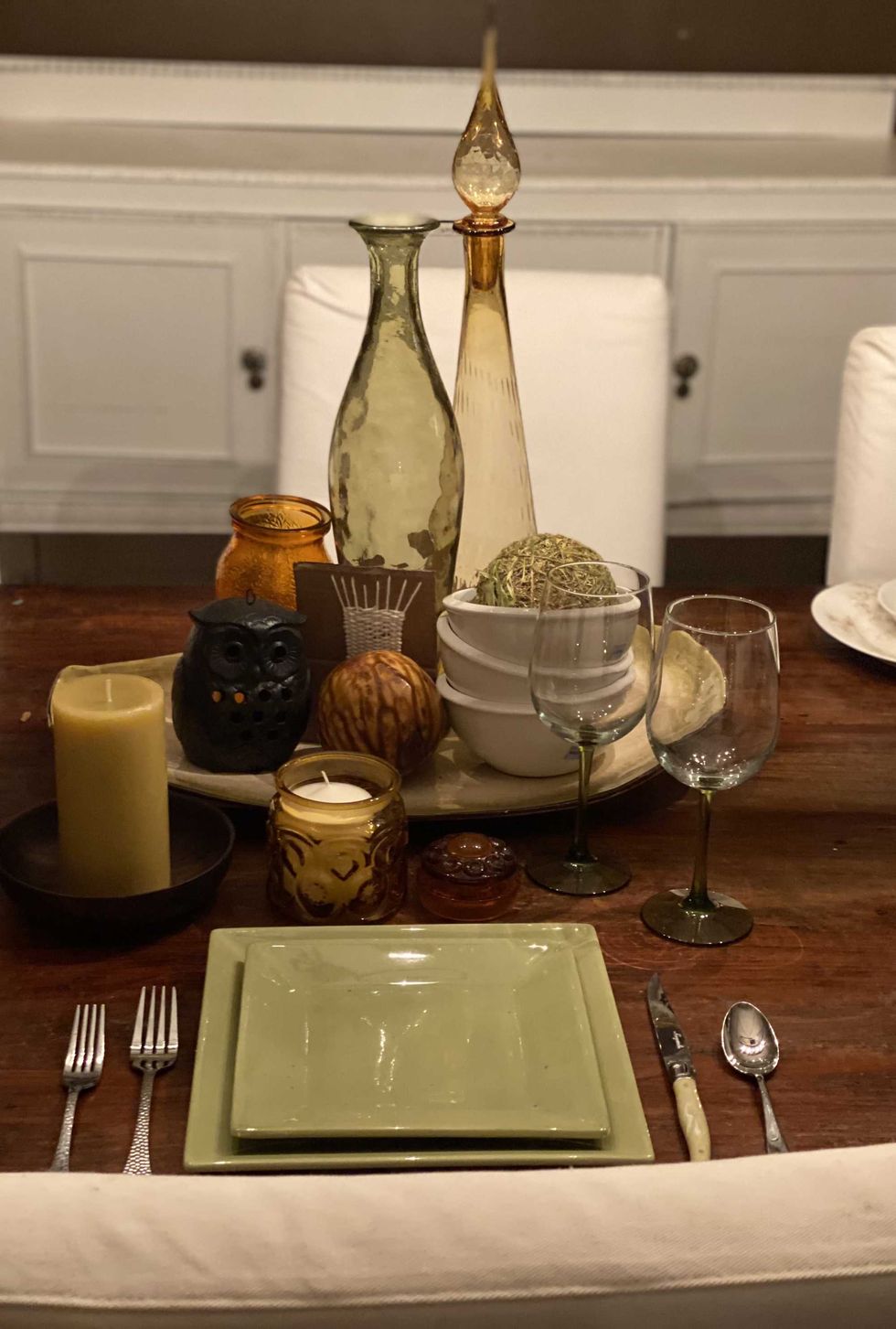 Thrifted mismatch! Gather unique unexpected things and cluster them for a fun centerpiece.Kerri-Lee Mayland
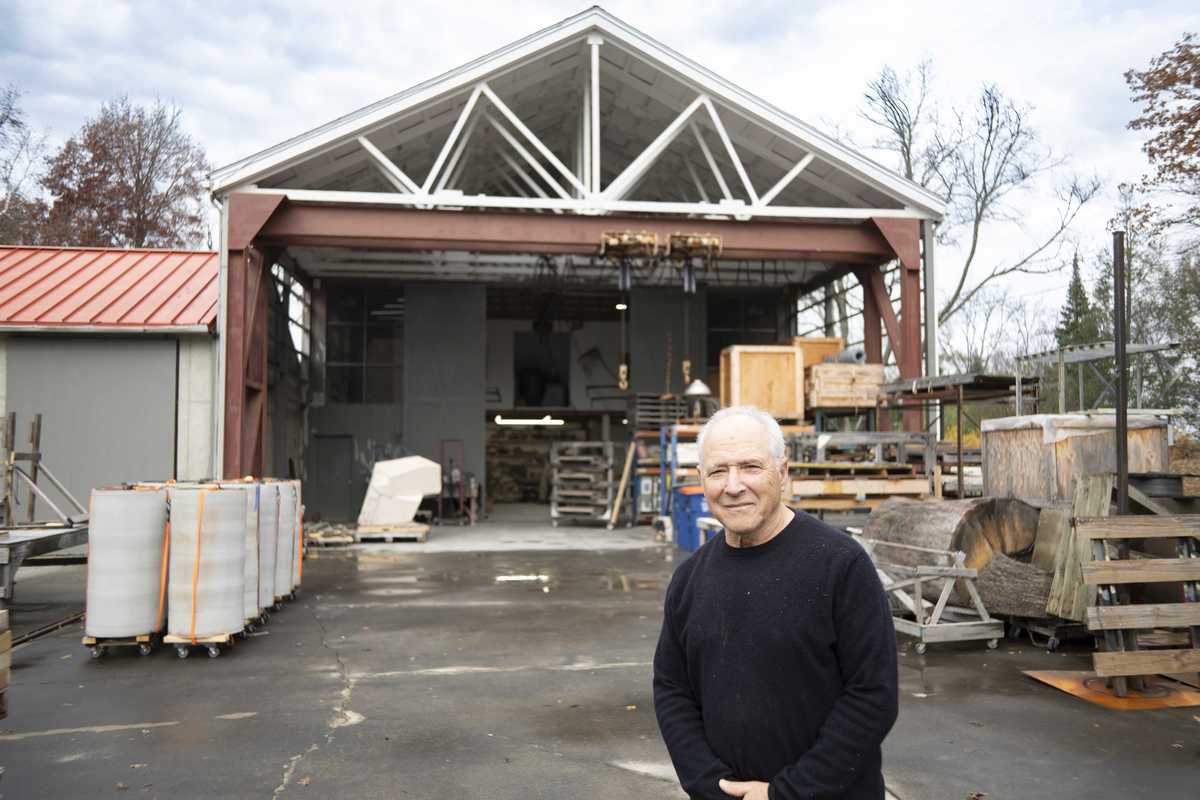
Paul Chaleff
There were no artists in the family and no connections to the art world. Yet, as a child, Chaleff loved making things. When his parents bought a house and renovated it themselves, his job was to collect nails with a magnet. He also loved spending time in his great-uncle’s workshop, shellacking and helping with small projects. He was an adventurous child and roamed the neighborhood collecting anything that caught his eye. His father often joked that there wasn’t a piece of neighborhood trash Chaleff didn’t drag home.
Still, he never imagined these experiences might lead to a life in the arts.
At the Bronx High School of Science, he excelled in geometry. “No one could come close to me,” he recalled. “I felt comfortable with three-dimensional space; it made sense to me.”
He enrolled at City College of New York (CCNY), intending to study science and perhaps become a dentist. Art was something he enjoyed, but he had not considered it as a career. Then one of his professors asked a question that changed everything: “Why are you studying biology? Don’t you know you were born to be an artist?”
When Chaleff admitted he’d never even visited an artist’s studio, the professor arranged a visit to a friend’s studio in the West Village.
“I decided right there and then that this would be my life.”
At CCNY, Chaleff studied under accomplished ceramic artist and educator Walter Yovaish, who became a longtime friend and mentor. He was in the first group to graduate with an MFA from the college’s new program, earning a fellowship and teaching in the ceramics department. His early work included ambitious clay murals and sculptural fountains, some inspired by the social and political issues of the day.
But it was Japanese ceramics and calligraphy that would ultimately shape his artistic direction. A fifth-century Japanese wood-fired bottle by one of Rosanjin’s workers, displayed at the Japan House Gallery in New York and associated with the ancient anagama firing tradition, made a lasting impression.
Through a fortunate friendship with legendary Japanese calligrapher Kampo Harada, Chaleff moved to Japan, spending two years studying ceramics, working alongside accomplished Japanese artists and mastering the demanding tradition of wood-fired pottery.
Returning to the United States, he joined a group of artists establishing Stissing Hollow Craftworks, a craft community in Pine Plains. He built a studio and one of the country’s first anagama wood-fired kilns, bringing the ancient Japanese ceramic tradition to America.
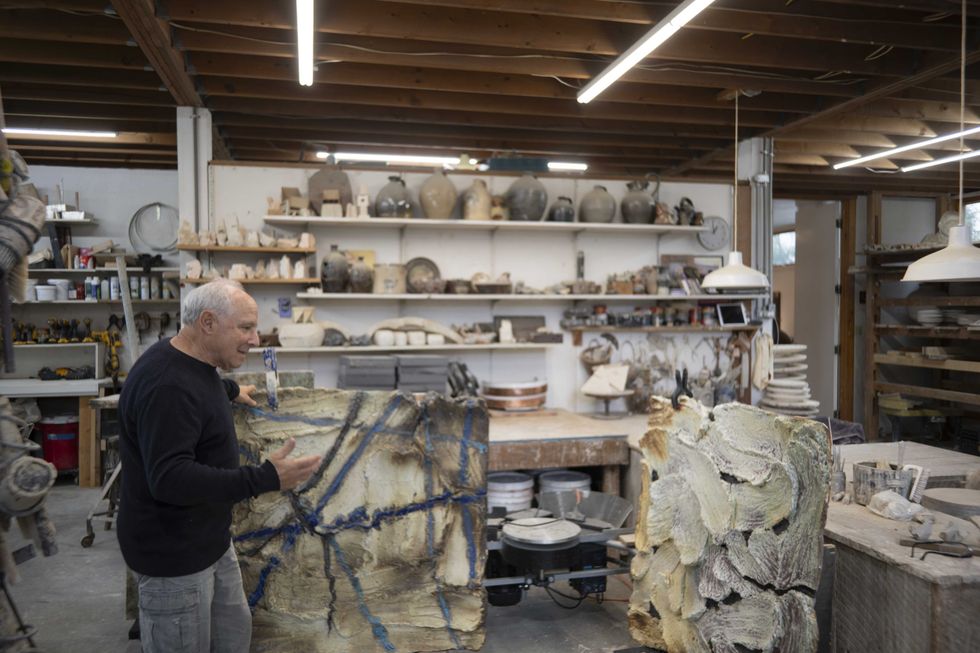 Paul Chaleff in his studio with some recent ceramic sculptures.Annette Stover
His ambition was not simply to recreate Japanese pottery but to develop a language of his own while making beautiful, meaningful ceramics that were within reach of all.
Recognition followed. At the 1978 Rhinebeck Crafts Fair, his work caught the attention of Rand Castile, founding director of the Japan House Gallery. Astonished by what this American artist had accomplished, Castile introduced Chaleff’s work to Arthur Drexler, the celebrated director of the Museum of Modern Art’s Department of Architecture and Design.
Today, Chaleff’s work is held in the permanent collections of the Metropolitan Museum of Art, the Museum of Modern Art, the Museum of Fine Arts in Boston, the Los Angeles County Museum of Art and the Smithsonian’s Renwick Gallery, among many others.
Yet international recognition has not changed his daily routine. Chaleff continues to work every day in his renovated sculpture studio in Ancram, where he lives with his wife, Haesook Kim, a retired professor of sociology.
There is plenty to look forward to. Chaleff’s work can be seen in the “Perfect Imperfection in Ceramics” recurring exhibition at the Metropolitan Museum. MoMA plans to include one of his vases in their exhibition, “Bold Is Better: ‘80s and ‘90s Design,” opening Jan. 17. Closer to home, beginning Dec. 5, Mad Rose Gallery in Millerton will showcase a selection of his powerful and socially significant cylindrical forms, new wood sculptures and a group of jar forms.
There is something timeless about Chaleff’s ceramics. They seem almost discovered rather than made, as though the earth has been waiting for his artistic vision to release long-dormant shapes and structures in clay.
There was no road map for his journey from a working-class Bronx neighborhood to Japan and the world’s great museums. It came through curiosity, friendships, a willingness to take chances, his sense of humor and, as Chaleff readily admits, a good deal of luck.
We are fortunate that this internationally celebrated artist continues to make his home and his art here in our community. And even more fortunate that he is still making something new every day.

Want more of our stories on Google? Click here to make us a Preferred Source.