

Latest News
Let's Hear It - June 25, 2026
Lakeville Journal
Jun 24, 2026

This Week
Summer is here, bringing long days, local events, gardens, lake time, family visits and, for some, a chance to slow down.
What are you looking forward to this summer? Is there a place you plan to visit, a restaurant you want to try, a show or concert you hope to see, a trail you want to explore or a summer tradition you never miss?
Send your responses to social@lakevillejournal.com by Monday, June 29 at 10 a.m. or comment on Facebook or Instagram.
We’ll publish a selection in next week’s paper.
Last Week’s Question
Should communities hold on to fireworks, embrace drone shows or find room for both?
“Ask the dogs …”
— Heron Hill
“This is a tough question. Drone shows are much more expensive and mostly unaffordable to small towns who have yearly traditions of fireworks. However, fireworks really aren’t good for multiple reasons, including the environment, wildlife and our Veterans. Wish there was a happy-medium like a silent firework!”
— Jessie Lawrence, Canaan
“Perhaps instead of each individual town igniting fireworks we could combine resources for a regional drone show. It’s way past time we should take climate action & consider air quality & effects on animals & humans with PTSD.”
— Lisa Palmer
“Prefer drone shows. Safer and quieter. Drought conditions, wildlife, vets and first responders with PTS and anxious pets.”
— Chloe Keyzn
Keep ReadingShow less
Letter to the Editor - June 25, 2026
Lakeville Journal
Jun 24, 2026
Thanks to community and volunteers for Fix-it
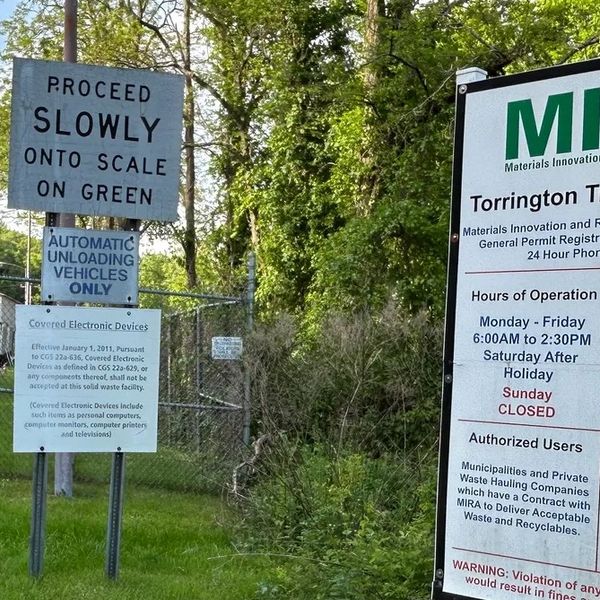
The organizers of the second annual Salisbury Fix-it Pop-Up would like to thank the community and the volunteers for making this year’s event a wonderful community building event. On May 23, over seventy people attended with over 100 items in need of repair. Our skilled volunteers - Paul Bascik, Rob Buccino, Arthur Fort, Angela Lomanto, Shepherd Myers, Pastor John Nelson, Karin Noyes, Bob Palmer, Pat Palmer, Barbara Reeves and Steven Wolf - worked diligently to repair as many items as possible. A shout out to Karen Vrotsos for promotional emails and scheduling through the library and Sarah Curtis for assisting with registrations. Thank you to Barbara Bettigole and the Salisbury/Sharon Transfer Station for supporting the signage around town. Thank you to the Congregational Church of Salisbury for the use of the parish hall. Thank you to the Lakeville Journal for putting our event in your events calendar and for printing Patrick Sullivan’s photo and article that appeared in the May 28 issue of The Lakeville Journal.
Thank you,
From the Organizers:
Angela Lomanto and Pat Palmer, the Congregational Church of Salisbury
Karen Vrotsos, Scoville Memorial Library
Barbara Bettigole, TRAC (Transfer Station Recycling Advisory Committee)
Keep ReadingShow less

Want more of our stories on Google? Click here to make us a Preferred Source.
Does declining immigration mean growing employment?
Bill Schmick
Jun 24, 2026
The immigration policies of the Trump administration may have some unexpected consequences in an era when Baby Boomers are leaving the workforce. Couple that with the AI boom, and we may be in for decades of lower productivity and a declining workforce.
Illegal immigration has already fallen by over 80% since Trump took office, while legal asylum seekers entering the U.S. has dropped by 99.9%, according to the Cato Institute. The reduction in legal immigrant entry have also been effective and are 2.5 times lower than illegal entries.
Last week the Republican House passed an additional $70 billion in spending for an immigration crackdown bill. They passed their bill by 2 votes. Now the legislation moved on to the Senate. The money will fund immigration enforcement. Clearly, the war on immigration continues.
In retrospect, today’s anti-immigration policies collides with one of the enduring American myths; that of the ‘melting pot.’ It was a cornerstone of American identity for decades. Without immigrants, so the story goes, there would be no United States. In one sense that is true, since the only inhabitants of North America in the time of the colonies were native Americans.
Although America’s population makes up about 4% of the world’s total, it accounts for 17% of all international migrants. As of 2023, more than 47.8 million immigrants lived in the U.S. That was the largest absolute number in the nation’s history. This foreign-born population accounted for 14.3% of the total population, almost as high as its 1890 peak of 14.8%. Historically, when immigration numbers have reached this level, there has been a backlash in attitudes towards immigrants.
In past columns, I have delved into America’s love/hate relationship with immigrants. As early as 1751, Benjamin Franklin worried about the number of Germans “swarming” into the colony of Pennsylvania. Suffice it to say that in the most recent presidential election, the majority of voters approved of Donald Trump’s anti-immigration rhetoric.
One result of these efforts has been a steep decline in U.S. population growth. One of the steepest in many years. Why does that matter? For one thing, lower population growth equates to a smaller workforce over time. The Congressional Budget Office had projected that higher-than-expected immigration levels between 2024 and 2034 would have increased U.S. GDP by an estimated $7 to $8.9 trillion.
Their analysis, along with that of many economists, argues that immigration was vital to economic growth. It does so by expanding the labor force and boosting consumer demand. Today, as the number of new immigrants decline precipitously that rosy view of economic growth and productivity is no longer a sure thing.
The analysts at the Federal Reserve Bank closely monitor employment, since full employment is one of its most important objectives. This year, they found that the monthly job gains required to keep unemployment steady (the breakeven rate) have now dwindled to near zero. Few economists expected to see the results of this drop off crop up so soon in the monthly employment figures. The immigration slowdown seems to be having an outsized impact on labor force growth.
Normally, a decline in job growth would signal an economic slowdown, but not this time. Employment growth has been anemic, and yet GDP growth has forged ahead. The combination of lower immigration, retiring Baby Boomers, and the advent of labor-saving AI is impacting job growth but not GDP growth, or at least not yet.
As for the labor market overall and its impact on the economy, both the retiring Baby Boomer workforce and declining immigration do not bode well for productivity growth. There is a hope that artificial intelligence will reverse the hit to productivity, but others argue that it will only do so at the expense of labor.
In my next column, I will expand on the benefits of immigration and exactly how the lack of it can hurt U.S. productivity.
Bill Schmick is a founding partner of Onota Partners, Inc., in the Berkshires.Bill’s forecasts and opinions are purely his own and do not necessarily represent the views of Onota Partners Inc.None of his commentary is or should be considered investment advice.Direct your inquiries to his website at www.schmicksretiredinvestor.com. Investments in securities are not insured, protected or guaranteed and may result in loss of income and/or principal.
Keep ReadingShow less
The greatest game ever played?
James Speyer
Jun 24, 2026
This year’s NBA Finals, in which the New York Knicks beat the San Antonio Spurs to end a 53-year championship drought, was tense and tight throughout. Game Four, in which the Knicks overcame a 29-point second half deficit to win 107-106, is universally acknowledged to be the masterpiece of the series. But it was more than that: it was the greatest game ever played in the history of American team sports.
That’s a bold statement, for sure. But I don’t believe I’m suffering from recency bias. Nor am I saying this because I’m a 66-year-old lifelong Knicks fan who was wrapping up junior high school when they last won the title. Hear me out:
A truly great game requires the coming together of several elements. First, the stakes must be high, which eliminates games played during the regular season no matter how extraordinary they are. Playoff games are a must, preferably in the championship round.
Second, the drama must be of the highest order, which usually involves overcoming seemingly insurmountable odds in the form of a massive comeback. High drama certainly can come in other forms, such as Don Larsen’s perfect game in the 1956 World Series or Wilt Chamberlain’s 100-point game in 1962, but those are superlative individual achievements. What most sports fans consider a great game usually involves a thrilling team comeback.
Third, a great game should have an iconic, signature play, such as Bobby Thomson’s bottom-of-the-ninth home run to beat the Dodgers and advance to the 1951 World Series, or LeBron James’s full-court rundown to block Andre Iguodala’s layup to win the 2016 NBA Finals.
Game Four had it all. The stakes were massive. A Knicks win would put them up 3-1 in the series and in the catbird seat, given that only one team had ever come back from a 3-1 deficit to win the Finals. A Spurs win would, after their Game Three win, even the series at 2-2 and return the momentum and home-court advantage to them. To be sure, it was not an elimination game for either team. But it was critically important.
The comeback was insane. The Knicks were getting demolished. The Spurs were unstoppable. They made fourteen threes in the first half, a Finals record for any half. They led 76-49 at the half, the most first-half points ever scored by a road team in a Finals game. They led by 29 at the 9:40 mark of the third quarter. During the entire 2025-26 regular season and playoffs, no team had overcome a 29-point deficit, at any point in the game. At that point, the Knicks had a 0.4% shot at winning.
And then it happened, slowly at first, with the Knicks chipping away — hitting singles, as Jalen Brunson said after the game. By 9:33 of the fourth quarter they had cut nine points off the lead— but they were still down by 20, and still had only a 0.4% chance to win. In the last thirty years of playoff basketball, teams other than the Knicks were 3-751 when down by 20 or more in the fourth quarter.
In the next nine minutes the Knicks erased all but a point off the lead. And with two seconds remaining, OG Anunoby capped it all off with the greatest single play in Knicks history. In an astonishing display of athleticism and grace under pressure, OG swooped in from beyond the three-point line, soared over two Spurs defenders, and tipped in Jalen Brunson’s missed three-pointer for the win. The degree of difficulty was off the charts.
In that moment millions of hyperventilating Knicks fans lost their minds.
The Tip, as the play will forever be known, was, in Kareem Abdul-Jabbar’s eloquent words, “as beautiful an encapsulation of the majesty of sports as anything you’re ever likely to see. The seemingly impossible happened.”
The Tip completed the greatest comeback in NBA Finals history and the second greatest comeback in NBA playoff history (after the Clippers’ 31-point third-quarter comeback in the first round of the 2019 playoffs).
So there you have it: super-high stakes, an unprecedented comeback, and the most unforgettable of game-winning plays. Can any other game match that?
I don’t think so. Let’s look at some of the usual contenders.
The 1951 Giants game ending with Bobby Thomson’s home run — “the shot heard round the world” — was perhaps the most famous baseball game ever played. But that was not a World Series game (it was a playoff game to decide the National League championship), he hit it with one out, not two, and it helped the Giants overcome a three-run ninth-inning deficit — impressive but not in the same league as surmounting a 29-point disadvantage. What’s more, it was a pop fly that traveled just 315 feet — dramatic for sure, but not comparable to the stunning magnificence of OG’s play.
Tom Brady’s Patriots overcame a second-half 28-3 deficit to win the 2017 Super Bowl: the greatest comeback ever to win the championship. But it lacked an iconic last second, score-flipping, game-winning moment.
The helmet catch — David Tyree’s unbelievable grab of Eli Manning’s desperation pass to sustain the drive that allowed the New York Giants to beat the hitherto-undefeated Patriots in the 2008 Super Bowl — was amazing, but that game involved nothing like the Knicks’ comeback.
Game Six of the 1986 World Series is also a good contender, since it was an elimination game for the Mets and they came back in the bottom of the tenth with two outs, no one on base and losing 5-3.But they won that game on a wild pitch and the famous Bill Buckner error, and it’s hard to say that a game ending on miscues should be considered the greatest game ever.
Sports fans are a disputatious lot, and I’m certain good arguments can and will be put forth for other worthy contenders that I haven’t even mentioned. But right now nothing else comes to mind. So I’m just going to say it (again): the greatest game ever played in the history of American team sports took place in New York City at Madison Square Garden, the Mecca of hoops, on June 10, 2026.
James Speyer lives in Sharon. He is very happy.
Keep ReadingShow less
Turning Back the Pages - June 25, 2026
Norma Bosworth
Jun 24, 2026
125 years ago — June 1901
LIME ROCK — A building burned down here Tuesday afternoon that was built when Lime Rock was young. It was the old structure standing near the north end of the wheel foundry. Years ago it was used as a dwelling, but of late it has served as a store house. A spark from the foundry ignited it on the roof. A large crowd gathered and the new fire hose was brought out for the first time. James McCusker played an inch stream upon the flames and pretty much everything else in the vicinity, including himself, for an hour. The old time buildings with oak frames do not burn as rapidly as the modern balloon and this fire was kept under control from the start.
With the approach of the Fourth comes the danger of frightening nervous horses. It is all right for the boys to burn their powder on that day of days but they should not get premature and set off their fire crackers in the streets, before hand. On the Fourth horsemen are on the lookout for such things but at present they are not expected and a little patience and forbearance may prevent serious runaways. Any right minded person will not indulge in premature celebrating and all others should be made to refrain from it.
The Twin Lakes depot was burned to the ground on Tuesday morning between 11 and 12 o’clock. It is thought a spark from a locomotive started the blaze.
We understand that Judge Jerome and Dr. G.L. Hurd expect their automobiles here in the near future. Judge Jerome’s machine is operated by steam and Dr. Hurd’s by the gas explosive system.
Charles Molesphini of New York has been spending a short time in this village with his parents, Mr. and Mrs. Paul Molesphini. He is in this section to rest and recuperate, his health having been impaired by overwork in the capacity of court reporter for the Associated Press.
100 years ago — June 1926
Henry Ford has again reduced the price of his flivvers, and thus increased the hazard to life and limb just that much more. Outside of that fact this is “rattling” good news.
Frank C. Bartle is building a new barn at his place on Bostwick Hill.
No, dear reader, there is no truth in the statement that the new bathing suits will be made of fig leaves. At least not yet awhile — possibly later on.
LIME ROCK — Mr. Salem is having a well drilled on his place.
Fireworks of all kinds are on sale at the home of George Parsons. Telephone orders taken care of.
50 years ago — June 1976
Ralph Ingersoll Scoville of Cornwall was pacing methodically toward the awards table, one of 160 Housatonic Valley Regional High School graduates receiving diplomas during last Thursday’s commencement exercises. The student in front of him accepted a diploma. Then the organist played a fanfare. “Ladies and gentlemen,” intoned Principal Edward M. Kirby over the public address system, ...”with distinction, the 4000th graduate of Housatonic Valley Regional High School, Ralph Ingersoll Scoville.” HVRHS board chairman Adela Eads then handed the surprised Mr. Scoville his diploma while the crowd of 1,000 applauded.
According to the Connecticut Extension Service, the canning lid crisis of 1975 will not be repeated this year. But two Tri-State area businesses asked this week had no lids to sell, and no assurances of receiving any in the near future. Out of the other six businesses questioned, four said they had plenty of lids available, and two said they had some, but were rationing them.
SALISBURY — A set of silhouettes of an old-time Salisbury family, discovered by chance in a 1904 Connecticut magazine, may be seen in one of the houses featured on the coming weekend’s tour of historic homes and sites. The Camp-Ball house on Under Mountain Road now belongs to George Gillette, who believes it to be the oldest home in the town. The silhouettes are of Thomas Ball and his wife, Lois Camp Ball, and their six children, Maria, Robert, Sally, Emily, Caroline and James. Mrs. Ball was the daughter of Deacon Hezekiah Camp, who had built the house in 1746 and members of the Ball family occupied the home for more than 100 years. Robert Ball increased the holdings from 500 to nearly 900 acres, including the Lee farm across the road. The property was inherited by Robert’s daughters, with the Camp-Ball land going to Edith (Mrs. George Clark) and the Lee farm to Mary (Mrs. Donald Warner).
The Canaan Fire Company proudly displayed its spacious new quarters Sunday afternoon as it invited the public to inspect the new firehouse at the intersection of routes 44 and 7.
FALLS VILLAGE — Two men hired to perambulate the borders of Falls Village completed their long walk over three days last weekend, locating all but two of the town’s boundary markers. Howard Reed, a teacher at Lee H. Kellogg School, said he and fellow teacher David Parmelee traversed the distance on Friday, Saturday and Sunday, locating 14 of the markers. Reed said that the search took them through wooded areas and over ledges. Many of the markers were only piles of stone, many hidden by overgrowth. The men failed to find the markers at the Canaan, Falls Village and Norfolk corners and the Cornwall, Norfolk and Falls Village intersection. These markers may be hidden by bushes and the locations may have to be visited again.
NORFOLK — Mary Welz of Norfolk joined other Democratic Town Committee chairmen from the 8th Senatorial District and members of the State Central Committee Wednesday for a luncheon at the Governor’s residence as guests of Gov. Ella T. Grasso.
Joseph Hamzy and Ted Daalhuyzen helped members of the Geer staff take three residents on a fishing trip recently. The fish were caught at Camp Freedman in Falls Village and cooked at the Salisbury Town Grove.
25 years ago — June 2001
SHARON — Patricia Chamberlain has kept a tissue box nearby during her last week as Sharon Center School principal. An open house was held Sunday afternoon in the school cafeteria for those wishing to say goodbye and offer congratulations to the 12-year principal, who will assume the duties of Region 1 assistant superintendent July 2.
FALLS VILLAGE — When the Housatonic Valley Regional boys’ tennis team takes the court for the start of the 2002 season, it will do so without the leadership of the man who has guided the program from the first day of its existence. Russ Coward of Salisbury, known as “Doc” to students and players, has stepped down from the head coaching position of the Mountaineers netmen after guiding the squad since its initial season of competition in 1989.
These items were taken from The Lakeville Journal archives at Salisbury’s Scoville Memorial Library, keeping the original wording intact as possible.
Keep ReadingShow less
Want more of our stories on Google? Click here to make us a Preferred Source.
loading


America’s 250th anniversary
Jeff Joyce
I have a small but real connection to America’s 250th birthday.
My six-times-removed great-grandfather, Elijah Joyce (1752-1804, b. Charlotte County, Virginia, d. Guilford County, North Carolina) fought the British as a Private in the Guilford County North Carolina Militia under Captain Alexander Hunter. He was at the Battle at Moore’s Creek Bridge, February 27, 1776, the first of the Revolutionary War in North Carolina. I do not know how much combat action he saw there. This brief but important battle effectively ended Royal rule in North Carolina (“First in Freedom” is the slogan on NC license plates). Elijah’s Continental Army pension stubs are in the State Archives in Raleigh.
I don’t take inordinate personal pride in this knowledge, but it is interesting. I can’t really know how Elijah viewed his service. It may be unfair to judge an ancestor’s actions through our knowledge of subsequent history. I suspect he knew Patrick Henry, as they were neighboring landowners in Virginia. I imagine Elijah scorned the British, given the bad treatment they had given his ancestors in the lowlands of Scotland and later in Ireland. Perhaps he wanted ‘the English’ just to get out of his immigrant father’s new home land. Elijah did not die in the fight for Independence, but probably of natural causes years later. He is likely buried somewhere on the land his father purchased along the Mayo River in North Carolina, but the exact location of his grave is not known. I do not know if he was wounded in battle. I will note and remember the man named Crispus Attucks (of both African and Wampanoag descent), the first person killed in confrontation at the Boston Massacre, and many Patriots after.
Branches of my family tree in America reach back to the 1640s in Virginia. Some people would call me a ‘Heritage American,’ a term I have no use for. There were already people from West Africa in the same colony who had arrived as early as 1619, in chains. And of course, there were the Powhatan, who had lived on that same land for perhaps 12,000 years.
Part of Elijah’s military service under Captain Hunter, perhaps the major part, involved attacks on the Cherokee (Tsalagi) people of western North Carolina. In response to colonist uprisings the British encouraged Native tribes to attack white settlements in western North Carolina, and then abandoned the tribes. Patriot militia retaliated against the tribes in the summer of 1776. In the 18th century, the Tsalagi Nation was huge, stretching across what is now western North Carolina, South Carolina, Tennessee, and Georgia. The Tsalagi were a highly developed society with a complex knowledge of their own history, language (Kituwah), and spiritual practice. The near complete extermination of this civilization by European settlers was a crime against humanity, a stain on our culture. Much as we might wish, we cannot change that history, but we should not forget it happened.
Now, here we are, Americans. Descendants of the Tsalagi, Mohican. Bantu, Igbo, Ashanti. Scots. Irish. Jews. Maya. Spanish. French Huguenots. Filipinos. Vietnamese. And many more.
The battle for independence we still must fight is the one against any notion that we not one people. Now, perhaps more than ever before in our history we need to act in solidarity.
Jeff Joyce is an artist who lives in Sharon.