The immigration policies of the Trump administration may have some unexpected consequences in an era when Baby Boomers are leaving the workforce. Couple that with the AI boom, and we may be in for decades of lower productivity and a declining workforce.
Illegal immigration has already fallen by over 80% since Trump took office, while legal asylum seekers entering the U.S. has dropped by 99.9%, according to the Cato Institute. The reduction in legal immigrant entry have also been effective and are 2.5 times lower than illegal entries.
Last week the Republican House passed an additional $70 billion in spending for an immigration crackdown bill. They passed their bill by 2 votes. Now the legislation moved on to the Senate. The money will fund immigration enforcement. Clearly, the war on immigration continues.
In retrospect, today’s anti-immigration policies collides with one of the enduring American myths; that of the ‘melting pot.’ It was a cornerstone of American identity for decades. Without immigrants, so the story goes, there would be no United States. In one sense that is true, since the only inhabitants of North America in the time of the colonies were native Americans.
Although America’s population makes up about 4% of the world’s total, it accounts for 17% of all international migrants. As of 2023, more than 47.8 million immigrants lived in the U.S. That was the largest absolute number in the nation’s history. This foreign-born population accounted for 14.3% of the total population, almost as high as its 1890 peak of 14.8%. Historically, when immigration numbers have reached this level, there has been a backlash in attitudes towards immigrants.
In past columns, I have delved into America’s love/hate relationship with immigrants. As early as 1751, Benjamin Franklin worried about the number of Germans “swarming” into the colony of Pennsylvania. Suffice it to say that in the most recent presidential election, the majority of voters approved of Donald Trump’s anti-immigration rhetoric.
One result of these efforts has been a steep decline in U.S. population growth. One of the steepest in many years. Why does that matter? For one thing, lower population growth equates to a smaller workforce over time. The Congressional Budget Office had projected that higher-than-expected immigration levels between 2024 and 2034 would have increased U.S. GDP by an estimated $7 to $8.9 trillion.
Their analysis, along with that of many economists, argues that immigration was vital to economic growth. It does so by expanding the labor force and boosting consumer demand. Today, as the number of new immigrants decline precipitously that rosy view of economic growth and productivity is no longer a sure thing.
The analysts at the Federal Reserve Bank closely monitor employment, since full employment is one of its most important objectives. This year, they found that the monthly job gains required to keep unemployment steady (the breakeven rate) have now dwindled to near zero. Few economists expected to see the results of this drop off crop up so soon in the monthly employment figures. The immigration slowdown seems to be having an outsized impact on labor force growth.
Normally, a decline in job growth would signal an economic slowdown, but not this time. Employment growth has been anemic, and yet GDP growth has forged ahead. The combination of lower immigration, retiring Baby Boomers, and the advent of labor-saving AI is impacting job growth but not GDP growth, or at least not yet.
As for the labor market overall and its impact on the economy, both the retiring Baby Boomer workforce and declining immigration do not bode well for productivity growth. There is a hope that artificial intelligence will reverse the hit to productivity, but others argue that it will only do so at the expense of labor.
In my next column, I will expand on the benefits of immigration and exactly how the lack of it can hurt U.S. productivity.
Bill Schmick is a founding partner of Onota Partners, Inc., in the Berkshires.Bill’s forecasts and opinions are purely his own and do not necessarily represent the views of Onota Partners Inc.None of his commentary is or should be considered investment advice.Direct your inquiries to his website at www.schmicksretiredinvestor.com. Investments in securities are not insured, protected or guaranteed and may result in loss of income and/or principal.

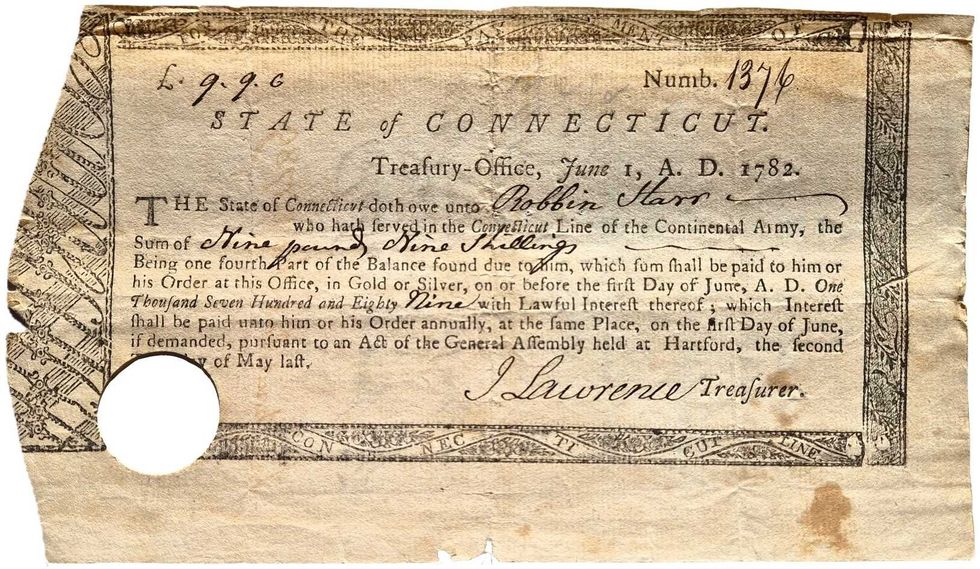 Pay Bill for Robin Starr’s service in the Continental Army.Courtesy the Alex Breanne Corporation
 John Mills speaking at Quinnipiac University.Courtesy the Alex Breanne Corporation
 Stephanie Saetta,with her rescue dog George and Blue (left), a shepherd mix awaiting his forever home.Madi Long
 Blue, a 7 year-old Shepard mix, is waiting for his forever home. Madi Long