WEBUTUCK — One week before the North East (Webutuck) Central School District was set to move into a hybrid instruction model, the Webutuck Board of Education (BOE) discussed the logistics involved and addressed the public’s questions and concerns at its meeting on Monday, Sept. 28, held via videoconference due to the COVID-19 pandemic. It met again last week to assess the reopening’s success.
Initiating the conversation, Superintendent of Schools Raymond Castellani assured the public that “a tremendous amount of work and hours have gone into trying to cross every t and dot every i… Where we need to be is having our children in school — we all want that; there’s nobody here that doesn’t want that.”
While acknowledging the district is now better prepared to deliver remote instruction and students now better adapted to learn online, Castellani stressed the best place for them to be is in the classroom.
But not everyone returned on Monday, Oct. 5. Out of the 601 students enrolled in the district, 159 students opted to continue with remote instruction while 226 students in grades pre-k through sixth are attending in-person; 216 students in grades seventh through 12th are attending in-person; and 108 student cohorts in grades seventh through 12th are attending in-person.
Because plans are based on these numbers, Castellani said the district cannot allow for students who chose remote learning to come back to school until after Wednesday, Dec. 23. The plan, he said, is that the district has enough space and enough staff for pre-k students to come in four days a week with schools closed on Wednesdays for deep cleaning. Students in grades seventh through 12th would come in on a hybrid model with one group of students coming into school on Mondays and Tuesdays and another group coming in on Thursdays and Fridays with a deep cleaning day on Wednesdays.
Castellani said the BOE went through each classroom and measured how many students could fit inside while abiding health guidelines. Desks have since been situated based on the guidelines and all “non-essential” furniture and materials removed and placed in storage.
The district also looked at student enrollment and divided individual classes by grade level into a number of sections to accommodate the smaller class sizes. For example, while the kindergarten class would originally have two sections with 21 students per class, there are now three sections with 10 students per class.
Castellani gave an overview of the choices of district-provided transportation or private transportation as well as the one bus run schedule, the school day schedule plan, mask breaks, lunch and an explanation of what the school day looks like for in-person and remote students in k through sixth and seventh through 12th grades.
“There is no manual telling us how to do this; we have looked at what other school districts have done, we’ve visited other school districts, we have talked countless hours planning this out,” he said. “I’m sure there will be some type of fly in the ointment in the first few days and weeks and we have to work through it… unless you start getting the train moving forward, the train stands still and we can’t have that.”
Throughout the remainder of the discussion, Castellani and administrators answered questions related to substitutes, bus schedules, student illness, sessions for special education, determining student cohorts, lunch structures and more from the public and the BOE.
In reflection of how Webutuck fared during the first week of its hybrid instruction model, Castellani said on Friday, Oct. 9, “I am humbled by the success of the program the first week. I could not be more pleased and thankful to our staff and our faculty and our students for adapting to this new normal that we have right now.
“Students have been following protocols and guidance by staying socially distant, by wearing their masks and following our directions in the hallways and on buses,” he continued. “They seem happy and pleased in every conversation I’ve had with them to be back. Our faculty and staff have put their best foot forward in making sure our students are welcomed and are exposed to an instructional model both in-person and remote that seems to be a success so far.”
A copy of the hybrid re-entry plan is available at www.webutuckschools.org.

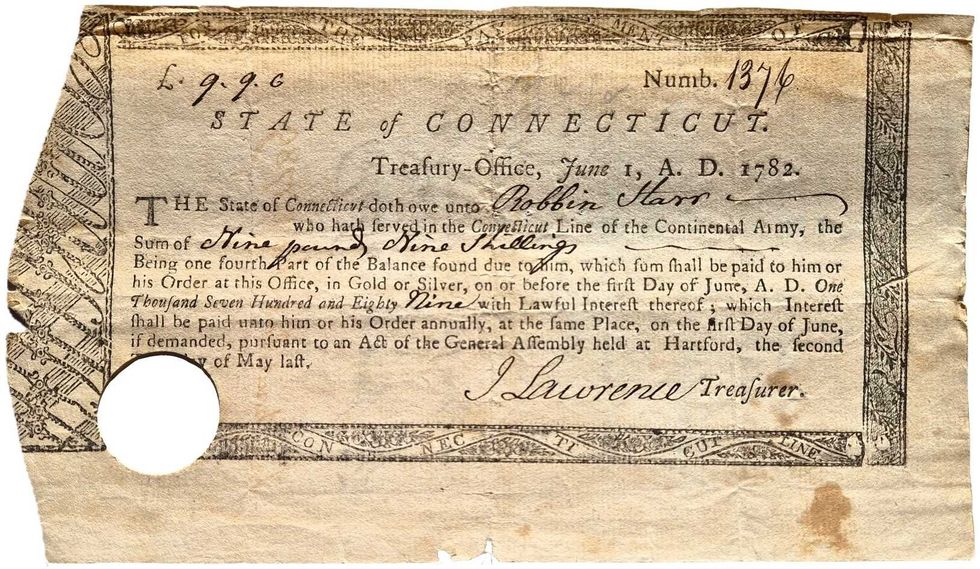 Pay Bill for Robin Starr’s service in the Continental Army.Courtesy the Alex Breanne Corporation
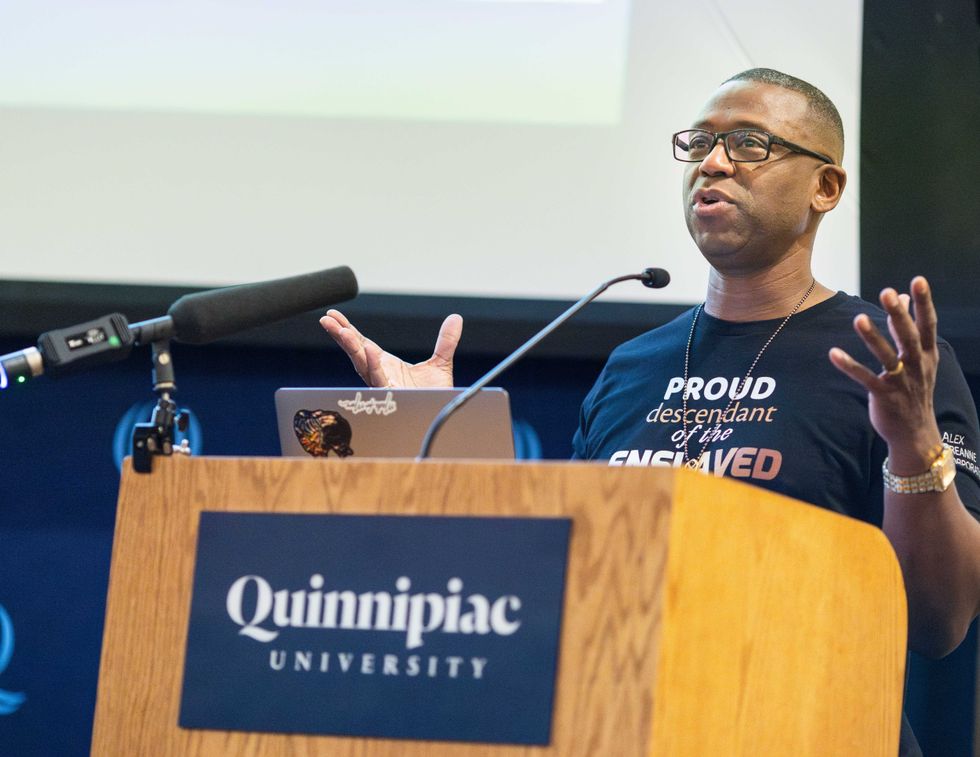 John Mills speaking at Quinnipiac University.Courtesy the Alex Breanne Corporation
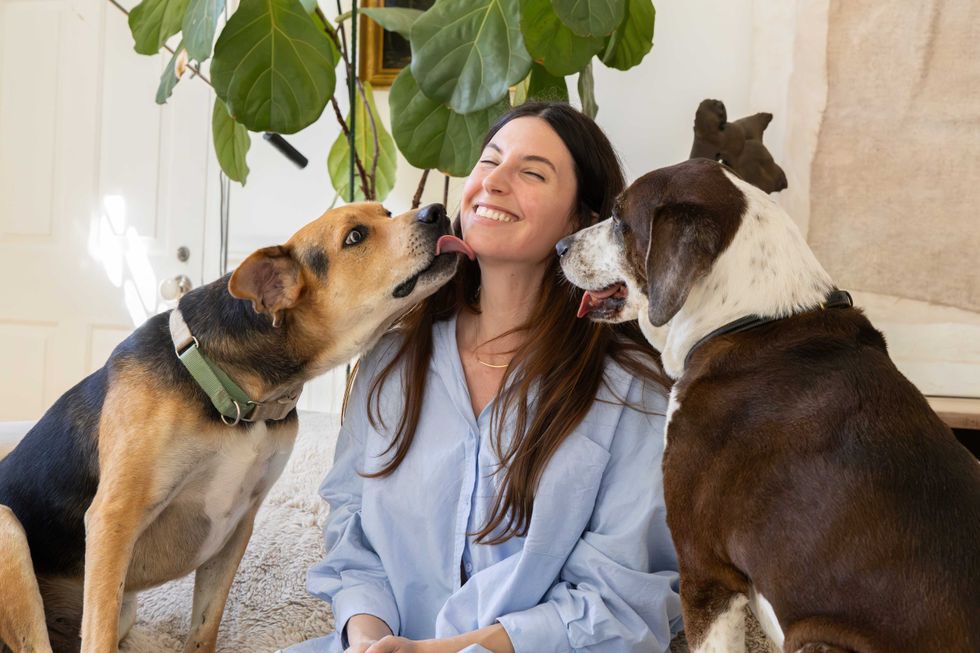 Stephanie Saetta,with her rescue dog George and Blue (left), a shepherd mix awaiting his forever home.Madi Long
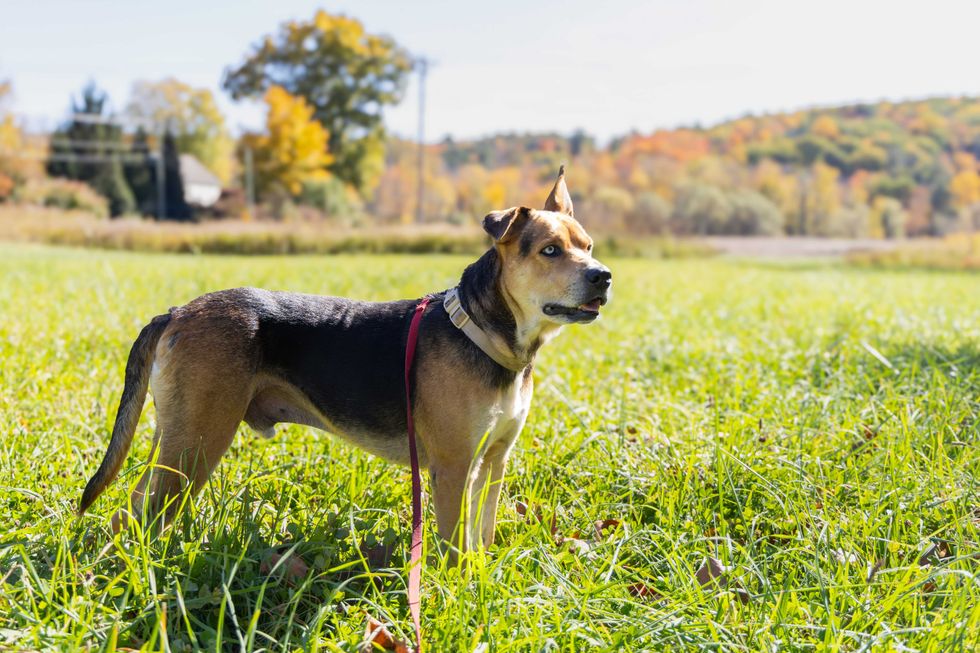 Blue, a 7 year-old Shepard mix, is waiting for his forever home. Madi Long