Elon Musk of SpaceX talks about space travel as a “duty to maintain the light of consciousness.” Frank Drake, the astronomer, says we must search for extraterrestrial intelligence to validate the probability — note, he says not possibility, but says probability — of other observable civilizations in our galaxy. Were Nikola Tesla and quantum physicist David Bohm right in affirming that space is not empty but filled with a kind of force field, something they referred to as “cosmic plenum?”
Or is space exploration only to evaluate who we are, gaining perspective from far away? Apollo 14 astronaut Edgar Mitchell said this returning from the moon: “You develop an instant global consciousness, a people orientation, an intense dissatisfaction with the state of the world and a compulsion to do something about it.”
Especially, like many astronauts, Mitchell believed, “Looking beyond the Earth itself to the magnificence of the larger scene, there was a startling recognition that the nature of the Universe was not as I had been taught. . . . There was an upwelling of fresh insight coupled with a feeling of ubiquitous harmony—a sense of interconnectedness with the celestial bodies surrounding our spacecraft.”
As the decades advance, the state of human understanding of quantum science teaches us about the connection between mind, matter and everything around us — space, the galaxy and the universe. And these new findings are beginning to expose the distinct possibility of a significant space-exploration-induced leap in human consciousness as we collectively become a spacefaring civilization.
Space exploration is not only about technological breakthroughs or the gaining of scientific knowledge. All exploration, since the dawn of man, has always taken us deeper into our own psyche and our understanding of human consciousness. We are driven as a species, not only to undertake these quests for knowledge of what is “out there,” but also to better understand who and what we are, what we are capable of.
Evolution of the human species has learned this over the eons: Exploration makes us better able to prosper and survive – better able to discover who we really are, what we are capable of.
“We went to the moon as technicians; we returned as humanitarians,” Mitchell said.
Our very human capability expanded globally during the moon missions. Now we’re set to advance humankind once again as we reach for a planet and, beyond that, the cosmos.
Peter Riva, a former resident of Amenia Union, now lives in New Mexico.
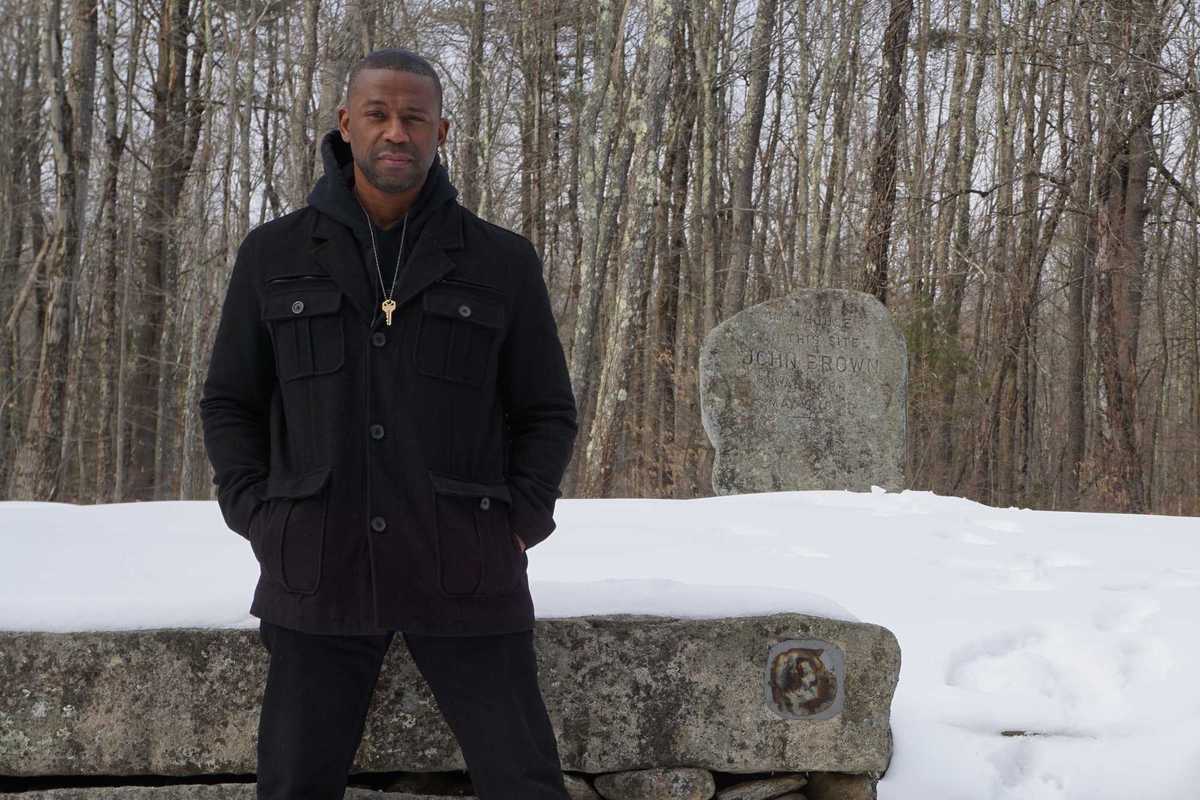
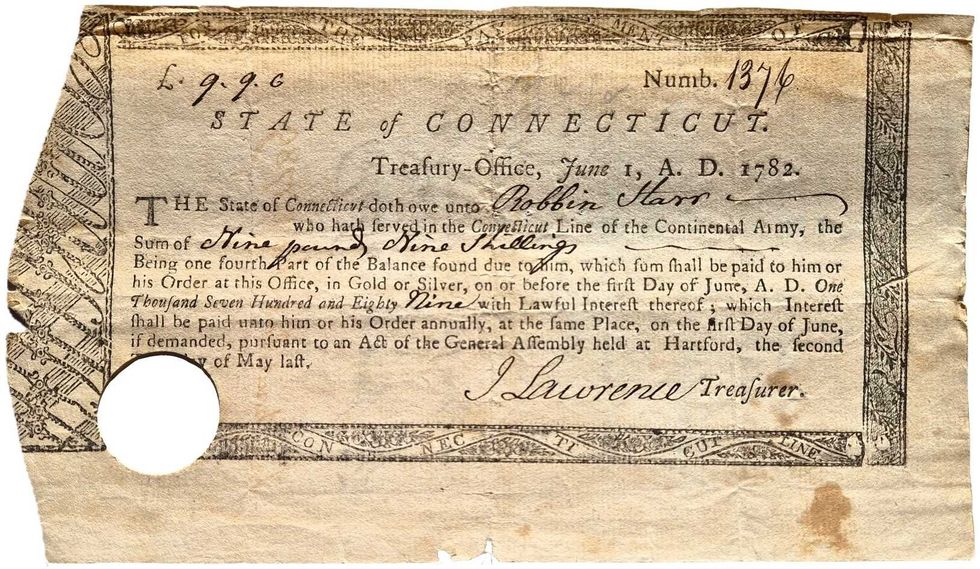 Pay Bill for Robin Starr’s service in the Continental Army.Courtesy the Alex Breanne Corporation
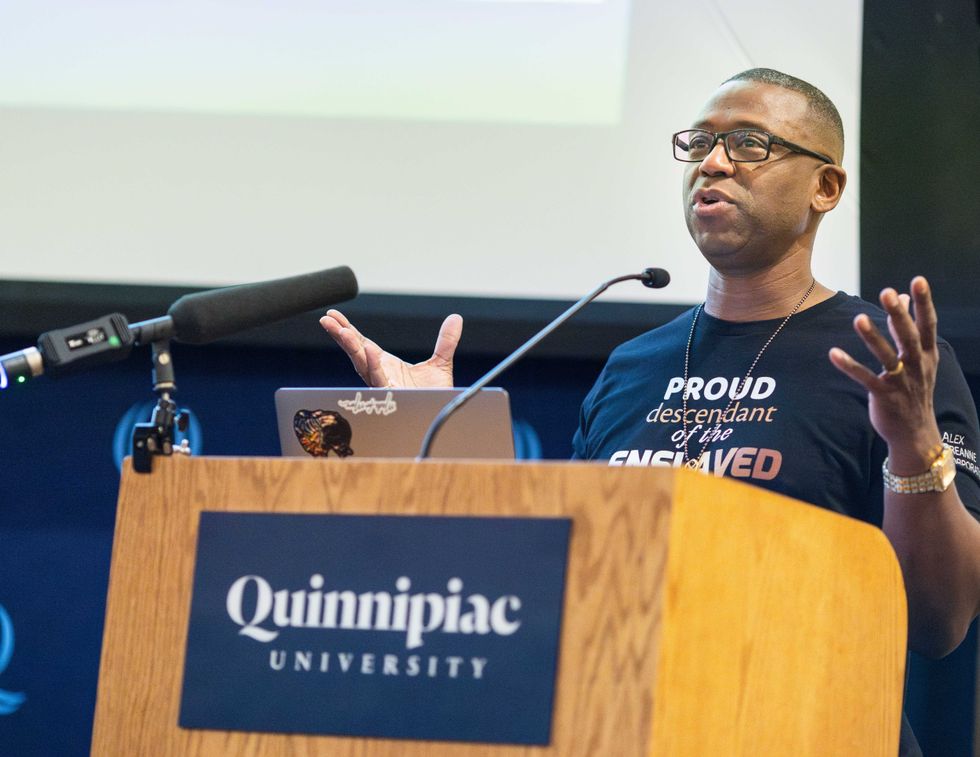 John Mills speaking at Quinnipiac University.Courtesy the Alex Breanne Corporation
 Stephanie Saetta,with her rescue dog George and Blue (left), a shepherd mix awaiting his forever home.Madi Long
 Blue, a 7 year-old Shepard mix, is waiting for his forever home. Madi Long