Architect works with Habitat to create affordable housing in Pine Plains

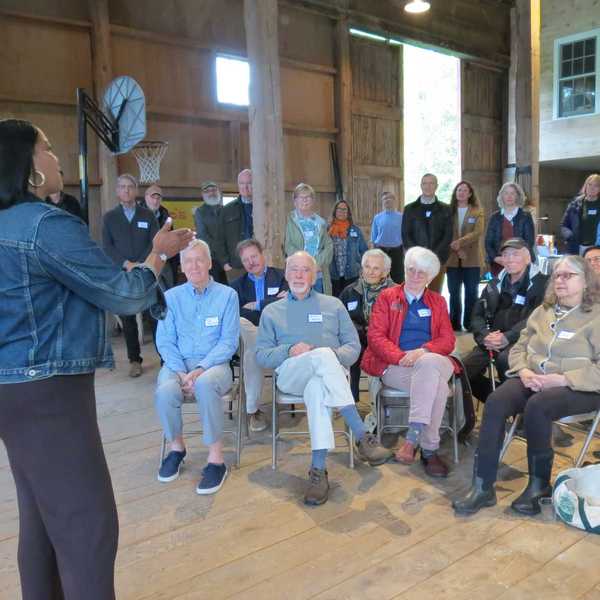
PINE PLAINS — The need for affordable housing was at the forefront of a presentation at last week’s Town Board meeting in Pine Plains, on Thursday, May 16. Architect Dennis Wedlick, of Barlis Wedlick in Hudson, spoke, along with Columbia County Habitat for Humanity Executive Director Brenda Adams and Dutchess County Habitat for Humanity Executive Director Maureen Lashlee.

Town Supervisor Darrah Cloud introduced the trio. She said she met Wedlick at an afforadable housing presentation held a couple of weeks earlier in Millerton, with stakeholders  from around the region.

“What we do is build affordable housing,” said Wedlick, adding he’s “pulled together” a coalition of engineers and others needed to make affordable housing possible. “We volunteer our services and call the work we’re doing the Rural Build, because it’s specifically suited for rural communities.”

The talking points? The homes are low density, not large subdivisions. The goal is to build two at a time on smaller lots, with passive house technology.

“They’re super high quality and low maintenance,” said Wedlick. “This is the highest quality construction you can build, with is unusual [for] affordable housing.”

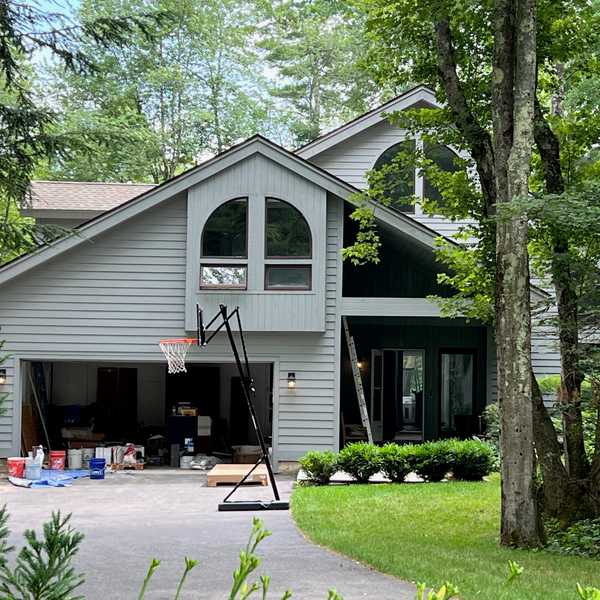
“It’s a brilliant piece of engineering and ingenuity,” said Cloud the next day. “I’ve been inside one in Ancramdale and it’s just gorgeous. It looks like a new farmhouse.”

At the meeting, Wedlick explained that it all began with the New York State Energy Research and Development Authority (NYSERDA), which awarded a grant to build the first passive house structures in the state. Then there was a tour of the project, and networking. Wedlick said he “thought it was going to be simple lunch… but the questions I  got were amazing.”

He said Habitat for Humanity expressed interest, and that was that.

“From farmers to framers and the people we work with, they all need affordable housing,” Wedlick said. “So a light bulb went off: why if it’s affordable we don’t just… reduce energy dramatically. Energy is only one piece of the puzzle for affordable housing.”

He spoke of zero lot line homes, recognizable as “mother daughter homes” with two units under one roof, side by side. 

“Two homes built like that are a lot cheaper,” he said. “You get a front yard, a back yard and a side yard, like rural homes should have.”

“The really cool part about them is the utility cost is so low,” said Cloud, citing utility bills totaling $100. “It’s ridiculously low because they’re insulated incredibly, the windows are triple layer and the air circulates well because there’s a gizmo on the second floor that keeps the air warm in the winter and cool in the summer.”

“We found the biggest challenges heating and property taxes,” said Adams. “The value of an attached house is less when taxed, and it makes it more affordable for a family over a lifetime.”

Wedlick added “we were lucky Habitat already came to this idea. If it’s too small it’s not energy efficient, so this makes it more efficient.”

And at the same time, he said, “they’re really spacious.” The homes are around 1,300 square feet, with three bedrooms and two bathrooms. They’re “starter homes,” all three agreed, perfect projects for Habitat, which Wedlick said “has a lot of history on how to build homes.

Currently Rural Build has constructed seven homes, and is working on its eighth. The crowd was invited to tour one of the homes in Ancramdale.

He added that there are many options for such projects; even if the town had a vacant lot, a home could be built. The homes don’t need a central sewer, which is good for towns like Pine Plains without such infrastructure.

“We’re certainly promoting it,” said Cloud. “If we had some land we’d be in the position to perhaps give to a project like this. But we need the housing, we need housing that people can afford to live in, and it’s more meaningful to them if they own it.”

The homes are built on a slab, as Wedlick said “basements used to be really desirable but are not so desirable any more.

“Nobody really appreciates them, so it was better to spend the money elsewhere,” he said.

To qualify for one of the Rural Build homes, applicants must go through income verification. The starting income is $32,500, though Lashlee said they “have to see what taxes are out here and try to reduce that.” The median income in Dutchess County, she added, is $86,000.

“Our homes, after the completed application process, are priced at your income,” Lashlee said. “We do not allow the home cost to be more than 29% of your gross income.” 

Additionally, she said, homeowners can become partners through sweat equity, by working on their own home or doing other work for Habitat for Humanity.

Typically a 30 year mortgage is taken out for the homes. There’s also something called a “soft second mortgage,” that’s the difference between fair market value at the time of the sale and what was paid for the home.

Attorney to the Town Warren Replansky had some questions, namely “how does the municipality get involved other than granting an area variance?”

The reply: Firstly, zoning laws could be conducive or welcoming. Secondly, there could be municipally owned land on which to build. And thirdly, the town could create a land bank through things like foreclosures.

As far as buyers, Adams said they first look at people living in poverty. Then they look at entry level civil service employees and first responders.

“We’re building in a rural community,” said Wedlick. “It’s a rural workforce that lives here. By inviting affordable housing into your community, you’re going to be helping. It’s really important.”

Adams added that they’re “finding difficulty finding volunteers,” and noted that 15 of 19 towns and villages in Columbia County now have housing committees.

“We wouldn’t volunteer our  time to go into a community that didn’t participate,” said Adams. “It’s a question of the comprehensive plan and vision. How much of Pine Plains do you want to stay the way it is?”

She added that a comprehensive plan is essential.

“Because I promise you, there will be objections. No matter how beautiful, how golden, no matter what,” she said.

The bottom line, all agreed, is to provide housing people can afford to live in, in their hometown.

“We want people to stay in town,” said Cloud. “A lot of people have to move out because they can’t afford it, and we’re losing people. We want to keep people.”

Latest News

GNH blanks St. Paul 34-0 in Turkey Bowl

Wes Allyn breaks away from the St. Paul defense for a reception touchdown Wednesday, Nov. 26.

Photo by Riley Klein

BRISTOL — The Gilbert/Northwestern/Housatonic co-op football team ended the season with a 34-0 shutout victory over St. Paul Catholic High School Wednesday, Nov. 26.

It was GNH’s fourth consecutive Turkey Bowl win against St. Paul and the final game for 19 GNH seniors.

Keep ReadingShow less
Students curate Katro Storm portraits at HVRHS

“Once Upon a Time in America” features ten portraits by artist Katro Storm.

Natalia Zukerman

The Kearcher-Monsell Gallery at Housatonic Valley Regional High School in Falls Village is once again host to a wonderful student-curated exhibition. “Once Upon a Time in America,” ten portraits by New Haven artist Katro Storm, opened on Nov. 20 and will run through the end of the year.

“This is our first show of the year,” said senior student Alex Wilbur, the current head intern who oversees the student-run gallery. “I inherited the position last year from Elinor Wolgemuth. It’s been really amazing to take charge and see this through.”

Keep ReadingShow less
Mini horses, big impact: animal learning center opens in Sheffield

Le Petit Ranch offers animal-assisted therapy and learning programs for children and seniors in Sheffield.

Marjorie Borreda

Le Petit Ranch, a nonprofit offering animal-assisted therapy and learning programs, opened in April at 147 Bears Den Road in Sheffield. Founded by Marjorie Borreda, the center provides programs for children, families and seniors using miniature horses, rescued greyhounds, guinea pigs and chickens.

Borreda, who moved to Sheffield with her husband, Mitch Moulton, and their two children to be closer to his family, has transformed her longtime love of animals into her career. She completed certifications in animal-assisted therapy and coaching in 2023, along with coursework in psychiatry, psychology, literacy and veterinary skills.

Keep ReadingShow less