Thank you!
Your support is sustaining the future of local news in our communities.

Are Florida panthers recovering?

Dear EarthTalk: What’s the story with the Florida panther these days? Is it still teetering on the brink of extinction, or is it on the rebound?             Alex T.

via email

One of more than 20 subspecies of cougar and native to the southeastern United States, the Florida panther is most certainly still highly endangered. Biologists estimate that less than 100 of the animals are alive in the wild today, hanging on in the southern tip of Florida below the Caloosahatchee River. Their current range represents less than five percent of where they originally roamed across Florida, Louisiana, Arkansas, Mississippi, Alabama, Georgia and parts of Tennessee and South Carolina.

Perceived as a threat to humans, livestock and game animals, the Florida panther was persecuted and hunted to near extinction by the mid-1950s. Today, primary threats are habitat loss and fragmentation as a result of human development. According to Defenders of Wildlife, the main culprits in the decline of the animals’ numbers are: urban sprawl; the conversion of once diversified agricultural lands into intensified industrial farming uses; and the loss of farmland to commercial development.

Other factors include collisions with automobiles, territorial disputes with other panthers as habitat shrinks, and inbreeding resulting from their isolated population. Additional threats include mercury poisoning from the fallout of coal-fired power plants, parasites, and diseases such as feline leukemia and feline distemper.

Efforts to help the Florida panther recover have had limited success. Many public agencies and nonprofit groups have worked together to try to bring back the panther—Florida’s state animal—since it was first listed as endangered by the federal government back in 1967. According to the U.S. Fish and Wildlife Service (USFWS), panthers require large areas of contiguous habitat: Each breeding unit of one male and two to five females requires some 200 square miles of territory to thrive.

Biologists report that a population of 240 panthers requires between 8,000 and 12,000 square miles of habitat and sufficient genetic diversity in order to avoid inbreeding as a result of small population size. The introduction of eight female cougars from a closely related Texas population in 1995 helped mitigate inbreeding problems, but most analysts fear that the effort was too little, too late for the threatened cats.

Since the animals were first listed as endangered, the human population of Florida has more than tripled, meaning that rescue efforts are swimming against the tide. Defenders of Wildlife reports that, since 2004, human-panther encounters have been on the rise, as have documented instances of panthers preying on livestock and pets. In response, the USFWS, the National Park Service and the Florida Fish and Wildlife Conservation Commission have drafted a landmark Florida Panther Response Plan, which guides game managers and law enforcement officials in handling such interactions in ways that ensure public safety while recognizing the need to preserve dwindling Florida panther populations.

Readers can help by getting educated about the plight of the big cats and pressuring their elected officials to take action. Another way to help is by supporting wildlife groups working on the issue. Defenders of Wildlife’s “Adopt a Panther†program, for one, puts donations into public education, preserving habitat and promoting sound transportation planning to prevent panther deaths on Florida’s roads and highways.


Dear EarthTalk: I’d like to know the relative electricity cost of utility scale solar and wind plants versus rooftop residential solar. In other words, how can I know whether to subsidize my utility’s alternative energy plant or renovate my own home?        

Randy Wilson

Flagstaff, Ariz.

Making such a determination is complex, but you could start with “In My Backyard,†a new online tool by the National Renewable Energy Laboratory (NREL). You first need to know your electricity usage and what size solar photovoltaic (PV) system or wind turbine you could install. Then, using Google Earth maps and data on the amounts of sunshine and wind at your location, the tool will estimate the electricity you could get from a certain size wind turbine or PV array installed on your property.

The costs to install renewable energy systems vary greatly by location, warn researchers at the Lawrence Berkeley National Laboratory, which is supported by the Department of Energy (DOE). And kilowatt hour (kWh) costs vary by utility, as do state and local financial incentives. One piece of good news: The federal Investment Tax Credit was expanded and extended this year. It allows for 30 percent of the cost of your system to be deducted from your federal tax bill, and is good through 2016.

Comparing the cost of going it alone to that of simply buying green power through your utility is not a simple equation, either. You can support your utility’s renewable power infrastructure by paying a premium on your electric bill, or you can buy renewable energy certificates—also known as green tags—even if your utility does not offer green power (green tags inject renewable energies into the grid even if they don’t come back to you via your own utility).

To decide which equation is better for you, compare the costs of those programs over the same time period with the cost of building and maintaining your own system (minus any installation credits and/or revenues from selling your excess electricity back to the utility). That would give you the relative costs and return-on-investment.

But that’s still not the whole picture: Another question is whether your home system can continue to produce energy more cost-effectively than your utility, as it brings more and more green energy sources into its mix. Lawrence Berkeley says no, essentially. A February 2009 report summarizing the costs of PV from 1998 to 2007 concluded that larger systems averaged a 25 percent lower cost than the smallest ones.

The same is true for wind power, says the American Wind Energy Association. The group’s February 2005 report calculates that a large wind farm can deliver electricity at a nearly 40 percent lower cost than a small one. It also can take advantage of economies of scale in lower operational and maintenance costs.

The bottom line is this: Decades ago, when widespread use of alternative energy was still only a dream, building one’s own private source of home power was the only way to get off the carbon-intense grid and ensure that your own energy needs left little footprint. But today, with considerably more renewable energy sources coming online or about to do so in quantum leap measures—and at much greater efficiencies than can be achieved privately—the best bet may well be to forego the go-it alone path and support your utility’s efforts to generate green power not just for your own household but for everyone.

SEND ENVIRONMENTAL questions to EarthTalk, P.O. Box 5098, Westport, CT 06881; earthtalk@emagazine.com. Read past columns at emagazine.com/earthtalk/archives.php. EarthTalk is now a book; details and order information at emagazine.com/earthtalkbook.

Latest News

‘So Little to Do,’ so much to discover at James Barron Art

Curator Deborah Goodman Davis reads the Emily Dickinson poem “The Grass So Little Has to Do.” Spencer Finch’s “Following Three Bees (Zinnias)” buzzes in the background.

Photo by Natalia Zukerman

“The Grass Has So Little to Do,” on view at James Barron Art in Kent, takes its title from Emily Dickinson’s poem “The Grass So Little Has to Do,” written in 1862:

“The Grass so little has to do—
A Sphere of simple Green—
With only Butterflies to brood
And Bees to entertain—”

Keep ReadingShow less

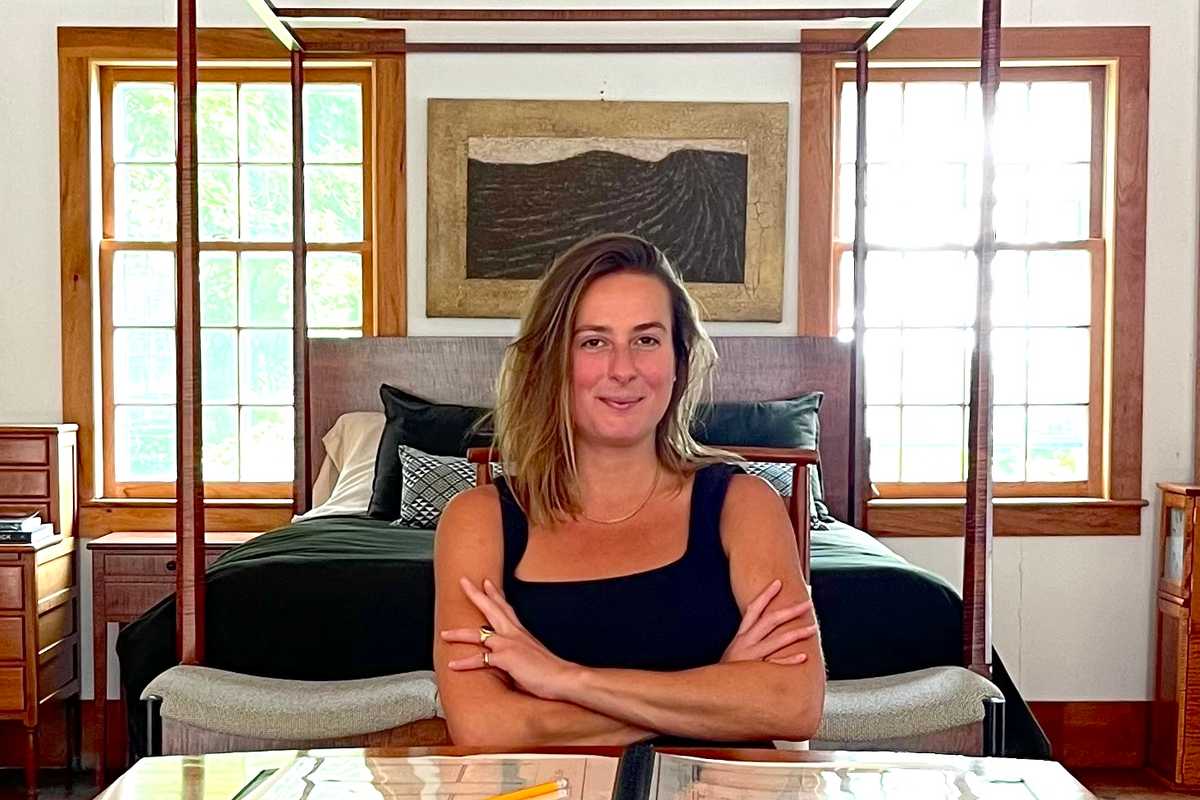
Marina Kotchoubey is not a woodworker

Marina Kotchoubey is not a woodworker

Marina Kotchoubey at the Ian Ingersoll Cabinetmakers showroom in West Cornwall.

Photo by D.H. Callahan

After 40-something years navigating the world of custom fine furniture, Ian Ingersoll was getting ready to retire. Starting off with a little dovetail stool that he sold at a shop in West Cornwall in the 1970s, he’d grown his skill and his business into something he — and the whole town — could be proud of. Shutting down that business was not an option.

Ingersoll built Ian Ingersoll Cabinetmakers, which produced mainly classical Shaker furniture, on passion: the passion he had to make a living through creative challenges and the passion of his employees, who all seem deeply in love with their craft.

Keep ReadingShow less
A legacy of giving at Norfolk Chamber Music Festival

One hundred and twenty years ago, Carl and Ellen Stoeckel commissioned New York architect E.K. Rossiter to design The Music Shed in Norfolk, Connecticut. After nearly a decade of entertaining their friends and neighbors with the finest music of the day, they built a permanent home for their beloved Litchfield County Choral Union.

The commission and full funding of the construction was not unheard of in an era when great fortunes led to public enrichment. Railroad tycoon John D. Rockefeller was instrumental in funding institutes of higher education. Steel baron Andrew Carnegie was building libraries all over the country, and famously said that a man who dies rich is a disgrace, challenging his peers to give their fortunes back to the people.

Keep ReadingShow less
google preferred source

Want more of our stories on Google? Click here to make us a Preferred Source.
Two unique exhibitions at Geary Gallery

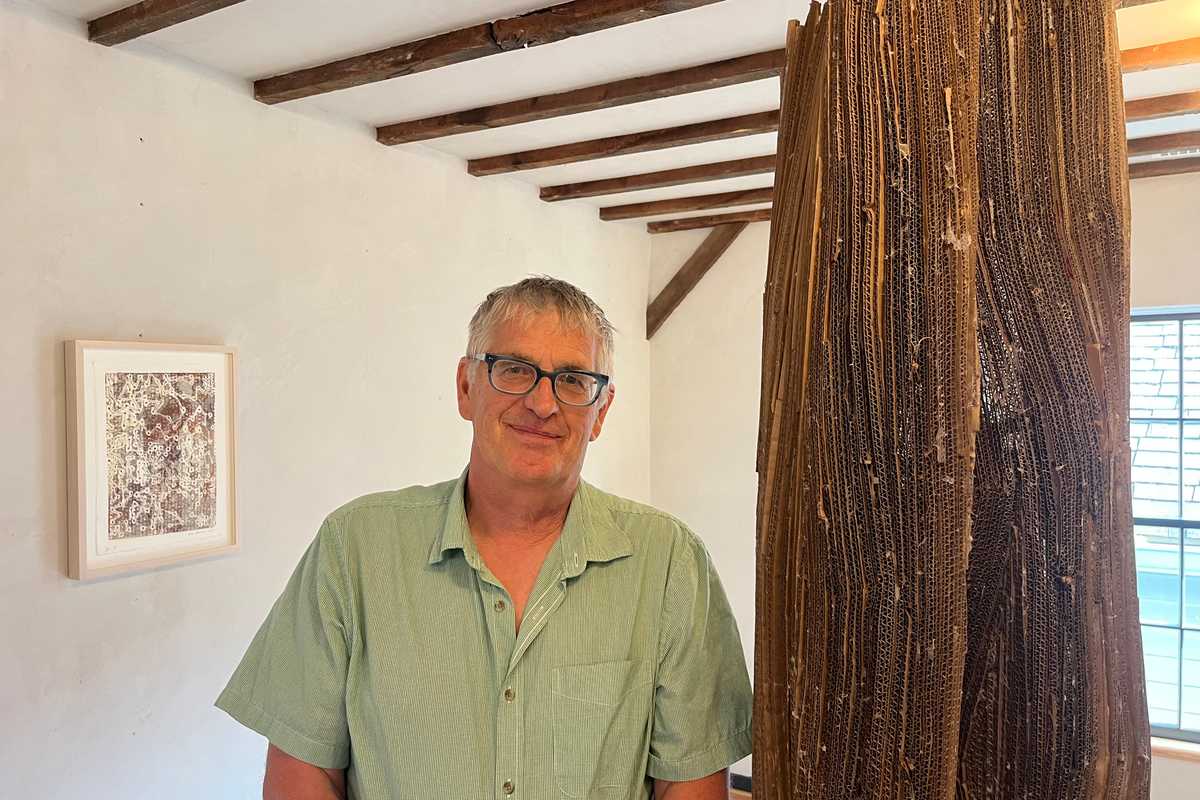
Henry Klimowicz with his sculpture, “Partial Pillar 1”

Photo by D.H. Callahan

On Saturday, Aug. 1, Geary Gallery opened its doors in Salisbury for two unique shows in its first- and second-floor gallery spaces. Art lovers flooded both floors over the course of the afternoon, giving the events a vibrant feeling that enhanced the importance of the art.

On the first floor is a show by Chicago-born, Colorado-based photographer Summers Moore, titled “Lobitos: Pueblo Fantasma,” or “Lobitos: Ghost Town.” The work centers around her daughter’s current hometown in Peru. Moore herself found a home away from home in Colorado in the mid-1980s and encouraged her children to seek out new places outside of their comfort zones.

Keep ReadingShow less

Writer’s retreat in the woods

Writer’s retreat in the woods

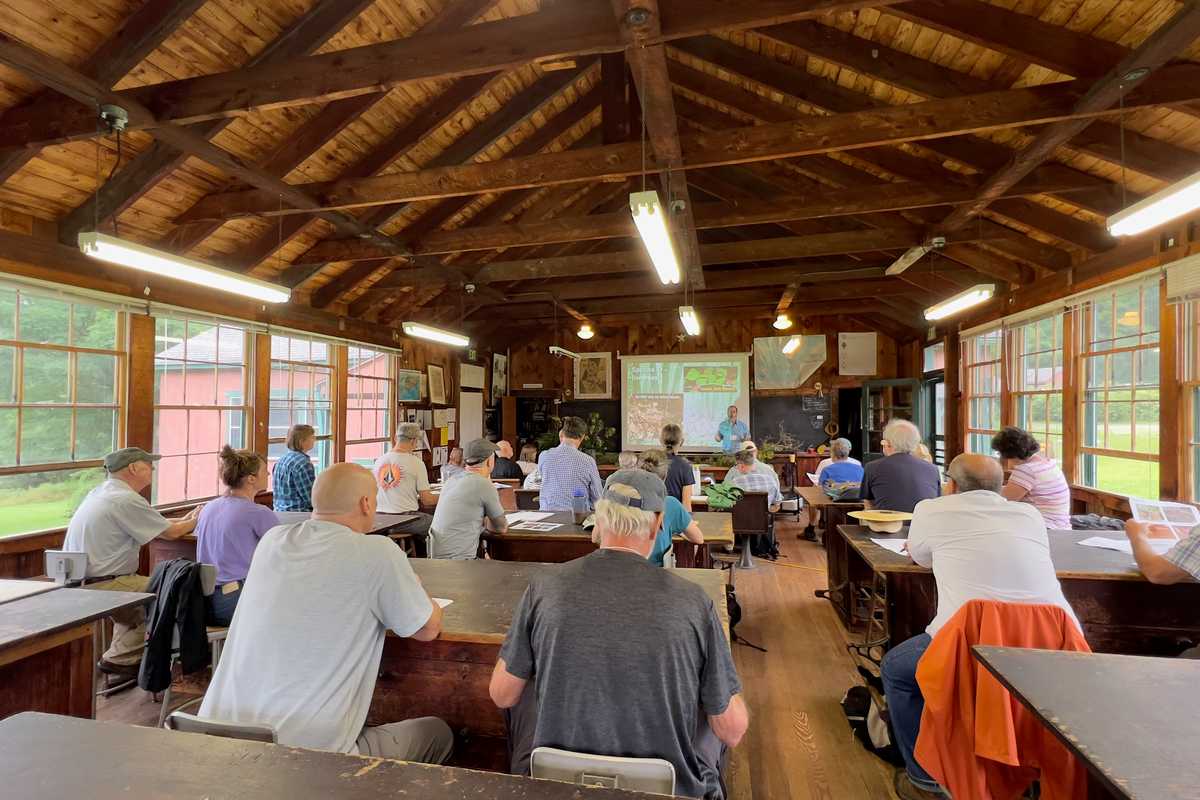
Participants in a 2024 Great Mountain Forest Woodland Academy workshop at Yale Camp.

Photo by Mike Zarfos

Great Mountain Forest (GMF) will host its first Nature Writing Retreat at the historic Yale Camp in Falls Village from Aug. 7-9, 2026. Writers of all levels are invited to draw inspiration from one of New England’s most notable forest landscapes. GMF envisions the retreat becoming an annual event celebrating writing, conservation and the relationship between people and forests.

This immersive three-day retreat reflects on the legacy of Hal Borland, the American writer and New York Times nature columnist whose work was deeply connected to this landscape. The retreat explores how wilderness shapes language, strengthens close observation and fosters environmental consciousness.

Keep ReadingShow less
From Cornwall to Rome, Adam Van Doren at Berkshire Botanical Garden

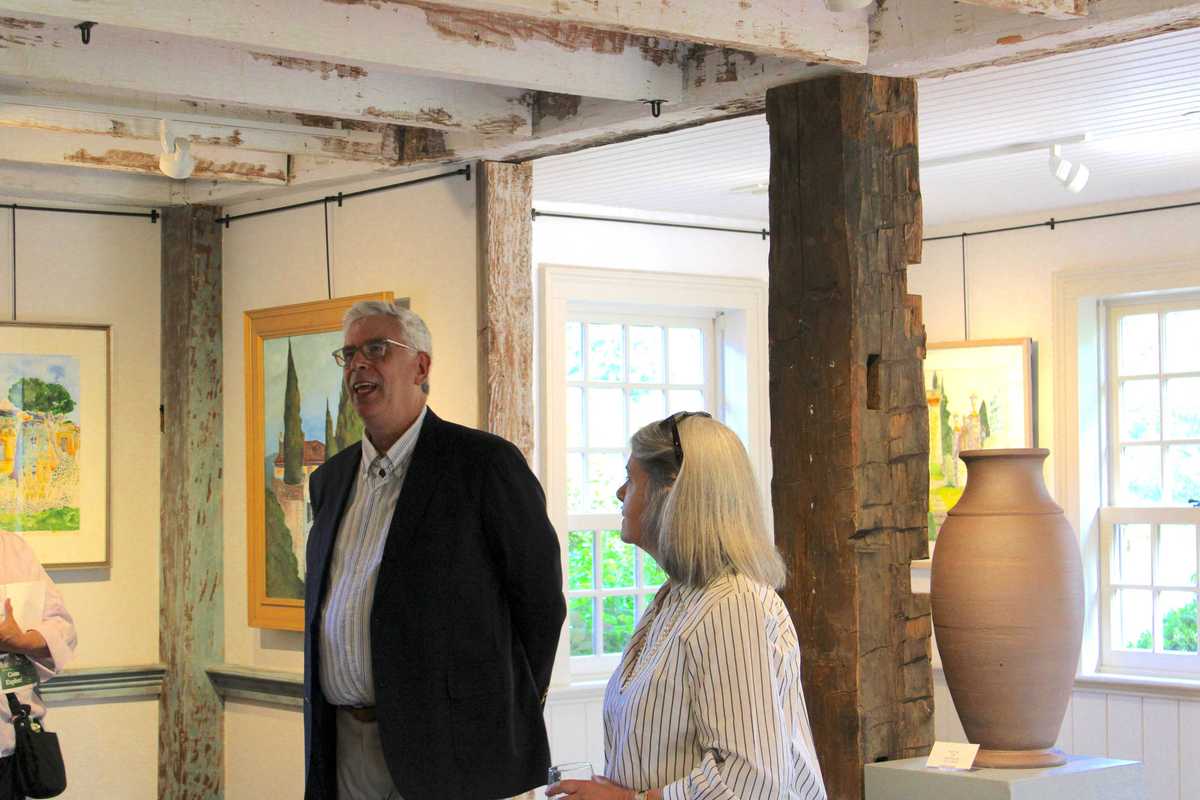
Artist Adam Van Doren and curator Donna Hassler talk to a group of visitors at the Berkshire Botanical Garden. A Stephen Proctor vessel sits to their left.

Photo by Natalia Zukerman

This summer, the Berkshire Botanical Garden in Stockbridge has hosted “Grounded in Nature: Paintings by Adam Van Doren,” an exhibition exploring the intimate relationship between architecture and the natural world.

On view for only a few more weeks in the Leonhardt Galleries, the exhibition features more than 35 watercolor and oil paintings by the New York-based artist, architect, author and Yale professor, curated by art historian Donna Hassler, director emerita of Chesterwood. The works span three distinct places that have shaped Van Doren’s artistic practice: New York City, Cornwall, Connecticut, and his travels throughout Europe.

Keep ReadingShow less
google preferred source

Want more of our stories on Google? Click here to make us a Preferred Source.
google preferred source

Want more of our stories on Google? Click here to make us a Preferred Source.