On Saturday, Aug. 1, Geary Gallery opened its doors in Salisbury for two unique shows in its first- and second-floor gallery spaces. Art lovers flooded both floors over the course of the afternoon, giving the events a vibrant feeling that enhanced the importance of the art.
On the first floor is a show by Chicago-born, Colorado-based photographer Summers Moore, titled “Lobitos: Pueblo Fantasma,” or “Lobitos: Ghost Town.” The work centers around her daughter’s current hometown in Peru. Moore herself found a home away from home in Colorado in the mid-1980s and encouraged her children to seek out new places outside of their comfort zones.
Her daughter found Lobitos, a small surfing village on Peru’s coast that has taken on multiple identities throughout its history, including a booming era as an oil town in the 1800s and later as a military outpost before becoming the small fishing and surfing community it is today.
While visiting her daughter, Moore befriended a local artist named Inti. The bulk of the photos on display are of murals Inti painted on Lobitos’ crumbling infrastructure, as well as the horses who live at the equine therapy retreat where Moore’s daughter works and lives.
Directly above Moore’s photography exhibition is “Methods of Proceeding,” a show by local multi-disciplinary artist and curator, Henry Klimowicz. Coming from a room full of photographs of easily decipherable places, people and animals, Klimowicz’s work is anything but obvious.
The room is carefully populated with amorphous structures made from shreds of cardboard and hot glue. The cardboard was sourced from a furniture shop in Millerton, just down the road from Klimowicz’s own art space, the Re Institute.
The Re Institute is known for making the inaccessible accessible. Its “gift shop” features a wide variety of artworks, all priced under $750. “Methods of Proceeding” seems to do the opposite — taking one of the most common materials available in our modern era of online shopping, and the shipping waste that comes with it, and making it less accessible by forming it into curious structures that can resemble a panoply of ideas depending on the viewing angle.
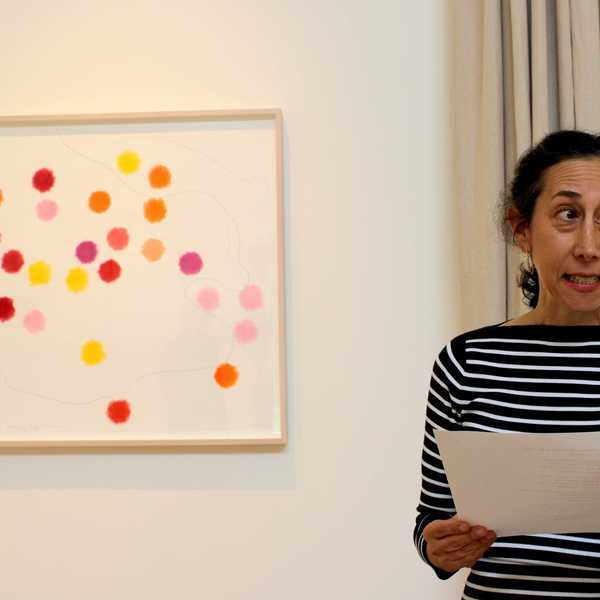
Larger structures are mostly called “Partial Pillars,” with smaller “Truffles” and “Pebbles” scattered around the ledges and corners of the room. Alongside the cardboard and glue sculptures is a series of colorful monoprints that mirror the wild patterns of the sculptures.
Both shows will remain on view at the gallery until Sept. 27, when Moore will return for a discussion about her work. For more information about the artists and the gallery, visit geary.nyc.

 Pay Bill for Robin Starr’s service in the Continental Army.Courtesy the Alex Breanne Corporation
 John Mills speaking at Quinnipiac University.Courtesy the Alex Breanne Corporation
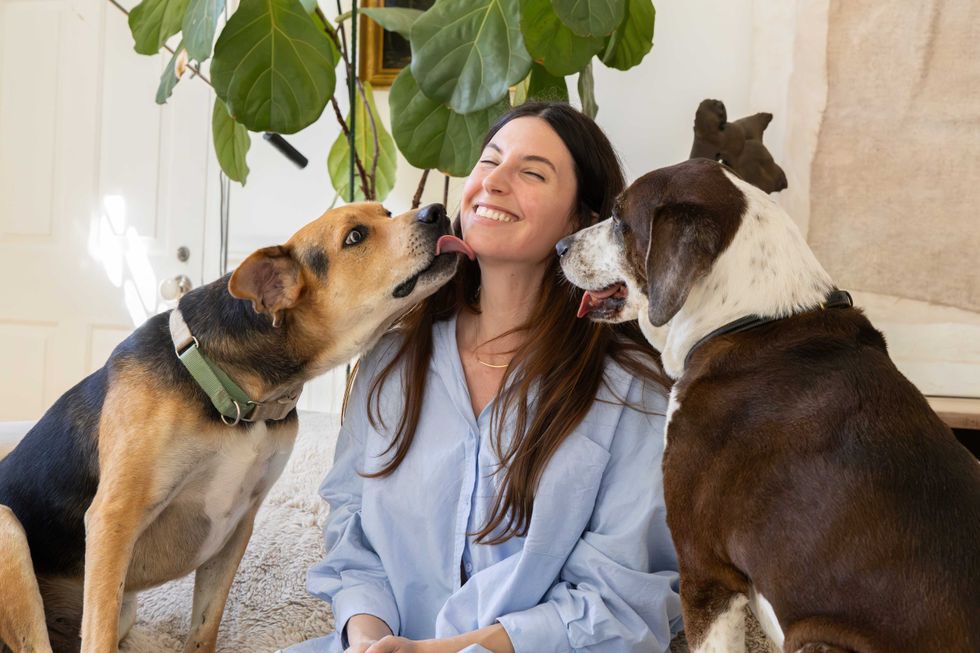 Stephanie Saetta,with her rescue dog George and Blue (left), a shepherd mix awaiting his forever home.Madi Long
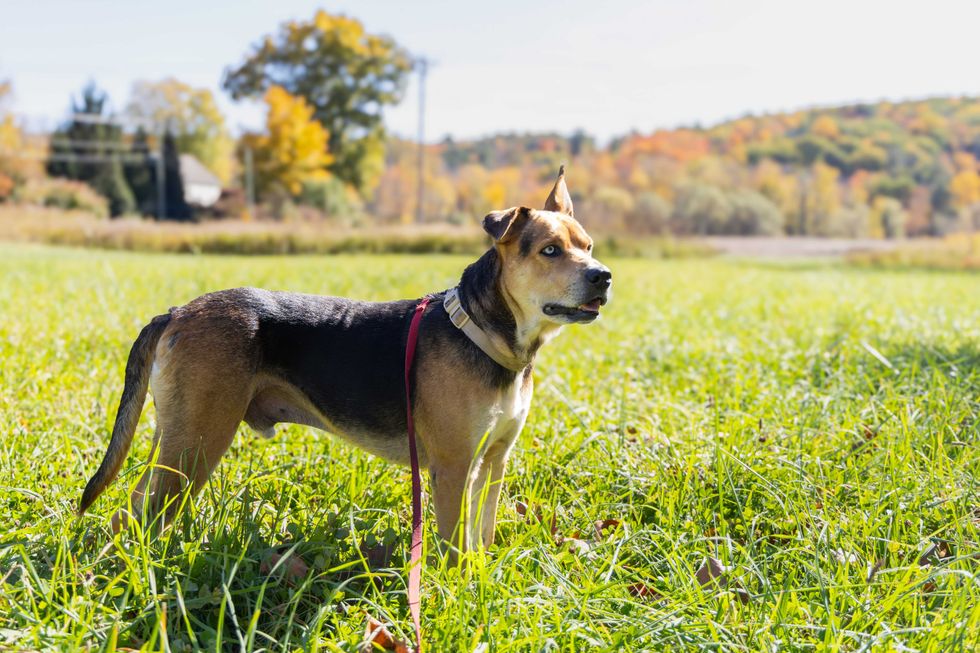 Blue, a 7 year-old Shepard mix, is waiting for his forever home. Madi Long