


An Art Tour Of NYC: Museums And Mutations

My wife and daughter were out of town last month. My sister called to tell me that she and my brother-in-law were going away for the weekend and to invite me to stay in their New York City apartment. I haven’t been on my own in the city since I lived there and was single, so I jumped at the chance.

As it happened, the first person I mentioned my plans to was Leon Graham, Compass’s resident art critic. He immediately laid out a list of art-related places to go and things to see. So now my weekend had a theme.

‘Mutations’ exhibit

I woke up on Saturday morning and traversed the width of Manhattan to get to the High Line. I remember the abandoned elevated railroad freight line that passed over — and sometimes through — the buildings of the meatpacking district, but I hadn’t been back to see it since it was rehabbed as a park.

The design and execution of the refit borders on perfection. Remnants of the old railway are allowed to show through, new design elements reflect a railroad motif, but the overall look is bright and light and new. The only problem is that in many places, the park is, as you might expect, only as wide as two railroad tracks laid side-by-side. There are places to sit, and people were sitting in them, but for the most part, visitors form two lanes in constant motion, one heading north and the other south. Birds-eye views of the neighborhood and hundreds of species of flora in beautiful plantings aren’t really compatible with a single-file forced march.

Fifteen art pieces are set out along the 1.5-mile stretch of the High Line, many of them under the overarching title “Mutations.” Jon Rafman’s “Mutations: L’Avalée des avalés (The Swallower Swallowed)” is a little too Human Centipede-esque for me, but Veit Laurent Kurz’s “Mutations: Salamanderbrunnen,” a site-specific commission built from concrete, fiberglass and plants, and with water flowing through it, provided much for the eye and ear to follow.

I’m not sure if Alisa Baremboym’s flesh-colored “Locus of Control” is supposed to look like a giant nose, but it does, and that made crawling into it all the more attractive to me. The viewers (there is room for four) slide past a sheet of slightly warped, clear plastic and sit, fairly comfortably, looking out at the distorted view. Although this was not the artist’s intent, I found it amusing to watch people watching me inside the thing.

“Mutations” is on view through March 2018. For details, go to art.thehighline.org.

Whitney museum
of American art

The High Line ends — or begins, depending on how you look at it — at Gansevoort Street, outside the second-floor windows of the Whitney Museum of American Art. At one point many years ago, I lived not too far from the Whitney and visited it often. It and I have both moved since then, although the museum has limited its relocations to one, having moved into the eight-story, Renzo Piano-designed building in May 2015.

It was already mid-morning, but the wait to buy tickets was no more than three or four minutes. On the other hand, admission costs $25.

The eighth-floor gallery was closed as a Calder exhibit was being loaded in. I didn’t mind missing that; my college campus was lousy with Calders, and I’m over him. If you want to see the exhibit, it’s on view through Oct. 23.

The seventh floor is given over to “Where We Are: Selections from the Whitney’s Collection, 1900–1960.” I was delighted to find plenty of classics here, including Jasper Johns’s “Three Flags” and Edward Hopper’s “Early Sunday Morning.” New (to me) pieces included Elsie Driggs’ “Pittsburgh,” a 1927 oil painting inspired by a factory building and rendered only in shades of gray, and Paul Cadmus’s tempera “The Bath,” best described as Norman Rockwell meets 1980s Fire Island — did no one in 1951 perceive that?

Given that the show highlights works up through 1960, I expected to find at least a little bogusness, such as Barnett Newman’s “Day One,” a large reddish-orange canvas with an orange border stripe on either side. Maybe stuff like this had a point to make back in 1952, but now it’s just tiresome.

The rest of the museum was given over to the Whitney Biennial, which (perhaps because of the move?) was last held three years ago. I had high hopes when I saw that the first exhibit inside the door had viewers wearing virtual-reality helmets. Silly me. Jordan Wolfson’s “Real Violence” is a five-minute film of one man beating another with a baseball bat, then stomping on his head, then hitting him with the bat some more. Signs warn visitors that it’s not suitable for children; in fact, it’s not suitable for anyone.

And the day went downhill from there. A few mildly interesting photographs. Pointless films. A pointless video game. One section of the fifth floor looked like a bath-fitting showroom. That’s where I found a small oil by Tala Madani with a two-word title, neither word of which I can write in this newspaper.

I know I’m verging perilously close to “My kid could do that” territory. But in my opinion, two mannequins wearing bathing suits, snorkels and virtual-reality helmets, surrounded by flat-screen TVs/monitors mounted horizontally with a plastic fish set on each screen, isn’t art; it’s self-indulgence.

The one standout was Samara Golden’s “The Meat Grinder’s Iron Clothes.” Four environments — miniatures, although that’s not immediately apparent — are reflected endlessly in mirrors set against huge windows overlooking the Hudson River. Each environment is fascinating in its own right, and the how’d-she-do-it factor adds much more to examine and ponder. (The Whitney’s YouTube channel has a short video of Golden setting up and talking about the piece. It’s worth a watch.)

After a good 15 minutes or so soaking in, examining, and discussing “Iron Clothes,” I decided to end my Whitney visit on that high note and headed to the exit. When I left in the early to mid-afternoon, the line to get into museum stretched out the doors and down the block.

The Biennial exhibit is on partial view until July 16. For information on all of the exhibits at the Whitney Museum of American Art, go to www.whitney.org.

Metropolitan
Museum of Art

On Sunday I went to the Metropolitan Museum of Art. I have a kind of an odd relationship with the Met. I’ve been there many times, but I always feel adrift, even lost, in there. I’ve been to the American Museum of Natural History many times as well, and I feel like I know it. I own it. Set me down anywhere in there and I’ll take you wherever you want to go. Not so the Met; I don’t know why.

Much of their collection doesn’t interest me. Antiquities are cool for having survived so long, but aesthetically they do nothing for me. I love 18th- and 19th-century Japanese prints, but the Met’s Asian galleries hold items from Korea, China and India, nowhere else.

I chose to go for things I knew I would enjoy: the low-hanging fruit of 19th- and early 20th-century European paintings and sculpture. I was surprised to find a number of pieces there that I did not remember from previous visits.

Ingres’ “Odalisque in Grisaille” is an oil study in black and white of his larger, more colorful “Grand Odalisque.”

There were several Pissarros and Degases painted on fans — apparently, fan painting was a thing for a while; Degas wanted to have a whole room at the 1879 Impressionist exhibition devoted to fan paintings.

It’s hard to look at Degas’ sculpture “The Little Fourteen-Year-Old Dancer” and not try to imagine what the wax original looked like in 1881, when her cotton clothing and satin hair ribbon were bright and new and her skin and hair were natural colors.

The most exciting find was Maximilien Luce’s 1890 pointillist oil “Morning, Interior.” Luce’s rendering of the sunlight pouring in the Mansard-roof skylight, casting shadows from and throwing into relief the figure of painter Gustave Perrot sitting on his cot and putting on his shoes, is simply astonishing.

Nothing in the Met’s collection of Rodins stands out for me, but it’s well worth seeing simply for its extent, nearly filling a long hallway.

After lunch in the cafeteria, I headed over to the American Wing. I try to stop in there whenever I’m at the Met, to gaze in awe at the Tiffany windows and say hi to the statue of Evelyn Nesbit. My preferred way to end a visit is to spend some time absorbing the beauty, balance, and serenity of the Frank Lloyd Wright Living Room.

For details on the Metropolitan Museum of Art’s current exhibitions, go www.metmuseum.org.

Latest News

Roomful of Blues set for April 17 show at Infinity Hall in Norfolk
Photo provided

NORFOLK –Roomful of Blues, the Rhode Island-based band hailed by DownBeat magazine as being “in a class by themselves,” will bring its mix of blues, jump, swing, boogie-woogie and soul to Infinity Hall in Norfolk on Friday, April 17, at 8 p.m.

The long-running group, formed in 1967, is touring behind its Alligator Records album Steppin’ Out!, released in late 2025.

Keep ReadingShow less

Robert E. Stapf Sr.

Robert E. Stapf Sr.

MILLERTON — Robert E. Stapf Sr. (Bobbo), a devoted husband, loving father, grandfather, great grandfather, brother and friend to many, passed away peacefully on April 9, 2026, at the age of 77, happily at home surrounded by lots and lots of love and with the best care ever.

Bob was born Jan. 16, 1949, to the late Peter and Dorothy (Fountain) Stapf. He began working at an early age, met his forever love, Sandy, in 7th grade and later graduated from Pine Plains Central School.

Keep ReadingShow less

Michael Joseph Carabine

Michael Joseph Carabine

SHARON — Michael Joseph Carabine, 81, of Sharon, Connecticut, passed away on the morning of Friday, April 3, 2026, at Bryn Mawr Hospital in Bryn Mawr, Pennsylvania. He was the beloved husband of the late Angela Derrico Carabine and loving father to Caitlin Carabine McLean.

Michael was born on April 23, 1944, in Bronx, New York. He was the son of the late Thomas and Kathleen Carabine of New York.

Keep ReadingShow less
google preferred source

Want more of our stories on Google? Click here to make us a Preferred Source.
Chion Wolf brings ‘Audacious’ radio show to Winsted with show-and-tell event
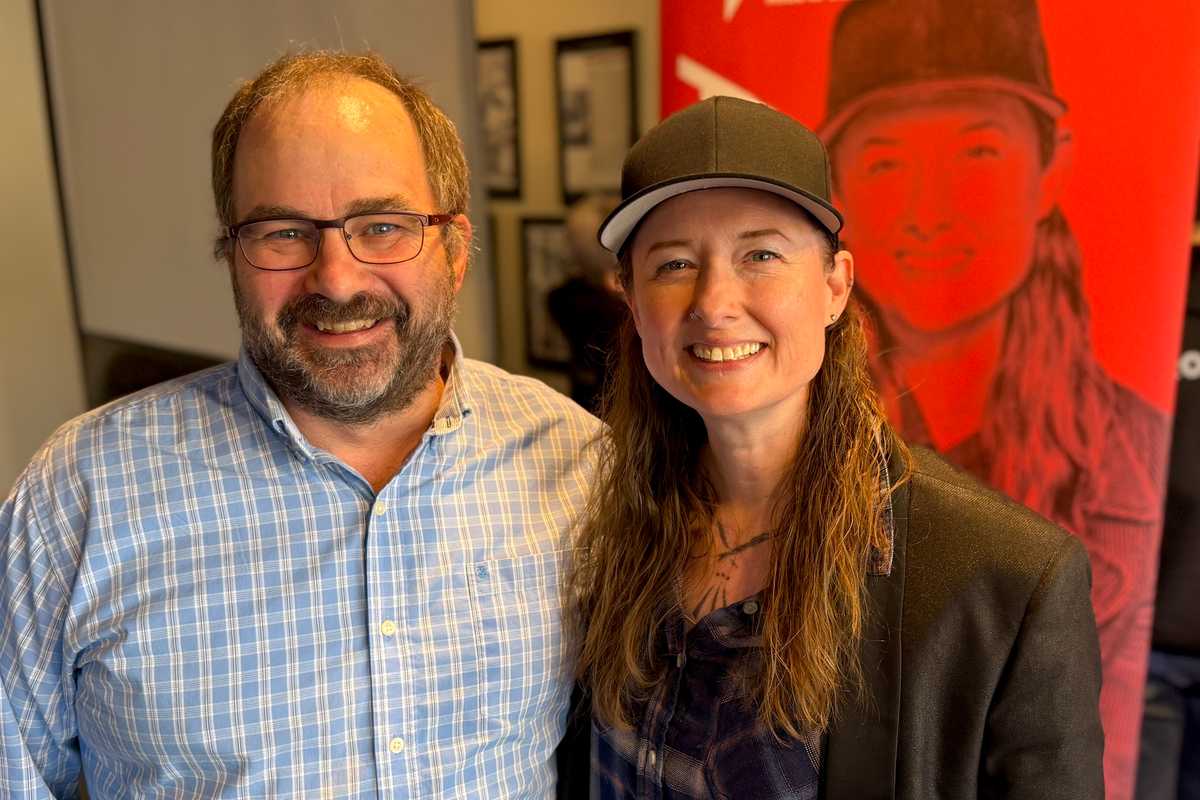
Nils Johnson, co-founder and president of The Little Red Barn Brewers in Winsted, hosted Chion Wolf and her Connecticut Public show “Audacious LIVE: Show and Tell,” which was broadcast on April 8, drawing a sold-out crowd.
Jennifer Almquist

The parking lot of The Little Red Barn Brewers in Winsted was full on Wednesday, April 8, as more than 100 people from 43 Connecticut towns — including New Haven and Vernon — arrived carrying personal treasures for a live taping of “Audacious LIVE Show & Tell.”

Chion Wolf, host and producer of Connecticut Public’s “Audacious,” and her crew, led by production manager Maegn Boone, brought the program to the packed brewery for an evening of story-driven conversation and shared keepsakes.

Keep ReadingShow less
Marge Parkhurst, the preservation detective

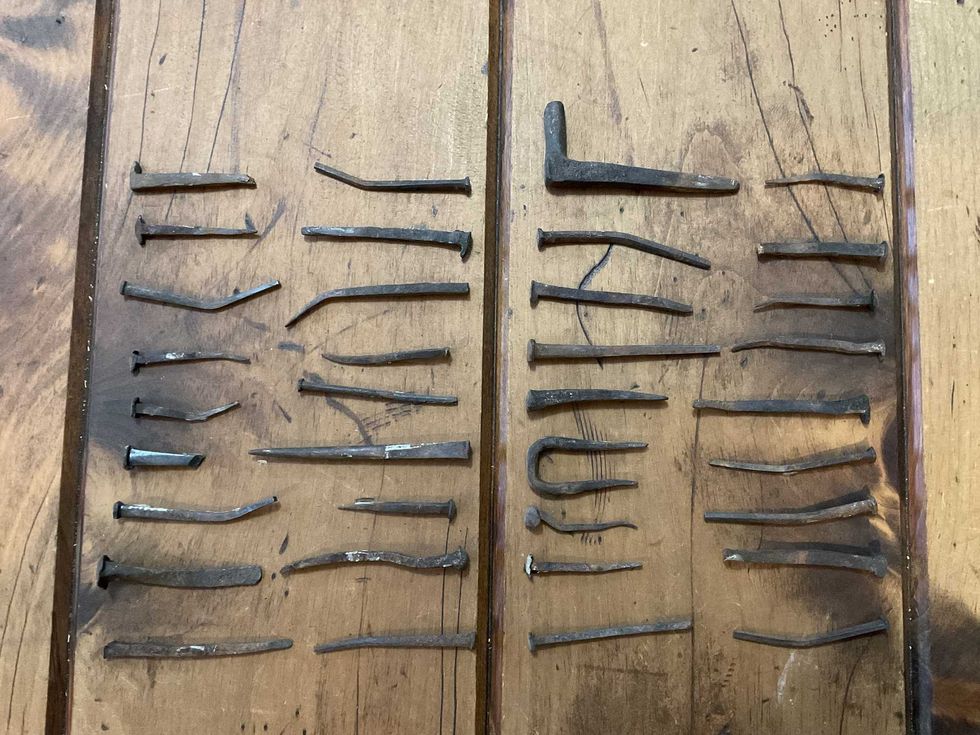
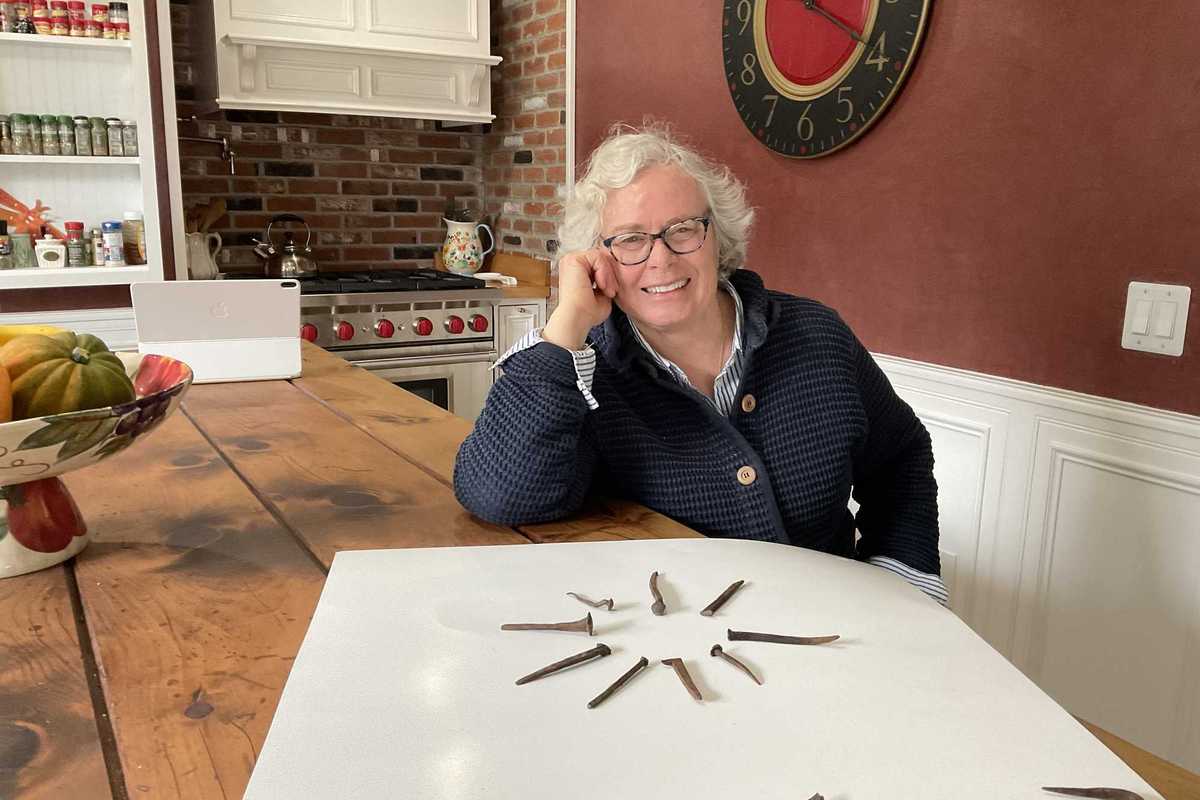
Marge Parkhurst with a collection of historic nails recovered from wall cavities during restoration work.

Photo courtesy of Marge Parkhurst/Cottage & Country Painting Company
Walls still surprise me. If you look hard enough, you can find buried treasure.
Marge Parkhurst

After nearly 50 years of painting some of Litchfield County’s oldest homes and landmark properties, Marge Parkhurst has developed an eye for the past—reading the clues left behind in stenciled vines, forgotten bottles and newspapers tucked into walls, each revealing a small but vivid piece of Connecticut history.

Parkhurst was stripping wallpaper in a farmhouse in Colebrook — the kind of historic home she has spent decades restoring — when she noticed something odd. Three layers of paper had already come off — each one a different era’s idea of decoration — and beneath them, just barely visible under dull, off-white plaster, a pattern emerged.

Keep ReadingShow less
Wings of Spring performance at the Mahaiwe Theater
Adam Golka
Provided

On Sunday, April 19, at 4 p.m., Close Encounters With Music (CEWM) presents On the Wings of Song at the Mahaiwe Performing Arts Center in Great Barrington.

The program focuses on Robert Schumann’s spellbinding song cycle Dichterliebe (“A Poet’s Love”), a setting of sixteen poems by Heinrich Heine that explores love, longing, and the redemptive power of beauty. Featured artists include John Moore, baritone; Adam Golka, pianist; Miranda Cuckson, viola; and Yehuda Hanani, cello.

Keep ReadingShow less
google preferred source

Want more of our stories on Google? Click here to make us a Preferred Source.
google preferred source

Want more of our stories on Google? Click here to make us a Preferred Source.