Walls still surprise me. If you look hard enough, you can find buried treasure.
— Marge Parkhurst
After nearly 50 years of painting some of Litchfield County’s oldest homes and landmark properties, Marge Parkhurst has developed an eye for the past—reading the clues left behind in stenciled vines, forgotten bottles and newspapers tucked into walls, each revealing a small but vivid piece of Connecticut history.
Parkhurst was stripping wallpaper in a farmhouse in Colebrook — the kind of historic home she has spent decades restoring — when she noticed something odd. Three layers of paper had already come off — each one a different era’s idea of decoration — and beneath them, just barely visible under dull, off-white plaster, a pattern emerged.
“At first it just looked like old paint,” said Parkhurst, who has been painting and restoring historic homes in Litchfield County for decades. “Until I realized it was a stencil, a beautiful pattern that repeated.”
She kept going carefully — a wet sponge, hot water, a little fabric softener — peeling back until she could see it clearly. A climbing vine emerged, applied in vertical runs to give the wall the look of wallpaper. Someone had signed it. The signature was faint, tucked above the baseboard in the corner, not fully legible. But the date was clear: 1870.
Parkhurst, owner of Cottage & Country Painting Co., has worked in enough old houses to develop a practiced eye for what they conceal — understanding that layers of paint, paper and plaster in a 19th-century New England home form a kind of compressed archive of the people who lived there.
The stencil bore a strong resemblance to what historians call Moses Eaton-type stenciling — a tradition of itinerant craftsmen who traveled New England in the early 1800s with portable kits of cut-pattern stencils. Their trade flourished because imported wallpaper was expensive. Stenciling offered the same visual effect at a fraction of the cost.
“These stencilers typically worked for a combination of cash, food and lodging,” Parkhurst said. “Their compensation was modest by any standard.” She paused, “He was a tradesman. But the work he left behind — that’s art.”
The vine pattern was dull with age but still legible. One section had survived intact beneath the layers of paper. The homeowners chose not to paint over it — instead building a wooden frame around it, a small window into 1870.
“Preservation means protecting something to prevent further deterioration,” she said. “Restoration means returning something to a previous state. In that room, we preserved what was there.”
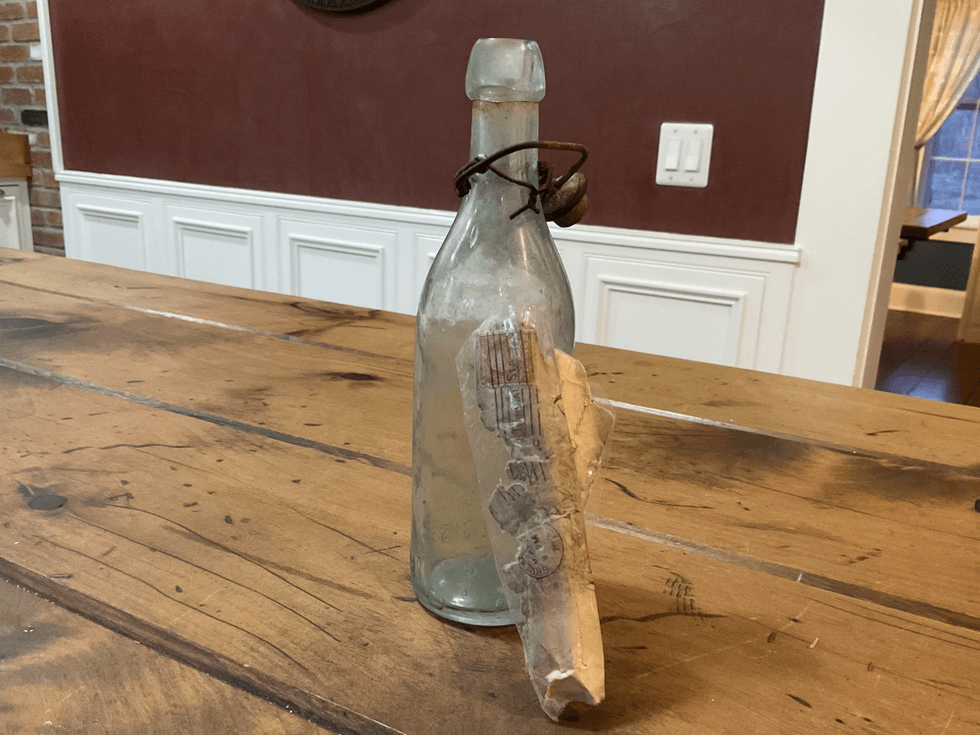 This bottle is from the Hartmann Brewing Company of Bridgeport, CT, found inside a wall of a former railroad outbuilding relocated from Canaan to Colebrook CT. The bottle was sealed with a glass stopper held by a wire, inside was a grocery list written on the back of an envelope postmarked 1915. Photo courtesy of Marge Parkhurst/Cottage & Country Painting Company
A Station’s Secrets
Not every discovery is decorative. Some are written into the bones of a building.
Parkhurst’s own home in Colebrook is a former railroad outbuilding moved from Canaan in 1920. Scraping the trim revealed it had once been sage green — and beneath that, a warm orange-brown soaked into the wood grain. “Old paint was made more like a stain back in the 1800s,” she said. “It penetrated the wood rather than sitting on top of it — so there’s never a shine.”
Up in the attic, eye bolts still anchored in the framing mark where cables stabilized the building during its move a century ago.
The most memorable find came by accident. Cutting open a wall under the stairs, she found a clear glass bottle sealed with a glass stopper held by a rusted wire. The label read: Hartmann Brewing Co., Bridgeport, Conn. It took days of careful oiling to free the stopper. Inside: a handwritten list of sandwiches and drinks, a postage stamp still attached. Not treasure. But a treasure just the same.
“I worked for days to get that thing open — and it was just somebody’s lunch order.”
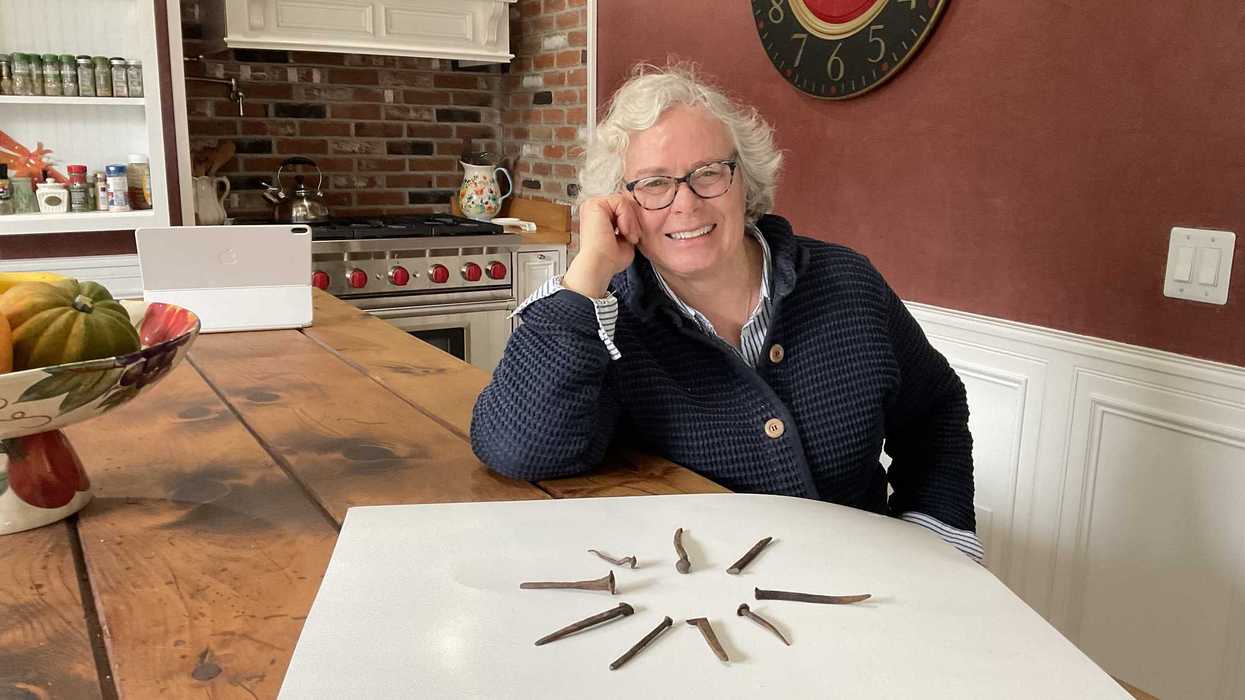
Newspapers stuffed into wall cavities, hand-wrought nails, paint layers thin as stain — over 50 years, Parkhurst has cataloged the details that tell a trained eye when a house was built and by whom. Litchfield County’s architecture is unusually varied: Georgian and Federal-style houses on Litchfield’s Main Street, industrial buildings along the rivers in Torrington and Winsted. “Each town has its own fingerprint,” she said.
The most consequential mistake she sees is changing a home’s character. “When you paint over stained woodwork, you hide the details. You can’t get them back.” She has talked more than a few owners out of it. Some have listened.
Not long ago, Parkhurst and her grandchildren gathered a few small objects, wrote a letter and tucked it into a wall of her Colebrook home. Someone will find it — a record of people who were once here.
“Walls still surprise me,” she said. “If you look hard enough, you can find buried treasure.”
In a county full of houses whose walls hold untold stories — stenciled by traveling tradesmen, nailed together by farmers, papered over by housewives following the fashions — Marge Parkhurst has spent a lifetime reminding us that history doesn’t only live in museums. Sometimes it’s hiding just behind the wallpaper.
Marge Parkhurst is the owner of Cottage & Country Painting Co. She can be reached at marge@cottageandcountryct.com or 860-379-4748.
Sarah Belzer is a writer, editor and creative director whose career has crossed journalism, advertising, film and cultural commentary. Managing Editor of The American Rant and founder of Jump Advertising, she has spent three decades shaping narratives for media and national and global brands.


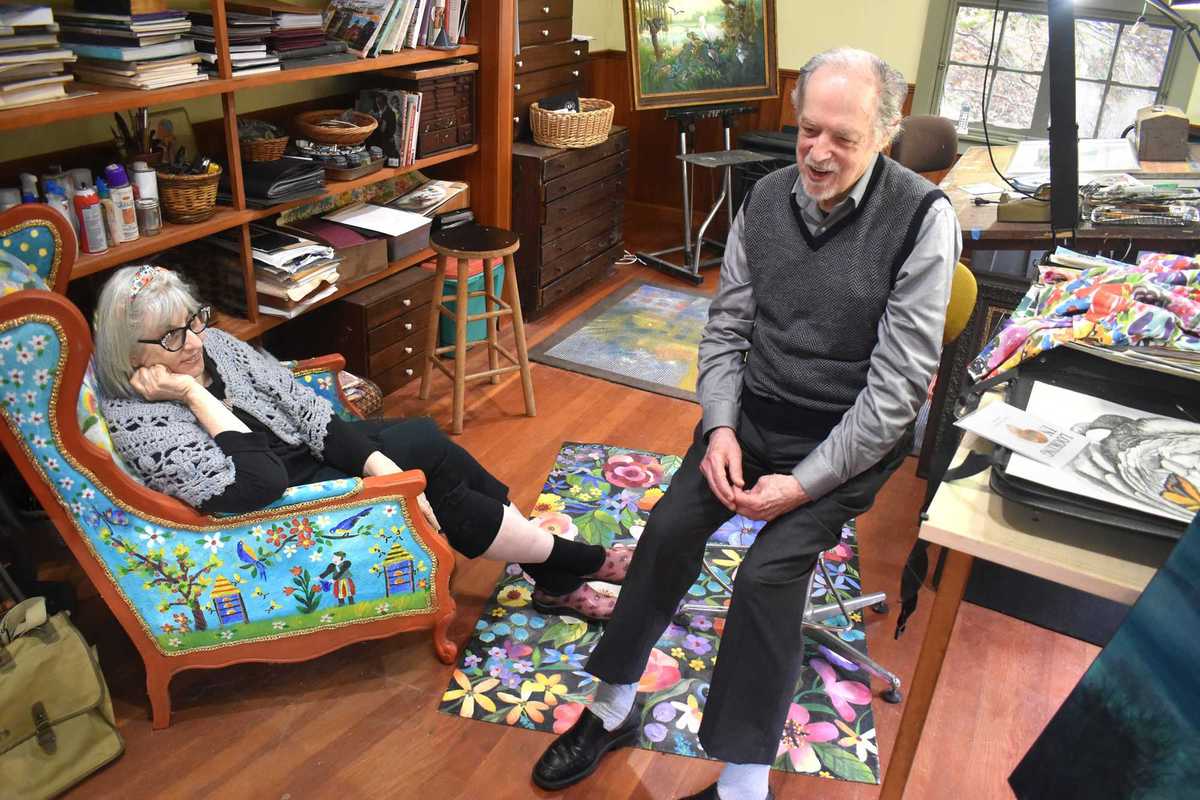
 Justine and Victor Valla in their studio with a painting of Victor’s,”Jonah and the Whale.” Robin Roraback

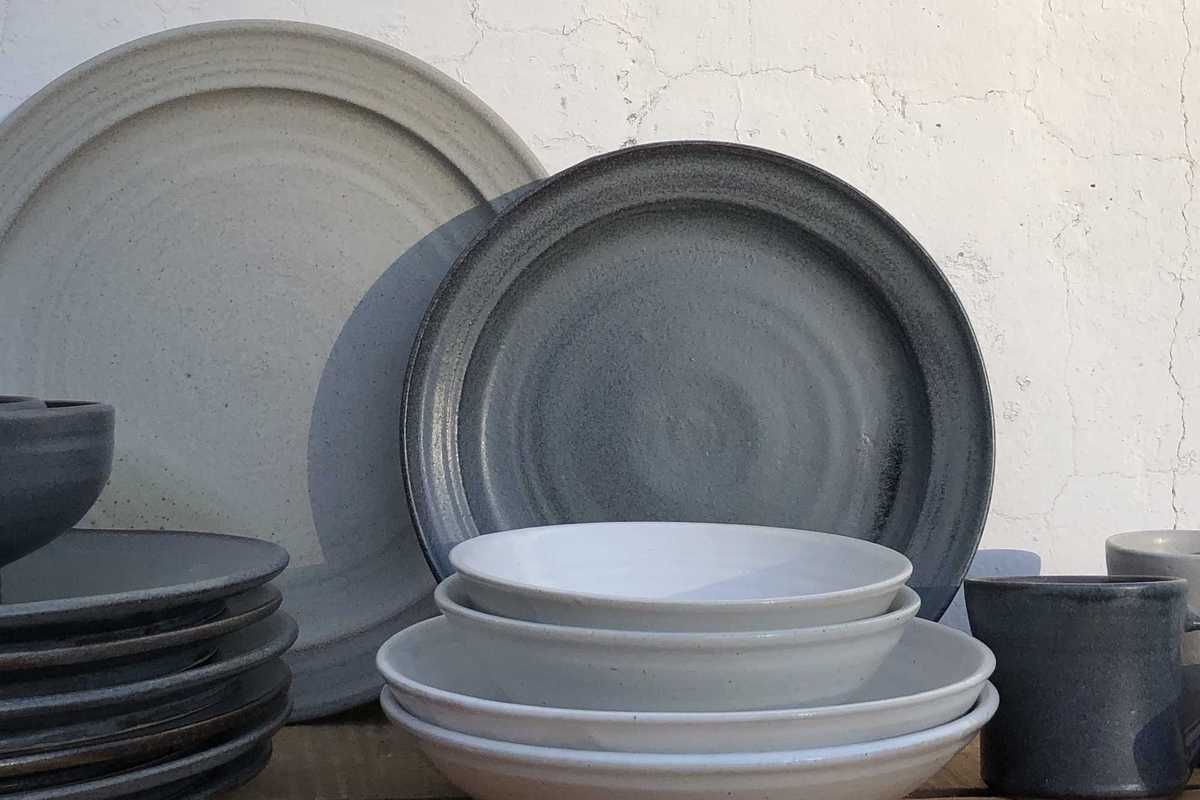
 A ceramic vase by Kathleen Heidemann.Provided
 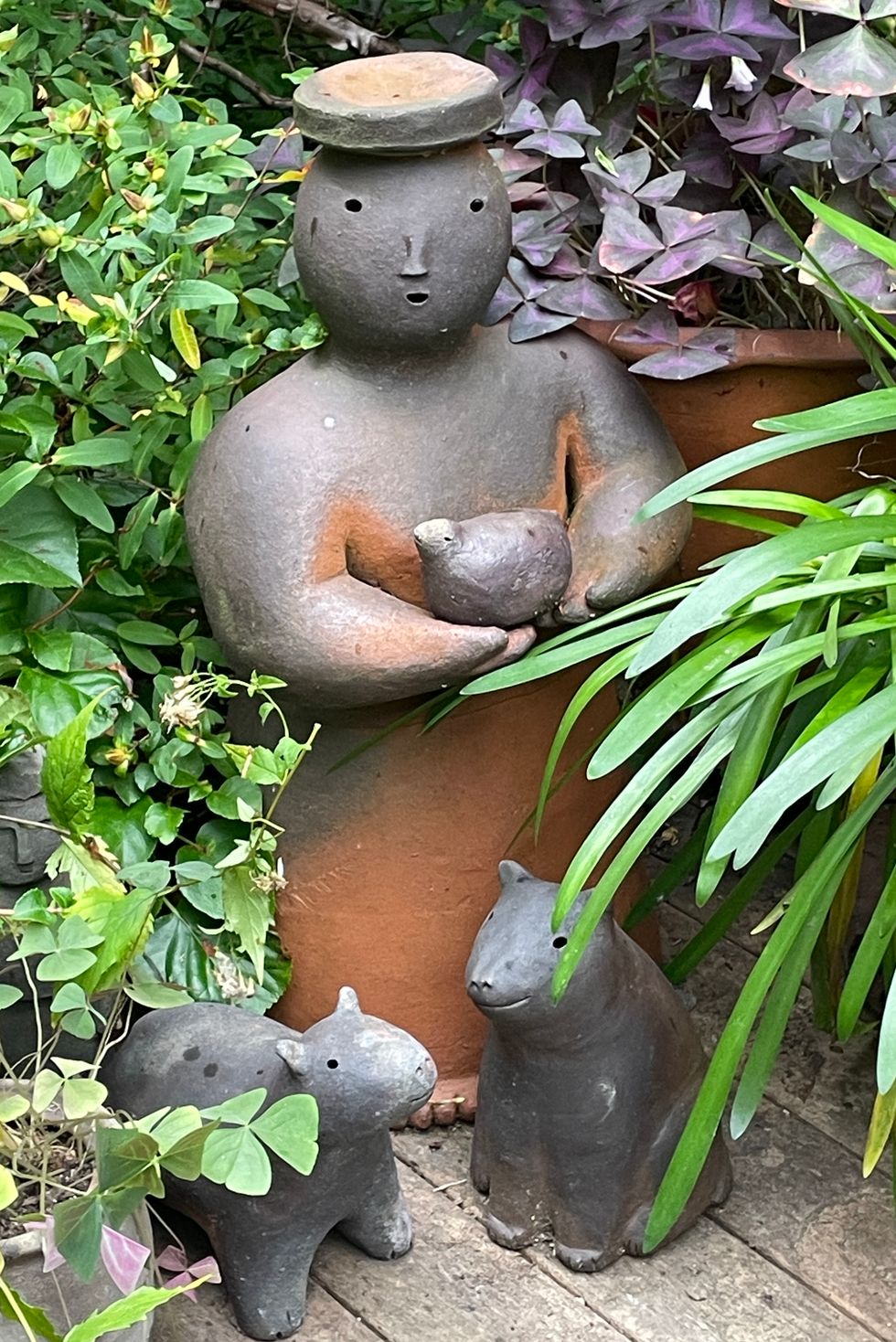 Joy Brown’s delightful ceramic sculptures.Provided