Robert E. Stapf Sr.


MILLERTON — Robert E. Stapf Sr. (Bobbo), a devoted husband, loving father, grandfather, great grandfather, brother and friend to many, passed away peacefully on April 9, 2026, at the age of 77, happily at home surrounded by lots and lots of love and with the best care ever.
Bob was born Jan. 16, 1949, to the late Peter and Dorothy (Fountain) Stapf. He began working at an early age, met his forever love, Sandy, in 7th grade and later graduated from Pine Plains Central School.
Following graduation, Bob and Sandy (Snyder) were married on Sept. 18, 1971. Bob soon began as a diesel mechanic, working at H.O. Penn and then Dutchess County Diesel for most of his career. He also loved every minute at Orvis Sandanona and all the other clubs where he worked with his dogs for over 50 years.
While Bob was happy outdoors hunting, snowmobiling and playing golf whenever he could and spending a lot of time customizing his 1949 Chevy Pickup, winning a lot of trophies at car shows all around, he was happiest spending time with family and friends. He could be found almost every morning having coffee with his buddies at Talk of the Town where he was “the mayor.”
Bob is survived by his loving wife of 54 years and best nurse, Sandy, of Millerton, his four children; Michelle Cianfarani and her husband Vinnie, Robin Stapf and her husband Rob, Bobby Jr. and his wife Jean and Kristofer Stapf and his wife Lauren, his 7 grandchildren; Zachary, Adriana, Mackenzie, Addison, “Bobcat,” Audrey and Maddie and his 2 great grandchildren; Nevaeh and Leiana. Bob is also survived by his 3 sisters; Barbara Holdridge (Everett), Debbie Bryant (Terry) and Wendy Lind (George), his 2 brothers: Peter Stapf (Donna) and John Stapf (Jane) along with many nieces and nephews.
The family would like to send our love and sincere appreciation to all of the wonderful nurses and doctors at Vassar Brothers Medical Center along with the nurses from Hospice Care who always took such great care of Bob for us.
Family and friends are invited to share memories and offer condolences on Tuesday, April 21, 2026, from 5:00 to 8:00 p.m. at Peck & Peck Funeral Homes, 7749 South Main Street, Pine Plains, New York.
In lieu of flowers, please consider making a small donation to Hospice Care for continued support to those who need it most. For directions, share a favorite memory or to leave a message of condolence for the family please visit www.peckandpeck.net
Patrick L. Sullivan
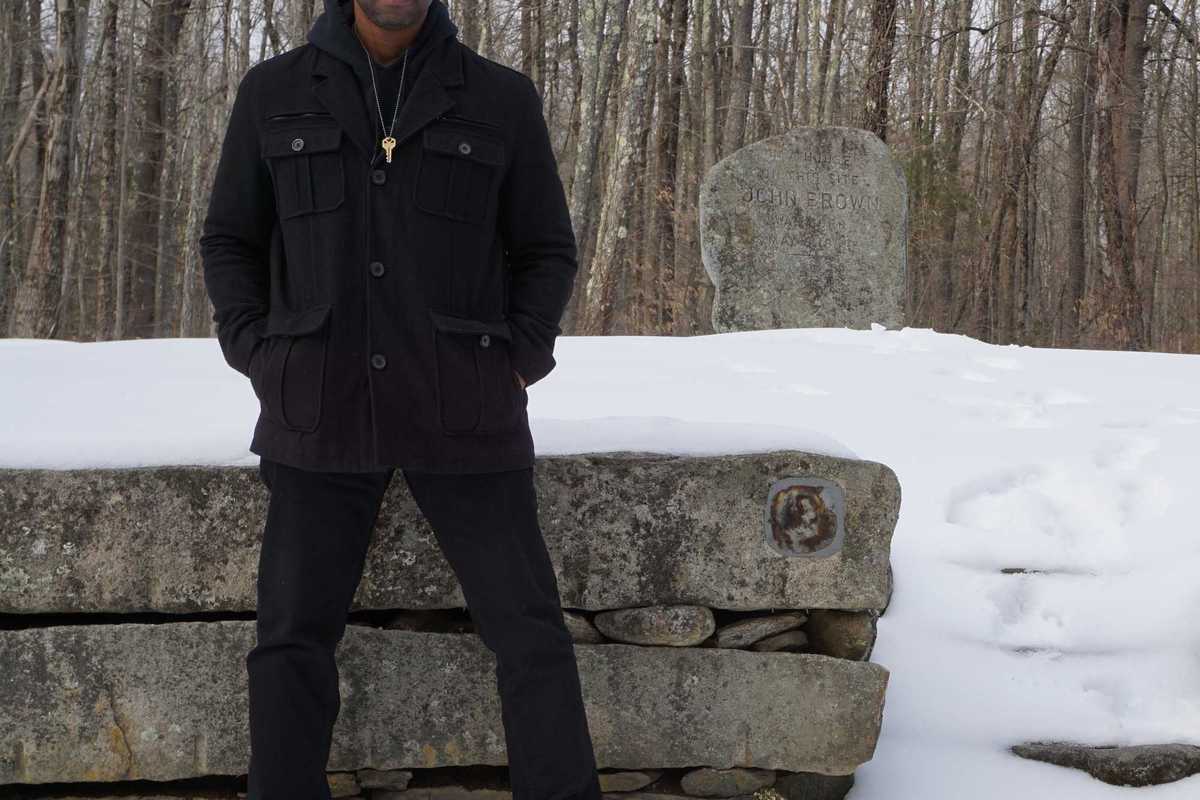
Jennifer Epstein Rudnick spoke in Falls Village Aug. 4.
FALLS VILLAGE — Jennifer Epstein Rudnick, a National Park Service ranger in Washington, D.C., and the author of “Search for the Signers: Visiting the Graves of the Signers of the Declaration of Independence,” said that finding the graves of the signers turned out to be more complicated than she initially thought.
For starters, it was by no means clear that the actual remains of some of the signers were actually beneath their gravestones.
Rudnick spoke at the South Canaan Meetinghouse Tuesday, Aug. 4, as part of the Falls Village-Canaan Historical Society’s “First Tuesdays at 7” series of summer talks.
Rudnick is the daughter of The Lakeville Journal reporter Ruth Epstein and Ed Epstein, and grew up in Kent, attending Kent Center School and Housatonic Valley Regional High School (HVRHS).
At Gettysburg College, she met fellow historian Peter Vermilyea, who is the head of the Social Studies Department at HVRHS.
With the 250th anniversary of the signing of the Declaration of Independence, Rudnick said she came at the subject of the signers from a different angle.
“I wasn’t interested in them while they were alive,” Rudnick said. “What I ended up doing was looking for their graves. I figured I’d find them, take a photo. It wouldn’t be that hard.”
What began as an interesting but modest side project became more complicated.
“I realized that just because the stone was there didn’t mean the signer was in the grave.”
She offered some examples of irregularities she uncovered, starting with Thomas Jefferson.
Jefferson died on July 4, 1826, 50 years after the Declaration was adopted, and was buried at his home in Monticello in Virginia.
His remains are still there, beneath an impressive monument. His original headstone, however, is at the University of Missouri in Columbia.
Rudnick said the family graveyard at Monticello was plagued by visitors looking for souvenirs. They “chipped away at the original headstone” until it had to be removed.
The original eventually wound up in Missouri in recognition of one of Jefferson’s major achievements, the Louisiana Purchase, which included the territory that is now Missouri.
Closer to home, Roger Sherman of Connecticut is said to be interred in the Grove Street Cemetery in New Haven, where a headstone and monument bear his name.
But Rudnick quickly found a problem. “
“The cemetery opened in 1796. Sherman died in 1793. So where was he for three years?”
During her research, Rudnick found that while cemetery guides often provided the official version of who is buried where, cemetery caretakers sometimes told a different, more nuanced story.
In Sherman’s case, the caretaker told her that before the Grove Street cemetery opened, New Haven’s notables were buried on the town green.
As the town grew into a city and space became limited, graves and remains were moved. Mostly.
“He said there was no record of Sherman ever being moved “ to Grove Street, Rudnick said.
“He’s probably still on the green.”
In the case of Caesar Rodney of Delaware, the quest initially seemed straightforward. At Christ Episcopal Church in Dover, Delaware, there was a monument marking his grave.
Then Rudnick noticed a plaque on the cemetery wall stating that Rodney’s remains had been moved to the church yard in 1889 – more than a century after his death in 1784.
This time, it was the cashier at the gift shop and the local visitor center who provided the additional information.
As Rudnick bought a scarf bearing the names of all 56 signers, the cashier asked what brought her to the shop. After learning of Rudnick’s interest in Rodney, the cashier said “Oh, he’s probably not really there.”
“We think it’s a woman,” added the cashier as she completed the transaction.
Seeing Rudnick’s surprise, she elaborated.
When the remains were relocated from the family graveyard, those doing the moving were not sure if they had found Rodney. Popular opinion holds that it was a woman’s remains that were interred in Rodney’s new grave.
Rudnick asked if that was true, where was Rodney’s body?
“Under Runway Seven of the Dover Air Force Base,” she replied.
Patrick L. Sullivan
Singers Jennifer Marshall (left) and Emily Levin perform as part of the church’s First Friday concert series on Aug. 7.
SALISBURY — The songs of Charles Ives, Rodgers and Hammerstein and Aaron Copland filled the Salisbury Congregational Church on Friday, Aug. 7, as singers Jennifer Marshall and Emily Levin performed for the church’s “First Friday at the Meeting House” concert series.
Accompanied by David Baranowski on piano, Marshall, a soprano, and Levin, a mezzo soprano, performed together and separately, beginning with “Stepsisters’ Lament” from Rodgers and Hammerstein’s “Cinderella.”
Marshall, who lives in Danbury, sang three songs by Danbury native Charles Ives.
“He ended up selling insurance and did music on the side,” she said. “He didn’t think he was very good at it.”
Levin sang “What a Movie!” from Leonard Bernstein’s “Trouble in Tahiti” with considerable elan. Introducing the song, she said it was a personal favorite.
“It’s Bernstein at his sharpest,” she said.
The next concert is Friday, Sept. 4, with contralto Alison Gish and pianist Melody Faber performing “Stabat Mater” by David Butler and the “Hermit Songs” of Samuel Barber.
All First Friday concerts begin at noon.
Patrick L. Sullivan
Lilly Rand shows workshop attendees how to make decorative books using paper.
SALISBURY — Artist and educator Lilly Rand showed nine adults and two teenagers the basics of making a small decorative book from scratch in a workshop at the Scoville Memorial Library Tuesday, Aug. 4.
Rand, who teaches art at Housatonic Valley Regional High School, had supplies galore spread across tables in the children’s area of the library.
There were wallpaper samples, wax, various kinds of string, binder clips, envelopes, pencils, markers, awls and many different types of paper.
Rand said children of artists often donate “whole studios’ worth of supplies” to the high school when their parents die.
She got the group started with a basic design she called the “Japanese four-hole binding,”
using three stiff pieces of paper folded to create six pages.
Rand demonstrated techniques for folding the paper, creating a sharp edge, using an awl to create the holes, and how to use the wax and string. She also pointed out the advantages and disadvantages of having the knot inside or outside the finished book.
The class worked diligently, with the occasional raised hand to ask for assistance.
After about an hour, everyone was admiring each other’s handmade books.
Rand noted that almost everything she used is readily available. Now that the group has the basics down, she said, there was no reason not to continue making books at home.

Want more of our stories on Google? Click here to make us a Preferred Source.
Alec Linden
State and local officials discuss health care policy during a conference at the Torrington Community Health and Wellness Center office on Thursday, Aug. 6.
TORRINGTON — Rural health care continues to pose unique challenges, but the Northwest Corner’s Community Health and Wellness Center (CHWC) is ready to take them on, said the organization’s CEO, Joanne Borduas, during a recent visit from Gov. Ned Lamont.
The governor was joined by public health officials at CHWC’s headquarters on Thursday, Aug. 6, for a brief conference in recognition of National Health Center Week, an annual celebration of the approximately 1,500 Federally Qualified Health Centers across the country. CHWC’s three locations – Torrington, Winsted and North Canaan – are among that group, offering sliding-scale payments regardless of insurance status. The CHWC serves as the only primary care provider for many in the region, especially those in lower income brackets.
Also present were Sen. Paul Honig (D-CT), Dr. Mandar Jadhav, of the National Association of Community Health Centers, Deb Polun, of the Community Health Center Association of Connecticut, Lisa Ferris, of the United Way of Northwest Connecticut and Petra Clark-Dufner, of the University of Connecticut’s Area Health Education Center Network.
During her opening remarks, Borduas said there was much to celebrate, including the recent reinstatement of CHWC’s dental practice after losses forced its suspension last year. However, challenges remain, she said.
One, Borduas said, is a misconception among policymakers that affluent areas do not need services.
“Sometimes there’s a misconception when you talk about areas that are considered a bit affluent — that there’s no need, they don’t need services,” she said. “So not true.”
Lamont said his experience lobbying in Washington for federal health care funding has been similar.
“We had to go talk to Dr. [Mehmet] Oz,” Lamont said, referring to the administrator of the U.S. Centers for Medicare and Medicaid services since 2025. “He said, ‘You know, I thought you were a couple of big cities and a lot of leafy suburbs.’ And I said, ‘I don’t think you understand Connecticut.’”
Connecticut ultimately received $154 million in 2026 through the new federal Rural Health Transformation Program and is expected to receive additional funding annually through 2030. The state will disburse the funds to providers and programs through grants.
Borduas said CHWC will focus on four key challenges unique to Northwest Corner health care as the federal funds are rolled out: transportation and geographic isolation, workforce recruitment, digital infrastructure and an aging population.
“The Northwest Corner is probably, I’ll be biased again, one of the most beautiful parts of the state,” she said, “but it is lacking in resources, and probably our biggest barrier here is the lack of public transit.”
Addressing transportation is a key priority for the organization, Borduas said, including through the organization’s mobile unit BETTY — “Bringing Exceptional Treatment to You ”— which brings services directly to patients.
BETTY was outside the Torrington facility accepting school supplies for children in need. Donations will be distributed to students at the Torrington Police Activities League’s 19th annual school supply event at Coe Memorial Park on Aug. 15 from 9 a.m. to 1 p.m.
Some supplies will be reserved for the CHWC’s school offices, some of which are located at HVRHS, North Canaan Elementary School and Sharon Center School.
Borduas also emphasized telehealth and the need to care for the region’s aging population.
“These folks want to age at home,” she said. “We need to make sure we can care for them so that they can do so with dignity.”
Overall, Borduas said she hopes to use the funds across these initiatives to “forge ahead” by enhancing and expanding the vital services CHWC provides.
Honig, a Harwinton resident, said he recognizes the organization’s importance to the region. “I have personal experience with this area being a primary care desert,” he said.
Jadhav, who serves as a liaison in Washington for the 1,500 Federally Qualified Health Centers across the nation, offered final remarks.
Despite impending cuts to Medicaid, he said, “this is a good year to celebrate.” He reported that FQHCs have moved from a negative to positive margin, “and that’s because you are innovative.”
Lans Christensen
Musical guests, Brother Other, play an outdoor acoustic set in Kent during the sidewalk sale.
KENT — A highly anticipated summer tradition, Kent Sidewalk Sale Days celebrated its 50th anniversary Aug. 6 through 9, bringing businesses, organizations and shoppers together for bargains and outdoor shopping on Main Street.
Tents and canopies spanned the length of the street, providing shoppers with a wealth of choices and great deals. Favorites like Terston, Foreign Cargo, and House of Books were joined by newcomers Perfectly Paired, Westerlind and others.
A premier destination of the event has always been the St Andrew’s Tag Sale. This year the “early bird” opportunity was scheduled for Thursday afternoon, giving dedicated shoppers first choice of the offerings. Glass, china, kitchen equipment and art were polished and cleaned to “as new “condition.

The success of this earlier access was evident in the long line of customers waiting for the 4 p.m. opening — and shoppers leaving with armloads of bargains.
Weather for the event was hot and humid as predicted, with the “feels like” temperature nearing triple digits. Rain held off, although it prompted the Karl Allweier concert to be rescheduled from Saturday evening to midday Sunday.
Beyond sidewalk shopping, Sale Days offered music, entertainment, food and drink, as well as fire truck rides and games for children.
The Kent Chamber of Commerce organizes and presents Sidewalk Sale Days, with Chamber Vice President Ellen Corsell and Board Member Gary Kidd playing key roles. Corsell emphasized Kidd’s contributions, saying she was in awe of “his motivation, innovation, and determination to make this the best Sale Days ever.”
“I am so happy to see the town so alive with people from everywhere,” Kidd said.
Patrick L. Sullivan
Salisbury native Darcy Boynton is the co-owner of Blue Studio Dance in Lakeville.
SALISBURY — When Darcy Boynton addressed Salisbury Central School’s graduating class in June, she urged students to focus on the process of learning rather than the outcome. It’s an outlook the Salisbury native has followed throughout her own career as a director, teacher, business owner and dancer — in no particular order.
“I firmly believe that the people who are the most successful, in any endeavor, are process-oriented,” she said. “The process is where we spend most of our time and where we grow. In the process, we become a team.”
During an interview at the White Hart on Friday, July 31, Boynton expanded on her argument for embracing “the process” and discussed her passion for using arts education to shape growth, development and confidence in children.
Boynton has been able to lean into her definition of “the process” with the establishment of Blue Studio Dance, which she co-founded with Falls Village resident Amber Cameron in 2023. The pair met at the Sharon Playhouse more than 15 years ago during a production of Oklahoma!, and have since taken their show on the road, teaching and choreographing together throughout the region. Entering its fourth year, Blue Studio Dance offers a variety of dance programs for children and adults with the goal of fostering a sense of belonging and artistic freedom.
She is also involved in children’s theater productions. She directed the last four musicals at Salisbury Central School, including Annie, Fiddler on the Roof, Matilda, and Newsies! She also directed Mary Poppins for the Falls Village Children’s Theater in March.
Boynton said she deliberately and thoughtfully challenges her dance and theater students and performers.
“I want to get them to stretch their abilities,” Boynton said. “It’s respectful to hold them to a high standard. Children get undersold all the time by adults.”
Boynton said she looks for the “sweet spot” between embracing the learning process and the final result.
“We want a good experience, but we can put on a good show too,” she said, adding that striking that balance requires “constant readjustment” as rehearsals go on.
One measure of success, Boynton said, is whether students come back. Boynton said the results have been encouraging.
“We have a very high return rate for the SOAR musical,” she said.
SOAR (Seek Originate Aim Reach) is the after school enrichment program at SCS. SOAR is a non-profit organization founded in 2000, and Boynton is a board member.
A Salisbury native, Boynton attended SCS, Indian Mountain School and The Hotchkiss School before graduating from New York University, where she began as a theater major and switched to English.
After college she floated between New York, San Francisco and Connecticut, unsure of where she was headed.
“I kind of fell into arts education,” Boynton said. She co-founded and operated Shooting Star Arts Camp alongside Elise Babigian, also from Salisbury, and operated the camp for six years. It was located where Blue Studio is now.
Boynton believes arts education is too often regarded as supplemental to the standard curriculum, but her years of directing and teaching have proven its value.
“The arts are integral, like math or science,” she said. “They are part of a core education.”

Want more of our stories on Google? Click here to make us a Preferred Source.

Want more of our stories on Google? Click here to make us a Preferred Source.