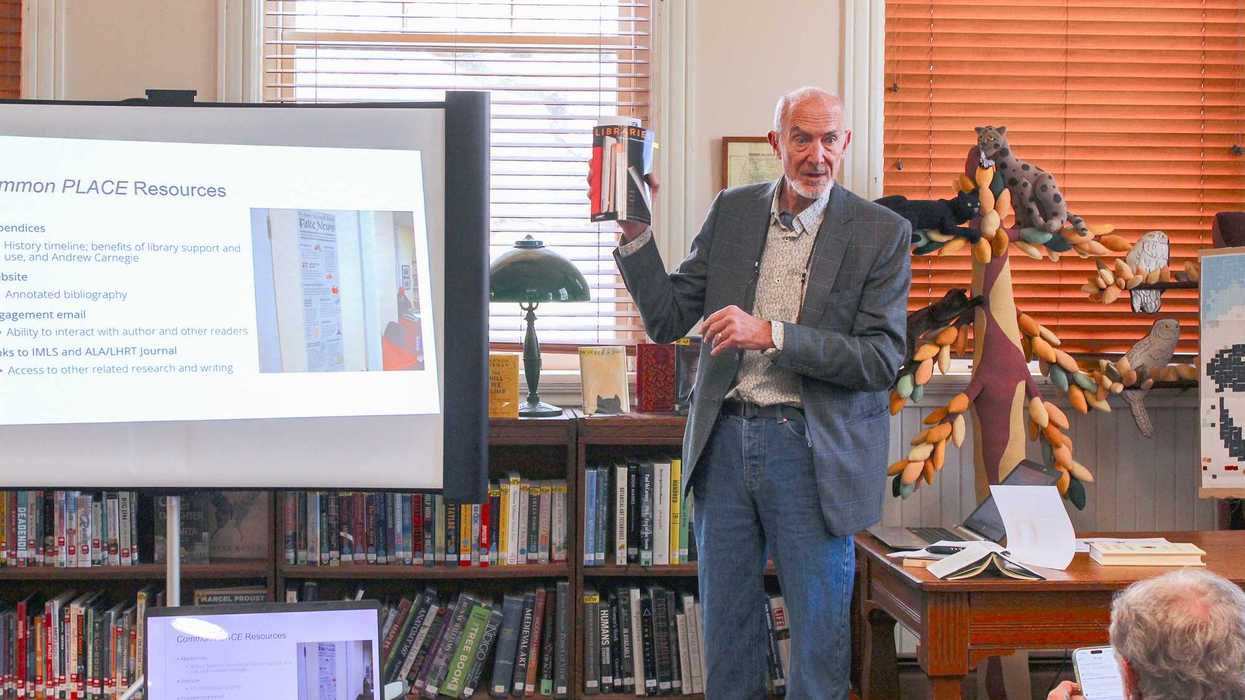
FALLS VILLAGE — Author Thomas E. Johnson, Jr., told an audience at the David M. Hunt Library in Falls Village Saturday, April 11, that public libraries have played a critical role in American communities since the Revolutionary era.
Johnson, whose book “Common Place: The Public Library, Civil Society and Early American Values” examines 12 case studies of public libraries, including the Scoville Memorial Library in Salisbury.
He said New England is the “epicenter” of public libraries, beginning with what he considers the first truly public library, established in 1790 in Franklin, Massachusetts.
The residents of Franklin wrote to their town’s namesake, Benjamin Franklin, asking for a bell roughly along the lines of the famous Liberty Bell in Philadelphia.
Franklin sent books instead.
Johnson noted that the Franklin library was located on the town’s common, along with the post office, the Congregational Church where town meetings were held, and the town’s poor farm.
It was no accident that the library was adjacent to the physical location of important town institutions.
There was a squabble about the books Franklin sent. At first the Congregational Church held on to the collection, and was stingy about access.
But a formal town meeting made the books available to all.
Johnson counts the Scoville Memorial Library as the second public library in the country as of 1803.
He said the criteria are that the library actually has books, and a permanent space for them, and is open to the public without charge.
He said the Salisbury library initially charged a fee, and was not open continuously at first.
He also credited the Scoville Library for being the first public library to receive public tax dollars.
Looking ahead at the future of public libraries in the age of the internet and artificial intelligence, Johnson said libraries can help citizens sort through the barrage of information – much of it unreliable – about current issues.
He also emphasized the public library’s role as a civic institution contributing to the common good.
Johnson reflected, “Isn’t that critical to the commons, to how we govern ourselves?”






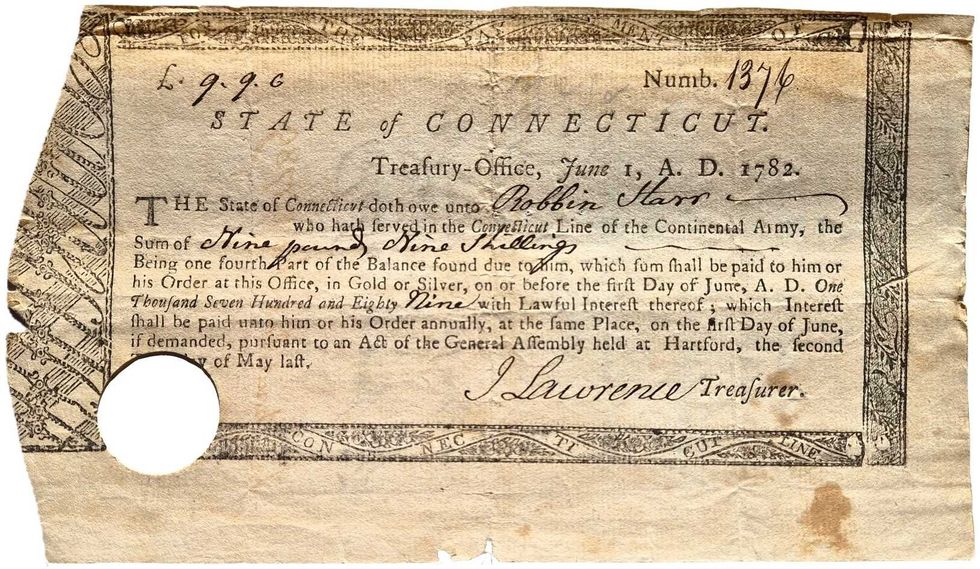 Pay Bill for Robin Starr’s service in the Continental Army.Courtesy the Alex Breanne Corporation
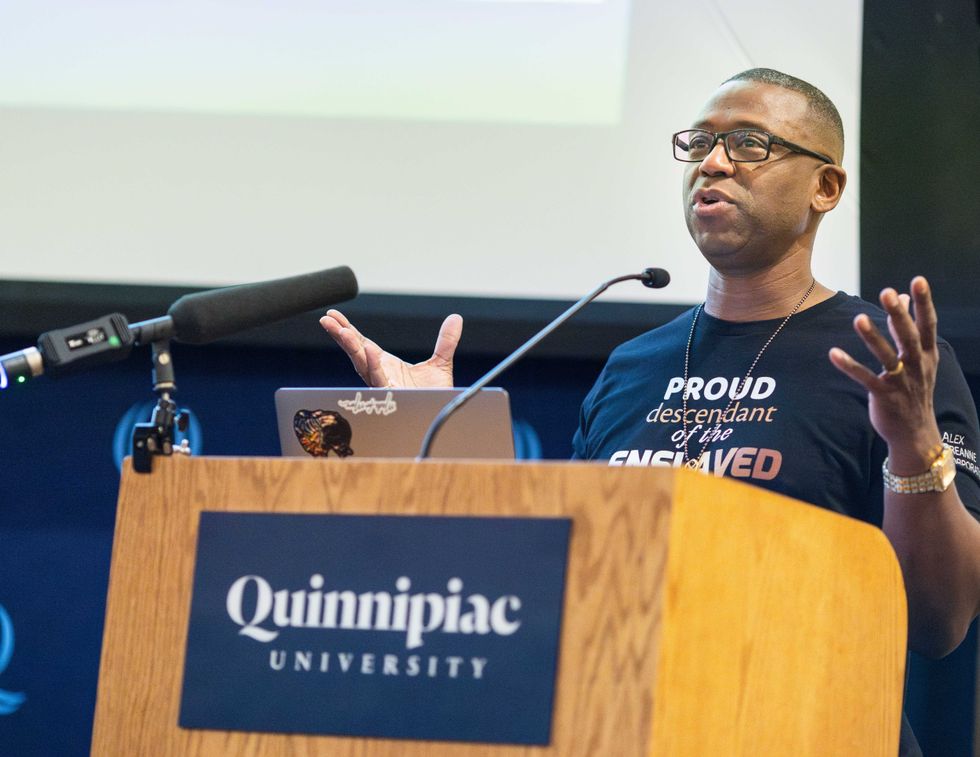 John Mills speaking at Quinnipiac University.Courtesy the Alex Breanne Corporation
 Stephanie Saetta,with her rescue dog George and Blue (left), a shepherd mix awaiting his forever home.Madi Long
 Blue, a 7 year-old Shepard mix, is waiting for his forever home. Madi Long