The New Yorker cartoonist (who shall remain unnamed) appeared to be nervous as he shifted his drink glass from hand to hand. We were lunching at Robert De Niro’s Tribeca Grill in a high-ceilinged, brick-walled room too big for comfort and too small to house the Graf Zeppelin.
It was a mega-quiet weekday afternoon in an elderly downtown Manhattan area once known for Pete Stuyvesant and Dutch settlers, now known for the unsettling world of a Hollywood film festival. It’s a show-biz area for sure, but actors are rarely seen there because they’re usually out ... acting!
Back to the nervous cartoonist: He was staring angrily at three women seated in a booth at a brick wall near the far end of a wide aisle.
“Problem?� I asked.
“There’s Joan Baez,� he answered with a low growling tone, not his normal style of speech.
“Uh, yeah, there she is,� I replied, not knowing what he meant. Joan Baez was the folk singer who many years ago had praised the DAR (Daughters of the American Revolution) for their protest against her scheduled Washington concert. “I’ll sell 2,000 more records because of that,� she was quoted as saying. I recall her onstage moments with Bob Dylan as they announced their usual amount of great feeling for each other.
I’m a longtime fan of her music. For a while, I actually started my day with one of her albums. Eventually, I moved on to Leonard Cohen, then returned to my roots in Sinatra and Hank Williams. OK, weird music pattern, right?
u u u
The cartoonist continued glaring angrily in her direction, but she was a rock. It comes with the fame thing. Didn’t notice him or pretended not to notice him. Then, Baez and her two friends climbed out of the booth and began a slow, angry stroll past us toward the door. Yup, they’d noticed this guy, but their angry, straight-ahead squints, grinding teeth and clenched jaw muscles were overkill for a one-guy staring contest.
I smiled as they moved past me in an attempt to remove myself from the tension. My smile was a peace offering in a silent war between a conservative Republican cartoonist and a folk singer whose politics are reputed to be, as they said of the old Russian Tea Room, slightly to the left of Carnegie Hall.
On more than one occasion, this cartoonist had wondered aloud about the lack of conservative Republican cartoonists in the media. He just couldn’t understand it. I’d wondered why he was complaining to me since he knew that I’d logged a lot of drawing time for the Civil Rights movements and, as my old Army sergeant might’ve said, I’d spent more time as a liberal then he did on the chow line, or something like that, but he was relentless.
I think I used The National Review as an example, told him Malcolm Hancock (MAL) had appeared there regularly. Recently, I’ve seen Mike Ramirez, a Pulitzer-Prize winner who I met in Cuba as I traveled with a group of cartoonists as guests of the Jose Marti Journalists Society. Mike is a very talented guy, a very conservative cartoonist and the Pulitzer Prize ain’t chopped liver. Conservative cartoonists do exist like ... hens’ teeth!
I suppose by its very nature cartooning is too far off the wall to enlist traditionalists; it’s an off-the-beaten-path profession, if you’re nuts enough to get into it. That guy wonders why there aren’t more conservative cartoonists and I wonder how they could exist at all.
Some years ago, I had a phone conversation with Mike Ramirez in which I bad-mouthed his Georgio Armani suit and it really pissed him off. Who knows what would’ve happened if I’d dissed Porsche or Mercedes — possessions are important to conservatives in my experience, and even now my cartoonist mind is racing toward gag idea drawings based on absurd images of the far right.
u u u
But (pause) the anger toward Joan Baez threw me off. She’s no Woody Guthrie or Pete Seeger and the world has no limit to songs of inequity and struggle. Fact is that country music, which is labeled as far right, logs the most time of any music form singing songs of social injustice.
Maybe the brick-walled interior of a film actor’s pub triggered a “Joe McCarthy� feeling about Hollywood and targeted the anti-Baez emotion. I wondered about it as I motioned for the check and made a mental note to play one of her tapes when I got home. Play them, listen to them and try to figure out what upsets the far right in Toon-Town ... and Tha-Tha-Tha-That’s all folks!
Bill Lee lives in Sharon and New York City, and regularly shares his cartoons with this newspaper.

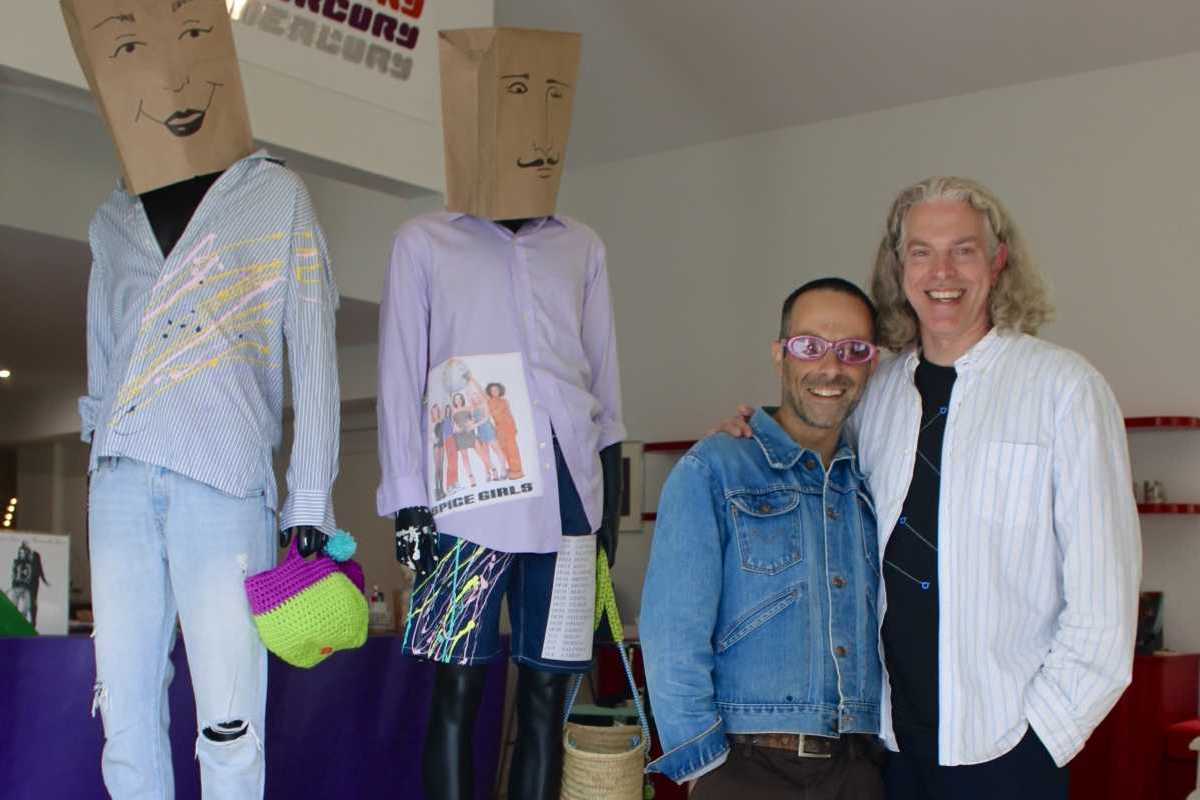
 Classic styles, bold colors, and creative concerts make up the “Imaginary Concerts” line at Peggy Mercury.Provided
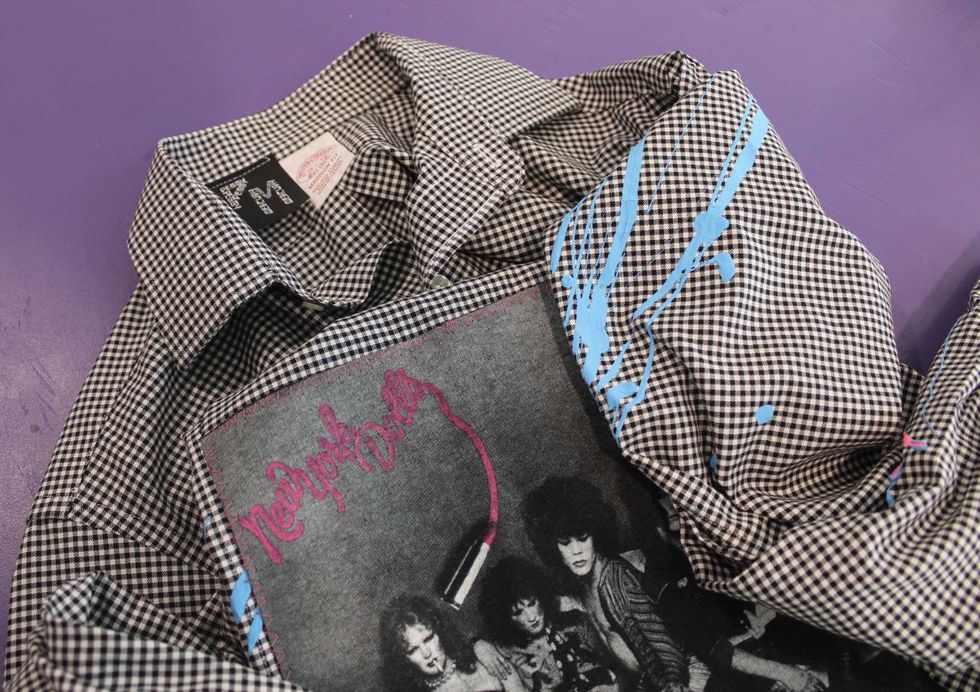
 Shirts from Peggy Mercury’s first fashion line, “Imaginary Concerts,” hang on display.Provided