Thank you!
Your support is sustaining the future of local news in our communities.

The best cold remedy: love and attention

The relatively warm winter is threatening to bring more ticks this spring, and it’s already delivering an unexpectedly large and vigorous batch of winter colds and flus.Doctors are available for actual medical advice. But with many illnesses, medicine isn’t what we rely on to fully restore ourselves. Sometimes what really works is a cool hand on a hot forehead, or a soothing cuddle on freshly changed sheets. In an informal round of interviews with area residents, the answers had one consistent theme: What made me feel better was having my mother spend a little extra time with me. This was as true for “only children” as it was for people who have multiple siblings.Whether you are a parent trying to figure out ways to comfort a child or an adult trying to remember what it was that made you feel better, the following is an unscientific sampling of suggestions. We didn’t add names because, really, what could be more personal than these stories? However, since my heritage will give away my identity on this one: When I was sick as a child my mother would always make me miso soup with large bits of seaweed in it. She would serve it in a large bowl and add rice. Here’s what other people told me:• When I was sick, my mother used to cut an apple in half and core it. Then she would sit with me and scrape out the center of the apple and feed it to me, like instant apple sauce. It was cool and refreshing, but the best part was that she was spending that extra time with me.• When I had a fever, which was often, my mother would sit with me and press cool, wet washcloths to my forehead. And she would change my sheets a lot.• The most comforting thing my mother did really was to stay by my side. She worked from home so staying home sick meant a day with mom, and it was always the best part to spend the time alone with her while Dad and my brother were at work and school.• I suffered from asthma as a child (still do, but not as badly), and my mom would dig out the humidifiers and turn the bathroom into a sauna using hot water from the shower.• First we’d get warm ginger ale, then we’d get chicken noodle soup and, when we started to get better, it would be cinnamon toast. And we got to stay at home in bed and listen to the radio. That was a real treat.• Vicks VapoRub rubbed on my chest always made me feel better, whether it worked or not. It just made me feel better to have someone doing something to take care of me.• My mother would let me stay in bed and read all day. • My mother would sing to me, the old-fashioned songs like “Good Night, Sweetheart.”• She would tickle my back and sing the Irish lullaby, “Toora, loora, loora.” And she used to give my sisters and me crushed ice with Coca Cola. That was a big deal because we were never allowed to have soda or anything with sugar in it. We had an old-fashioned ice grinder on the wall and she would grind the ice and pour it over the Coke. • Soap operas. My mom would let me stay in bed, and I’d watch soap operas all day. My favorite was “As the World Turns.” Even now, sometimes, if I’m feeling down, I’ll get in bed and watch the soaps. • My mother always made me creamed tuna on toast. It was tuna, milk and peas, thickened, on toast. It always made me feel good. I make it now for my daughter. We call it Ugly Tuna.• I used to get to stay home from school and lie on the couch and watch cartoons. • My father used to read to me from my favorite book, “The Book of Knowledge.” I used to love that. And my mother would make soup. It didn’t matter what kind of soup, and it didn’t matter whether I ate it or not. It was comforting, it made me feel better just to know that she had made it.• My mother would put Vicks VapoRub on our chests and then wrap a woolen scarf around our necks with a big pin and send us to school. • My mother would make us egg nog, with vanilla instead of whiskey. Back in those days you could still eat raw eggs because they were so fresh. They came from a nearby farm.

Latest News

‘So Little to Do,’ so much to discover at James Barron Art

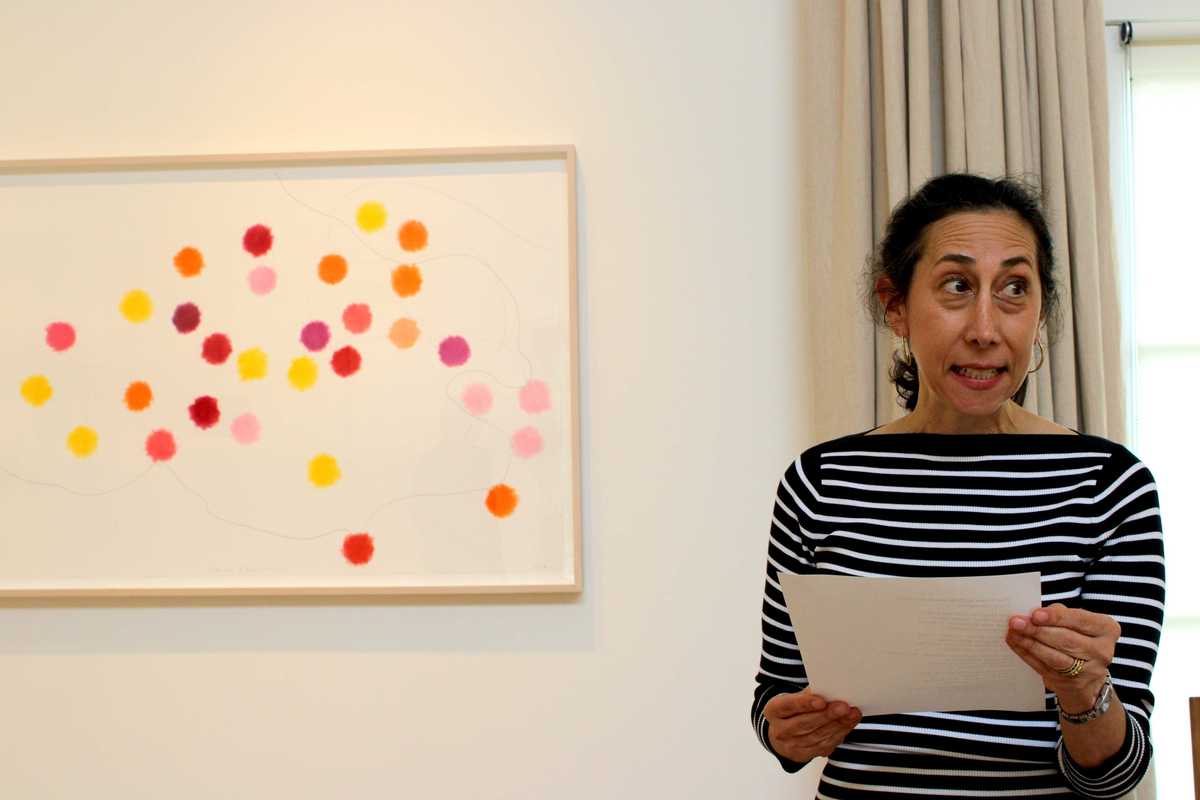
Curator Deborah Goodman Davis reads the Emily Dickinson poem “The Grass So Little Has to Do.” Spencer Finch’s “Following Three Bees (Zinnias)” buzzes in the background.

Photo by Natalia Zukerman

“The Grass Has So Little to Do,” on view at James Barron Art in Kent, takes its title from Emily Dickinson’s poem “The Grass So Little Has to Do,” written in 1862:

“The Grass so little has to do—
A Sphere of simple Green—
With only Butterflies to brood
And Bees to entertain—”

Keep ReadingShow less
Marina Kotchoubey is taking care of business

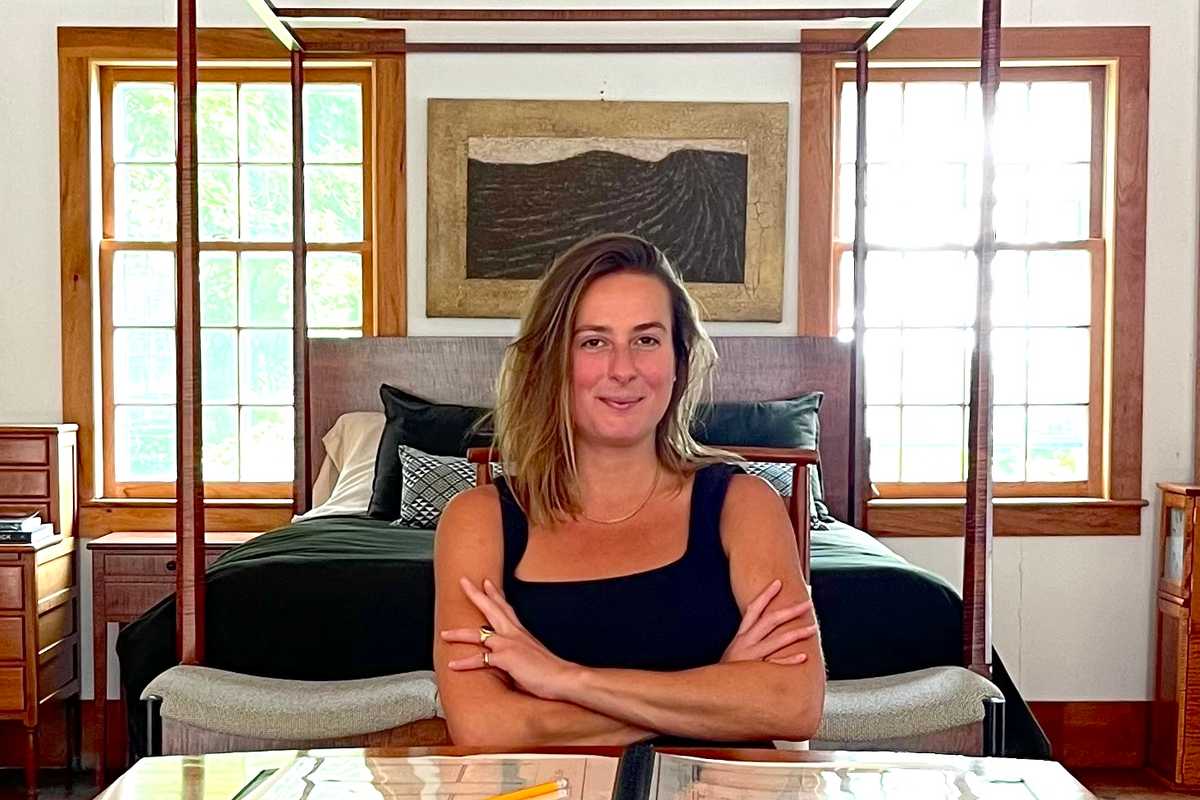
Marina Kotchoubey at the Ian Ingersoll Cabinetmakers showroom in West Cornwall.

Photo by D.H. Callahan

After 40-something years navigating the world of custom fine furniture, Ian Ingersoll was getting ready to retire. Starting off with a little dovetail stool that he sold at a shop in West Cornwall in the 1970s, he’d grown his skill and his business into something he — and the whole town — could be proud of. Shutting down that business was not an option.

Ingersoll built Ian Ingersoll Cabinetmakers, which produced mainly classical Shaker furniture, on passion: the passion he had to make a living through creative challenges and the passion of his employees, who all seem deeply in love with their craft.

Keep ReadingShow less
A legacy of giving at Norfolk Chamber Music Festival

One hundred and twenty years ago, Carl and Ellen Stoeckel commissioned New York architect E.K. Rossiter to design The Music Shed in Norfolk, Connecticut. After nearly a decade of entertaining their friends and neighbors with the finest music of the day, they built a permanent home for their beloved Litchfield County Choral Union.

The commission and full funding of the construction was not unheard of in an era when great fortunes led to public enrichment. Railroad tycoon John D. Rockefeller was instrumental in funding institutes of higher education. Steel baron Andrew Carnegie was building libraries all over the country, and famously said that a man who dies rich is a disgrace, challenging his peers to give their fortunes back to the people.

Keep ReadingShow less
google preferred source

Want more of our stories on Google? Click here to make us a Preferred Source.
Two unique exhibitions at Geary Gallery

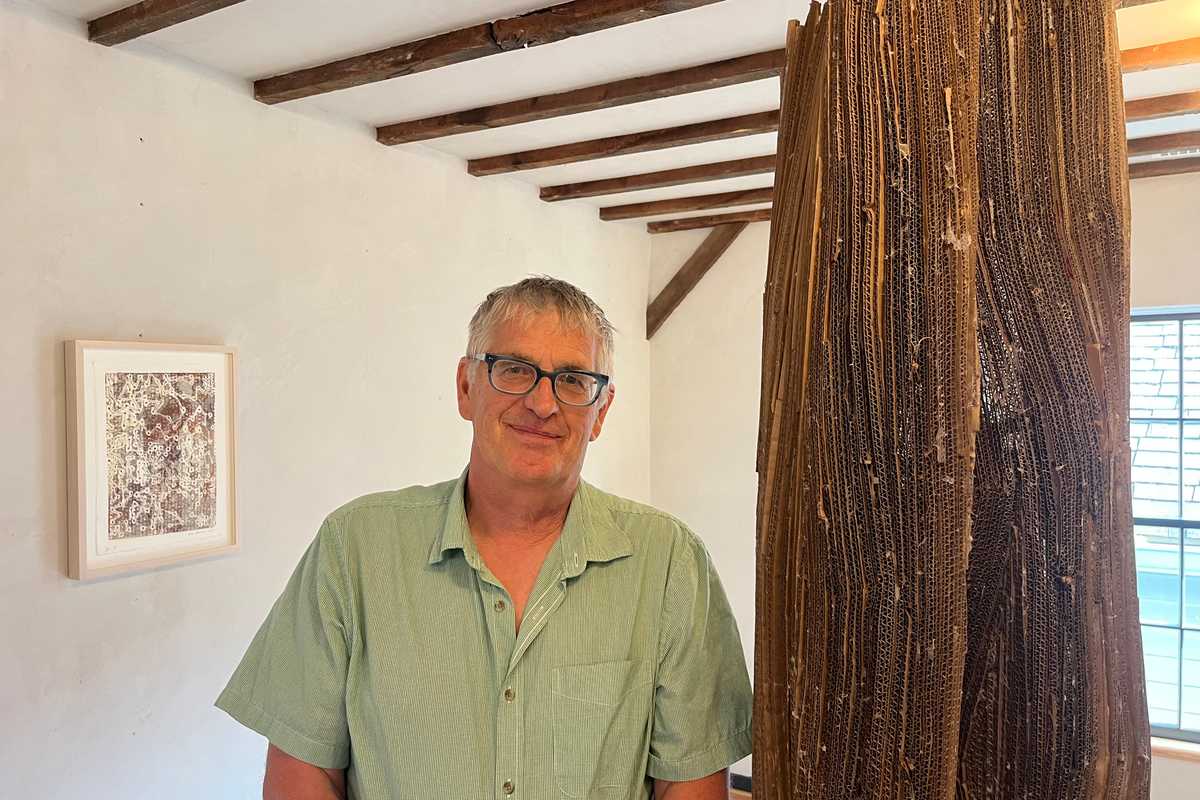
Henry Klimowicz with his sculpture, “Partial Pillar 1”

Photo by D.H. Callahan

On Saturday, Aug. 1, Geary Gallery opened its doors in Salisbury for two unique shows in its first- and second-floor gallery spaces. Art lovers flooded both floors over the course of the afternoon, giving the events a vibrant feeling that enhanced the importance of the art.

On the first floor is a show by Chicago-born, Colorado-based photographer Summers Moore, titled “Lobitos: Pueblo Fantasma,” or “Lobitos: Ghost Town.” The work centers around her daughter’s current hometown in Peru. Moore herself found a home away from home in Colorado in the mid-1980s and encouraged her children to seek out new places outside of their comfort zones.

Keep ReadingShow less

Writer’s retreat in the woods

Writer’s retreat in the woods

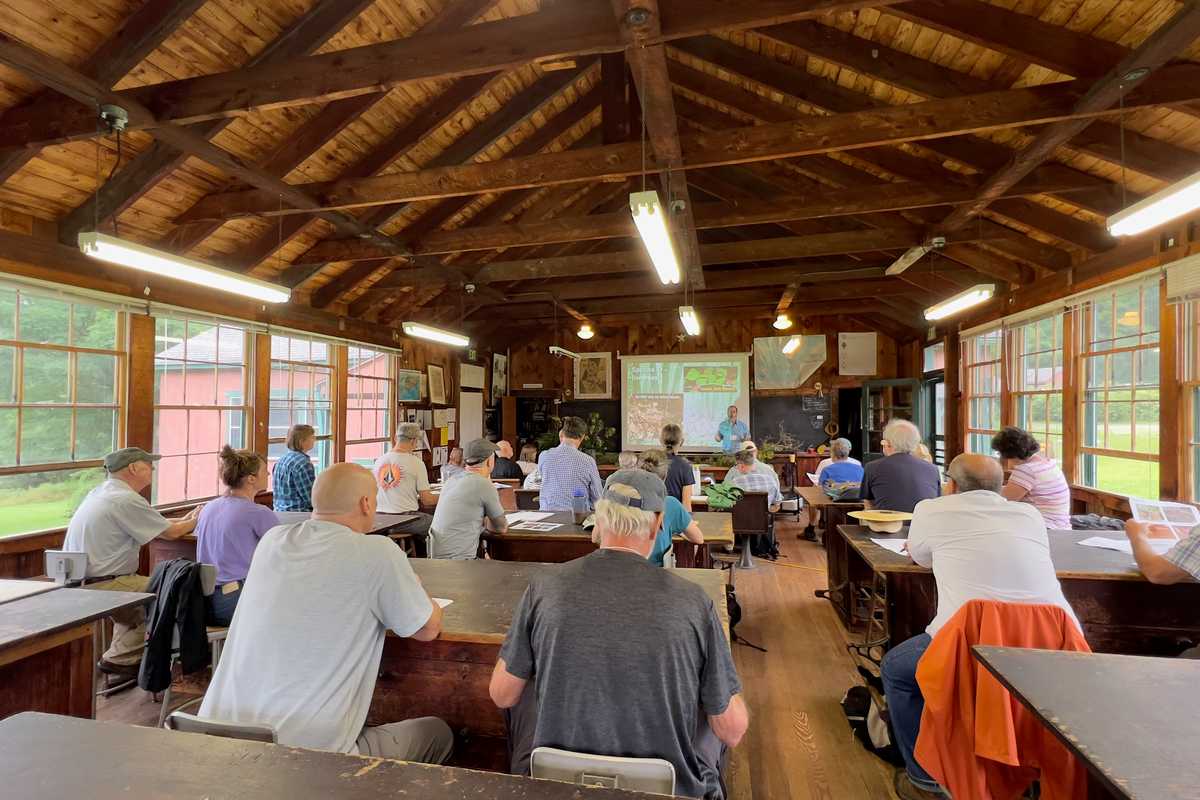
Participants in a 2024 Great Mountain Forest Woodland Academy workshop at Yale Camp.

Photo by Mike Zarfos

Great Mountain Forest (GMF) will host its first Nature Writing Retreat at the historic Yale Camp in Falls Village from Aug. 7-9, 2026. Writers of all levels are invited to draw inspiration from one of New England’s most notable forest landscapes. GMF envisions the retreat becoming an annual event celebrating writing, conservation and the relationship between people and forests.

This immersive three-day retreat reflects on the legacy of Hal Borland, the American writer and New York Times nature columnist whose work was deeply connected to this landscape. The retreat explores how wilderness shapes language, strengthens close observation and fosters environmental consciousness.

Keep ReadingShow less
From Cornwall to Rome, Adam Van Doren at Berkshire Botanical Garden

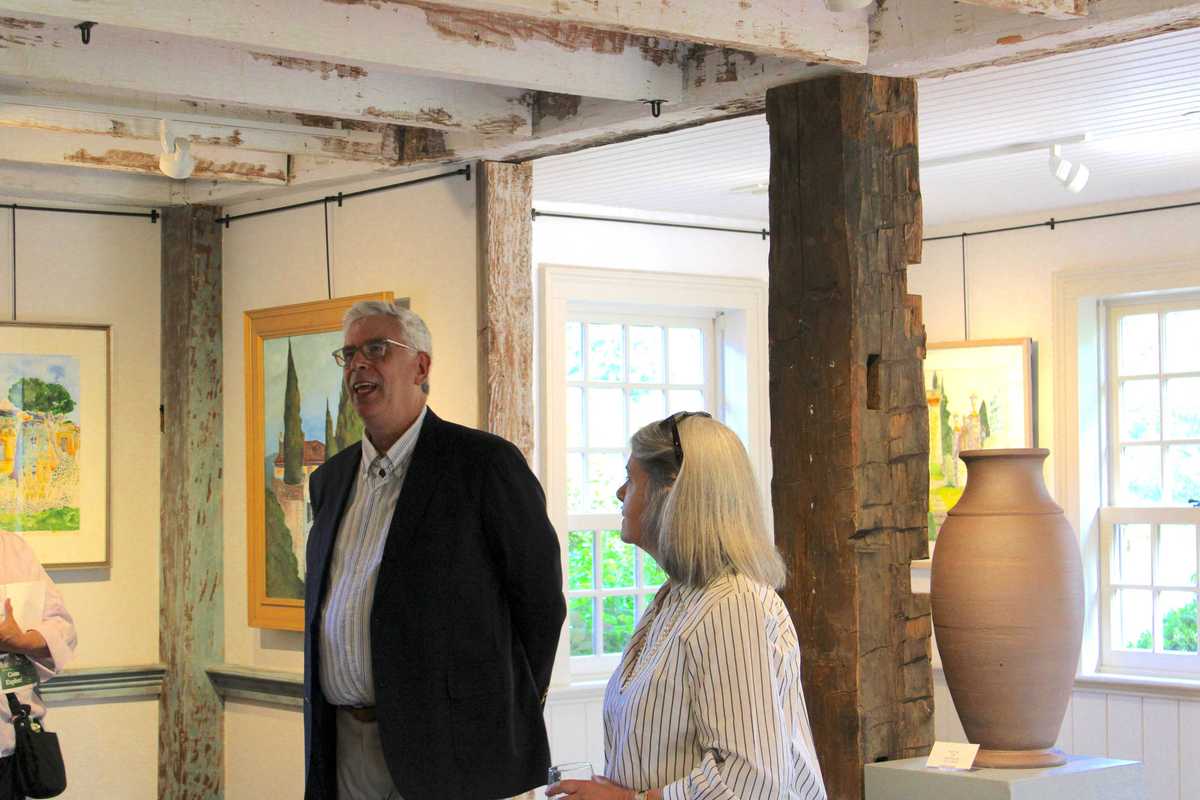
Artist Adam Van Doren and curator Donna Hassler talk to a group of visitors at the Berkshire Botanical Garden. A Stephen Proctor vessel sits to their left.

Photo by Natalia Zukerman

This summer, the Berkshire Botanical Garden in Stockbridge has hosted “Grounded in Nature: Paintings by Adam Van Doren,” an exhibition exploring the intimate relationship between architecture and the natural world.

On view for only a few more weeks in the Leonhardt Galleries, the exhibition features more than 35 watercolor and oil paintings by the New York-based artist, architect, author and Yale professor, curated by art historian Donna Hassler, director emerita of Chesterwood. The works span three distinct places that have shaped Van Doren’s artistic practice: New York City, Cornwall, Connecticut, and his travels throughout Europe.

Keep ReadingShow less
google preferred source

Want more of our stories on Google? Click here to make us a Preferred Source.
google preferred source

Want more of our stories on Google? Click here to make us a Preferred Source.