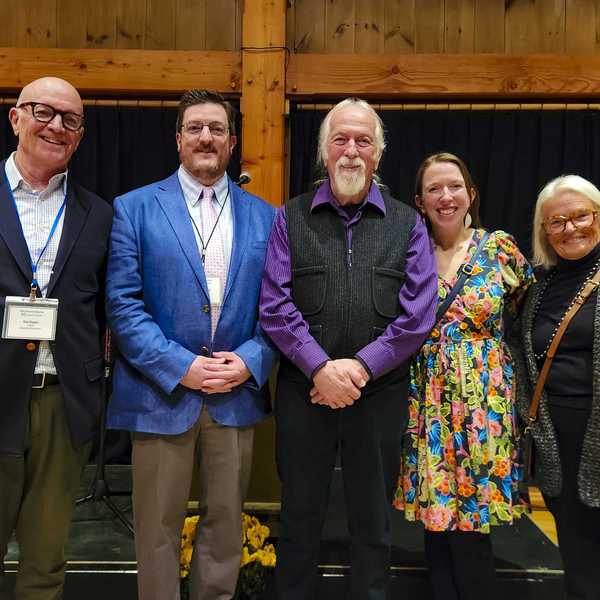
WINSTED — State Rep. Jay Case (R-63) spoke about the state’s budget woes at his discussion at the Winsted Senior Center on Thursday, July 6.
Fifteen residents attended the event and talked to Case about funding issues for programs, area transportation issues and community resources.
The official legislative session ended on June 7, and despite a special session, lawmakers failed to adopt an official biennial budget.
In response, Gov. Dannel P. Malloy (D) adopted through an executive order a Resource Allocation Plan which funds the state through the first quarter of fiscal year 2017–2018, which started on July 1.
The first quarter will end on September 30.
Case serves on the Appropriations Committee and is the ranking member on the House’s Human Services Committee.
“Sitting on the Appropriations Committee, we brought a proposed budget together that is more than 400 pages long,” Case said. “It’s quite an extensive budget. The problem is it never got voted on. On the committee the majority Democratic party is one person stronger than us. They were missing two people that day so they wouldn’t put the proposed budget for a vote because they didn’t believe they had enough votes for it to pass because it had $200 million of bonding, frivolous things.”
Case said that the Republican party submitted three different proposed budgets.
“The majority party [Democrats] had no budget put out there,” Case said. “They wouldn’t call a budget to the house floor. Being in the minority party, we can’t call anything to be voted on. We didn’t get a chance to put our budget forward.”
Case said that the proposed budgets from the Republican party included no tax increases and “structural changes to the top layers of state government.”
“We have 48,000 employees in the state, we wanted to bring it down to 30,000,” Case said. “In one state office we have an individual who made $199,000 in overtime, on top of their $99,000 in salary, and she only happens to be 40 years old.”
Case would not name the employee or specify the department the employee works in.
“The top 10 people in this one department last year made $1.4 million in overtime,” Case said. “We’re now able to oversee this because of the union contracts. We can cut overtime in the budget, which is what we did on our side of the budget. But then things rolled around and they called for a special session which was in the last week of June. Once again, the majority party was missing 22 people because they were all on vacation. Meanwhile, we had 100 percent of our party to go vote.”
“Doesn’t that make you angry?” Winsted Senior Center Director Jennifer Kelley asked Case.
“I have no control because they are the majority party,” Case said.
When asked by an attendee how Case would pwropose to cut state jobs, Case said “We have positions where people are getting paid that don’t show up for work.”
Case said that a special session is scheduled for Tuesday, July 18, but that the Democratic Party still has not submitted a proposed budget.
“The Senate Democrats and the House Democrats aren’t getting along,” Case said. “Senate President Martin Looney (D-11) said that he will need two to three more months before he can put a budget forward. Where we are right now is that Gov. Malloy has executive orders to do whatever he wants with our money.
Drastic cuts foreseen
Case said that, under Malloy’s budget, Winsted would see $2.7 million cut in state aid.
He said that several programs funded by the state would see budget cuts.
“The day program for the Department of Developmental Services [DDS] is cut out of Malloy’s budget,” Case said. “He’s also trying to cut other DDS programs. Malloy is trying to hit the most vulnerable people because that gets the most screaming and most voices to be heard. He has not made all of these cuts yet because he is waiting to see if we come in on July 18th. Malloy has to realize that he is dealing with a checkbook that is $5.3 billion short. That doesn’t happen overnight. That happens when you give your staff 12 percent raises.”
Case said that, two years ago, the state’s deficit was less than $2 million.
“To be in July and not have a budget when we ended our session on June 7, and we did five and a half months of work, it’s disheartening and a disservice,” Case said. “I had one bill where, by March 31, every municipality would know what their Educational Cost Sharing (ECS) money is and what their town aid is. They wouldn’t have the funds, but they would know the numbers. The bill never got called because no votes ever came out of the Appropriations Commission.”