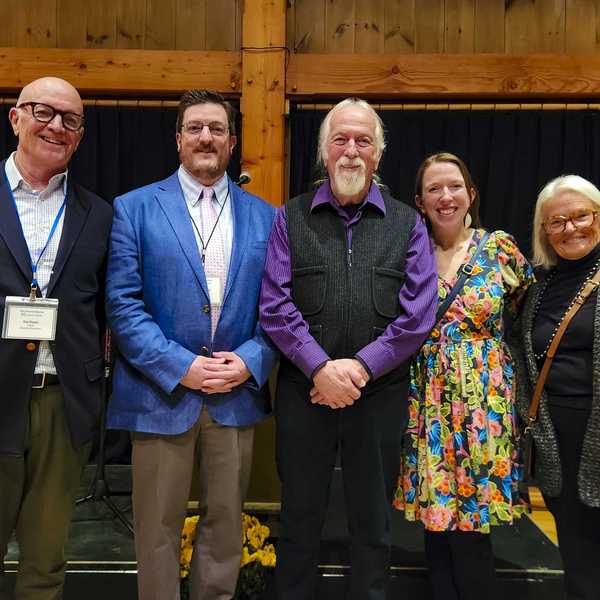
This will be Fred Baumgarten’s final Nature Notebook column. Beginning Dec. 3, Scott Heth will write the column bi-weekly, alternating with Tim Abbott. Fred will continue to write for the Compass section.
An announcement I recently saw for a lecture at the monthly meeting of the Linnaean Society, one of New York City’s oldest natural history associations, was on the subject of change.
For much of the 20th century, ecology was believed to be a race to a point of stasis, or equilibrium, a notion still deeply rooted in the popular conscience. But recent decades of theory and research have largely overturned that idea.
Nature is now seen as dynamic, often unpredictable and constantly changing. Powerful events such as hurricanes, floods, and volcanoes can rewrite the course of natural history (as well as human history) and alter or erase what seems like an orderly progression to a fixed point.
Evolution, though best understood as an accumulation of millions of years of changes, can also occur in real time. Sudden, random genetic shifts or mutations can take evolution down entirely new pathways.
The pressure of six billion humans on the planet surely is changing things, sometimes unalterably. Many species are adapting to the changes; others go extinct. I read last week that an estimated 17,000 species are in danger of extinction. 17,000! That should be cause for alarm.
But now for something completely different, less dire: I like change. Perhaps that’s why fall has always been my favorite season. Not only is it the transition from summer to winter, but it has change within change. The other day I woke up to nearly freezing temperatures; by mid-afternoon it was a balmy 60 degrees.
Many people I know look for constancy in the weather — the “perfect†fall day. To me, it wouldn’t be fall if it wasn’t snowing one day, sunny and warm the next day and pouring rain the day after.
(And just because it is 70 degrees one November day isn’t prima facie evidence of global warming, just as snow in October doesn’t mean the opposite.)
I love watching migrating birds in fall because they are harbingers of change — though, in a complementary way, they are also a comforting sign of stability, enacting a timeless seasonal ritual, year in and year out.
Birdwatching itself is enjoyed greatly for how it changes, for the unpredictable. Who knows what we’ll find on the next Christmas Bird Count? Or what we’ll find in our own backyards?
u u u
So, in this season of change, comes one more: My farewell after nearly five years as your Nature’s Notebook columnist (a privilege shared, most recently, with the inestimable Tim Abbott).
Shifting circumstances in my life, the need to devote more time to my children as well as to being out in nature, have precipitated a change. It is a change I embrace, though not without sadness.
And, since this is also the season to give thanks, let me give mine to Cynthia Hochswender, the fabulous editor and friend who gave me this opportunity and has nurtured my writing from the start, and to Janet Manko, The Journal’s stalwart publisher who also has supported my work faithfully.
But most of all, to you, the readers, who have identified me as “that nature writer†and given me constant feedback and encouragement in countless e-mails, letters and face-to-face encounters: thank you.
I hope I’ve given back just a little sense of the joy and wonder I feel for the ever-changing seasons.
Fred Baumgarten can be reached at fredb58@sbcglobal.net.



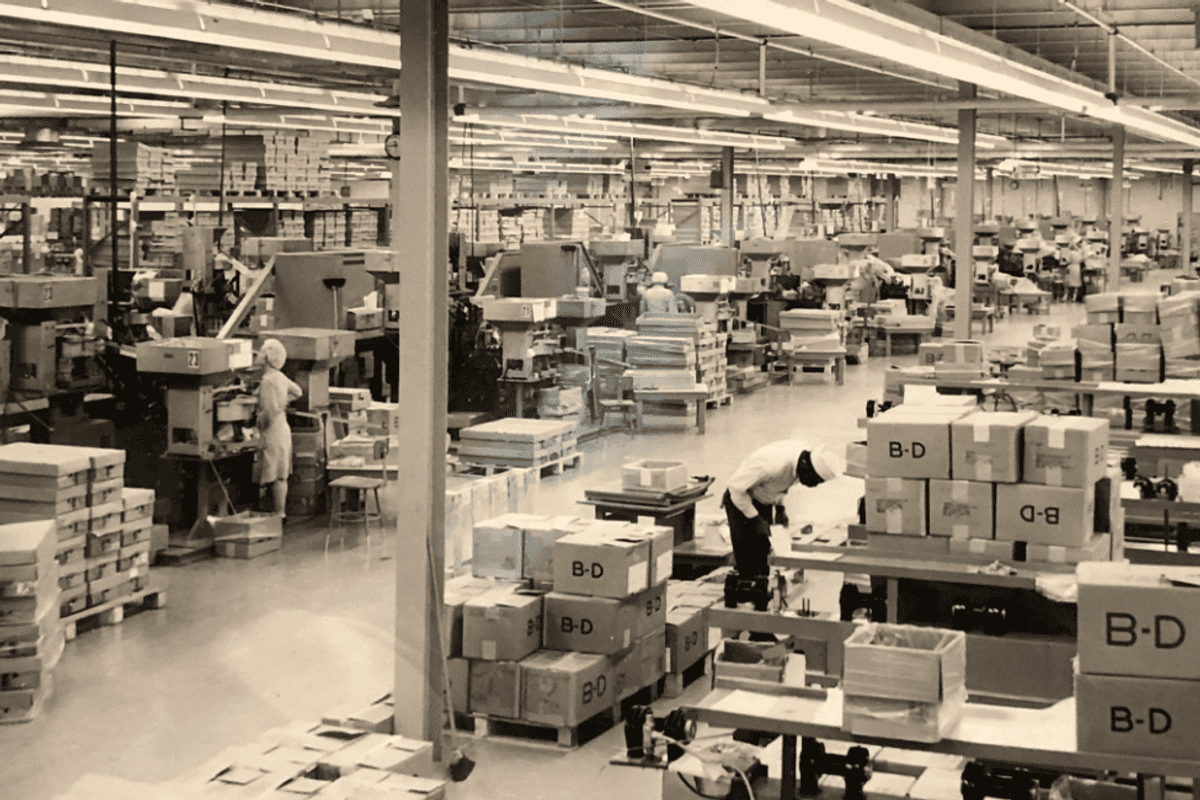
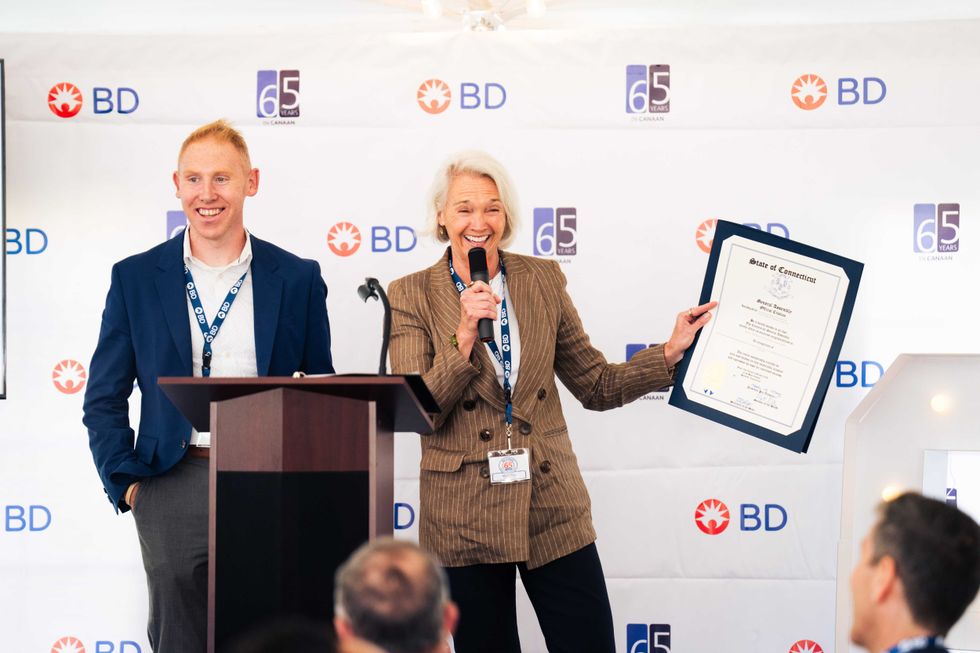 State Rep. Maria Horn (D-64) and state Sen. Stephen Harding (R-30), who represent the Northwest Corner, at BD’s 65th anniversary celebration on Oct. 6. The company was presented with an Official Citation from the Connecticut General AssemblyProvided by BD