Chaos and shock in Sandy’s aftermath

Sixty-two percent of the world’s populations lives at sea level or 40 feet higher. One climate change expert, Klaus Jacob, 30 miles upstream from New York on the Hudson, even invested in raising his 1850s Hudson-side home five feet before Hurricane Sandy. He had officially predicted years ago that such a storm would occur, so he was prepared, or so he thought. “The water was driven into the New York Harbor and the Hudson flushed backward. We had nine feet of a storm surge ... like a very fast biker it just ran up the Hudson and swamped our home.” Four hours after the surge hit Manhattan it reached Albany. Jacob said, “I am fully aware that I will be the last generation or the last but one generation that will live in this house,” or any house alongside the river. Like all his neighbors, and people all over New York from Sandy Hook to Centerport on Long Island, including 50 percent of the population of the Atlantic coast from Cape Hatteras to Staten Island, all of Long Island Sound coasts, the Connecticut River up to Hartford and on and on — Sandy wrote the coming reality as tide mark for them all.Sandy was 1,000 miles wide and it broke all records of rainfall, wave heights and tidal surge. Had Sandy occurred during peak high tides, the damage would have been worse. Touted as a hundred-year event, we now know better. Decisions have yet to be made on how to cope with catastrophic events yet to come, as vast economies may collapse and people driven inland, forcing abandonment of centuries-old ways of life. History has shown that unless action is taken within one year, the political will and public stamina to manage or prevent reoccurring disasters wanes. And to achieve something, anything, like tidal barriers or channels to prevent river tidal surge, the discussions have to be underway in a serious fashion within six months. Heard anything yet?After Katrina, the finger was pointed at the Army Corps of Engineers for not designing better barriers and protection. So money was poured in, barriers raised and everyone thinks New Orleans is safe. Had Sandy reached New Orleans however, the dykes would have over spilled by five feet, and an area from Mobile, Ala., to Galveston, Texas, would have been flooded, done, over. Oh, and 30 percent of the gasoline supply for the entire USA as well. So is New Orleans safe? Hardly. The head-in-the-sand pundits think that Katrina was a fluke, a one-off, a hundred-year storm. Scientific predictions point otherwise.• • •Why wasn‘t New York ready for Sandy? Perhaps it is a matter of culture, we’re biased to the immediate, the now, not the long-term. We’re better at clean-up than prevention, repair than maintenance. Worried about tornadoes in a place called tornado alley? Build a house out of flimsy wood, insure it, but build a small concrete storm shelter. Kind of hard to do with America’s largest city. And there is another problem with promoting prevention, there is no sure-fire bogeyman, no enemy that is surely coming, we are better off waiting and seeing. We needed Pearl Harbor in order to get into a war we surely knew we needed to fight. We needed 9/11 to decide, as a nation, to go after al-Qaeda even though they had blown up a bomb under the very same building in 1993. Not enough people had been killed in 1993, we didn’t believe the danger was real enough or could repeat.So it is with hurricanes Sandy and Katrina. Surely they are flukes? Right? St. Petersburg learned the lesson and built defenses against the sea, as did Rotterdam. But how do you plan for a storm 1,000 miles wide? How do you protect the whole population of the coasts of America? Again, the American way is to be self-reliant, manage your safety yourself. And that’s fine up to a point. Try telling that to people living on Staten Island. They pay taxes and contribute to the national economy, why shouldn’t they expect safety infrastructure to be put in place? And they do, now, I can assure you, with political voice loud and clear. No one is listening.The current climate change prediction for our planet is a five-foot rise in sea levels within two generations (if not quicker). To prepare for that, Manhattan alone will have to begin building a wall 20 feet high all around the city, five feet for the rise and 15 feet for tidal surges. And budget for future generations at the rate of 12 feet of more wall every 50 years.It is hardly likely to happen. At best New York Harbor may get a barrier, and that will protect 20 percent of the population affected by Sandy. The other 80 percent, like the folks in Sandy Hook, had better prepare to protect themselves and move, while they can afford to. And the reality will be that whole regions of the Atlantic and Gulf coasts will be uninsurable, certainly by FEMA or flood insurance. Will people simply move? Have they left New Orleans or Miami which are indefensible? Or you can ask the Dutch. The dykes and dams there get higher and higher, as public funding has become a way of life. My guess is people will cling on and the age-old human habit of battling Mother Nature will continue. Only this time Mother Nature will be relentless as she is super-charged by global climate change.Peter Riva, a former resident of Amenia Union, now lives in New Mexico.

Latest News

A new life for Barrington Hall

A new life for Barrington Hall

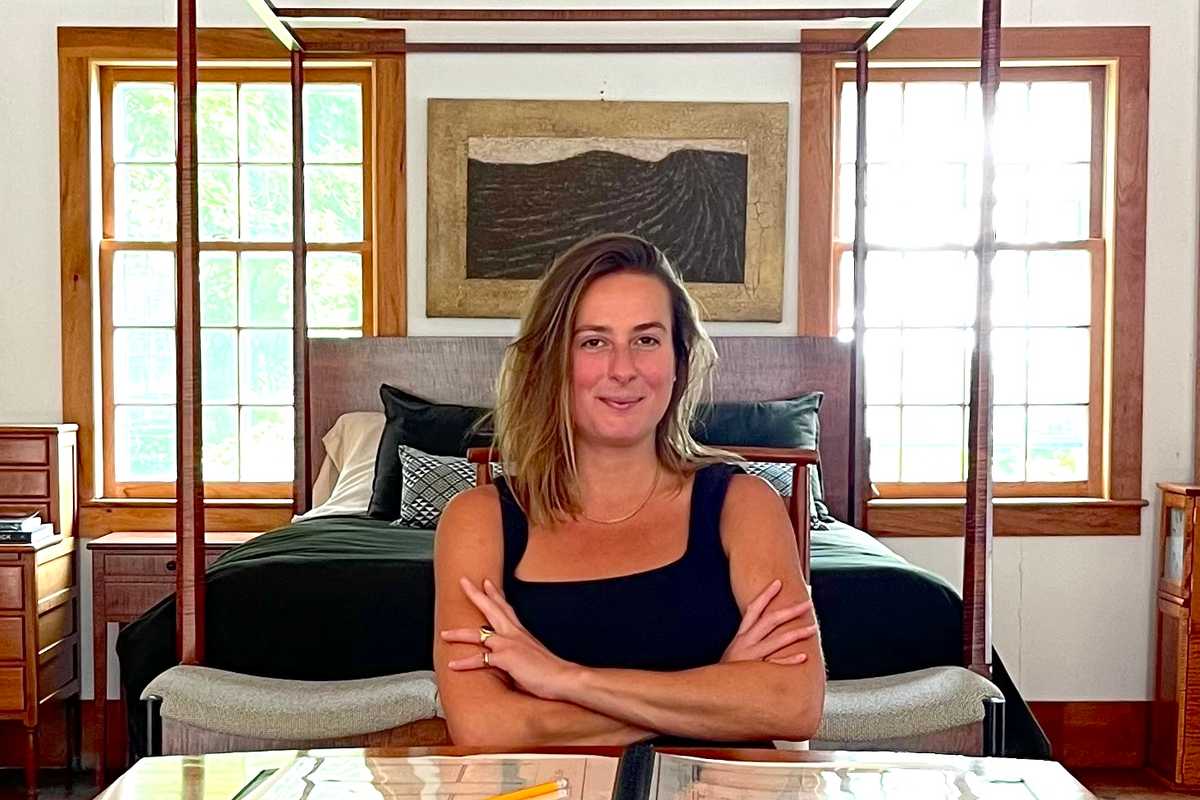
Dan Baker, left, and Daniel Latzman at Barrington Hall in Great Barrington.

Provided

Barrington Hall in Great Barrington has hosted generations of weddings, proms and community gatherings. When Dan Baker and Daniel Latzman took over the venue last summer, they stepped into that history with a plan not just to preserve it, but to reshape how the space serves the community today.

Barrington Hall is designed for gathering, for shared experience, for the simple act of being together. At a time when connection is often filtered through screens and distraction, their vision is grounded in something simple and increasingly rare: real human connection.

Keep ReadingShow less

Gail Rothschild’s threads of time

Gail Rothschild’s threads of time

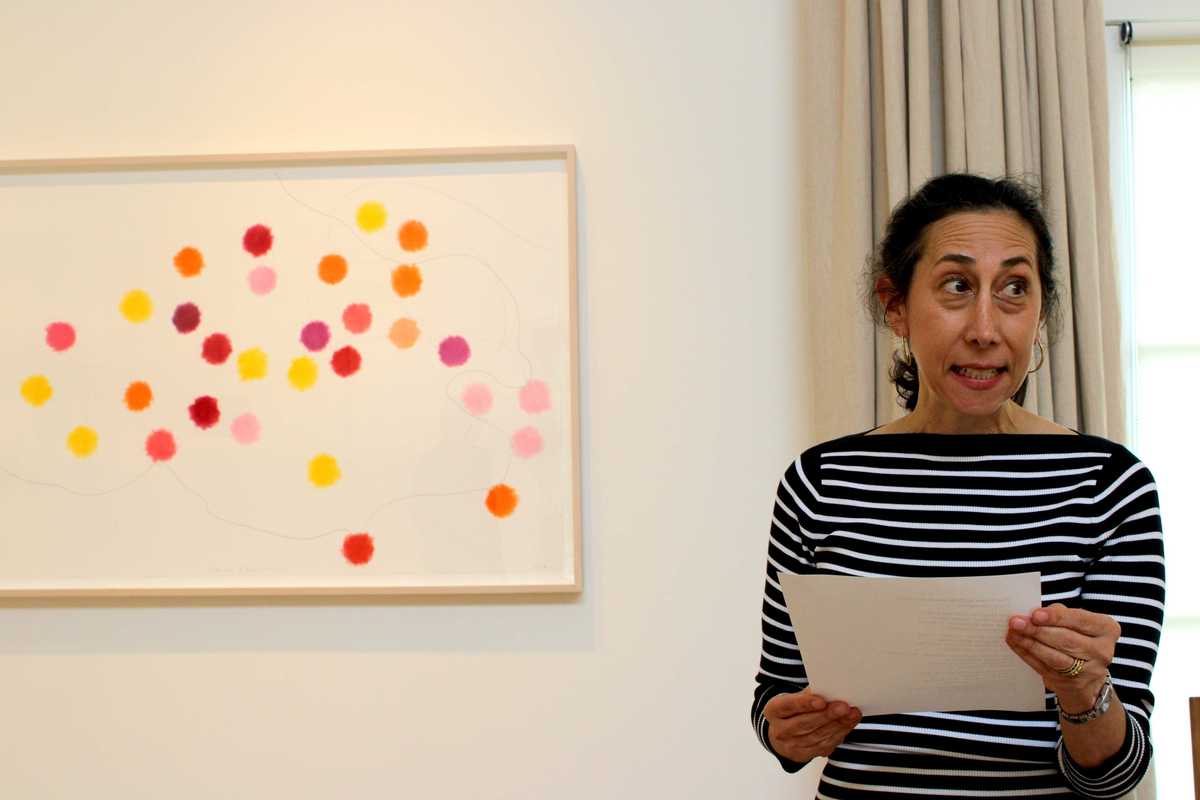
Gail Rothschild with her painting “Dead Sea Linen III (73 x 58 inches, 2024, acrylic on canvas.

Natalia Zukerman

There is a moment, looking at a painting by Gail Rothschild, when you realize you are not looking at a painting so much as a map of time. Threads become brushstrokes; fragments become fields of color; something once held in the hand becomes something you stand in front of, both still and in a constant process of changing.

“Textiles connect people,” Rothschild said. “Textiles are something that we’re all intimately involved with, but we take it for granted.”

Keep ReadingShow less

Sherman Players celebrate a century of community theater

Sherman Players celebrate a century of community theater

Cast of “Laughter on the 23rd Floor” from left to right. Tara Vega, Steve Zerilli, Bob Cady (Standing) Seated at the table: Andrew Blanchard, Jon Barker, Colin McLoone, Chris Bird, Rebecca Annalise, Adam Battlestein

Provided

For a century, the Sherman Players have turned a former 19th-century church into a stage where neighbors become castmates, volunteers power productions and community is the main attraction. The company marks its 100th season with a lineup that blends classic works, new writing and homegrown talent.

New England has a long history of community theater and its role in strengthening civic life. The Sherman Players remain a vital example, mounting intimate, noncommercial productions that draw on local participation and speak to the current cultural moment.

Keep ReadingShow less
google preferred source

Want more of our stories on Google? Click here to make us a Preferred Source.
Reimagining opera for a new generation

Reimagining opera for a new generation

Stage director Geoffrey Larson signs autographs for some of the kids after a family performance.

Provided

For those curious about opera but unsure where to begin, the Mahaiwe Theater in Great Barrington will offer an accessible entry point with “Once Upon an Opera,” a free, family-friendly program on Sunday, April 12, at 2 p.m. The event is designed for opera newcomers and aficionados alike and will include selections from some of opera’s most beloved works.

Luca Antonucci, artistic coordinator, assistant conductor and chorus master for the Berkshire Opera Festival, said the idea first materialized three years ago.

Keep ReadingShow less
BSO charts future amid leadership transition and financial strain

Aerial view of The Shed at Tanglewood in Lenox, Massachusetts.

Provided

The Boston Symphony Orchestra is outlining its path forward following the announcement that music director Andris Nelsons will step down after the 2027 Tanglewood season, closing a 13-year tenure.

In a letter to supporters, the BSO’s Board of Trustees acknowledged that the news has been difficult for many in its community, while emphasizing gratitude for Nelsons’ leadership and plans to celebrate his final season.

Keep ReadingShow less
A tradition of lamb for Easter and Passover

Roasted lamb

Provided

Preparing lamb for the observance of Easter is a long-standing tradition in many cultures, symbolizing new life and purity. For Christians, Easter marks the end of Lenten fasting, allowing for a celebratory feast. A popular choice is roast lamb, often prepared with rosemary, garlic or lemon. It is traditional to serve mint sauce or mint jelly at the table.

The Hebrew Bible suggests that the last plague God inflicted on the Egyptians, to secure the Israelites’ release from slavery, was to kill the firstborn son in every Egyptian home. To differentiate the Israelites from the Egyptians, God instructed them to mark their doorposts with the blood of a lamb. Today, Jews, Christians and Muslims generally believe that God would have known who was Israelite and who was Egyptian without such a sign, but views of God’s omnipotence in the Abrahamic faiths have evolved over the millennia.

Keep ReadingShow less
google preferred source

Want more of our stories on Google? Click here to make us a Preferred Source.
google preferred source

Want more of our stories on Google? Click here to make us a Preferred Source.