Thank you!
Your support is sustaining the future of local news in our communities.

Cornwall’s affordable housing challenge

CORNWALL — Targeted goals for implementing the town’s affordable housing plan and the obstacles that could lie ahead were discussed at a virtual “conversation” hosted by the Cornwall Library, drawing about 65 attendees on Saturday, May 7.

The hour-long event was moderated by documentary filmmaker Bill McClane and featured a discussion between longtime affordable housing advocate Maggie Cooley and urban planning and New York University policy professor Ingrid Gould Ellen. McClane also fielded questions from the public.

The talk focused on ways Cornwall can create affordable housing that supports a “gentle density increase” in town by amending zoning regulations, helping homeowners renovate homes to increase occupancy and assisting seniors with making their homes liveable to help them age in place.

“The easiest ones to achieve and the ones most palatable to anyone who is nervous about affordable housing are the ones that are quasi-invisible and involve changes within existing structures with no exterior alterations,” said Cooley, a West Cornwall attorney who heads up the Cornwall Affordable Housing Committee and has been part of the Cornwall Housing Corporation (CHC) since the 1990s.

Cornwall, like many other Northwest Corner towns, is required to abide by a 2017 state statute mandating an Affordable Housing Plan by July 2022. According to McClane, an initial $10,000 grant from the state funded the creation of Cornwall’s plan, which was backed by the Board of Selectmen and submitted to the state.

The long-term goal of the plan is not only to meet the housing needs of current and future residents, but also to attract and retain a diverse workforce within the community.

“It is now a regulatory document still in discussion among the selectmen and Planning and Zoning,” said McClane, who noted that the mandate had been on the books for years and sat mostly dormant until the past two years. “It became apparent that the state was getting more serious about it.”

Statistics support
the need

Housing advocates pointed out that a household that spends more than 30% of its monthly income on housing costs, which includes rent and/or mortgage, utilities and maintenance, is considered “housing-cost burdened.”

In Cornwall, as of last year, 35% of the population fit that category. On a related note, Connecticut is the third most costly state in the country in terms of home maintenance, which is estimated at a yearly expense of about $18,000, according to statistics from a May 24, 2021, Cornwall Housing Forum presentation.

The big picture across the country in the past five decades, Gould Ellen said, is that the slowdown in construction has resulted in higher demand and skyrocketing home and rental prices — if rental units can be found at all. Add to that, a global pandemic.  “COVID exacerbated everything and affordable disappeared.

“As a result, households are limiting spending, making it impossible to pay for down payments and any financial crisis,” Gould Ellen said, adding that in many areas, adult children continue to live in their parents’ homes. “All this is true in Cornwall, too.”

Another side effect is that as available homes are purchased, their values increase with subsequent ownerships, as the structures are renovated and expanded.

“These houses will never be affordable again. It makes them larger, and even more out of reach,” explained Gould Ellen.

65 more
units needed

According to Gould Ellen, there are 36 affordable housing units in town, representing about 3% of all housing stock. In order to meet the state’s benchmark that 10% of housing become affordable in every municipality, “Cornwall would need 65 more affordable units,” she said.

Affordable housing is defined as housing that costs less than 30% of the income of households earning 80% or less of the area’s median income. Under that formula, said Gould Ellen, for a three-person household, that is someone earning less than about $74,000. “An affordable rent for that household would be $1,800 or less.” For a two-person household, she said, the rent would be about $1,600 per month.

Cooley, who held positions on the Planning and Zoning Commission and was Cornwall’s land use clerk and also served as town probate judge for 20 years, responded that the rental rates quoted by Gould Ellen “are still astronomical for the people that we serve.”

She noted that the highest rental at the 18-unit Kugeman Village housing project is around $590 for a three-bedroom apartment, which is “extraordinary” by comparison. “That’s what’s manageable. The rentals that Ingrid quoted aren’t easy for anyone.”

On the other hand, the construction of additional multiple-unit affordable housing projects in Cornwall can be a challenge, as there is limited infrastructure to support such large-scale housing, said Cooley. “It’s a huge undertaking to do a large project like that, and it takes two to three years from start to renting — and that’s if you have a clear timeline without any interruptions,” like rising building costs. “It can take a long, long time.”

Suggested strategies 
and goals

In response to a question about what  the Cornwall Affordable Housing Plan recommends, Gould Ellen noted that there are various strategies and some numerical goals that will target and monitor progress.

These include the addition of 10 additional units of affordable housing in town and creation of  10 more units of rental housing in general. She noted that, at last count, there were only two rental homes on the market in Cornwall, and both were asking exorbitant rents. “It was something astronomical, like $7,000 a month.”

The plan also calls for an additional 10 units of senior housing. Currently, the only age-designated housing development in Cornwall is Bonney Brook, a 10-unit federal Department of  Housing and Urban Development (HUD) senior affordable housing complex on Kent Road, which has an average waiting list of about two years.

Five buckets on the list

Gould Ellen said the Cornwall Housing Corporation’s bucket list has five main components: to build dedicated, affordable housing that supports gentle density increase. This goal may involve amending zoning regulations to allow for accessory apartments or Accessory Dwelling Units on existing single-family lots, which can be in separate buildings on the property like barns, garages or pool houses.

Other goals include helping seniors age in place in their homes, connecting residents with available affordable housing units and educating residents about the Affordable Housing Plan and its incentives.

“One of the other ideas kicking around is the creation of a revolving loan fund in the town,” to help seniors make adjustments to their homes and to assist with down payments, said Gould Ellen. “Modest reforms to the town zoning regulations could end up producing a fair amount of affordable rental housing.”

Community values

matter, too

McClane asked the panel what conversation they would have with homeowners who support affordable housing but are concerned that the addition of such housing will negatively impact property values.

Gould Ellen pointed to Bonney Brook and Kugeman Village as examples of good neighbors. “Housing developments like these don’t have to undermine your property values and you don’t have to worry about that.”

Cooley said proponents of affordable housing have been “singing the song for decades about how creating affordable housing has the opposite effect on overall property values.”

The reality, she said, is that when a community has ample affordable housing, there is also an array of residents who wouldn’t be there otherwise.

“Besides strictly property values, it’s good to also think about community values. You have to consider the value of these people and the functions they perform in the town,” said Cooley, who noted that almost every business in town has a “Help Wanted” sign on its window.

“These are people who used to live down the road; some are gone forever.”

Gould Ellen agreed. “You need housing that is affordable to a range of incomes in order to have a diversity of workers in your community.

“If you don’t do that you are going to have people suffering unsustainable commutes, which is not only a burden on the individual, but also environmentally costly for the rest of us.”

Latest News

‘So Little to Do,’ so much to discover at James Barron Art

Curator Deborah Goodman Davis reads the Emily Dickinson poem “The Grass So Little Has to Do.” Spencer Finch’s “Following Three Bees (Zinnias)” buzzes in the background.

Photo by Natalia Zukerman

“The Grass Has So Little to Do,” on view at James Barron Art in Kent, takes its title from Emily Dickinson’s poem “The Grass So Little Has to Do,” written in 1862:

“The Grass so little has to do—
A Sphere of simple Green—
With only Butterflies to brood
And Bees to entertain—”

Keep ReadingShow less
Marina Kotchoubey is taking care of business

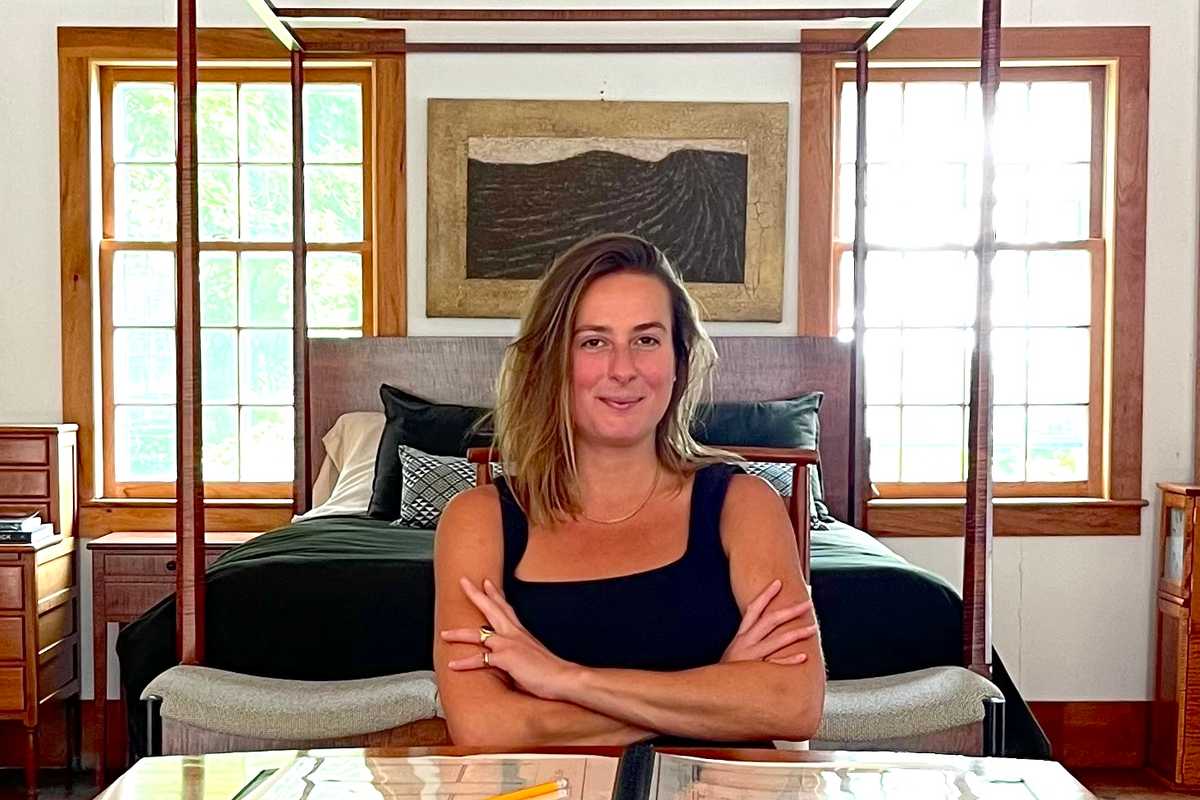
Marina Kotchoubey at the Ian Ingersoll Cabinetmakers showroom in West Cornwall.

Photo by D.H. Callahan

After 40-something years navigating the world of custom fine furniture, Ian Ingersoll was getting ready to retire. Starting off with a little dovetail stool that he sold at a shop in West Cornwall in the 1970s, he’d grown his skill and his business into something he — and the whole town — could be proud of. Shutting down that business was not an option.

Ingersoll built Ian Ingersoll Cabinetmakers, which produced mainly classical Shaker furniture, on passion: the passion he had to make a living through creative challenges and the passion of his employees, who all seem deeply in love with their craft.

Keep ReadingShow less
A legacy of giving at Norfolk Chamber Music Festival

One hundred and twenty years ago, Carl and Ellen Stoeckel commissioned New York architect E.K. Rossiter to design The Music Shed in Norfolk, Connecticut. After nearly a decade of entertaining their friends and neighbors with the finest music of the day, they built a permanent home for their beloved Litchfield County Choral Union.

The commission and full funding of the construction was not unheard of in an era when great fortunes led to public enrichment. Railroad tycoon John D. Rockefeller was instrumental in funding institutes of higher education. Steel baron Andrew Carnegie was building libraries all over the country, and famously said that a man who dies rich is a disgrace, challenging his peers to give their fortunes back to the people.

Keep ReadingShow less
google preferred source

Want more of our stories on Google? Click here to make us a Preferred Source.
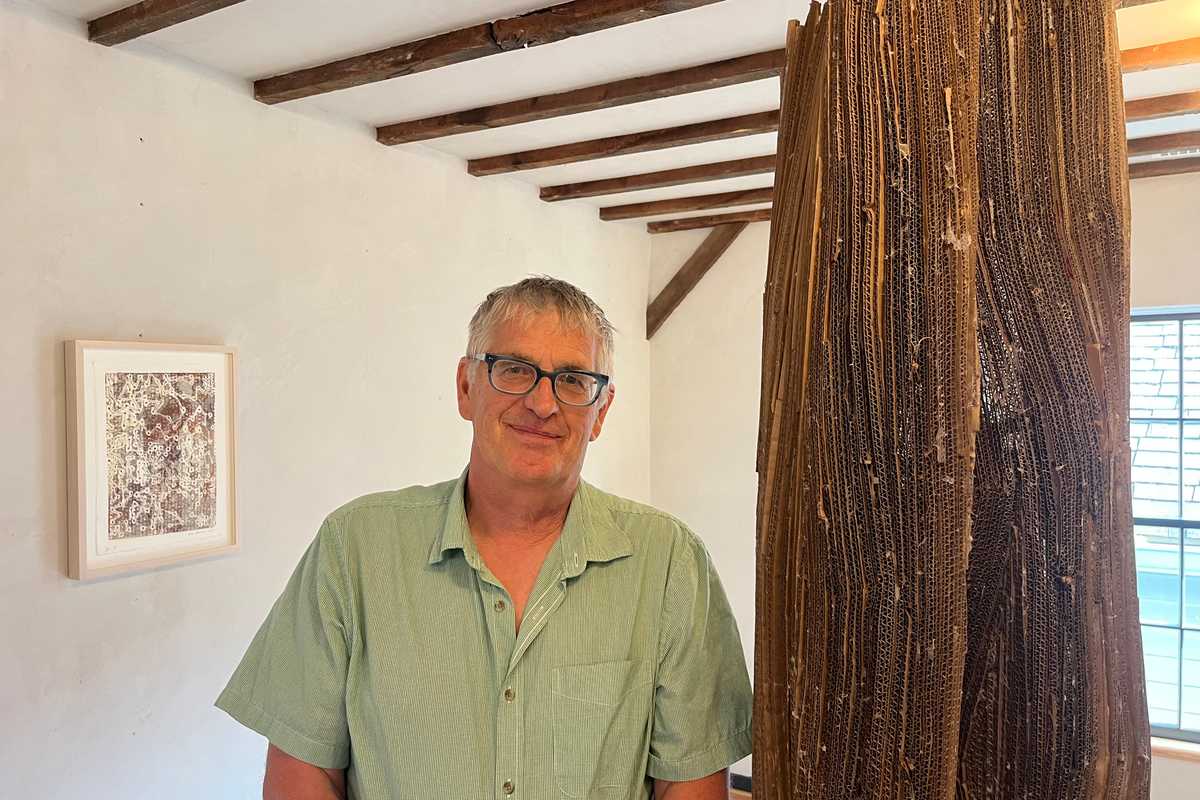
Two unique exhibitions at Geary Gallery

Henry Klimowicz with his sculpture, “Partial Pillar 1”

Photo by D.H. Callahan

On Saturday, Aug. 1, Geary Gallery opened its doors in Salisbury for two unique shows in its first- and second-floor gallery spaces. Art lovers flooded both floors over the course of the afternoon, giving the events a vibrant feeling that enhanced the importance of the art.

On the first floor is a show by Chicago-born, Colorado-based photographer Summers Moore, titled “Lobitos: Pueblo Fantasma,” or “Lobitos: Ghost Town.” The work centers around her daughter’s current hometown in Peru. Moore herself found a home away from home in Colorado in the mid-1980s and encouraged her children to seek out new places outside of their comfort zones.

Keep ReadingShow less

Writer’s retreat in the woods

Writer’s retreat in the woods

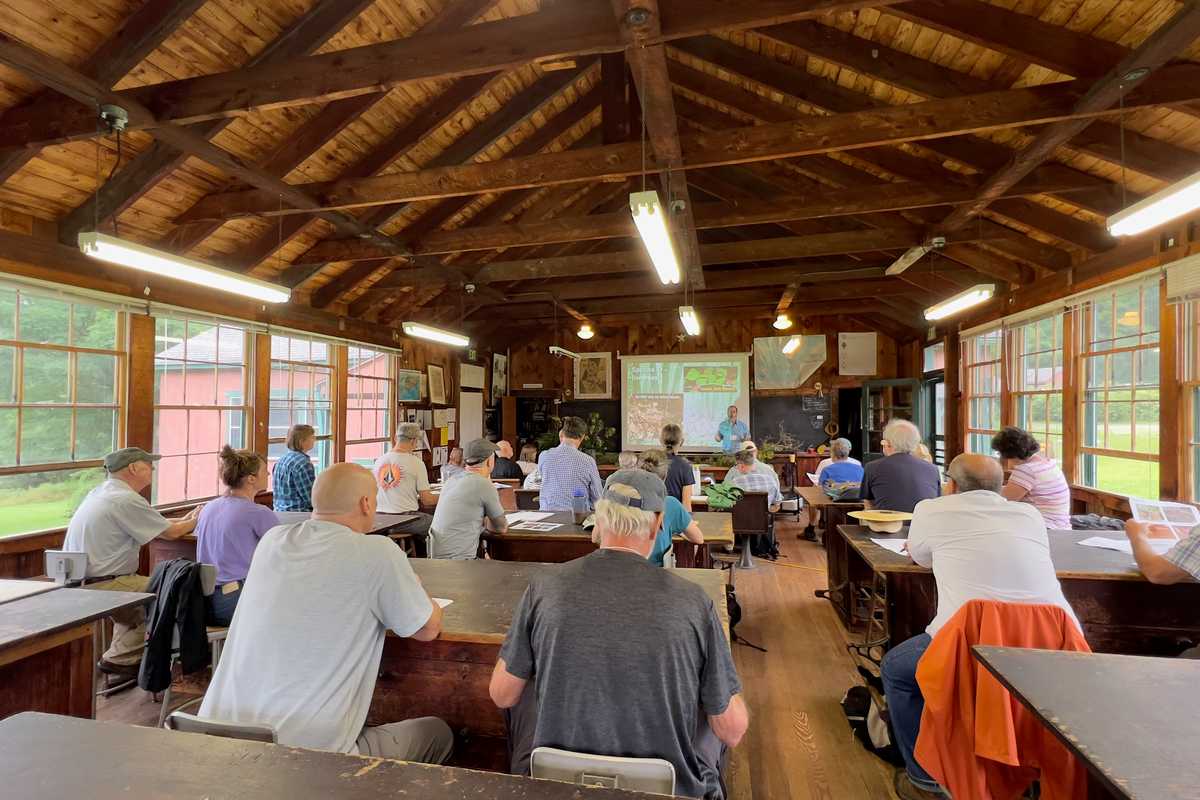
Participants in a 2024 Great Mountain Forest Woodland Academy workshop at Yale Camp.

Photo by Mike Zarfos

Great Mountain Forest (GMF) will host its first Nature Writing Retreat at the historic Yale Camp in Falls Village from Aug. 7-9, 2026. Writers of all levels are invited to draw inspiration from one of New England’s most notable forest landscapes. GMF envisions the retreat becoming an annual event celebrating writing, conservation and the relationship between people and forests.

This immersive three-day retreat reflects on the legacy of Hal Borland, the American writer and New York Times nature columnist whose work was deeply connected to this landscape. The retreat explores how wilderness shapes language, strengthens close observation and fosters environmental consciousness.

Keep ReadingShow less
From Cornwall to Rome, Adam Van Doren at Berkshire Botanical Garden

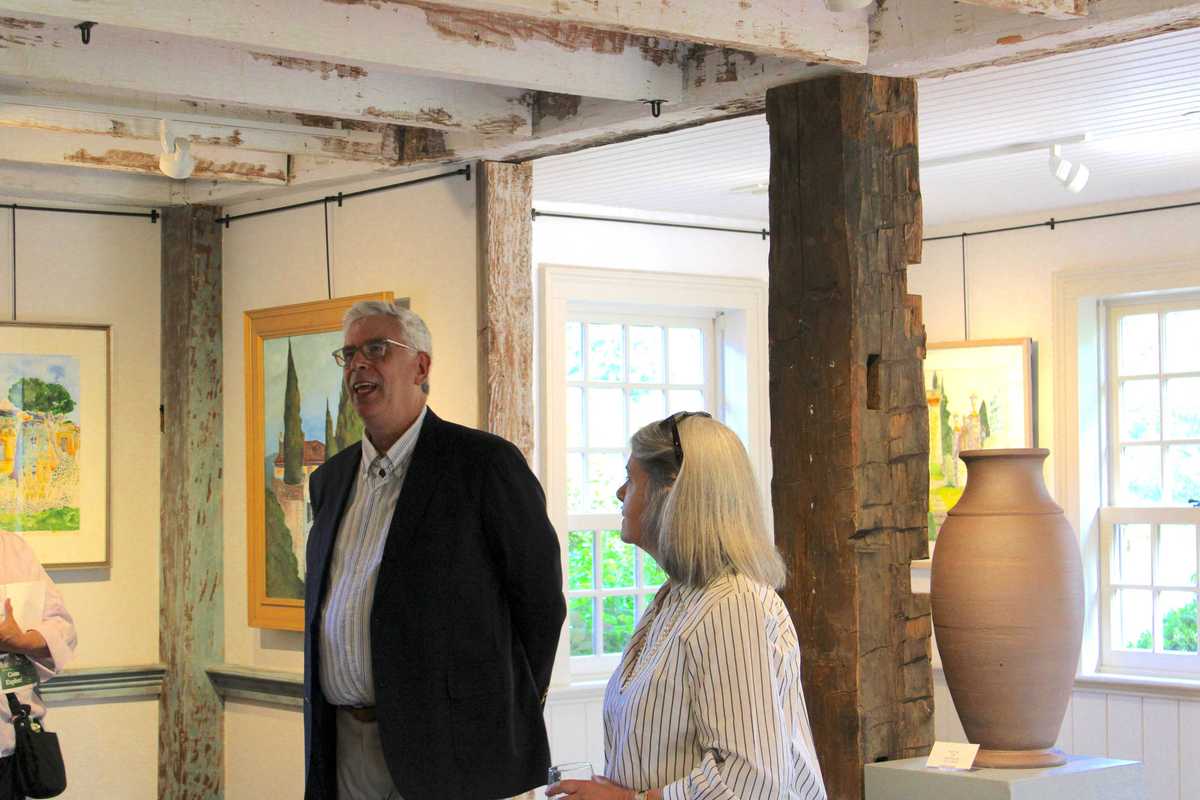
Artist Adam Van Doren and curator Donna Hassler talk to a group of visitors at the Berkshire Botanical Garden. A Stephen Proctor vessel sits to their left.

Photo by Natalia Zukerman

This summer, the Berkshire Botanical Garden in Stockbridge has hosted “Grounded in Nature: Paintings by Adam Van Doren,” an exhibition exploring the intimate relationship between architecture and the natural world.

On view for only a few more weeks in the Leonhardt Galleries, the exhibition features more than 35 watercolor and oil paintings by the New York-based artist, architect, author and Yale professor, curated by art historian Donna Hassler, director emerita of Chesterwood. The works span three distinct places that have shaped Van Doren’s artistic practice: New York City, Cornwall, Connecticut, and his travels throughout Europe.

Keep ReadingShow less
google preferred source

Want more of our stories on Google? Click here to make us a Preferred Source.
google preferred source

Want more of our stories on Google? Click here to make us a Preferred Source.