
Thank you!
Your support is sustaining the future of local news in our communities.

Day 6 of military commission proceedings in the 9/11 case: July 21, 2016 Dispatch from Guantanamo: the fireworks edition

Today saw another time-devouring kerfuffle involving Walid Bin Attash, who for nearly a year has sought, without success, to rid himself of his two leading lawyers. Let us hasten past this latest episode in what will be an ongoing saga, wishing Bin Attash a fair trial and a just verdict, which I fear will be impossible in any of these military commissions.

Probably not since election night in 2008, as Connie Bruck reported in The New Yorker on Aug. 1, when it became clear that Barack Obama had soundly defeated John McCain, has there been such overt conflict at Camp Justice. 

The camp includes the court building, opposing rows of trailers where the lawyers both work and sleep (the prosecutors, appropriately, are housed on one side and the defense teams dwell on the other), and the Quonset-shaped tents where NGOs and media people sleep. On that occasion, the celebrating defense lawyers formed a conga line, dancing around the prosecutors’ trailers, chanting the refrain: “Hey, hey...goodbye!” The prosecutors took offense and a shoving match broke out.

What was the new source of conflict? Back in May, David Nevin, lead counsel for Khalid Shaikh Muhammad (KSM), filed an extraordinary motion asking that Judge Pohl no longer preside over his case and that Chief Prosecutor Mark Martins and his entire team be thrown off as well. Nevin also asked that Pohl’s replacement declare that the guilt or penalty phase of the case be “permanently abated.”  Dismissed, in other words. What had happened to warrant such an extreme request? 

Years ago, Nevin asserted, the government had sought permission from Pohl to dispose of “certain [important] evidence.” (Remember, we’re dealing with highly classified information, hence the stilted and abstract lingo.) The defense objected, and Pohl entered an order directing the government to ensure that the evidence would not be destroyed, pending his further order. Nonetheless, the government communicated secretly with Pohl, seeking his approval to destroy the evidence. 

The judge granted the clandestine request and the government “thereafter destroyed the evidence — all without giving fully-cleared defense counsel ... even a hint” of this until more than 18 months after issuance of the destruction order. Because he was not advised that Pohl had “surreptitiously authorized” the destruction until nearly two years after the order and “the actual destruction of the evidence,” KSM was deprived of his chance to seek relief from a higher court. 

Far more chillingly, after all this came to light, the prosecution had made clear that the “government never had any intention of disclosing” the evidence, and in the future would “not disclose similar evidence to the defense, irrespective of the sanctions [Pohl] might impose for the government’s willful behavior.” 

In sum, the government, confident in the belief that Pohl wouldn’t dare dismiss the case, nor even take the death penalty off the table, would do what it damn well pleased. “Do your worst, we don’t care,” it was telling the court. This is the commitment to the rule of law that Brigadier General Martins boasts about?

The motion claimed that KSM, when informed of these actions, had responded: “First they tell us they will not show us the evidence, but they will show our lawyers. Now they don’t even show the lawyers. Why don’t they just kill us?”

u u u

The government came out swinging in its brief. “Continuing their scorched-earth litigation strategy [Khalid Shaikh Muhammad’s (KSM) counsel] maligns the reputation of the Military Judge and the entire Prosecution team..., but that does not stop [them] from spewing on about prosecutor-judge ‘collusion.’” Nasty epithets followed: “willfully blind narrative;” “hatchet-job of a motion,” “defense-manufactured nonsense,” etc. Then came the topper: “Defense counsel will apparently stop at nothing in their attempts to convince whoever may still be following their shrill antics that justice simply is not attainable ... before a military commission. Their goal is not acquittal...; their goal, and their entire defense strategy, is that the case never, ever be tried.”

Alas, the motion, since it dealt with classified information, would not be argued in open court, though a threshold segment could. But did Judge Pohl, whose own conduct and right to continue presiding were being challenged, have the right to decide his own fate?    

During the colloquy between Pohl and defense counsel, the identity of the secret evidence became clear. The whip-smart James Connell, lead counsel for KSM’s nephew, had ferreted out from non-classified government filings that the government had sought to decommission a former CIA black site where some of the accused had been tortured, and to substitute for this crucial evidence partially censored videos or photos of the areas where the prisoners were held, interrogated and tortured, and — here the “governmentese” grows impenetrable, so I’m guessing a bit — implements of torture, such as waterboards, small coffin-like boxes into which the prisoners were stuffed, hooks from prison ceilings from which they had been suspended, chains attached to them, etc.  Perhaps some instructional manuals for the interrogators as well, but these too would be partially censored. Whether the photos depict blood or human excretions in the flooring is not stated.    

David Nevin, lead counsel for KSM — sincerely, I believe — told Pohl: “I would rather defend your reputation and service to the country any day than defend this motion.... It’s not particularly pleasant for me to be here having this discussion with you, and I’m sure it’s not pleasant for you.” Judge Pohl replied: “[T]he day that my decisions are not being criticized by at least 50 per cent of the participants is the day I probably won’t be a judge, so I take none of this personally.” But still, Nevin added, “We have lost the ability to put our hands on some of the most important evidence in this case...,” so Pohl should allow another judge to decide the motion.

Connell “share[d] the shock at the events which had transpired. [He] did not want to believe them...because they are heartbreaking.” Who was to blame? He did not then seek Pohl’s disqualification, but did want to question him on the still-murky factual picture. Only after doing that would he decide whether to pursue Pohl’s disqualification.

Robert Swann for the prosecution (no surprise to those who had read its primary brief) was angry. “[M]r. Nevin indicated that he had deduced certain things. Well, the art of deduction is the craft of Sherlock Holmes and, from what I can see, [Nevin] is no Sherlock Holmes....” And, “[t]hey want another judge to hear the motion (to disqualify), and they find fault with our over-the-top patriotism and dramatic response, but when you not so subtly accuse people of wrongdoing or cheating, it requires calling it what it is. It’s grandstanding. It’s despicable, [and] a perverse distortion of the facts.” 

There’s more, but you get the idea (though Swann twice worked in the nearly 3,000 who died on 9/11). Nevin replied in kind: “[W]e are to be lectured about cheating? That’s despicable behavior.” At least the lawyers didn’t start shoving each other.

After lunch, Judge Pohl ruled that he would decide the motion to dismiss him and the prosecution, not another judge. He would, however, permit the defense lawyers to question him in a closed session, where the primary motion also would be argued.

The written ruling on the motion, which may be highly redacted to exclude classified material, will issue later. But given my impression of Judge Pohl developed over three tours at Gitmo in which I observed him in action, I’d be stunned if it turns out that he intentionally did something terribly wrong. My conviction is buttressed by this: when Pohl presided over the court-martial of the Army torturers at Abu Ghraib, before trial the government requested permission to destroy the prison, and Pohl’s answer was no. But Pohl may have been duped by the prosecution, I really don’t know. For me, it’s hard to wait for the answer.


Charles Church is a Salisbury, Conn.-based human rights lawyer who travels to observe Guantanamo’s military commissions under the auspices of Seton Hall Law’s Center for Policy and Research. During his stay at the base, Church sent dispatches describing the events to this newspaper.

Latest News

‘So Little to Do,’ so much to discover at James Barron Art

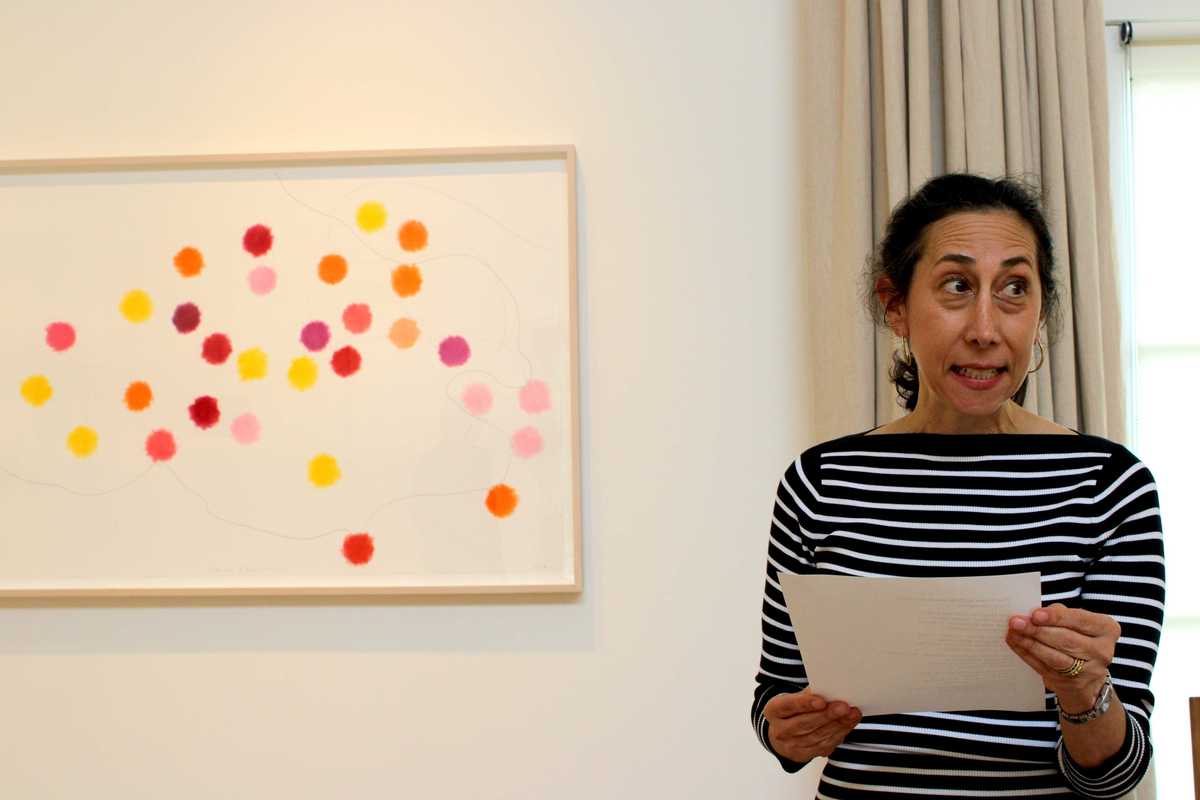
Curator Deborah Goodman Davis reads the Emily Dickinson poem “The Grass So Little Has to Do.” Spencer Finch’s “Following Three Bees (Zinnias)” buzzes in the background.

Photo by Natalia Zukerman

“The Grass Has So Little to Do,” on view at James Barron Art in Kent, takes its title from Emily Dickinson’s poem “The Grass So Little Has to Do,” written in 1862:

“The Grass so little has to do—
A Sphere of simple Green—
With only Butterflies to brood
And Bees to entertain—”

Keep ReadingShow less

Marina Kotchoubey is not a woodworker

Marina Kotchoubey is not a woodworker

Marina Kotchoubey at the Ian Ingersoll Cabinetmakers showroom in West Cornwall.

Photo by D.H. Callahan

After 40-something years navigating the world of custom fine furniture, Ian Ingersoll was getting ready to retire. Starting off with a little dovetail stool that he sold at a shop in West Cornwall in the 1970s, he’d grown his skill and his business into something he — and the whole town — could be proud of. Shutting down that business was not an option.

Ingersoll built Ian Ingersoll Cabinetmakers, which produced mainly classical Shaker furniture, on passion: the passion he had to make a living through creative challenges and the passion of his employees, who all seem deeply in love with their craft.

Keep ReadingShow less
A legacy of giving at Norfolk Chamber Music Festival

One hundred and twenty years ago, Carl and Ellen Stoeckel commissioned New York architect E.K. Rossiter to design The Music Shed in Norfolk, Connecticut. After nearly a decade of entertaining their friends and neighbors with the finest music of the day, they built a permanent home for their beloved Litchfield County Choral Union.

The commission and full funding of the construction was not unheard of in an era when great fortunes led to public enrichment. Railroad tycoon John D. Rockefeller was instrumental in funding institutes of higher education. Steel baron Andrew Carnegie was building libraries all over the country, and famously said that a man who dies rich is a disgrace, challenging his peers to give their fortunes back to the people.

Keep ReadingShow less
google preferred source

Want more of our stories on Google? Click here to make us a Preferred Source.
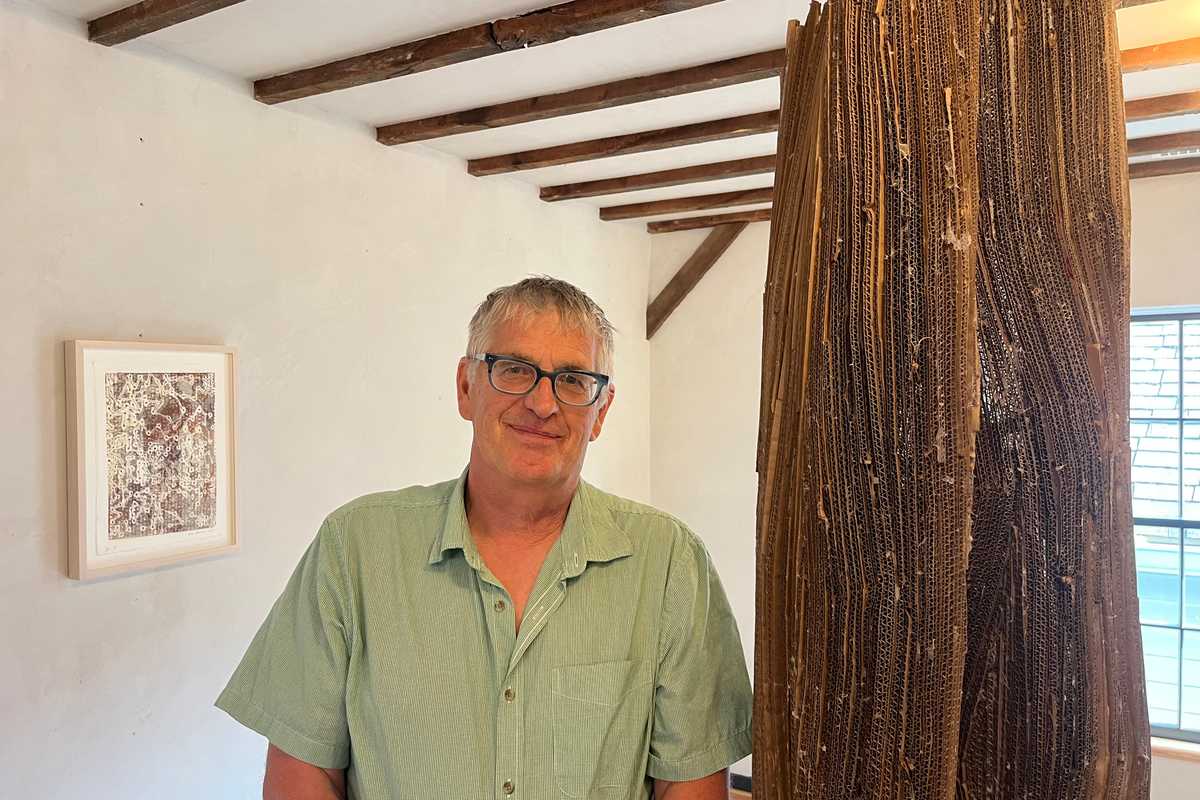
Two unique exhibitions at Geary Gallery

Henry Klimowicz with his sculpture, “Partial Pillar 1”

Photo by D.H. Callahan

On Saturday, Aug. 1, Geary Gallery opened its doors in Salisbury for two unique shows in its first- and second-floor gallery spaces. Art lovers flooded both floors over the course of the afternoon, giving the events a vibrant feeling that enhanced the importance of the art.

On the first floor is a show by Chicago-born, Colorado-based photographer Summers Moore, titled “Lobitos: Pueblo Fantasma,” or “Lobitos: Ghost Town.” The work centers around her daughter’s current hometown in Peru. Moore herself found a home away from home in Colorado in the mid-1980s and encouraged her children to seek out new places outside of their comfort zones.

Keep ReadingShow less

Writer’s retreat in the woods

Writer’s retreat in the woods

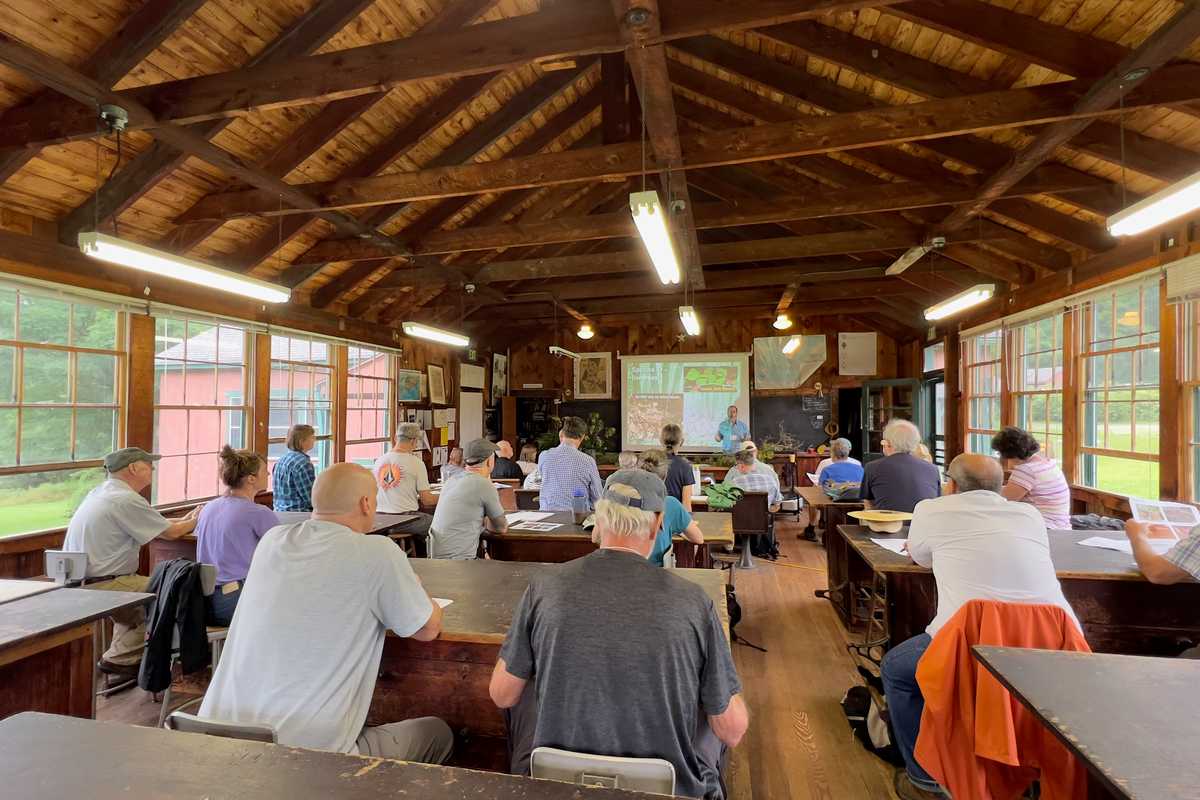
Participants in a 2024 Great Mountain Forest Woodland Academy workshop at Yale Camp.

Photo by Mike Zarfos

Great Mountain Forest (GMF) will host its first Nature Writing Retreat at the historic Yale Camp in Falls Village from Aug. 7-9, 2026. Writers of all levels are invited to draw inspiration from one of New England’s most notable forest landscapes. GMF envisions the retreat becoming an annual event celebrating writing, conservation and the relationship between people and forests.

This immersive three-day retreat reflects on the legacy of Hal Borland, the American writer and New York Times nature columnist whose work was deeply connected to this landscape. The retreat explores how wilderness shapes language, strengthens close observation and fosters environmental consciousness.

Keep ReadingShow less
From Cornwall to Rome, Adam Van Doren at Berkshire Botanical Garden

Artist Adam Van Doren and curator Donna Hassler talk to a group of visitors at the Berkshire Botanical Garden. A Stephen Proctor vessel sits to their left.

Photo by Natalia Zukerman

This summer, the Berkshire Botanical Garden in Stockbridge has hosted “Grounded in Nature: Paintings by Adam Van Doren,” an exhibition exploring the intimate relationship between architecture and the natural world.

On view for only a few more weeks in the Leonhardt Galleries, the exhibition features more than 35 watercolor and oil paintings by the New York-based artist, architect, author and Yale professor, curated by art historian Donna Hassler, director emerita of Chesterwood. The works span three distinct places that have shaped Van Doren’s artistic practice: New York City, Cornwall, Connecticut, and his travels throughout Europe.

Keep ReadingShow less
google preferred source

Want more of our stories on Google? Click here to make us a Preferred Source.
google preferred source

Want more of our stories on Google? Click here to make us a Preferred Source.