Thank you!
Your support is sustaining the future of local news in our communities.

Drawing a line in the coffee grounds

It happens every weekend and bank holiday. It happens the week between Christmas and New Year’s Eve, and sometimes it happens Monday mornings when the weather is unseasonably nice: Out-of-towners go to Irving Farm and destroy the semblance of order we townsfolk hold dear. Seriously, Lime Rock crowd? Seriously, Brooklyn transplants? Obviously the line goes around the little island thing on the left.On regular mornings, a groggy pre-coffee crowd forms in a beautiful sweeping curve around the left of the island.On vacation days, everything changes.Last Saturday, the coffee shop scene was buzzing at a healthy level. I stood in formation dreaming of my Gotham roast when an older woman appeared at my elbow. At my right elbow.“I think the line is over here,” she offered helpfully.“No it’s not,” the man ahead of me corrected her.“Oh,” the woman said, inching toward me to take stock of the young families joining the line stretching toward the entrance. Café consensus was not on her side.Then this full-grown woman began a complicated process known in middle school cafeterias as “cutting.” She fronted like a soap star as she snuck in line, several places ahead of her rightful spot acting as if she had absentmindedly wandered into the line midway in between me and my large-black-coffee-to-go by accident. But I sensed the malice under that harmless looking 65-year-old exterior. “What is a line?” I began to question, as my sense of place fell apart. Does it mean anything any more? Will lines become a quaint relic of the past as we mob the counter from both sides? When I tell my progeny about the legend of Honey Boo Boo, must I also shock them with tales from a forgotten era when the line swerved lazily in front of the glass pastry case?I’d had so many good memories in that line. On mornings I ordered an extra coffee, the baristas knew to ask if it was for my mom or dad. Dunkin’ Donuts employees would probably just assume it’s for my Italian futbol-playing boyfriend. But Irving knows the truth.When I began a bit of daily pastry binge, it was the barista’s gentle question, “Did you want a donut today?” that made me realize it was time to cut back.I mean, obviously, you go to the cream and sugar counter after you’ve received your coffee. What kind of world lurks beyond the borders of the town of North East that people would select their sweetener and dairy-fat products before their roast? It’s just unnatural. It’s wrong. It violates all that is good about Millerton. We only have one Main Street. How could we have two coffee lines?How can we hope to protect our local customs against this assault of foreign disregard? I would like to propose a Defense of Millerton Act, or DOMA, which would prevent those who queued on the right from ordering at all. That’s right. No skinny-grande-mocha-no-whip for you. The staff could just ignore them. Or they could say, “No, your side doesn’t count.” They could occasionally picket with posters reading: You’re left or you’re wrong.Anderson Cooper could come to report on the movement, but that kind of fame might only bring more right-liners to our modest town. Clearly-labeled signs could indicate the direction of the line for those unsure, with Spanish and Braille translations.So many awkward dates and various encounters have begun and ended in that line that it just doesn’t feel right to change it, or to allow outsiders to carry on with such disregard. Would a Starbucks-esque velvet rope make the designation more apparent? I pondered one morning on my walk into town. It just feels ... excessive. People should just know that the line goes on the left. That’s just how it is.I entered the quiet coffee shop, acknowledged the familiar faces and walked up to the cash register to retrieve my morning Joe. I just walked straight up to the counter and pulled out my Irving card and realized I had walked up on the right.Oh my God. I turned around to see if anyone had noticed. The breakfast club was engaged in their banter. The laptops were writing Faulknerian Facebook statuses. No one seemed to be disturbed at all by my modern approach to the express lane.That’s when I realized: We’re all a little queer sometimes. And sometimes, that’s the most efficient way to be. I backed away, paper cup in hand, on the same side from which I had entered. My coffee tasted no different. Kara Panzer is a Millerton native and an undergraduate student at Georgetown University. She is an intern at The New York Times. Her poetry and short fiction have appeared in Word Riot, Vector Press and Absinthe Revival.

Latest News

‘So Little to Do,’ so much to discover at James Barron Art

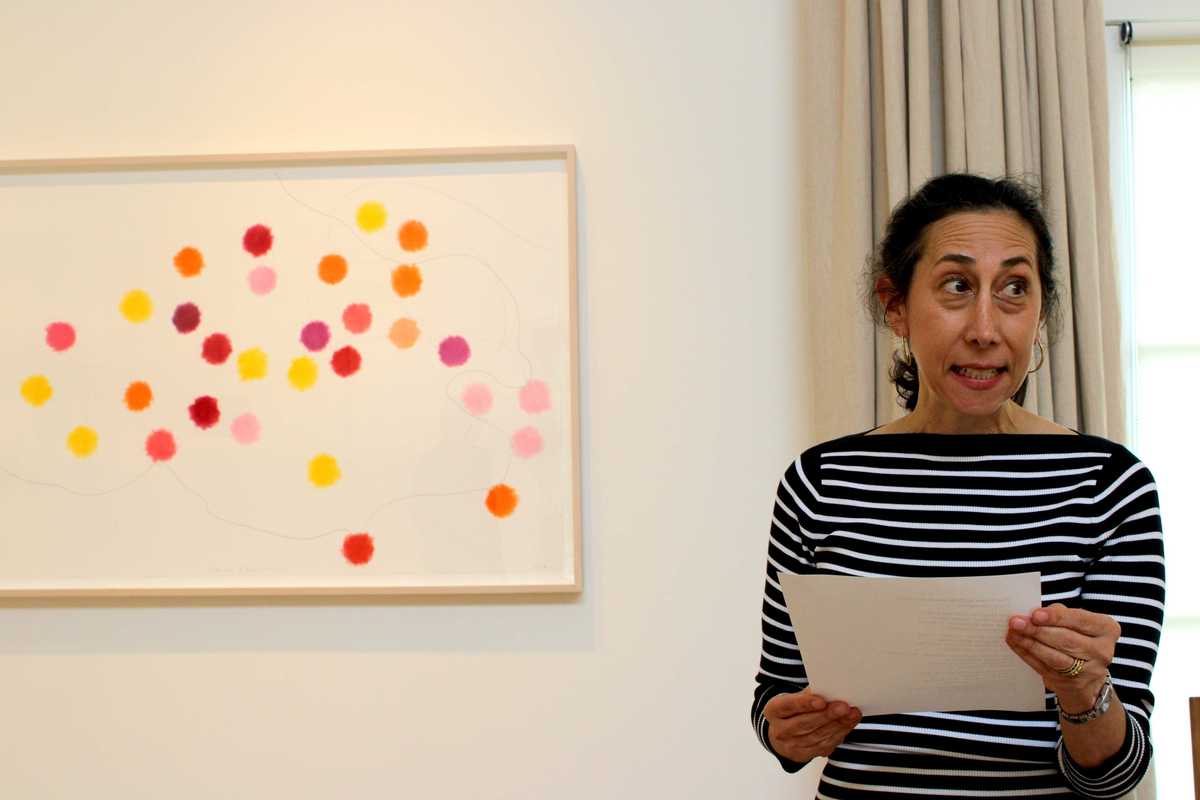
Curator Deborah Goodman Davis reads the Emily Dickinson poem “The Grass So Little Has to Do.” Spencer Finch’s “Following Three Bees (Zinnias)” buzzes in the background.

Photo by Natalia Zukerman

“The Grass Has So Little to Do,” on view at James Barron Art in Kent, takes its title from Emily Dickinson’s poem “The Grass So Little Has to Do,” written in 1862:

“The Grass so little has to do—
A Sphere of simple Green—
With only Butterflies to brood
And Bees to entertain—”

Keep ReadingShow less
Marina Kotchoubey is taking care of business

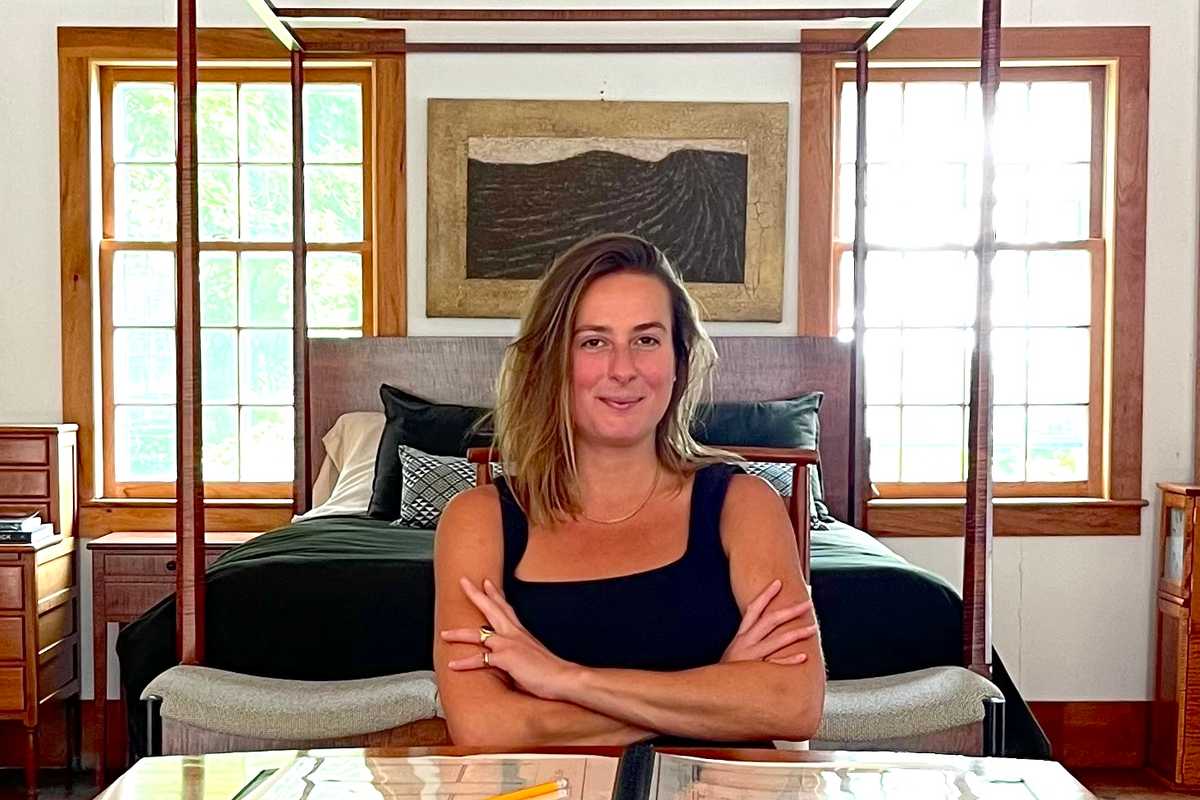
Marina Kotchoubey at the Ian Ingersoll Cabinetmakers showroom in West Cornwall.

Photo by D.H. Callahan

After 40-something years navigating the world of custom fine furniture, Ian Ingersoll was getting ready to retire. Starting off with a little dovetail stool that he sold at a shop in West Cornwall in the 1970s, he’d grown his skill and his business into something he — and the whole town — could be proud of. Shutting down that business was not an option.

Ingersoll built Ian Ingersoll Cabinetmakers, which produced mainly classical Shaker furniture, on passion: the passion he had to make a living through creative challenges and the passion of his employees, who all seem deeply in love with their craft.

Keep ReadingShow less
A legacy of giving at Norfolk Chamber Music Festival

One hundred and twenty years ago, Carl and Ellen Stoeckel commissioned New York architect E.K. Rossiter to design The Music Shed in Norfolk, Connecticut. After nearly a decade of entertaining their friends and neighbors with the finest music of the day, they built a permanent home for their beloved Litchfield County Choral Union.

The commission and full funding of the construction was not unheard of in an era when great fortunes led to public enrichment. Railroad tycoon John D. Rockefeller was instrumental in funding institutes of higher education. Steel baron Andrew Carnegie was building libraries all over the country, and famously said that a man who dies rich is a disgrace, challenging his peers to give their fortunes back to the people.

Keep ReadingShow less
google preferred source

Want more of our stories on Google? Click here to make us a Preferred Source.
Two unique exhibitions at Geary Gallery

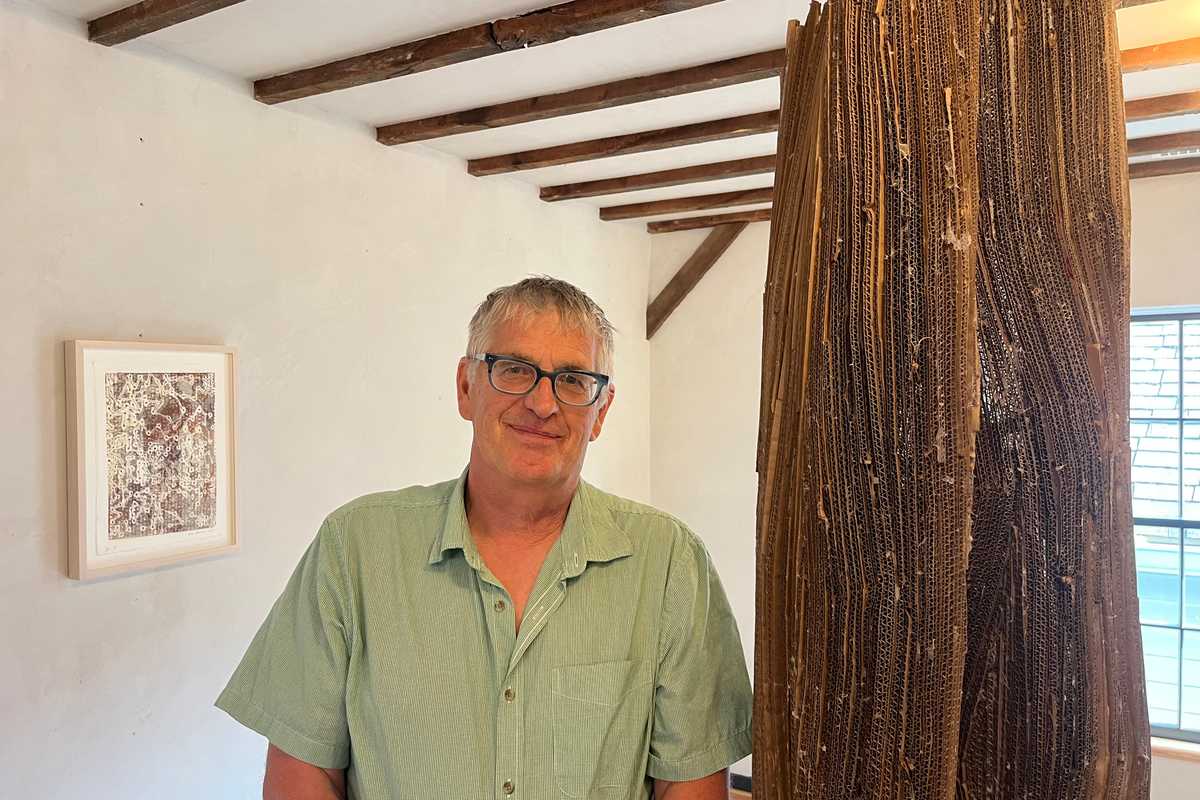
Henry Klimowicz with his sculpture, “Partial Pillar 1”

Photo by D.H. Callahan

On Saturday, Aug. 1, Geary Gallery opened its doors in Salisbury for two unique shows in its first- and second-floor gallery spaces. Art lovers flooded both floors over the course of the afternoon, giving the events a vibrant feeling that enhanced the importance of the art.

On the first floor is a show by Chicago-born, Colorado-based photographer Summers Moore, titled “Lobitos: Pueblo Fantasma,” or “Lobitos: Ghost Town.” The work centers around her daughter’s current hometown in Peru. Moore herself found a home away from home in Colorado in the mid-1980s and encouraged her children to seek out new places outside of their comfort zones.

Keep ReadingShow less

Writer’s retreat in the woods

Writer’s retreat in the woods

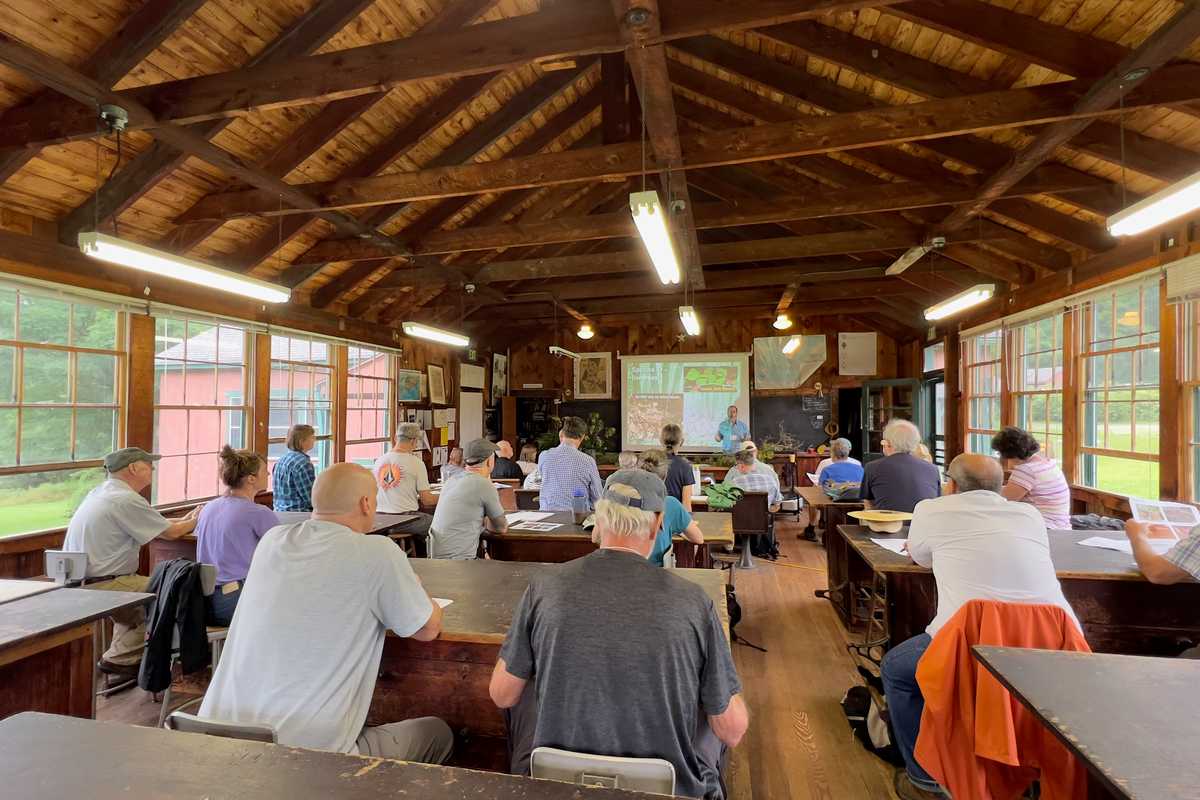
Participants in a 2024 Great Mountain Forest Woodland Academy workshop at Yale Camp.

Photo by Mike Zarfos

Great Mountain Forest (GMF) will host its first Nature Writing Retreat at the historic Yale Camp in Falls Village from Aug. 7-9, 2026. Writers of all levels are invited to draw inspiration from one of New England’s most notable forest landscapes. GMF envisions the retreat becoming an annual event celebrating writing, conservation and the relationship between people and forests.

This immersive three-day retreat reflects on the legacy of Hal Borland, the American writer and New York Times nature columnist whose work was deeply connected to this landscape. The retreat explores how wilderness shapes language, strengthens close observation and fosters environmental consciousness.

Keep ReadingShow less
From Cornwall to Rome, Adam Van Doren at Berkshire Botanical Garden

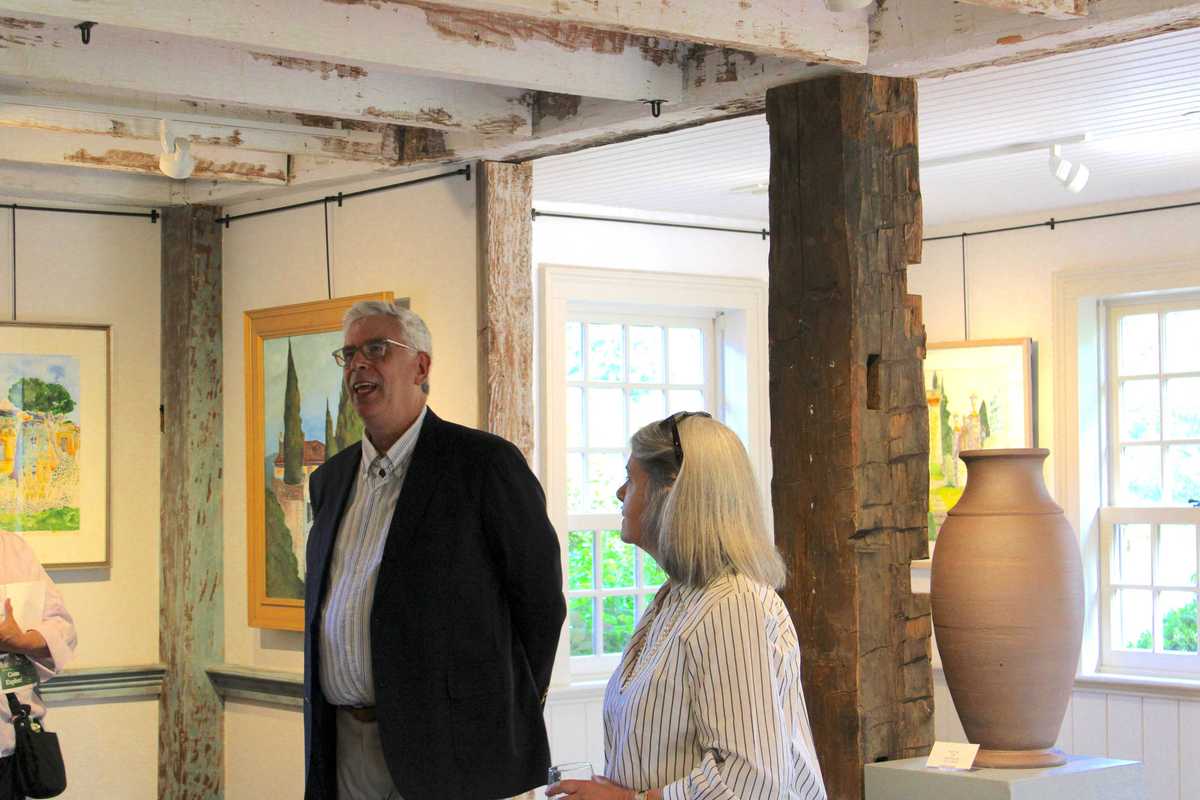
Artist Adam Van Doren and curator Donna Hassler talk to a group of visitors at the Berkshire Botanical Garden. A Stephen Proctor vessel sits to their left.

Photo by Natalia Zukerman

This summer, the Berkshire Botanical Garden in Stockbridge has hosted “Grounded in Nature: Paintings by Adam Van Doren,” an exhibition exploring the intimate relationship between architecture and the natural world.

On view for only a few more weeks in the Leonhardt Galleries, the exhibition features more than 35 watercolor and oil paintings by the New York-based artist, architect, author and Yale professor, curated by art historian Donna Hassler, director emerita of Chesterwood. The works span three distinct places that have shaped Van Doren’s artistic practice: New York City, Cornwall, Connecticut, and his travels throughout Europe.

Keep ReadingShow less
google preferred source

Want more of our stories on Google? Click here to make us a Preferred Source.
google preferred source

Want more of our stories on Google? Click here to make us a Preferred Source.