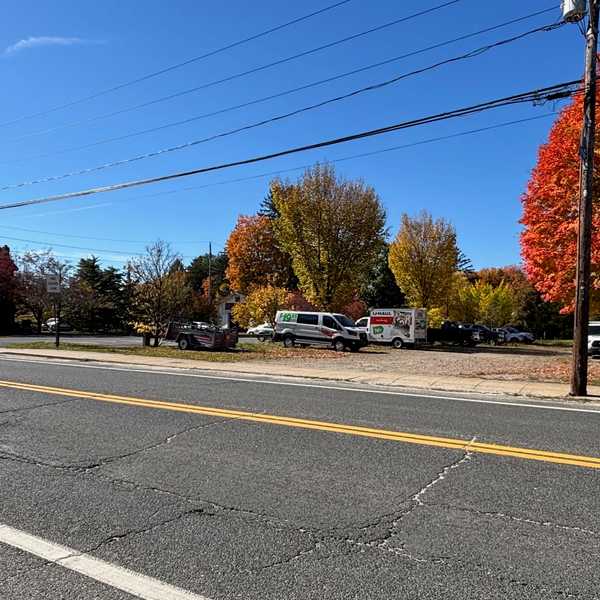
Snow returned to the Northwest Corner earlier this month, sending town highway and public work screws back into their annual cycle of plowing, sanding and salting —work that keeps roads passable but strains municipal budgets, equipment and the surrounding environment.
Connecticut lies within the so-called “Salt Belt,” where sodium chloride remains the primary defense against icy roads, even as officials weigh its financial and environmental costs.
In North Canaan, First Selectman Jesse Bunce said road salt is one of the town’s largest winter operating expenses, and reducing reliance on straight salt could bring both fiscal and environmental benefits. The town currently applies straight salt during most storms, but Bunce said he would like to shift toward blending salt with sand more often.
Bunce said the cost difference between the two materials is stark, estimating sand at roughly $20 per cubic yard compared to about $120 per cubic yard for salt. He said even partial blending could yield meaningful savings over the course of a winter while also reducing the volume of salt entering roadside soils and waterways. He said he and his highway crew have discussed experimenting with different blends to determine what works best under local conditions.
The town has also explored alternatives such as limestone in the past — an idea periodically raised because North Canaan has limestone quarries — though Bunce emphasized that no decisions have been made and further evaluation is needed. Beyond costs, Bunce said straight salt accelerates corrosion on trucks and equipment and contributes to environmental stress along roadways.
Salt-laden runoff, he said, can damage roadside trees, creating additional maintenance costs when trees decline or die. Reducing salt use, he said, could help protect vegetation while extending the lifespan of municipal vehicles. “Salt is tougher on our roadsides, our trees, things of that nature, which are another big operating cost,” Bunce said. “When these trees die on the roadside, we have to deal with them.”
Bunce, who owns and operates an excavation business, said equipment exposed to straight salt wears out significantly faster than machines spreading sand-and-salt mixtures, driving up maintenance and replacement costs for towns. When it comes to storms, North Canaan’s road crew handles them on a case-by-case basis, sometimes pre-treating roads ahead of storms and other times plowing several times before applying material. Certain roads pose particular challenges because of steep grades, making traction a key concern.
Falls Village First Selectman Dave Barger said his town follows a similarly adaptive approach, with the Department of Public Works applying sand and salt based on real-time conditions rather than a fixed formula. Road design and the surrounding landscape, he said, play a significant role.
“There are a lot of factors that play into how much product you put down — whether it keeps snowing, whether temperatures go up or down, and how much sun a road gets,” Barger said.
Narrow roads with heavy tree canopy tend to retain ice longer, requiring more salt, while more open roads that receive sunlight thaw faster and require less treatment. Many towns use sand–salt mixtures on back roads to improve traction, while applying straight salt in village centers. Local geography also shapes winter maintenance. Even modest elevation differences can affect temperatures enough to determine where ice forms first.
Norfolk, at roughly 1,200 feet, sits 400 to 500 feet higher than river-valley towns like North Canaan and often ices up sooner and holds snow longer.
With large areas to cover, Northwest Corner towns often require hours to complete plowing and salting routes. Sharon, for example, maintains 83 miles of roads divided into seven plow routes, each taking about four hours during storms.
For the current fiscal year, Salisbury budgeted $172,000 for salt and sand, Sharon $188,000, Kent $140,000, Cornwall $61,000 and Falls Village $42,000. North Canaan budgeted $46,000 for sand and salt, down from the previous two years.



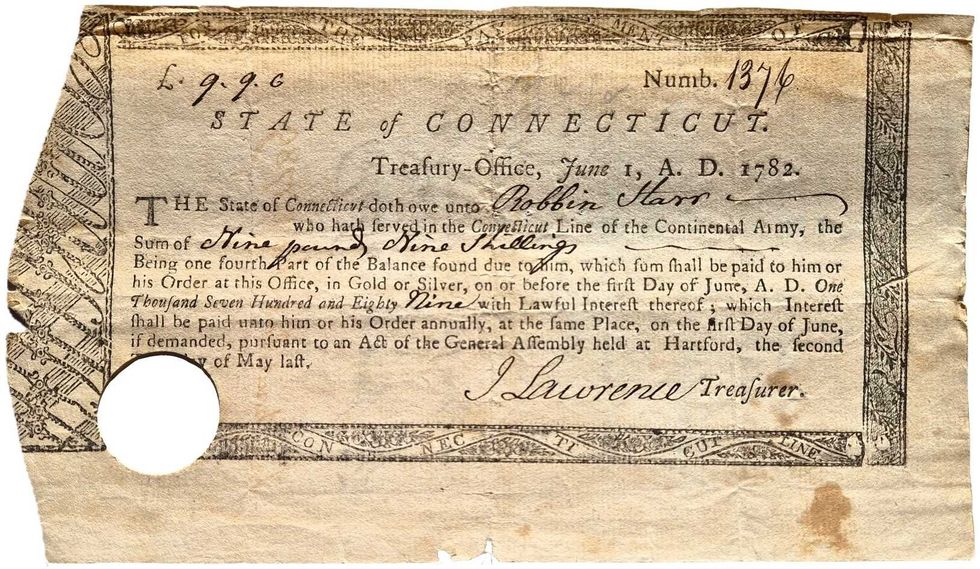 Pay Bill for Robin Starr’s service in the Continental Army.Courtesy the Alex Breanne Corporation
 John Mills speaking at Quinnipiac University.Courtesy the Alex Breanne Corporation
 Stephanie Saetta,with her rescue dog George and Blue (left), a shepherd mix awaiting his forever home.Madi Long
 Blue, a 7 year-old Shepard mix, is waiting for his forever home. Madi Long