Elm Watch: a savior for the elms, and other trees

NORTH CANAAN — Fifteen years ago, Elm Watch was created to preserve heritage trees and promote the planting of new, disease-resistant species of American elm.That decade and a half is just a drop in the bucket of the time frame of what came before and what the group is now working toward.Like his father, Ollie, before him, most of Tom Zetterstrom’s knowledge of trees is self-taught. But it’s the hands-on kind that sticks, and an awareness of the big picture, that sets his and the efforts of other area volunteers apart.Across the North Canaan Elementary School campus, and now all of North Canaan, an arboretum, or community forest, continues to evolve, along with an awareness of the right tree in the right place and how non-native trees can impact the environment.Farther afield is a corridor in three states of not just tree plantings but a plan to ensure success by controlling Dutch elm disease with tree removal and inoculations. “Elm Watch has grown from a few members into a network of partners intent on stewarding and planting elms and diverse tree species in the community forest,” according to the group’s mission statement. “We invite individuals, organizations and municipalities to support us in our mission.”Zetterstrom’s bigger view began in the 1970s with his Portraits of Trees photography portfolio project. Those images are currently displayed in 40 museums across the country. Many are archived in the Library of Congress.“I have spent as much as 40 years observing and photographing specific trees, like the Twin Oaks in Sharon that recently collapsed. I’ve watched trees until they weren’t trees anymore.”Regular checkups for elmsTwo North Canaan elms recently received one of their regular inoculations, done every three years and paid for by the town beautification committee, at a cost of $600 to $800 per tree. Chris Wheeler of Race Mountain Tree Services was alone on a job that used to take a crew of workers. It has become routine, and practice has made it a quick job to insert injection ports into the exposed roots at the tree base. “This one was really thirsty,” he said of a West Main Street elm. “It usually takes about four hours, but I expect to be done here in two and a half.”The 46.8 DBH (diameter at breast height) tree, a pretty old elm, requires about 60 injection sites and 56 gallons of a fungicide-and-water mixture. An elm on Main Street, on the town Green (across from St. Joseph’s Church), was also inoculated that day. It appears to be doing well, Wheeler said.Nearly a decade ago, roots on one side of the tree were badly damaged during digging for an upgrade to the nearby traffic signal. Elms are very tall with high canopies — this one especially — and the fear was that its compromised foundation could allow it to blow over. Zetterstrom fought for needed work to save the tree. Support cables remain to this day.Currently, eight elms in Salisbury and five in Great Barrington are also on inoculation schedules. Elm Watch’s role is to keep local awareness high by promoting tree committees and funding in local budgets. An initial idea was to raise funding through Elm Watch for tree projects. But that would require being heavy on the administrative end, as opposed to concentrating on field work. And, Zetterstrom reasoned, the trees belong to towns and private property owners. Their efforts are better left to monitoring, advising and educating. Elm Watch and town committees can and do accept donations and grants.From stripling to saviorZetterstrom is about to turn 70, but one of his strongest memories goes back to when he was about 10. His dad was hired to cut down the diseased elms that lined both sides of Main Street in North Canaan. The invasive fungus would eventually claim 77 American elms (the number continues to rise).Fast forward to 2011, the year he received the Public Awareness of Trees Award from the National Arbor Day Foundation.In Washington, D.C., that year, he and a horticulturalist inspected 88 elms planted on Pennsylvania Avenue on the inaugural parade route within view of the White House. None had been pruned, and thick leaders spread out at only 5 or 6 feet up the trunks, as opposed to one strong trunk with branches beginning at about 20 feet.“All the pruning we’ve done around Canaan is to avoid this, and they were not smart enough to figure out that that is why all this fracturing and ripping is starting to happen.”This past February, Zetterstrom was back to meet with a liaison to the White House and the parks superintendent and help them move forward with a plan to save the trees. This year also found him the recipient of the Ossenbrugger Award for Meritorious Service, presented by the Connecticut Urban Forest Council. Locally, the focus has turned also to invasives beyond the Dutch elm fungus and to reclaiming community forests for recreational uses. At Housatonic Valley Regional High School, cross-country trails at the north end of campus that were lost to invasives such as bittersweet, and to tree breakage and collapse, are being reclaimed It was the same issue at a park behind Salisbury Town Hall, where a once well-used space had been lost to neglect after its donation to the town. Zetterstrom rallied students for a recent cleanup project.At Canaan Union Station, Elm Watch prevented a honey locust from being removed for the renovation project and will make sure its roots are protected during upcoming drainage work.Zetterstrom is set to give two talks locally called Whose Woods These Are … Invasive Impact and Identification, Early Detection and Eradication, Mapping and Management. One is the Annual Ted Byers Conservation lecture, which is for a private group this month. The Salisbury Rotary Club will hear the talk at its Sept. 23 luncheon meeting. An update of the Elm Watch website, www.elmwatch.org, is underway, and a brochure is being made available that lists nearly two dozen invasive plants, including trees, shrubs and vines, all commonly found here, and how to eradicate them.

Latest News

Living art takes center stage in the Berkshires

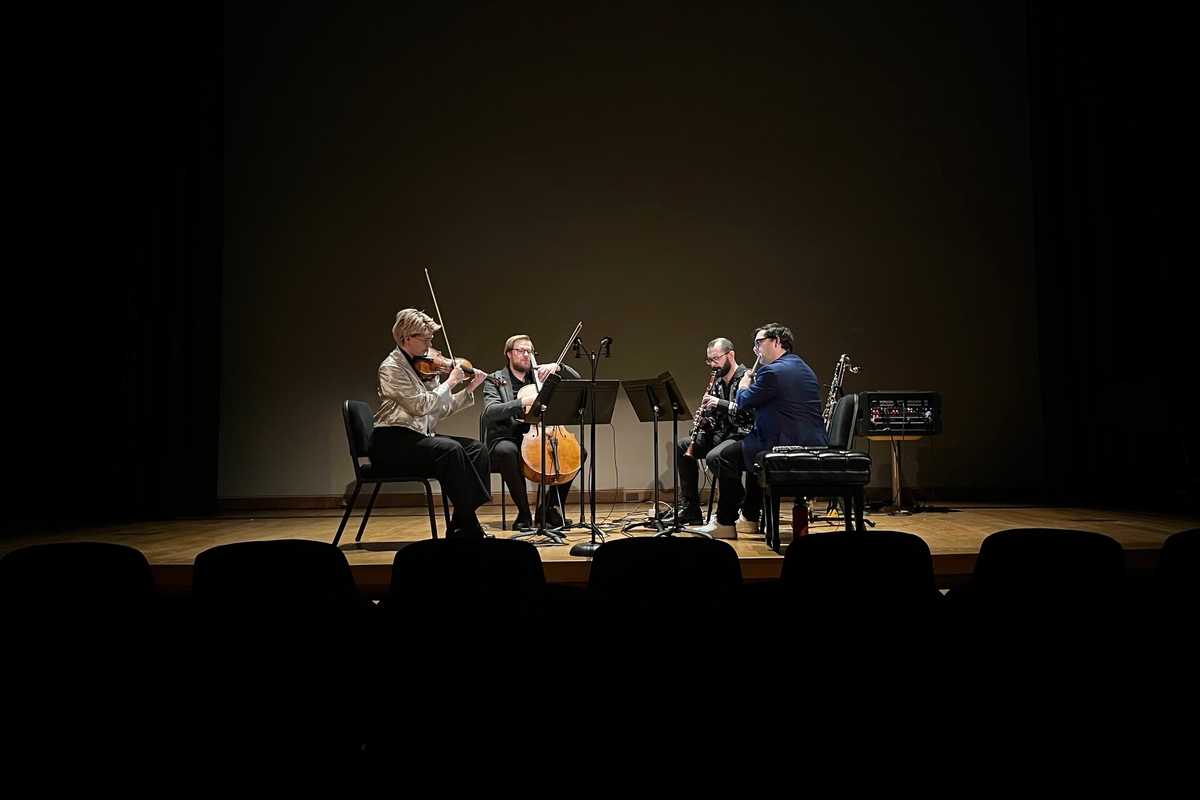
Contemporary chamber musicians, HUB, performing at The Clark.

D.H. Callahan

Northwestern Massachusetts may sometimes feel remote, but last weekend it felt like the center of the contemporary art world.

Within 15 miles of each other, MASS MoCA in North Adams and the Clark Art Institute in Williamstown showcased not only their renowned historic collections, but an impressive range of living artists pushing boundaries in technology, identity and sound.

Keep ReadingShow less
Persistently amplifying women’s voices

Francesca Donner, founder and editor of The Persistent. Subscribe at thepersistent.com.

Aly Morrissey

Francesca Donner pours a cup of tea in the cozy library of Troutbeck’s Manor House in Amenia, likely a habit she picked up during her formative years in the United Kingdom. Flanked by old books and a roaring fire, Donner feels at home in the quiet room, where she spends much of her time working as founder, editor and CEO of The Persistent, a journalism platform created to amplify women’s voices.

Although her parents are American and she spent her earliest years in New York City and Litchfield County — even attending Washington Montessori School as a preschooler — Donner moved to England at around five years old and completed most of her education there. Her accent still bears the imprint of what she describes as a traditional English schooling.

Keep ReadingShow less
Jarrett Porter on the enduring power of Schubert’s ‘Winterreise’
Baritone Jarrett Porter to perform Schubert’s “Winterreise”
Tim Gersten

On March 7, Berkshire Opera Festival will bring “Winterreise” to Studio E at Tanglewood’s Linde Center for Music and Learning, with baritone Jarrett Porter and BOF Artistic Director and pianist Brian Garman performing Franz Schubert’s haunting 24-song setting of poems by Wilhelm Müller.

A rejected lover. A frozen landscape. A mind unraveling in real time. Nearly 200 years after its premiere, “Winterreise” remains unnervingly current in its psychological portrait of isolation, heartbreak and existential drift.

Keep ReadingShow less
google preferred source

Want more of our stories on Google? Click here to make us a Preferred Source.
A grand finale for Crescendo’s 22nd season

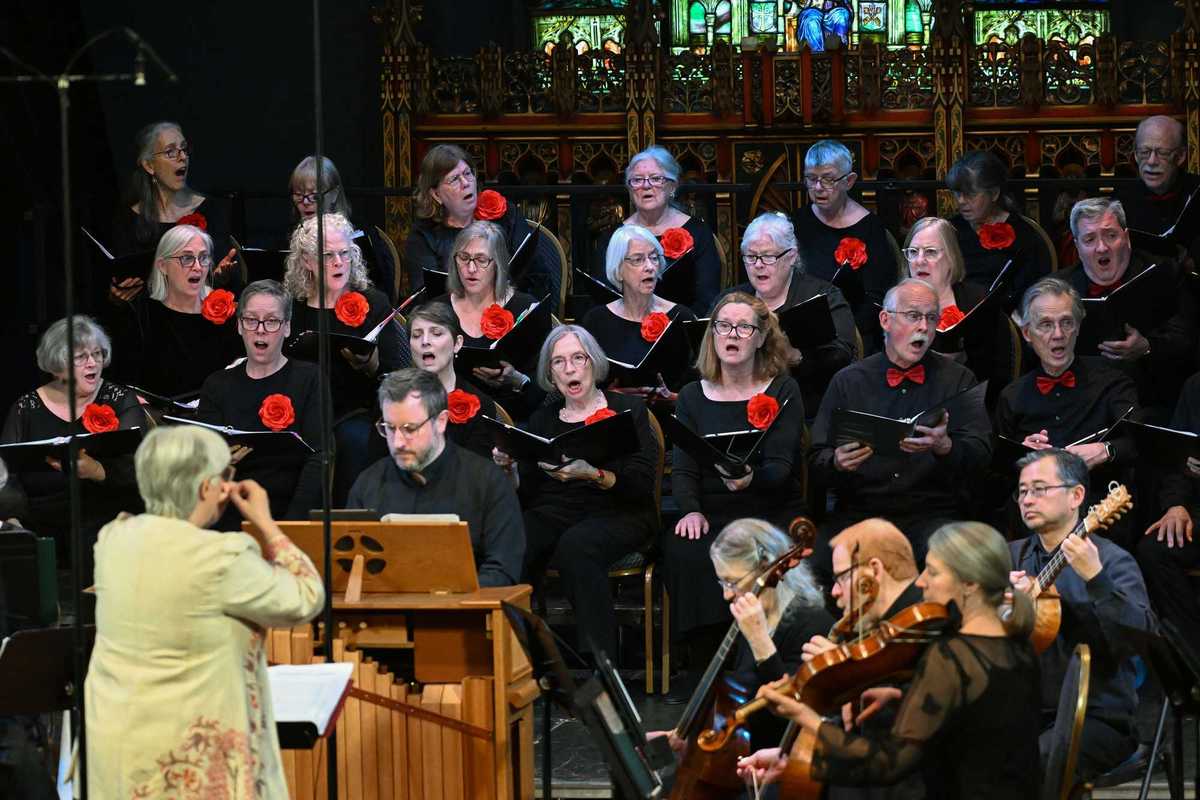
Christine Gevert, artistic director, brings together international and local musicians for a season of rare works.

Stephen Potter

Crescendo, the Lakeville-based nonprofit specializing in early and rarely performed classical music, will close its 22nd season with a slate of spring concerts featuring international performers, local musicians and works by pioneering composers from the Baroque era to the 20th century.

Christine Gevert, the organization’s artistic director, has gathered international vocal and instrumental talent, blending it with local voices to provide Berkshire audiences with rare musical treats.

Keep ReadingShow less

Leopold Week honors land and legacy

Leopold Week honors land and legacy

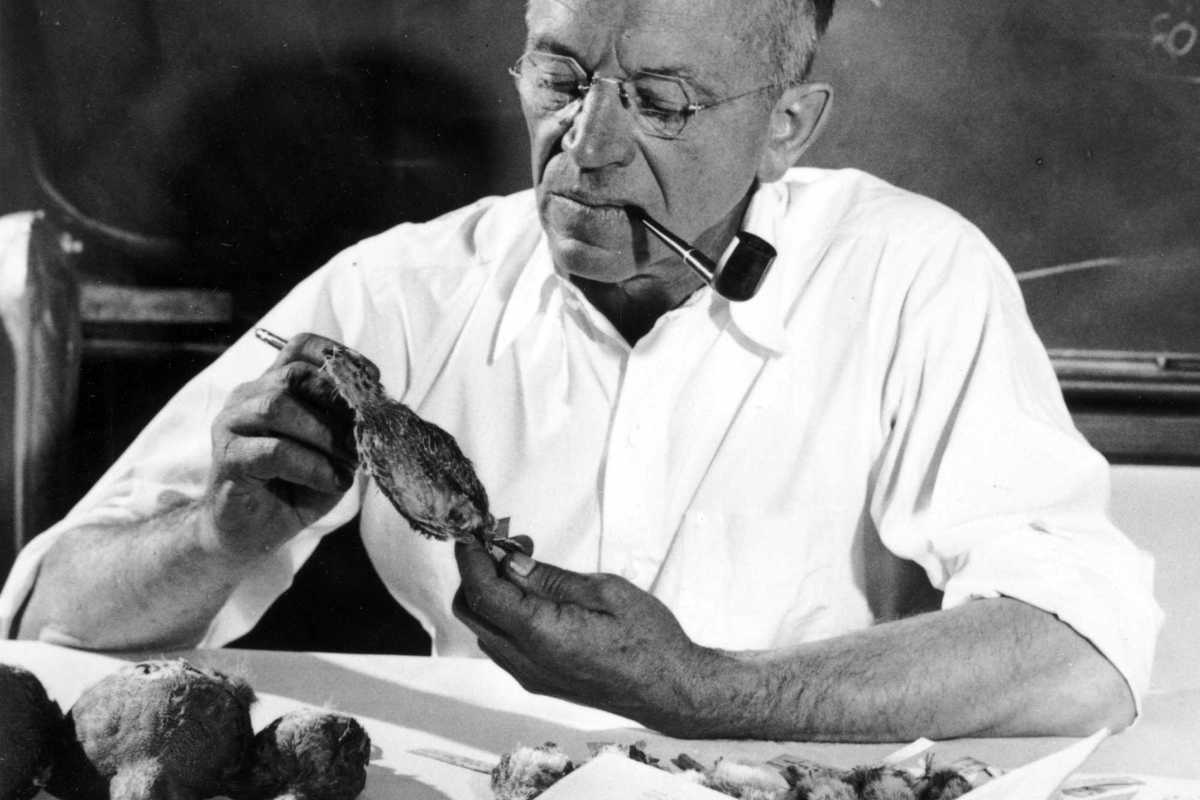
Aldo Leopold in 1942, seated at his desk examining a gray partridge specimen.

Robert C. Oetking

In his 1949 seminal work, “A Sand County Almanac,” Aldo Leopold, regarded by many conservationists as the father of wildlife ecology and modern conservation, wrote, “There are some who can live without wild things and some who cannot.” Leopold was a forester, philosopher, conservationist, educator, writer and outdoor enthusiast.

Originally published by Oxford University Press, “A Sand County Almanac” has sold 2 million copies and been translated into 15 languages. On Sunday, March 8, from 3 to 5 p.m. in the Great Hall of the Norfolk Library, the public is invited to a community reading of selections from the book followed by a moderated discussion with Steve Dunsky, director of “Green Fire,” an Emmy Award-winning documentary film exploring the origins of Leopold’s “land ethic.” Similar reading events take place each year across the country during “Leopold Week” in early March. Planning for this Litchfield County reading began when the Norfolk Library received a grant from the Aldo Leopold Foundation, which provided copies of “A Sand County Almanac” to distribute during the event.

Keep ReadingShow less

Erica Child Prud’homme

Erica Child Prud’homme

WEST CORNWALL — Erica Child Prud’homme died peacefully in her sleep on Jan. 9, 2026, at home in West Cornwall, Connecticut, at 93.

Erica was born on April 27, 1932, in Doylestown, Pennsylvania, the eldest of three children of Charles and Fredericka Child. With her siblings Rachel and Jonathan, Erica was raised in Lumberville, a town in the creative enclave of Bucks County where she began to sketch and paint as a child.

Keep ReadingShow less
google preferred source

Want more of our stories on Google? Click here to make us a Preferred Source.
google preferred source

Want more of our stories on Google? Click here to make us a Preferred Source.