A reader of this widely syndicated column (three newspapers) thinks I unfairly picked on a Republican when I wrote that Senate candidate Linda McMahon’s official campaign biography has no reference to wrestling, the art form responsible for financing her campaign. (She has since identified her company’s acronym WWE as World Wrestling Entertainment in the biography but makes no other mention of wrestling on the campaign Web site.)
The reader, who uses the nom de guerre “Ledyard Conservative†and fondly refers to me as “this left-wing hack,†wondered why my criticism of biographical omissions by candidates like McMahon and George W. Bush, who failed to mention his New Haven birthplace when running for president, “applies only to Republicans.†Another reader agreed and noted correctly, “Blumenthal has had more press than anyone over the years. There must be something in his past that we don’t know.â€
u u u
Well, there are things in his past these curious voters may not know about, so let us review the Richard Blumenthal resume. While it is an impressive document, Ledyard Conservative should find enough to alarm him.
How’s this for starters, LC? Blumenthal was educated at those two citadels of the leftist elites, Harvard (1967, magna cum laude and Phi Beta Kappa) and Yale, but so was George W. Bush, who managed to emerge uncontaminated and without the burdens of magna cum laude and Phi Beta Kappa. Both men came of age during the Vietnam War but did not get drafted. Instead, Bush joined the Air National Guard and Blumenthal, the Marines Reserve.
At Harvard, Blumenthal roomed with Donald Graham, who now runs The Washington Post, and between graduation from Harvard and Yale Law School, he worked for a time as a reporter for the Graham family’s newspaper, a member in good standing of the eastern media elite, and as an assistant to Graham’s mother, publisher Katharine Graham.
Before going to law school, Blumenthal was an aide to Connecticut Democratic Sen. Abraham Ribicoff and worked for Democrat Daniel Moynihan. But Moynihan hired him — as his assistant in the Nixon White House — because he liked Blumenthal’s Harvard thesis on the failure of the Lyndon Johnson poverty programs so much. I don’t mean to confuse you, LC, but that made Blumenthal an assistant to the assistant to President Richard M. Nixon.
At Yale Law School, Blumenthal edited the Law Journal and that helped get him a clerkship with Supreme Court Justice — and Nixon appointee — Harry Blackmun, who wrote the Roe v. Wade abortion decision.
Connecticut first became aware of Blumenthal when President Carter named him U.S. attorney in 1977 and the media began to cover the 31-year-old lawyer’s prosecution of consumer fraud, drug dealers, air polluters, white collar crime and civil rights violators. He became involved in politics in the ’80s, and after six years in the General Assembly, he was elected to the first of five terms as attorney general in 1990.
u u u
As long ago as 2000, the voters and the media were commenting over two phenomena, Blumenthal’s successes as a crusading attorney general and his well known reluctance to advance his career by running for governor. That year, the online magazine Slate profiled him with the headline, “He was supposed to be president. So why is he only Connecticut’s attorney general?â€
By 2000, with neither U.S. senator indicating an interest in retiring, Blumenthal had hoped to be named a federal appeals court judge, but the outgoing Clinton administration determined there was no time to get this appointment through the Senate before its term ended. The year’s first disappointment, of course, was Joe Lieberman’s decision to run for re-election to the Senate while also running to be Al Gore’s vice president.
Ledyard Conservative and his friends and allies were looking for “something in his past that we don’t know†and I have endeavored to oblige, so here’s one more.
Back when Blumenthal was the youthful U.S. attorney and I was news director at Channel 3, we tried to hire him as an investigative reporter. We thought his background as both an investigator who knew things we surely didn’t and a reporter at the Post, which owned Channel 3 back then, would serve him and the station well. He declined.
Dick Ahles is a retired journalist from Simsbury. E-mail him at dahles@hotmail.com.
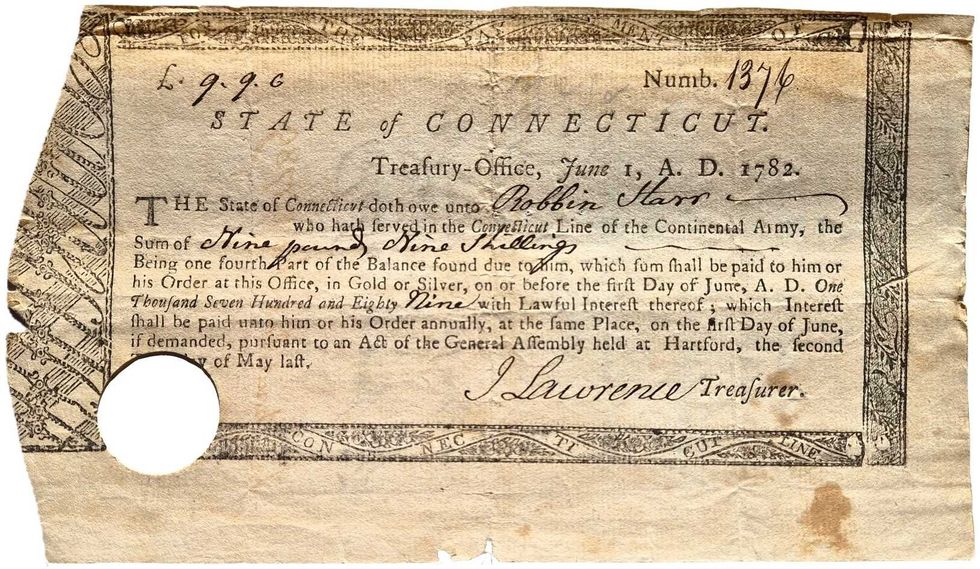 Pay Bill for Robin Starr’s service in the Continental Army.Courtesy the Alex Breanne Corporation
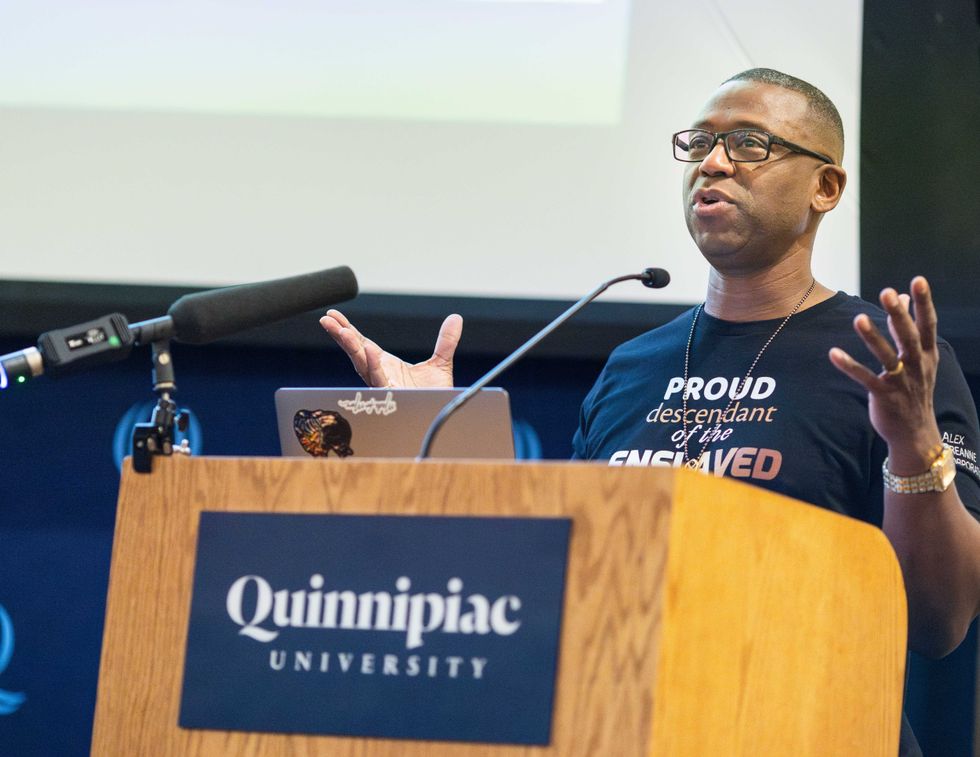 John Mills speaking at Quinnipiac University.Courtesy the Alex Breanne Corporation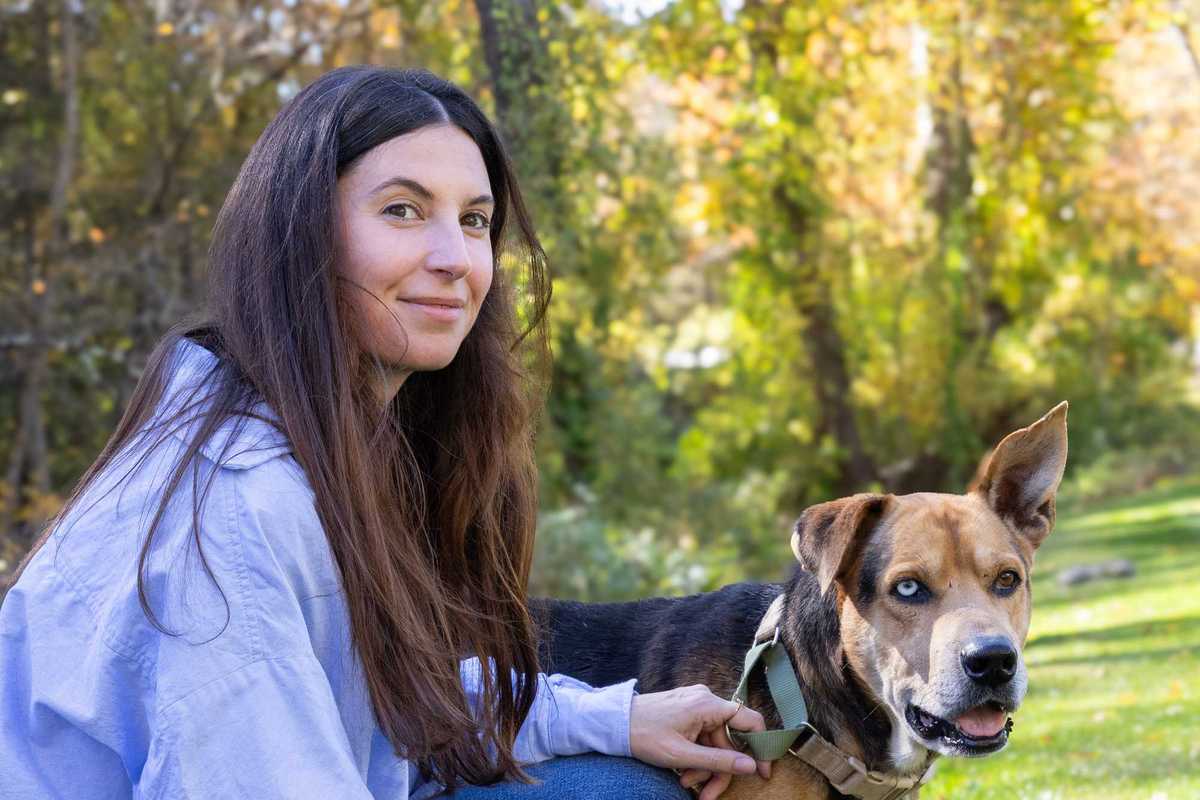
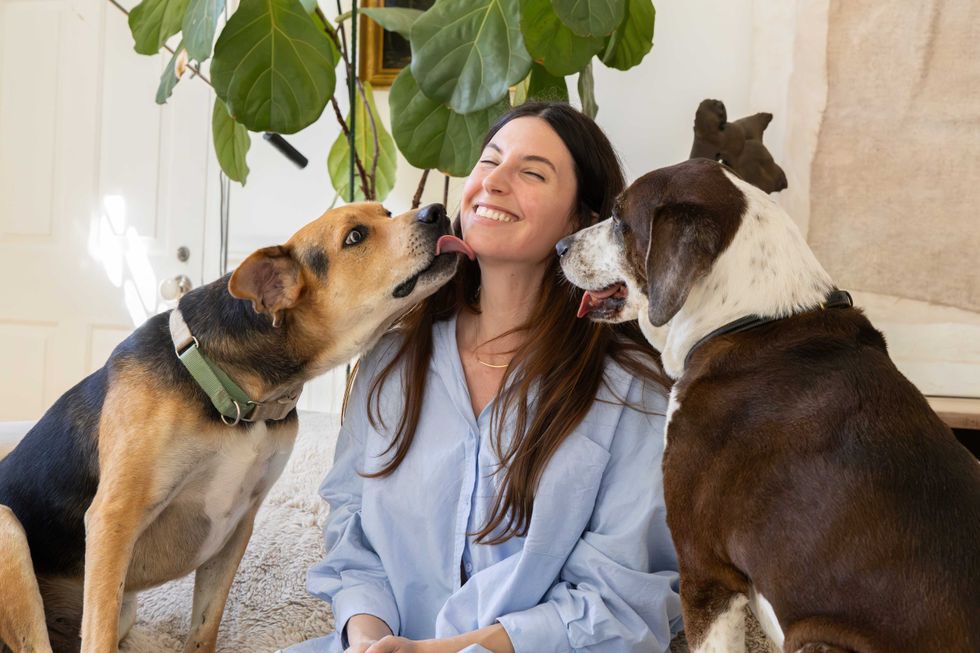 Stephanie Saetta,with her rescue dog George and Blue (left), a shepherd mix awaiting his forever home.Madi Long
 Blue, a 7 year-old Shepard mix, is waiting for his forever home. Madi Long