NORTH EAST — With a goal of creating equity among all of the parcels in the town of North East, which would come from an assessment process that is open and fair, the Assessor’s Office Study Group (AOSG) submitted its final report to the Town Board for review last Thursday.
“What I wanted was a comprehensive document that could be referred to,� said committee Chairman and town Councilman Dan Briggs. “Our goal was clear — we wanted equity among the properties inside the town.�
The report addressed the need to maintain accurate data cards.
“That’s number one. If that’s not right everything falls apart,� Briggs said.
It’s expected the assessor will visit all properties over a three to a four year period. A representative from the assessor’s office need not enter the interior of a property, unless invited by the property owner.
The report also suggested data collectors be in-house, rather than be hired from the outside, to be “more efficient and cost effective.�
In terms of the property record cards it was also stated that the assessor should be “personally involved in the data collection to insure fairness and consistency.�
Briggs moved on to agricultural assessments, which he said are on a downhill slide, despite the fact that agriculture is the largest industry in the town.
“Agricultural exemptions will meet standards as prescribed by New York State Ag and Markets and the Dutchess County Real Property and Tax Service,� he said, adding that all would be reviewed by the assessor annually.
Field checks would also be made to verify the data. AOSG recommends that an annual report is given to the Town Board on: the impact of agricultural assessments on the overall tax role, farm impacts and changes over the last year.
Briggs next discussed the revaluation itself.
“We had a lot of debates on that,� he said of his group, which included members from the community who sat on the Town Board to those who sat on the North East Tax Revolt Alliance (NETRA), which opposed the reassessment and yearly revaluations. However, the Assessor’s Office Study Group was able to come to consensus on the revaluation process. It concluded that an annual assessment “is not practical for the town of North East.�
AOSG recommended that revaluation should occur every six years, “ideally reassessment would start during the third year of an assessor’s term. This would allow two years for training and experience if the assessor were newly elected,� the report stated.
The group went so far as to suggest the town adopt a local law establishing a schedule “for town-side revaluation at no later than six years from the previous revaluation.�
In terms of funding, it was suggested that the town set up a reserve fund to finance revaluations. Those revaluations will be done primarily by the assessor.
“We expect the assessor to do the bulk of the revaluation,� Briggs said, adding the assessor’s own property should be evaluated by an independent third-party assessor from a neighboring town. “I think the bulk of assessors would take their property and say ‘I don’t want any questions so I’m going to value it higher to take the questions out of the equation.’�
The report also touched upon what the group felt the assessor should provide to the community, as part of his or her service.
“We expect the assessor to be available to the public, to make reports, to communicate well with the building department so we don’t have lost projects, to develop right procedures for the assessor’s office and building departments and to write reports,� Briggs said. “But as our expectations for that office increase, I think it would have to result in an increase in cost.�
Town resident Peter Judge, who sat on AOSG, as well as NETRA, praised Briggs for his leadership and the resulting report.
“I think the report is pretty good and I would like to commend Dan for the way he handled this thing,� Judge said. “I totally agree with him that it’s a consensus report.�
Briggs suggested the board move forward and recommend the report in its entirety as soon as possible.
Town Supervisor Dave Sherman said the board should first discuss with counsel how to adopt such recommendations.
“The board does pass standing resolutions that become policy,� he said. “It might be more akin to a local law, but I think we need to sort that out. We can adopt the report as far as guidelines to the town of North East.�
“I think it might be the appropriate method to accept the report,� Briggs said. “Some of these might be policies and procedures and some might be local law.�
“I like that we can establish guidelines, and this looks very good,� Councilman Carl Stahovec said.
Sherman suggested AOSG’s report be published as a complete book so copies can be made available to the public.
The board moved to accept the report and extend its thanks to the group for its hard work. The motion was met with unanimous approval.

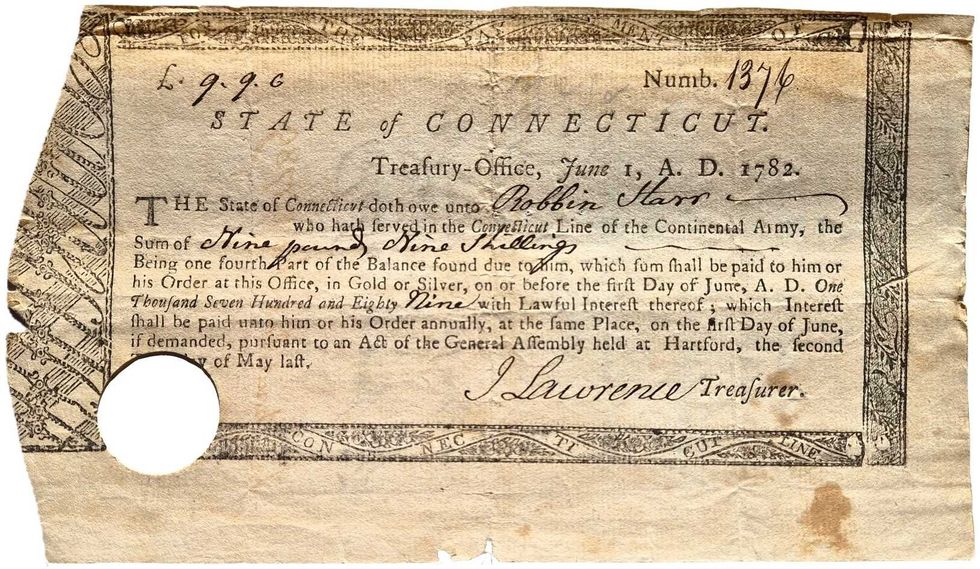 Pay Bill for Robin Starr’s service in the Continental Army.Courtesy the Alex Breanne Corporation
 John Mills speaking at Quinnipiac University.Courtesy the Alex Breanne Corporation
 Stephanie Saetta,with her rescue dog George and Blue (left), a shepherd mix awaiting his forever home.Madi Long
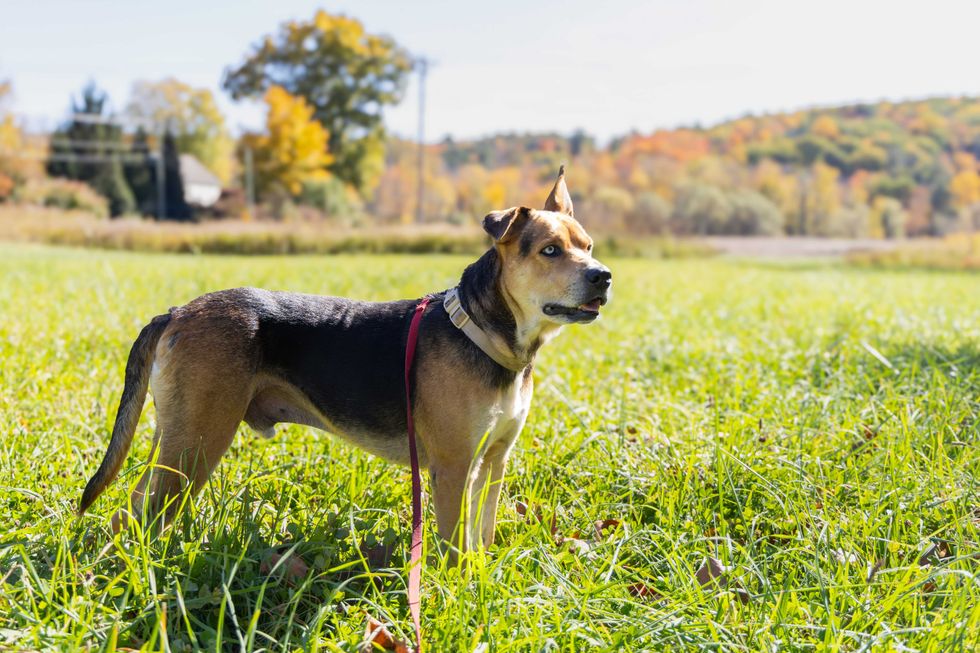 Blue, a 7 year-old Shepard mix, is waiting for his forever home. Madi Long