


Guantanamo, national security and crying wolf

Many have grown weary of thinking about the Guantanamo Bay Detention Facility, which nears its 13th birthday. Its mere existence can excite controversy still, but endless contention tires a body, and many have chosen to look away, perhaps long ago. Even so, most remain aware that the seemingly endless partisan battle over closing the facility trudges on, and that debates continue over the legality and morality of force-feeding hunger strikers there. I focus here, hoping you will not be tempted to turn away, on a federal court case that deals with force-feeding and the public’s right-to-know its grim details in which something important is taking place.

Twelve-year Gitmo detainee Abu Wa’El Dhiab, a Syrian national cleared for transfer in 2009 who languishes there still for complex reasons, at times has resorted to hunger striking to protest his indefinite imprisonment. His judicial filings assert that he does not wish to die; he wants to see his family again and live as a free man. Striking is his only peaceful means to protest the indignities and inhumane treatment of his captivity.  

Dhiab suffers chronic pain in his kidneys and in his back and neck from severe disc problems along his spinal column, and from leg weakness too. Blood flows in his urine. Yet he has repeatedly been denied a wheelchair to take him to feedings, or even crutches, though his severe pain often prevents his walking unassisted to the station. Nonetheless, even when Dhiab is willing to go, if he declines to walk there, “forced cell extractions” (FCEs) — Miami Herald reporter Carol Rosenberg calls them “tackling and shackling”—are performed by six “riot force” members, outfitted along the lines of Darth Vader. These guards rush the cell, pin Dhiab to the concrete floor, face down, shackle his hands painfully behind his back, then shackle his legs, and finally carry his body to the feeding station. Force-feeding then occurs in a specially made “five point restraint chair,” in which the guards strap down his hands, legs, waist, shoulders and head. Detainees call this the “torture chair.” After the metal-tipped feeding tube is snaked up Dhiab’s nose, the staff verifies its placement, according to medical testimony at the hearing, by a method unable to differentiate between whether it has gone to the stomach or the bronchial tree and lungs. Then a nutritional supplement is pumped into his stomach. All this happens, once or twice each day. This is all according to filings and testimony on behalf of Dhaib.

Inhumane system 

Dhiab is not asking D.C. federal Judge Gladys Kessler to stop the feedings, but simply implores that she order that a non-punitive and humane system be used, and that the brutal methods “designed to break the hunger strikers” be prevented. He wants the judge to order that force-feeding be employed only as a last resort, where medically indicated and ordered by a competent doctor (instead of the camp Commander), but never as punishment.  

The government has responded with denials of abuse and earnest expressions of humane treatment.

Less than two weeks before Dhiab’s long-scheduled October hearing, the government filed a request that the court completely close the proceeding to the public. On Oct. 2, 2014, the plainly annoyed judge found the motion, which appeared “to have been deliberately made on short notice” to be “deeply troubling.” Observing that one of the strongest pillars of our justice system is the presumption that all judicial proceedings are open to the public, she swatted away the government’s request, ruling sensibly in her Memorandum Opinion that she would close the court only when necessary to protect classified information.

First Amendment issues

In May 2014, the government had revealed the existence of videotapes of Dhiab’s FCEs and force-feedings. Dhiab’s counsel promptly filed an Emergency Motion for an order compelling the government to preserve the tapes (remember, the CIA years earlier had destroyed videotapes of Abu Zubaydah’s “enhanced interrogations” at a black site) and produce them to Dhiab’s counsel. The motion was granted, and 28 tapes — which had been classified “Secret” — were placed on the court’s docket under seal. Soon, smelling a big story, an armada of the nation’s best-known media companies intervened in the case, and asked the court to unseal the tapes. After all, they provide the best evidence of Dhiab’s treatment at the hands of Gitmo personnel.

In her Memorandum Opinion, Judge Kessler turned to the First Amendment’s guarantees of freedom of speech and of the press, and the right to petition the government, which carry an “implicit right of public access to ... government information.” Under the amendment, the press and the public enjoy a general right of access to court proceedings and documents, absent “compelling reasons demonstrating why” that right cannot be observed. The party seeking closure must show a substantial probability of harm to an overriding interest. It is the court, not the government, which has discretion to seal a judicial record.

 “The court is well aware, as the government has emphasized, that in no case involving Guantanamo Bay detainees has any court ordered disclosure of classified information over the government’s opposition,” Judge Kessler observed. But such does not mean that, in a given factual situation, no court has the discretion to do so where warranted. Rather, it is the judiciary’s responsibility, when ruling on an issue as overwhelmingly important as diminution of our First Amendment rights, to ensure that classification of an item — in this case, the videos — is proper. While the Executive has the sole authority to determine what information is properly classified for its purposes, only the judiciary has the discretion to seal or unseal a judicial record. And “courts must...satisfy themselves...that the (government) in fact had good reason to classify.”

The government offered five means by which release of the videotapes would give rise to a substantial probability of harm to a compelling governmental interest, but the court found most “unacceptably vague, speculative, lack(ing) in specificity, or just plain implausible.”

Videos as propaganda 

Its most significant point argued that the videos could prove useful as propaganda for Al Qaeda and its affiliates and could increase anti-American sentiment, placing at risk the lives of U.S. service members.  (Though the court omitted to say so, this argument undercuts the government’s contention that the FCEs and feedings are safe, painless and humane.) Here Judge Kessler’s reasoning was least persuasive. Terrorists do not need pretexts for their barbarism, and she never dealt specifically with the potential use of the videos by Al Qaeda or ISIL as a recruitment tool. 

Law Professor Jack Goldsmith on Oct. 4 in Lawfareblog.com wondered about the lack of deference by Judge Kessler to the government’s claims concerning classified information during wartime. He thought that perhaps weariness with years of exaggerated government claims concerning the harms that would flow from disclosing classified and other sensitive information had influenced her.  In other words, “the perception that the government is crying wolf... appears to be growing and deepening.”

Judge Kessler on Oct. 3, 2014, granted the motion to unseal the videos while ordering specific redactions to protect the identities of Gitmo staff. Since then, at the government’s request, she has stayed her public disclosure ruling to provide time for the government to decide whether to appeal.

On Oct. 9, Carol Rosenberg of the Miami Herald quoted Cori Crider, one of Dhiab’s attorneys: “The truth is right there in the tapes.  The American people, and the rest of the world, ought to be able to see the footage of my client and judge for themselves.”

But if an appeal is taken, we shall see whether Judge Kessler’s bold and unique decision will be upheld to allow the people to get that chance.

Charles R. Church is an attorney practicing in Salisbury who focuses primarily on Guantánamo Bay, detention, torture, habeas corpus and related issues.

Latest News

Roomful of Blues set for April 17 show at Infinity Hall in Norfolk
Photo provided

NORFOLK –Roomful of Blues, the Rhode Island-based band hailed by DownBeat magazine as being “in a class by themselves,” will bring its mix of blues, jump, swing, boogie-woogie and soul to Infinity Hall in Norfolk on Friday, April 17, at 8 p.m.

The long-running group, formed in 1967, is touring behind its Alligator Records album Steppin’ Out!, released in late 2025.

Keep ReadingShow less

Robert E. Stapf Sr.

Robert E. Stapf Sr.

MILLERTON — Robert E. Stapf Sr. (Bobbo), a devoted husband, loving father, grandfather, great grandfather, brother and friend to many, passed away peacefully on April 9, 2026, at the age of 77, happily at home surrounded by lots and lots of love and with the best care ever.

Bob was born Jan. 16, 1949, to the late Peter and Dorothy (Fountain) Stapf. He began working at an early age, met his forever love, Sandy, in 7th grade and later graduated from Pine Plains Central School.

Keep ReadingShow less

Michael Joseph Carabine

Michael Joseph Carabine

SHARON — Michael Joseph Carabine, 81, of Sharon, Connecticut, passed away on the morning of Friday, April 3, 2026, at Bryn Mawr Hospital in Bryn Mawr, Pennsylvania. He was the beloved husband of the late Angela Derrico Carabine and loving father to Caitlin Carabine McLean.

Michael was born on April 23, 1944, in Bronx, New York. He was the son of the late Thomas and Kathleen Carabine of New York.

Keep ReadingShow less
google preferred source

Want more of our stories on Google? Click here to make us a Preferred Source.
Chion Wolf brings ‘Audacious’ radio show to Winsted with show-and-tell event
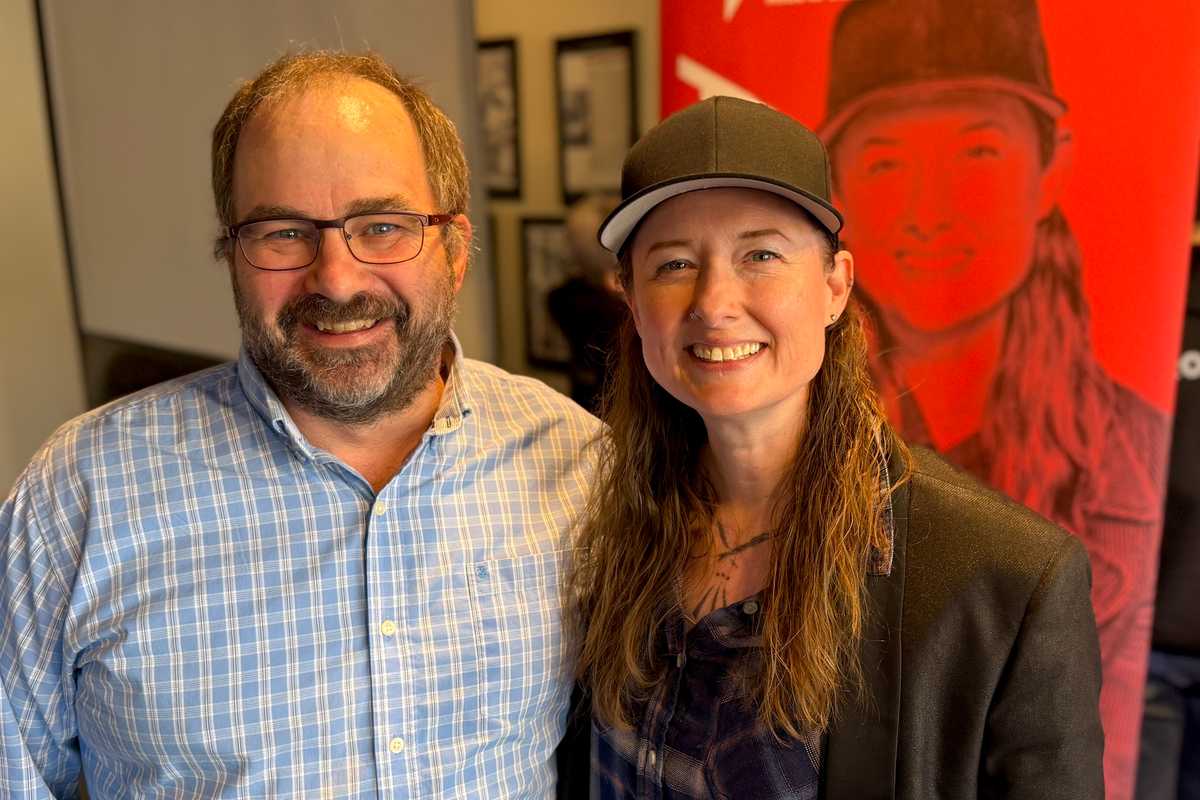
Nils Johnson, co-founder and president of The Little Red Barn Brewers in Winsted, hosted Chion Wolf and her Connecticut Public show “Audacious LIVE: Show and Tell,” which was broadcast on April 8, drawing a sold-out crowd.
Jennifer Almquist

The parking lot of The Little Red Barn Brewers in Winsted was full on Wednesday, April 8, as more than 100 people from 43 Connecticut towns — including New Haven and Vernon — arrived carrying personal treasures for a live taping of “Audacious LIVE Show & Tell.”

Chion Wolf, host and producer of Connecticut Public’s “Audacious,” and her crew, led by production manager Maegn Boone, brought the program to the packed brewery for an evening of story-driven conversation and shared keepsakes.

Keep ReadingShow less
Marge Parkhurst, the preservation detective

Marge Parkhurst with a collection of historic nails recovered from wall cavities during restoration work.

Photo courtesy of Marge Parkhurst/Cottage & Country Painting Company
Walls still surprise me. If you look hard enough, you can find buried treasure.
Marge Parkhurst

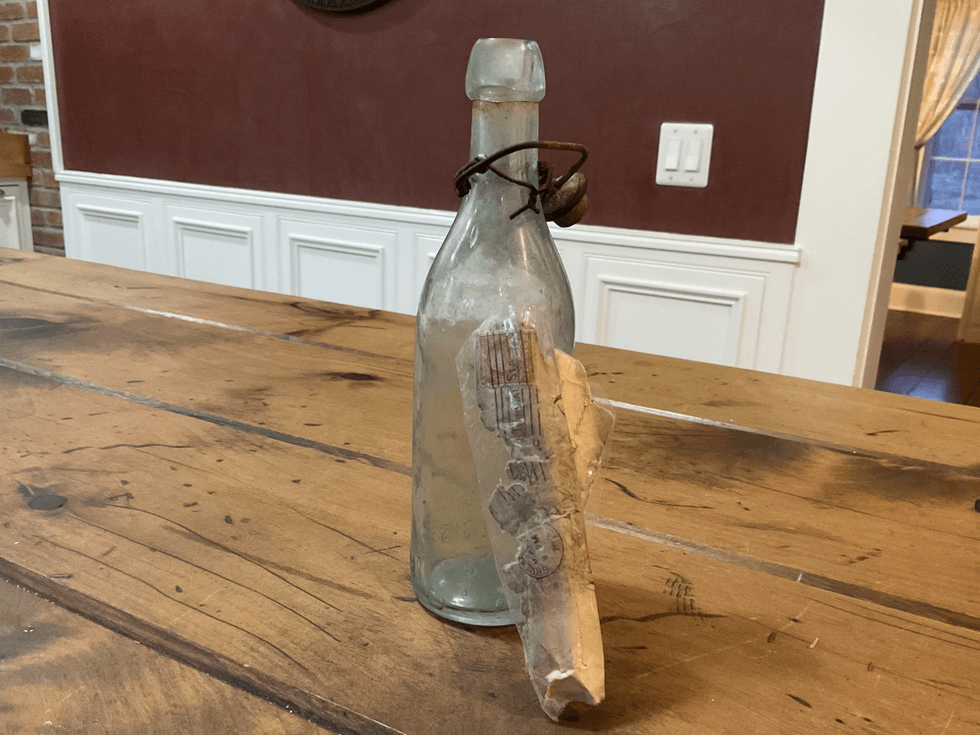
After nearly 50 years of painting some of Litchfield County’s oldest homes and landmark properties, Marge Parkhurst has developed an eye for the past—reading the clues left behind in stenciled vines, forgotten bottles and newspapers tucked into walls, each revealing a small but vivid piece of Connecticut history.

Parkhurst was stripping wallpaper in a farmhouse in Colebrook — the kind of historic home she has spent decades restoring — when she noticed something odd. Three layers of paper had already come off — each one a different era’s idea of decoration — and beneath them, just barely visible under dull, off-white plaster, a pattern emerged.

Keep ReadingShow less
Wings of Spring performance at the Mahaiwe Theater
Adam Golka
Provided

On Sunday, April 19, at 4 p.m., Close Encounters With Music (CEWM) presents On the Wings of Song at the Mahaiwe Performing Arts Center in Great Barrington.

The program focuses on Robert Schumann’s spellbinding song cycle Dichterliebe (“A Poet’s Love”), a setting of sixteen poems by Heinrich Heine that explores love, longing, and the redemptive power of beauty. Featured artists include John Moore, baritone; Adam Golka, pianist; Miranda Cuckson, viola; and Yehuda Hanani, cello.

Keep ReadingShow less
google preferred source

Want more of our stories on Google? Click here to make us a Preferred Source.

google preferred source

Want more of our stories on Google? Click here to make us a Preferred Source.