Fluoridation has been accepted for some time by those in the dental world as a resource for building strength in bones, particularly teeth, by preventing teeth decay, and perhaps that was the reason behind a Thursday, April 15, Board of Health (BOH) vote to require the additive of fluoride in public drinking supplies. This change would affect residents who live or work in Poughkeepsie, Hyde Park, East Fishkill and beyond who drink, wash or otherwise access the public water supply.
The Health Board’s decision to add fluoride is highly controversial in substance as well as process.
Legitimate concerns exist. There is little research of fluoride’s long-term effects on human organs other than teeth. Some studies suggest too much fluoride can store up in bones causing them to weaken. Others found fluoride, when used to treat osteoporosis in the elderly, can lead to increased hip fractures. Elsewhere excessive fluoride exposure caused a form of cancer (osteosarcoma) in male rats, and was found to interfere with testosterone, the male hormone needed for bone growth.
Additionally, fluoride is a non-biological contaminant so that when homeowners water their lawns, wash their cars, or irrigate crops it can negatively affect groundwater, seeping into aquifers and septic systems.
Just as serious is the claim that the Board of Health vote usurped the county’s Legislature’s policy-making role.
The Dutchess County Board of Health is a seven-member body appointed by the county Legislature with broad powers (according to the county charter), “to formulate and adopt, promulgate, amend or repeal such rules and regulations as may affect the public health.†Controversy follows because changes to public health law masked as “rules†appear to exceed the scope of a non-elected group, which serves for six-year terms, and is not held accountable through the election process. In practice because there are not term-limits, most members serve for 15-20 years or longer including one member who is in her 39th consecutive year.
Such distinction between the “rules†of administrative agencies and “laws†of legislatures have spawned an entire field of law known as administrative law, where consideration of procedural safeguards of notice and public hearings has become the norm, although seemingly not practiced by the Dutchess County Board of Health in this case. Good law requires public scrutiny, if not input.
Earlier in the decade the BOH also enacted rules without procedural safeguards that came so dangerously near to resembling laws that the Legislature intervened (first in enacting a nonsmoking rule in public places, and secondly in adopting a well-testing rule at real property transactions).
The state took notice of this issue of fluoridation of public drinking supplies by overreaching boards of health in 1996. Legislation was passed then transferring the decision on whether to fluoridate away from boards of health and given exclusively to elected bodies. Citing this state law our new county attorney has asked the Board of Health to rescind its vote, which is expected.
The larger issue of the Board of Health drafting law-resembling “rules†without procedural safeguards still remains to be addressed by the county Legislature.
Michael Kelsey represents the towns of Amenia, Washington, Stanford, Pleasant Valley and the village of Millbrook in the Dutchess County Legislature. Write him at KelseyESQ@yahoo.com.
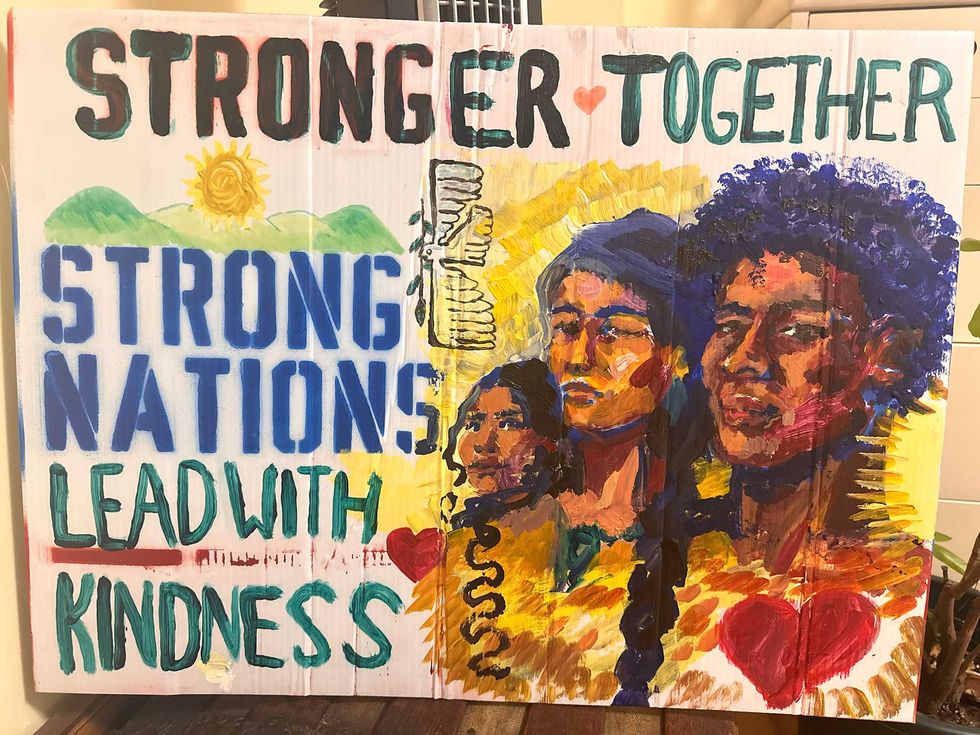 Some residents painted over a Patriot Front sign that had been removed and plan tohang it back up to spread a message of positivity and community.Provided