Melissa Gamwell’s handmade touch

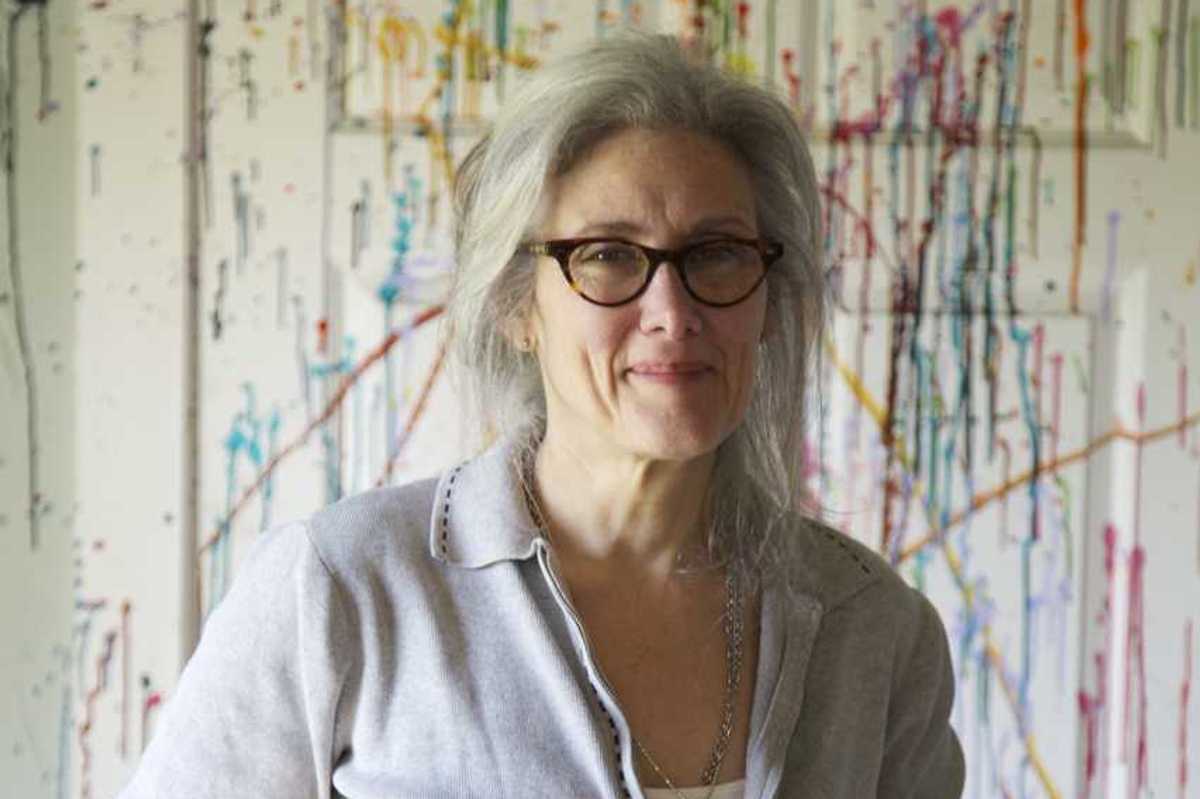
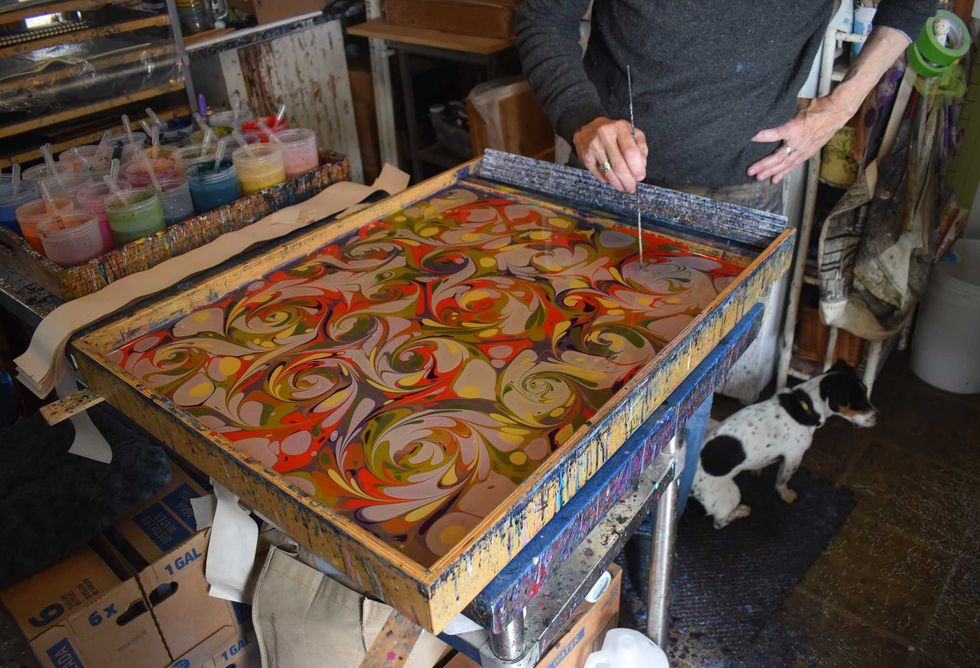
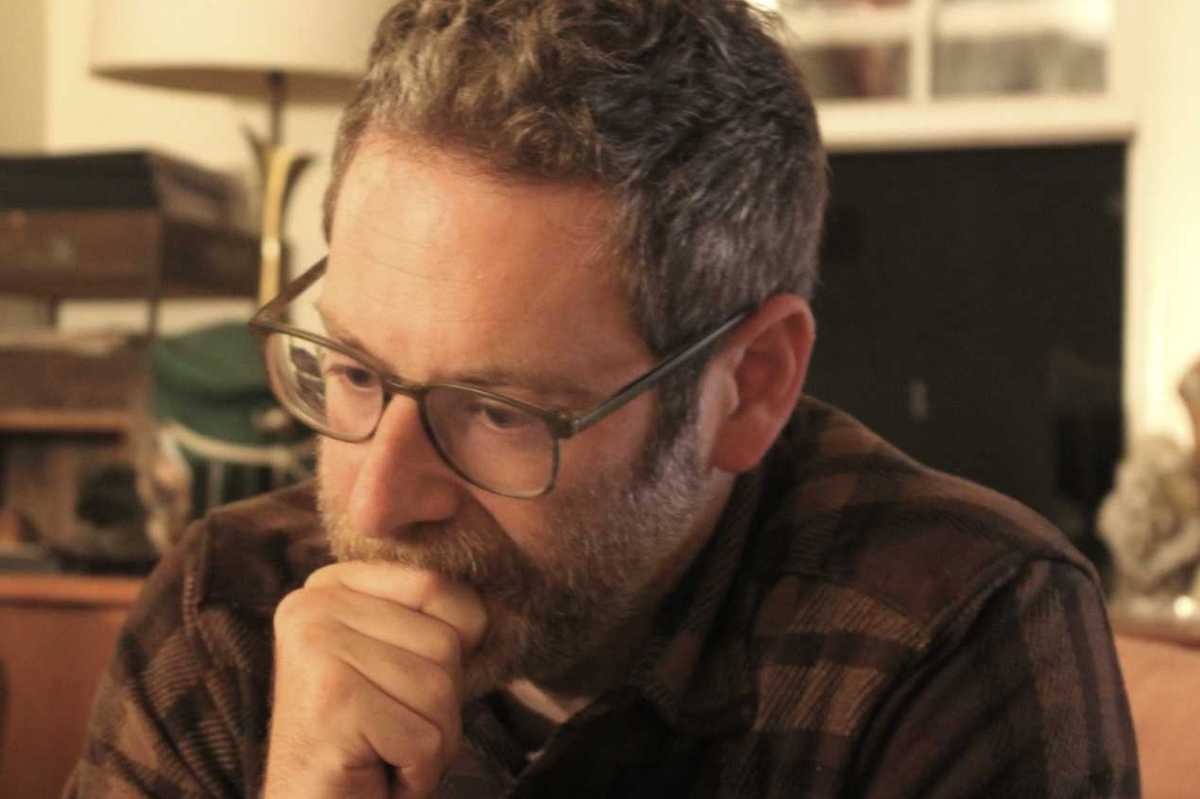
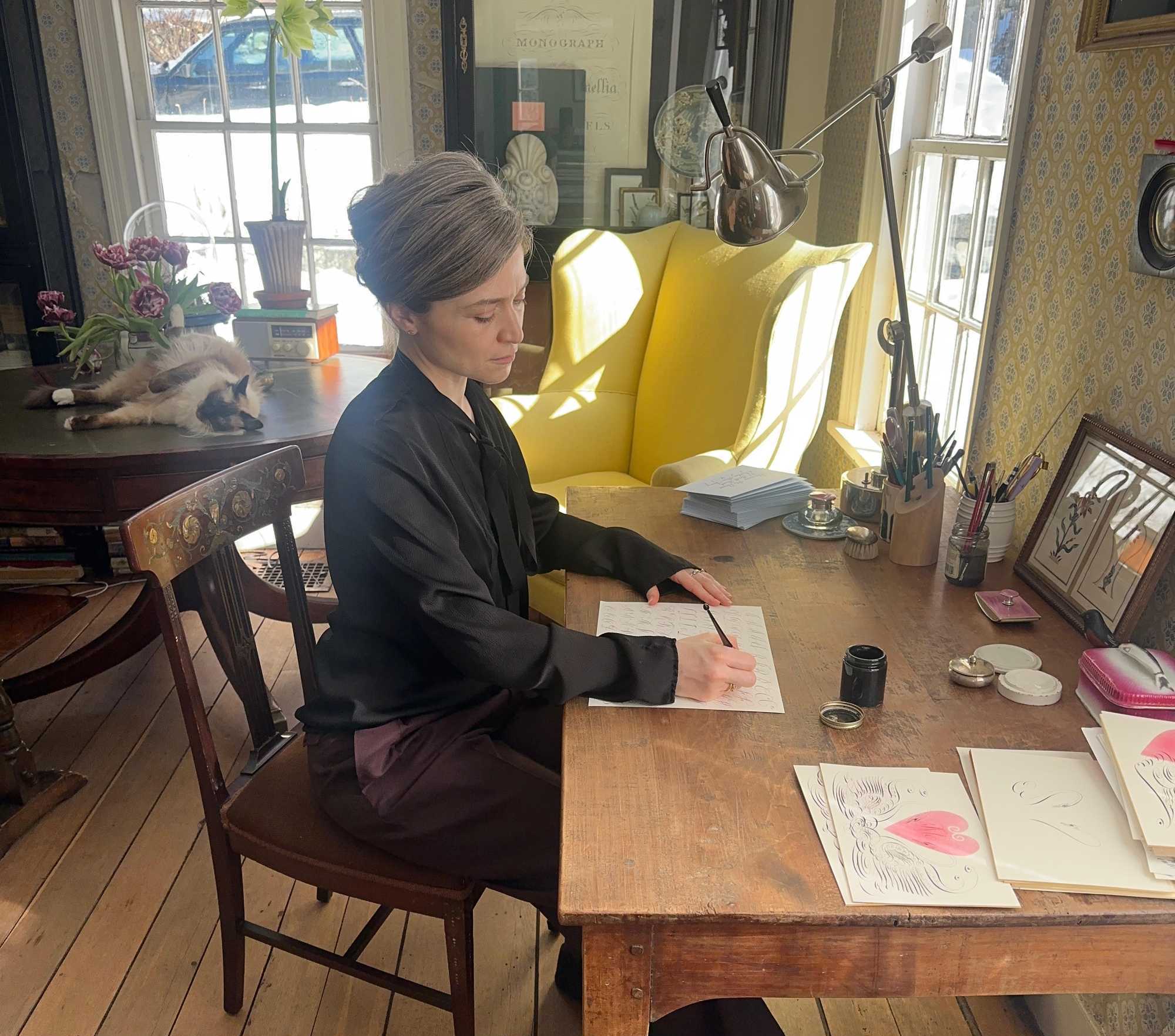
Melissa Gamwell, hand lettering with precision and care.
Kevin Greenberg

Melissa Gamwell, hand lettering with precision and care.
"There is no better feeling than working through something with your own brain and your own hands." —Melissa Gamwell
In an age of automation, Melissa Gamwell is keeping the human hand alive.
The Cornwall, Connecticut-based calligrapher is practicing an art form that’s been under attack by machines for nearly 400 years, and people are noticing. For proof, look no further than the line leading to her candle-lit table at the Stissing House Craft Feast each winter. In her first year there, she scribed around 1,200 gift tags, cards, and hand drawn ornaments.
Each piece makes a gift, a note or even a Christmas tree seem more personal, more considered, and more connected to humanity. Since then, demand for her personalized, hand-lettered tags, ornaments and cards has only grown, appearing in mailboxes across the region and at shops like the Cornwall Whale and Marton & Davis in Chatham, New York. Her precision is remarkable, and to watch her create these one-of-a-kind pieces is an art all unto itself.
In recent months, we’ve seen a deluge of stories on digital replacement. Data managers, bankers and even therapists are being replaced by computer programs in mass waves of layoffs. But what many still find surprising about the proliferation of nonhuman competitors in the job market is how it’s affecting the arts. Illustrators, animators, photographers, musicians and even on-screen actors are being supplanted by bots touted as “artificial intelligence agents.”
But calligraphy — and handwriting in general — has been in the crosshairs of mechanical progress for centuries. There was a time, if you can believe it, when writing anything required ink, paper and sometimes even a living, breathing human scribe. No typewriters, no word processors, no voice-to-text programs.
Then came Gutenberg’s printing press. Sure, it changed the world for the better, ensuring a greater distribution of ideas, and helping spark some of the most important political movements in history. But it also marked one of the first moments when technology replaced the artistic work of the human hand. Over the centuries, printers, designers and technologists have continued to innovate. Today, with Photoshop or Illustrator, an entire universe of alphabets exists, from ornate and embellished to precise and futuristic — all designed to replace the human hand.
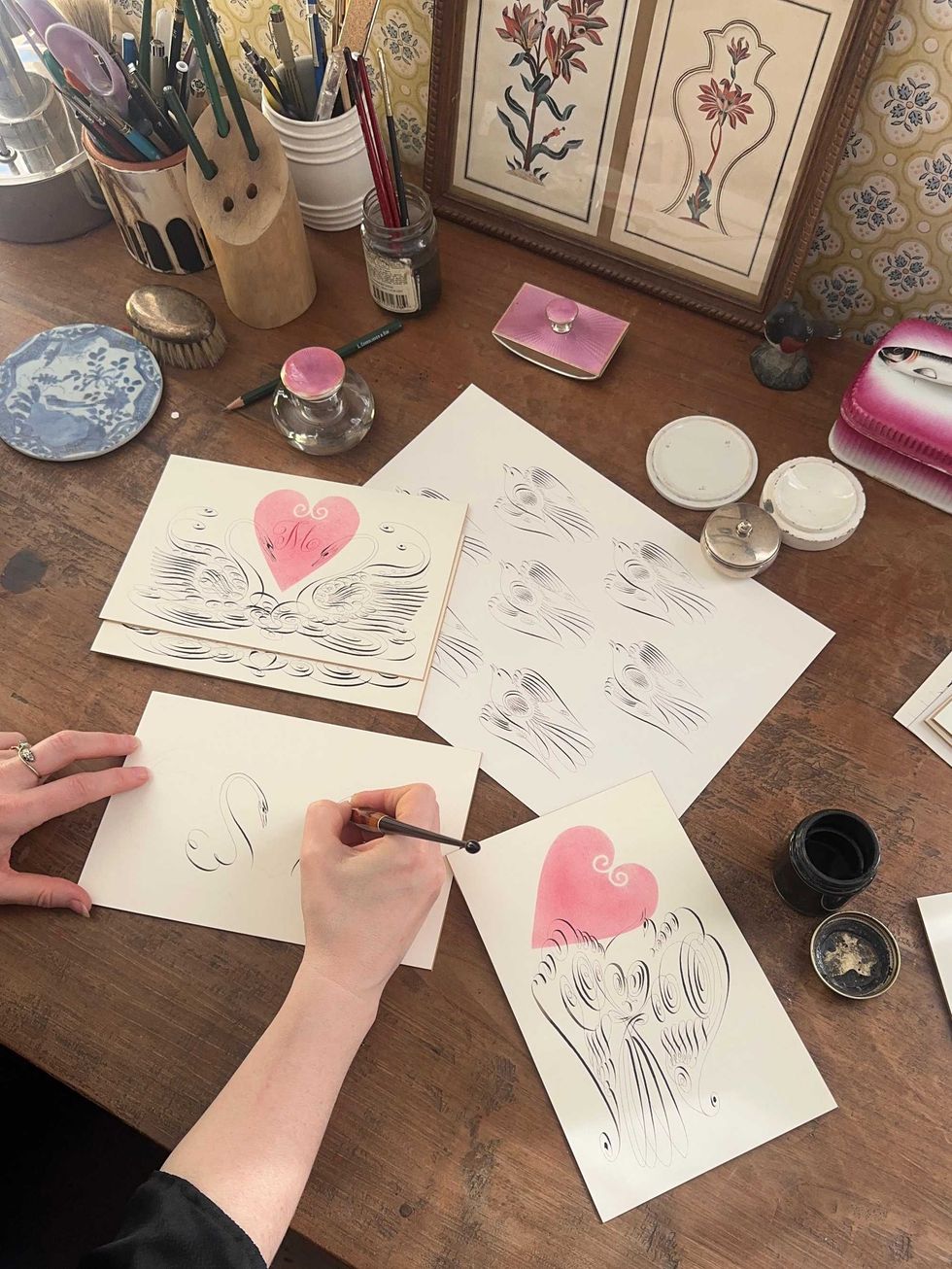
Yet, despite this centuries-long assault from technology, Gamwell has found her own way to thrive. Largely self-taught, she combines her drawing and industrial design background with an old-school New England childhood in Maine that involved “very tangible, hands-on, creative problem-solving using many materials.” Raised by “parents who loved antiquarian books, often filled with hand-written dedications,” hers was the kind of upbringing in which “traditional practices were cherished and flaunted” — a time and place with “hand-painted lettering on churches, street signage, the stones in beautiful churchyard cemeteries, and log books.”
Those early impressions have stayed with her, heightening her appreciation of sometimes overlooked details.
“There’s so much ephemera floating around with traces of beautiful handwriting to see everywhere, even now in Connecticut,” she said.
Even in a digital age, she keeps technology at a distance.
“You will not find ChatGPT on my phone, and you will usually not find my phone on me,” she said. Instead, she opts for a notebook, a scrap of paper or the back of a receipt. Sometimes, she goes even further, gathering black walnuts from trees on her property to make the specialized ink for her practice.
Gamwell’s approach to her craft is also philosophical. “There is no better feeling than working through something with your own brain and your own hands, even if you find it less exemplary than you would hope. And it only uses the water you’re already consuming. Do you need to convey an idea? Draw it, however horrific or childish. Write it, even if you never learned proper grammar — because you’ve always had programs do it,” she said.
“Sometimes I think that everything I like is ‘historic’ but it’s really that I just find more value in the traditional methods, which are still alive and well, and desperately in need of stewards for the future.”
After nearly 400 years of pressure, it’s encouraging to see handwriting — an art form that once seemed destined for obsolescence — still thriving, one careful stroke at a time. And thanks to Gamwell, perhaps there’s a new generation of observers, collectors and future calligraphers ready to carry it forward.
D.H. Callahan is a voice actor, creative director and trail steward. He lives with his wife, artist Lane Arthur, in West Cornwall, Connecticut.
Elena Spellman
Dan Baker, left, and Daniel Latzman at Barrington Hall in Great Barrington.
Barrington Hall in Great Barrington has hosted generations of weddings, proms and community gatherings. When Dan Baker and Daniel Latzman took over the venue last summer, they stepped into that history with a plan not just to preserve it, but to reshape how the space serves the community today.
Barrington Hall is designed for gathering, for shared experience, for the simple act of being together. At a time when connection is often filtered through screens and distraction, their vision is grounded in something simple and increasingly rare: real human connection.
The partnership behind Barrington Hall began long before the building itself. Both Baker and Latzman grew up on Long Island, spent more than a decade in New York City, and eventually found their way to the Berkshires, drawn by the desire for something different. What they didn’t realize at first was just how closely their lives had already mirrored one another.
They were born in the same hospital, a year apart. Their families had distant connections. They even played on the same soccer team — never meeting, but moving through the same spaces. It wasn’t until they became neighbors in Egremont about five years ago that those parallels came into focus.
“In hindsight, it feels inevitable,” Latzman said. “But it was actually extremely random that we ended up here.”
From the beginning, Barrington Hall was meant to be a place people return to, not for any one event, but for the experience of being there. On any given week, the space might host a jazz performance, a dance party, a songwriter circle or a children’s event. Some nights bring in touring acts. Others highlight local creatives. The variety is intentional and so is the atmosphere.
“It’s about people,” Baker said. “It’s about being present.”

Baker and Latzman are keenly aware of the world outside with its constant barrage of information, political conflicts, a culture that pulls people deeper into their screens. Barrington Hall offers a way out of that noise.
“A little bit of a bubble,” Latzman said. “A place to step away from everything else.”
During a recent event, they noticed something telling: a full room of people dancing, talking, engaged — and almost no one on their phone.
“That’s when you know something is working,” Baker said.
Taking over a beloved local space comes with responsibility, one Baker and Latzman have met by honoring the building’s traditions while also expanding them.
“We didn’t feel obligated,” Latzman said. “We felt honored.”
Part of what makes the space distinct is its versatility. Large enough to host more than 250 people, yet intimate enough to feel personal, it fills a gap in the local landscape, serving a wide range of people and bringing different groups together in the same space.
“We want people to feel like, if something’s happening here, it’s worth checking out,” Latzman said.
They are carefully balancing community access with the realities of running a business, with an eye toward the long term.
“We want this to be here in 20 years,” Latzman said.

That vision extends beyond the building itself — future collaborations, expanded programming, a growing role in shaping the cultural life of the Berkshires. But at its core, the mission remains simple: to create a place where people can gather, a place that feels alive.
And perhaps most importantly, to create a place where, if only for a few hours, people can step away from the noise of the world and enjoy being together.
When asked who they’re most excited to host next, their answer was immediate: The Mammals on April 10 and Lee Ross, a one-man party band from Massachusetts, scheduled to perform on May 1.
For more information and tickets, visit
barringtonhallgb.com
Richard Feiner And Annette Stover
Cast of “Laughter on the 23rd Floor” from left to right. Tara Vega, Steve Zerilli, Bob Cady (Standing) Seated at the table: Andrew Blanchard, Jon Barker, Colin McLoone, Chris Bird, Rebecca Annalise, Adam Battlestein
For a century, the Sherman Players have turned a former 19th-century church into a stage where neighbors become castmates, volunteers power productions and community is the main attraction. The company marks its 100th season with a lineup that blends classic works, new writing and homegrown talent.
New England has a long history of community theater and its role in strengthening civic life. The Sherman Players remain a vital example, mounting intimate, noncommercial productions that draw on local participation and speak to the current cultural moment.
Sherman Players President Missy Alexander is an enthusiastic champion of the group’s history and collaborative spirit, which engages amateurs and professionals alike “to see what fun we can have” in bringing theater to all audiences. Everyone pitches in — from sets and costumes to administrative work — to bring each production to life. She calls it the “extra special sparkle” that has defined the company since its first performances in their historic church home in 1926.
The season opens in April with Neil Simon’s “Laughter on the 23rd Floor,” a comedy set in the 1950s television writers’ room during the McCarthy era. In June, the company will present a production (with live music) of the classic Broadway musical “Bye, Bye Birdie!” one of the first shows that highlighted the Baby Boomer generation and our “Kids are King” culture.
In July, The Sherman Players will debut “Restored to Reason,” a new work by local writer Elizabeth Young about Mary Todd Lincoln. Developed through the theater’s Cold Lemonade reading series, the work marks the first time the company has taken a piece from staged reading to full production, a memorable milestone in the group’s historic mission.
September brings a timely revival of the historic American courtroom drama, “Inherit the Wind.” The Sherman Players last presented this riveting account of the infamous Scopes “monkey trial” in 1966. The season concludes with a special holiday presentation of “An American Christmas Carol,” an original adaptation of the Dickens classic, written by Artistic Director Robin Frome, directed by Jane Farnol.
Alexander is quick to acknowledge that The Sherman Players is committed to supporting the broader regional arts community. “We’re closer than you think, and we all draw on the same talents and resources,” she said. “We all see and support each other’s work.”
This dedication is helping to enrich the theater-going experience for everyone, from long-established generational Sherman Players patrons to new, younger audiences looking for community connection.
The Sherman Playhouse is located at 5 Route 39 N, Sherman, Connecticut. For tickets, subscriptions and more information, visit shermanplayers.org.
Graham Corrigan
Stage director Geoffrey Larson signs autographs for some of the kids after a family performance.
For those curious about opera but unsure where to begin, the Mahaiwe Theater in Great Barrington will offer an accessible entry point with “Once Upon an Opera,” a free, family-friendly program on Sunday, April 12, at 2 p.m. The event is designed for opera newcomers and aficionados alike and will include selections from some of opera’s most beloved works.
Luca Antonucci, artistic coordinator, assistant conductor and chorus master for the Berkshire Opera Festival, said the idea first materialized three years ago.
“This production is one of the highlights of the off-season,” he said.
“Opera is all about telling stories through music, which makes the concert a hit with people of all ages,” he added. “Every story has something to tell us about the human experience.” He pointed to the range of material covered in the program. “From the beautiful ornamentation of Baroque operas to the majesty of Mozart, to the gripping emotions of Verdi and Puccini … up to the modern-day stories of today’s operas by composers like Huang Ruo, Missy Mazzoli and so many others.”
The event features three singers from the Berkshire Opera Festival: soprano Juliet Schlefer, mezzo-soprano Abbegael Greene and tenor Maximillian Jansen. All three are still early in their careers, a class of rising vocal talent carrying the torch for the next generation. They will be accompanied by pianist Charles Tsui.
“I think that opera is especially exciting for families and young children precisely because it is all about storytelling,” Antonucci said. “Adding costumes, sets, props and the incredible power of operatic voices to the mix makes it one of the few types of experiences where all the arts come together.”
This year, the production reimagines some of those legendary stories in present-day Massachusetts. As always, “Once Upon an Opera” promises to be an interactive affair, encouraging audience participation throughout its hourlong runtime. While the event is free, reservations are encouraged due to limited seating.
Tickets are available at berkshireoperafestival.org/onceuponanopera.

Want more of our stories on Google? Click here to make us a Preferred Source.
Natalia Zukerman
Aerial view of The Shed at Tanglewood in Lenox, Massachusetts.
The Boston Symphony Orchestra is outlining its path forward following the announcement that music director Andris Nelsons will step down after the 2027 Tanglewood season, closing a 13-year tenure.
In a letter to supporters, the BSO’s Board of Trustees acknowledged that the news has been difficult for many in its community, while emphasizing gratitude for Nelsons’ leadership and plans to celebrate his final season.
The orchestra also pointed to broader challenges facing the institution and the field at large. Attendance has declined over the past two decades, while operating costs have risen. The BSO has relied on more than $100 million in reserve funds beyond standard endowment draws to cover ongoing deficits, and key facilities — including venues at Tanglewood — require significant upgrades.
In response, the organization is advancing a long-term strategy centered on three priorities: programming, partnerships and place. Plans include rethinking how concerts reach contemporary audiences, strengthening ties across Boston and the Berkshires, and investing in major performance spaces such as Symphony Hall and Tanglewood.
The board emphasized that while the BSO remains committed to artistic excellence and its core repertoire, adapting to changing audience habits will be critical to its sustainability. Leaders say ongoing conversations with musicians, staff and community partners have helped shape the new direction.
Despite financial pressures and leadership changes, trustees expressed confidence in the orchestra’s future, underscoring the role of audiences, donors and artists in sustaining one of the country’s oldest cultural institutions.
Leila Hawken
Roasted lamb
Preparing lamb for the observance of Easter is a long-standing tradition in many cultures, symbolizing new life and purity. For Christians, Easter marks the end of Lenten fasting, allowing for a celebratory feast. A popular choice is roast lamb, often prepared with rosemary, garlic or lemon. It is traditional to serve mint sauce or mint jelly at the table.
The Hebrew Bible suggests that the last plague God inflicted on the Egyptians, to secure the Israelites’ release from slavery, was to kill the firstborn son in every Egyptian home. To differentiate the Israelites from the Egyptians, God instructed them to mark their doorposts with the blood of a lamb. Today, Jews, Christians and Muslims generally believe that God would have known who was Israelite and who was Egyptian without such a sign, but views of God’s omnipotence in the Abrahamic faiths have evolved over the millennia.
This tradition, celebrated at Passover, has made lamb a first choice for Jewish families commemorating freedom from Egyptian slavery. Christians have continued the tradition, naming Jesus the Lamb of God, whose death serves as atonement for the sins of the world. For them, the dietary restrictions of Lent have ended, allowing a return to eggs, sweets and meat.
2 or more cloves garlic, thinly sliced
Good-quality olive oil
Rosemary
Salt and pepper to taste
Preheat oven to 450 degrees. Trim fat from lamb as desired. Using a sharp knife, cut small gashes in the meat and insert a slice of garlic into each cut. Rub the roast with olive oil, then season with rosemary (some cooks also add thyme), salt and pepper.
Place the meat on a rack in a shallow roasting pan and put it in the preheated oven. After 15 minutes, reduce heat to 350 degrees. Roast for 25 minutes per pound for rare or 30 minutes per pound for well-done. Well-done lamb will be less juicy and less tender. If garlic is not desired, substitute lemon or additional rosemary.
When the roast is done, carve by slicing parallel to the bone, rotating as needed.
Variations: Some recipes substitute lemon juice for olive oil. You may also use salad oil instead of olive oil and add a bit of powdered ginger, a bay leaf, sage and marjoram. Soy sauce is also used.
To make gravy:
After removing the roast to rest, place the roasting pan on the stovetop over heat. Add flour and stir for one minute, until a paste forms. Add beef stock or water to reach the desired consistency. Mash any garlic pieces, if used, to enhance flavor. Strain and serve.
Patrick L. Sullivan
The snow is mostly gone, the mud is flowing, the stocking trucks are rolling and that means only one thing: it’s tackle fondling time!
Yes, it’s that happy time of year when we dig out all the gear we carefully cleaned and stowed away back in November.
What’s that? You left it all in the car until you had to help Aunt Edna move? And now it’s piled up in the garage?
Never mind that. What’s important is getting ahead of it,starting now.
Reels: Take the spools off and blast them with a can of compressed air. Then deploy a Q-tip to get the stubborn stuff. Then deploy something long and pointy to get the little bits of cotton that came off the Q-tip.
Lines: Clip off the old leader. It’s no good. Pull the fly line of the reel and clean it with something. There are many commercial products available. The Rio line cleaner seems to work pretty well, but it goes fast. I use a weak solution of Dawn dish soap and warmish water and a clean sponge or two, so I can see just how much yick comes off the line. Then I give it a shot of some stuff called Albolene, which is used for removing heavy theatrical makeup. It also functions as a line dressing and costs much less than actual line dressings.
Rods: I check guides and ferrules, and give everything a wipe with a chamois cloth or something similar. Then I start emailing people I barely know looking for someone who repairs rods.
I have something like 60 fly rods, and they are a pain in the neck to store. But I had a brain wave over the winter and bought four kitchen garbage cans. Ignoring the lids, I arranged them in a corner of my living room and to my delight found I can corral most of the rods in such a way that I can actually find the one I want.
It works very well. If the cans had an Orvis or Simms logo on them I could sell them for $85 apiece as a “modular rod storage system.”
Flies: What you absolutely don’t want to do is buy more fly boxes because the giant cardboard box filled with fly boxes is still in the back of the car and you can’t remember what’s in any of them so it’s better to just buy new flies and boxes and use those, reserving the joy of sorting through the old boxes for the summer when you’re at the summer camp that has a nice big table. Whatever you do, don’t do this. Oh, excuse me, that must be the Amazon guy at the door with my new boxes and flies.
Waders and boots: I have a dedicated wader rack where I hang them up. This is an improvement over my old method, which was to leave them in the car in a crumpled heap all winter. Check for leaks by taking a small flashlight and running it over the seams from the inside of the waders. If you see pinholes then it’s time to deploy Aquaseal. There are wader repair kits that have small tubes of Aquaseal and patches that can be cut to fit. Do not buy a big tube of Aquaseal unless you plan to use it very quickly, otherwise the big expensive tube turns to stone in a matter of days. That’s why the tubes in the kits are small. Ask me how I know this.
Check boot laces and replace if necessary. Paracord is your friend here, if you’re on a tight budget and don’t mind using a lighter to create an aglet. Look for missing studs and replace. Clean the soles with an old toothbrush. Do this outside. Ask me how I know this, too.
Note: Thanks for all the kind inquiries as to my new right hip. I am pleased to report that Ye Surgeon took me off the Injured Reserve list a couple of weeks ago, and as soon as things settle down a bit on the run-off, I will be back in action for the first time since September 2025.

Want more of our stories on Google? Click here to make us a Preferred Source.

Want more of our stories on Google? Click here to make us a Preferred Source.