In a time of fear, John Carter revives a network of “neighboring”

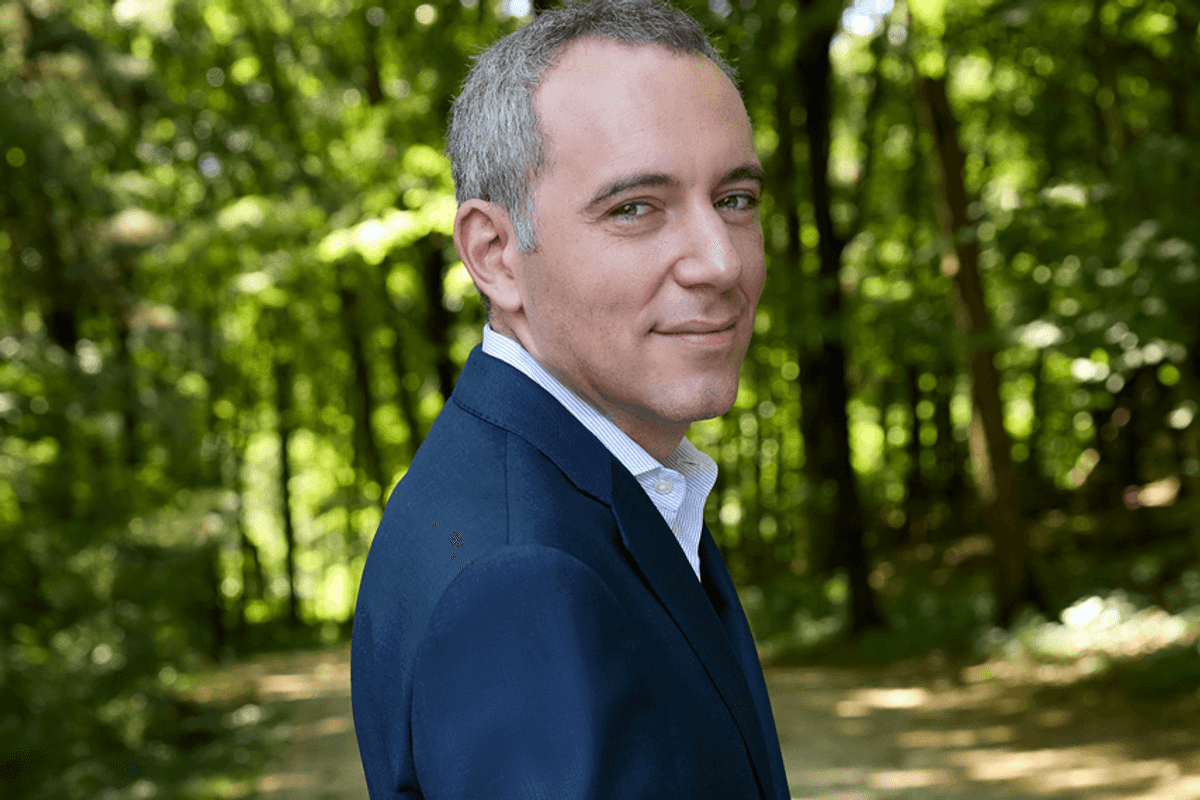
John Carter
Photo by Deborah Carter

John Carter
"The human cost of current ICE practices is appallingly high."
—John carter
John Carter, who served as rector of St. John’s Episcopal Church in Salisbury from 1999 until his retirement in 2014, launched the first iteration of the nonprofit Vecinos Seguros 1 (Safe Neighbors) in 2017 by introducing a misa, a Spanish-language worship service, at Trinity Lime Rock Episcopal Church.
In December 2024, amid concerns over a renewed federal crackdown on immigrants, a group of volunteers revived the program as Vecinos Seguros 2 (VS2). According to its 2025 annual report, the initiative “created a network of trusted allies to help those who may be targeted by immigration enforcement agents,” taking a low-key approach that prioritizes in-person connections.
Carter arrived at his calling by a circuitous route. After graduating from Yale, he joined the Peace Corps, then returned to his hometown of Milton, Mass., where he founded and ran the Carter Tree Co. for seven years. After closing the business, he attended Virginia Theological Seminary, earning a Master of Divinity. During that time, he and his wife, Deborah, were involved in the hunger movement. Carter said every venture he undertook was made possible by Deborah, whom he described as his constant companion and indispensable partner in his pursuit of compassion and justice. Still, he questioned himself: “Who am I, and what should I be doing that I’m passionate about?”
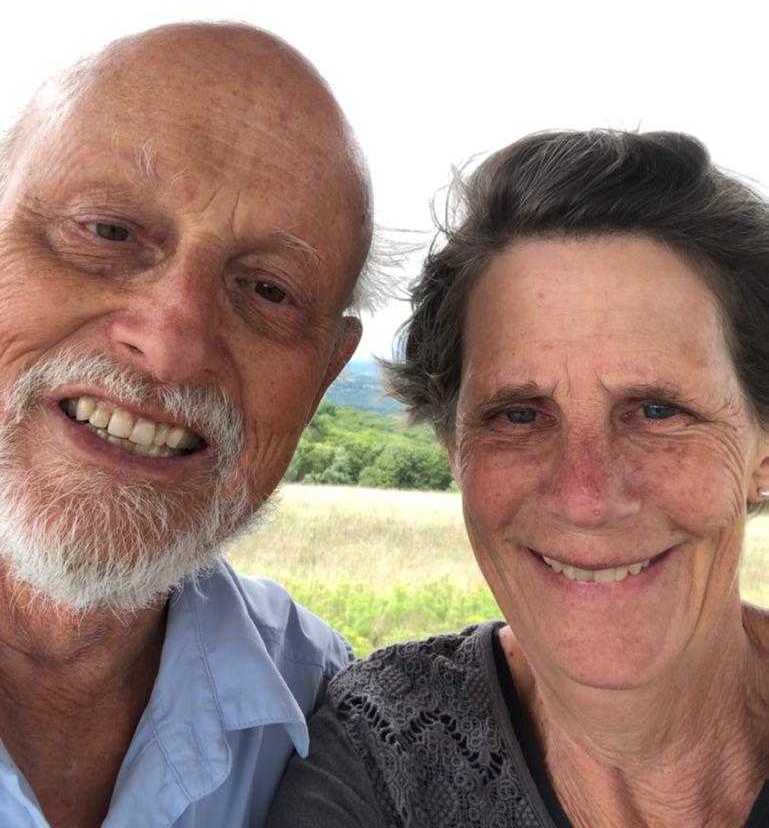
In the face of new challenges, volunteers joined the effort to revive the original program, VS1. The Rev. Heidi Truax, recently retired rector of Trinity Lime Rock, has been a strong supporter of Vecinos Seguros from its inception. Glenn Formica, an immigration attorney from New Haven, gave a presentation informing the community about the second Trump administration’s amended policies. Formica also generated written materials in English and Spanish, advising private citizens and employers how to prepare in the event of a visit from ICE (U.S. Immigration and Customs Enforcement). William Tong, Connecticut’s attorney general, a proponent of many social justice issues, including the opioid crisis and fair pricing for generic drugs, has also provided support since the establishment of Vecinos Seguros.
The VS2 steering committee, which includes Carter, is led by Jill Drew, a local civic leader. Drew has worked with Judiciary Committee co-chairmen Gary Winfield and Steven Stafstrom in support of SB 91, a proposal by Connecticut Gov. Ned Lamont to limit ICE actions in “protected areas,” including schools, hospitals and religious buildings. She has also supported HB 5499, which would place limits on the use of automated license plate readers, addressing concerns that the Trust Act is being circumvented through technology deployed for other purposes. Other committee members include Amy Lake and Lee and Sophia DeBoer.
VS2 has launches a range of initiatives, including distributing “know your rights” flyers; creating an online resource with local legal and social services for immigrants; hosting in-person events to educate neighbors and train volunteers; organizing a rapid response team to verify reported immigration enforcement activity and support those affected; providing financial assistance for legal expenses, rent and utilities; and advising employers — from farms and restaurants to stores and private homes — on how to protect workers if immigration agents arrive.
As the annual report states: “We are committed to building on the powerful work of Rev. Carter, who, in the first seven years of Vecinos Seguros, assisted a significant number of individuals and families. It is our mission to continue this important work.”
Few descriptions capture the moment more clearly than Carter’s own words:
“The human cost of current ICE practices is appallingly high. Evidence of the brutality and cruelty of these practices is everywhere. Minneapolis is a recent and egregious example. ICE enforcement is doing much more than deporting individuals. It is also the systematic destruction of families. According to some reports, 90% of deportees are male. They are husbands, partners and fathers, often the primary contributors to family finances. There is heartbreak, trauma and stress experienced by the families left behind. The humanitarian response to the violence and chaos in Minneapolis is inspirational and instructive. Both citizens and immigrants came to the aid of residents living in fear and peril. It should be noted that people of color, whether their status was legal or undocumented, were also deeply shaken by what they witnessed in their communities.”
Carter also described how communities responded. That out of devastation, he said, came something else:
“A new word was born out of the compassionate response in Minneapolis: ‘neighboring.’ In caring for each other, they were ‘neighboring.’ The mission of Vecinos Seguros 2 is to ‘neighbor’ members of the immigrant community whose lives have been turned upside down by current immigration policies.”
Natalia Zukerman
Tremaine Gallery exhibit ‘Vulnerable Earth’ explores climate change in the High Arctic.
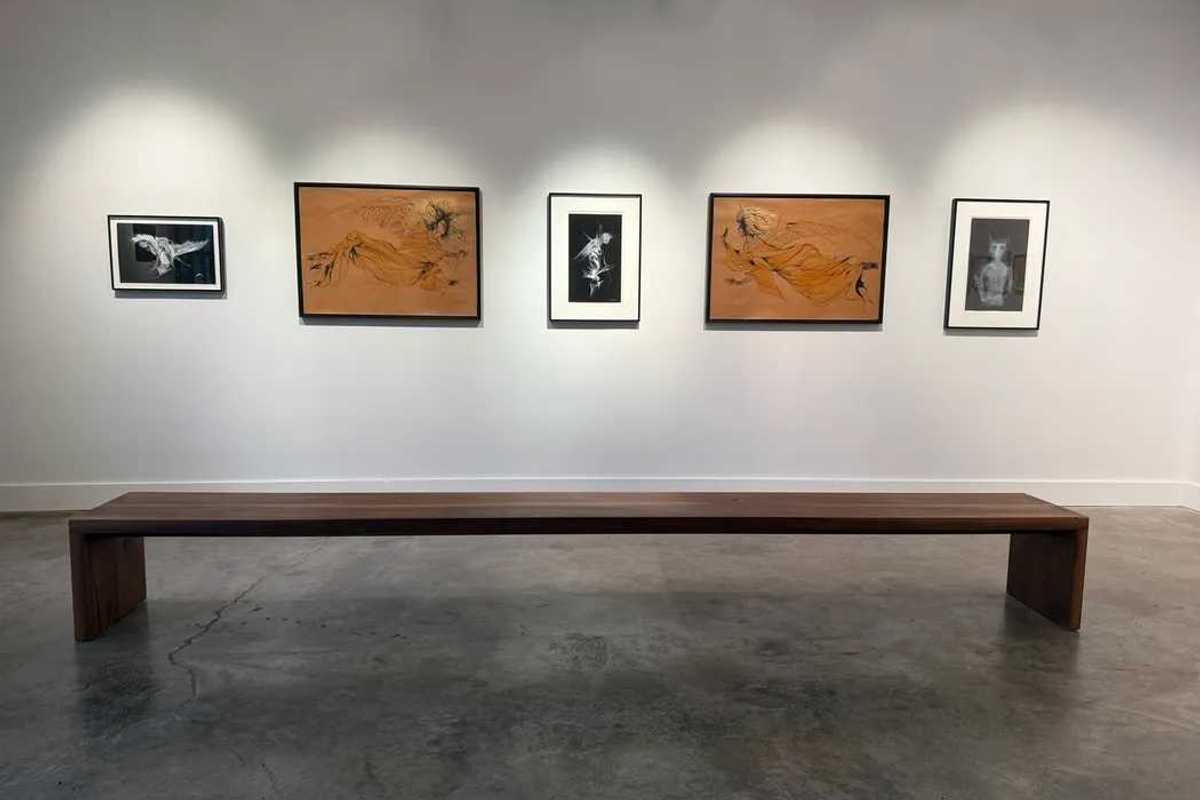
“Vulnerable Earth,” on view through June 14 at the Tremaine Gallery at Hotchkiss, brings together artists who have traveled to one of the most remote regions on Earth and returned with work shaped by first-hand experience of a fragile, rapidly shifting planet, inviting viewers to sit with the tension between awe and loss, beauty and vulnerability.
Curated by Greg Lock, director of the Photography, Film and Related Media program at The Hotchkiss School, the exhibition centers on participants in The Arctic Circle, an expeditionary residency that sends artists and scientists into the High Arctic aboard a research vessel twice a year. The result is a show documenting their lived experience and what it means to stand in a place where climate change is not theoretical but visible, immediate and accelerating.
That shared experience — weeks spent together navigating the waters around the Svalbard Archipelago —forms the connective tissue of the exhibition. Artists work across video, photography, performance and digital media, but what binds them is proximity: to the landscape, to one another and to the evidence of environmental change.
“The residency is fantastic,” Lock said. “You fly into the most northerly airport on the planet, get on a ship with a bunch of artists and then sail around the archipelago and find a bay or a glacier, get into little rubber boats and go to shore. There are three guides with rifles … and they form a triangle around us to protect us from polar bears, and then you’re just there.”
That immediacy — of risk, of beauty, of isolation — is evident in the work on view. “Everyone is concerned with the environmental shifts that are occurring, and you’re witnessing it out there,” Lock said. “We were cleaning the beach one day and there’s so much trash on this beach in the middle of nowhere … because there’s plastic in the sea. We are witnessing these things firsthand.”
Lock’s own contributions underscore how quickly the landscape is changing. In one piece, two photographs are mounted on a glacier-shaped metal stand. “I went to photograph the glacier, and we were sailing around and because of the map, we knew we were at the glacier, but we couldn’t see it,” he said. Dense fog, created by warming air meeting cold ground, obscured what should have been unmistakable. Only later, in post-production, did the glacier emerge. “In Photoshop, I could extract the glacier, but to the naked eye, it was no longer visible.”
Other changes are even more stark. Lock recalled the reaction of the ship’s captain comparing current conditions to his charts. “His ‘up to date’ map showed that the glacier was 8 kilometers between one side and the other, but we parked at one side, sailed and moored on the other side and it was 1.4 kilometers,” Lock said. “So, it’s just like bam. It’s happening so fast.”
There is a sense of urgency in these images, but the collection also is a testament to process and to the community that forms in such extreme conditions. “There’s quite a nice network of artists who are pretty tight,” Lock said. “We were on a ship together in tight quarters for three weeks, so we got to know each other really well. And I found connections across the work with my own practice.”
Mindful of the environmental stakes embedded in the work itself, Lock made decisions aimed at reducing impact when curating the exhibition. “A lot of this work I printed with their permission to cut down on my carbon footprint,” he said.
And yet, for all its focus on fragility and loss, the Arctic exerts a pull. “It was funny, I’ve been twice,” Lock said. “When I left the last time, I was like, oh, I don’t know if I need to go back. And then I got back, and all I wanted to do was go back.”
The Tremaine Gallery is located on the Hotchkiss campus at 11 Interlaken Road, Lakeville. Gallery hours are Tuesday - Saturday, 10 a.m. to 4 p.m. and Sunday, 12 noon to 4 p.m.
Richard Feiner And Annette Stover
Amid the many cultural attractions in the region, the Barrington Stage Company in Pittsfield, Massachusetts, stands out for its award-winning productions and comprehensive educational and community-based programming. The theater’s 2026 season is one of its most ambitious; it includes two Pulitzer Prize-winning modern classics, one of the greatest theatrical farces ever written, and new works that speak directly to who we are right now as a society.
“Our 2026 season is a celebration of extraordinary storytelling in all its forms — timeless, uproarious and boldly new,” said Artistic Director Alan Paul. “This season features works that have shaped the American theater, as well as world premieres that reflect the company’s deep commitment to developing new voices and new stories. Together, these productions embody what BSC does best: entertain, challenge and connect our audiences through theater that feels both essential and alive.”
The company has several theaters within a few blocks of each other. In the Boyd-Quinson Theater, BSC’s main stage, the season features “A Chorus Line” (July 15-Aug. 8), a new 50th anniversary production of the Broadway musical that won nine Tony Awards and the Pulitzer Prize for drama. This will be followed by Michael Frayn’s beloved door-slamming comedy “Noises Off,” in a first-time BSC production directed by Gordon Greenberg.
At BSC’s Blatt Center for the Performing Arts, the St. Germain Stage season will open with “Driving Miss Daisy” (May 27-June 21), a collaboration with Palm Beach Dramaworks directed by BSC founding artistic director Julianne Boyd and starring Ray Anthony Thomas and Debra Jo Rupp. This is followed by the world premiere of “Estate Sale” (June 30-July 25) by Keelay Gipson, an Afro-surrealist artist, professor and award-winning playwright and BSC Sparks grant recipient.
The season includes other provocative and timely new works. “The Zionists: A Family Storm” (June 16-July 3), produced in association with Miami New Drama, focuses on a family gathering on a Caribbean island where old grievances give way to new political fears. “Dead Girl’s Quinceañera” (Aug. 5-29), a collective world premiere by BSC, Chicago’s Goodman Theatre and Hartford Stage, is a dark comedy about true-crime obsession, teenage bravado and what happens when girls decide to stop waiting for answers. Another world premiere, “The Urmetazoan” (Sept. 30-Oct. 25), by playwright Alex Rugman and directed by Jack Serio, tells the story of two sisters facing an imminent goodbye as one prepares to leave Earth for deep space.
“BSC is deeply committed to our home in the Berkshires, producing as many or more shows this summer than ever before, for a devoted and engaged audience,” said Managing Director Greg Reiner. “And we are continuing our deep work within this community, showing up where it matters to bring new audiences theater that matters.”
Since moving to Pittsfield in 2006, Barrington Stage has prioritized its connection to residents and families through extensive and inclusive education and community engagement programs that help make its productions accessible to all. The company strives to make BSC an artistic home for an inclusive community of talented actors, writers, designers, directors and musical directors, as well as a home for its staff, students, interns and educators.
BSC has gained attention beyond the Berkshires, with productions that have moved on to Broadway and to major regional theaters around the country. The company believes that its work to support playwrights, and their visions of the world we live in, is central to its success in creating meaningful theater that resonates with all audiences.
“BSC’s season is a thrilling reflection of who we are right now as a society, wrestling with division and longing for connection,” Paul said. “It’s an exciting season because it’s alive and designed to bring us together in the dark to experience something unforgettable.”
For tickets and more information on the 2026 season, including additional productions, concerts, cabarets and the company’s annual gala, visit barringtonstageco.org.
Brian Gersten
Student festival directors Trey Ramirez (at the mic) and Leon Li introducing the Hotchkiss Film Festival.
The 15th annual Hotchkiss Film Festival took place Saturday, April 25, marking a milestone year for a student-driven event that continues to grow in ambition, reach and artistic scope. The festival was founded in 2012 by Hotchkiss alumnus and Emmy-nominated filmmaker Brian Ryu. Ryu served as a festival juror for this year’s installment, which showcased a selection of emerging filmmakers from around the region. The audience was treated to 17 films spanning drama, horror, comedy, documentary and experimental forms — each reflecting a distinct voice and perspective.
This year’s program was curated by student festival directors Trey Ramirez and Leon Li, working alongside faculty adviser Ann Villano. With more than 52 submissions received, the selection process was both rigorous and rewarding. The final lineup included six films from Hotchkiss students.
For Ramirez, the festival represents both a personal and creative evolution. His interest in filmmaking began with producing sports media during his freshman year, creating highlight reels for the Hotchkiss boys varsity basketball team during its 2026 NEPSAC championship season. That early work led him into photography and eventually into narrative and experimental filmmaking. Among the films screened was Ramirez’s own experimental piece, “Paradise Waits,” an abstract, montage-driven work emphasizing editing and visual rhythm.
“What I enjoy most about organizing the festival is the opportunity to curate a program that reflects a wide range of voices and styles,” Ramirez said, “while also creating a space where student filmmakers can share their work with a larger audience.”
For many filmmakers, this was the first time seeing their work projected on a large screen before a live audience, an experience Ramirez described as especially meaningful given the time and dedication behind each project.
Now in its 15th year, the Hotchkiss Film Festival continues to build on its legacy as a platform for young filmmakers. The festival not only celebrates student achievement but also signals a promising future for the next generation of storytellers.

Want more of our stories on Google? Click here to make us a Preferred Source.
Natalia Zukerman
‘The Laundry Room,’ a painting by Maira Kalman from the exhibition “Shaker Outpost: Design, Commerce, and Culture” at the Shaker Museum’s pop-up space in Chatham.
With “Shaker Outpost: Design, Commerce, and Culture,” opening May 2, the Shaker Museum in Chatham invites artist and writer Maira Kalman to pair her own new paintings with objects from the museum’s vast holdings, and, in the process, reintroduce the Shakers not as relic, but as a living argument for clarity, usefulness and grace.
Born in Tel Aviv, Maira Kalman is a New York–based artist and writer known for her illustrated books, wide-ranging collaborations and distinctive work spanning publishing, design and fine art.
“I always approach my work from an aspect of love,” she said. “I fall in love with a face or a chair or a shoe. And then it is my pleasure to paint. That is how I approached the pieces I chose for the installation. They spoke to me. They SANG to me.”
Her selections for the Shaker Outpost include clothing of daily life — hats, shoes, socks, gloves — alongside objects shaped by hand and necessity. A pair of bear fur mittens, a glove form, a forged iron stake. Items that once moved through ordinary days now sit in conversation with Kalman’s paintings, which draw from the museum’s photographic archive. “As I looked at the photo archive, I gravitated to images that made me happy,” she said. “The Shaker work is so full of delicate elegance and superb utility. I love that.”

The idea of utility that is elevated to poetry is at the center of the show. Kalman described the impulse to “edit your life” after encountering Shaker design, and here that instinct becomes both curatorial method and invitation. “After seeing their work, you want to run home and throw out everything you have,” she said. “You want to edit your life. You only want what is essential. The simplicity and beauty of Shaker design are rarely equaled… They have wit and wisdom. Clarity and kindness. They are practical and they sing. You just cannot go wrong.”
The exhibition also marks a return. After more than two years at the Kinderhook Knitting Mill, the museum’s programming comes back to Chatham — if only temporarily — before the opening of its future permanent home.
The pop-up exhibition at 4 Depot Square in downtown Chatham extends beyond the gallery walls. A small, carefully assembled General Store — also curated by Kalman — offers books, textiles, notecards and handmade goods by local artisans. Like the Shakers’ own public-facing shops, it blurs the line between commerce and ethos, asking what it means to buy something made with care. It is, deliberately, a place to linger.
Kalman sees the Shakers as kindred spirits. “Even though my mother was a Russian born Jew, she could have been a Shaker,” she said. “But then all of the women in my family could have been. A sense of beauty, care, simplicity and love imbued all that they did. They were frugal and fastidious.”
That inheritance feels newly relevant. “Today we have a very fast-moving day. Never enough time,” she said. “And I think that the sense of taking time to make beauty resonates very much these days. It restores the soul.”
Kalman worked closely with her son, Alex Kalman, on this exhibit. “Working with my son Alex Kalman on this installation has been a joy,” she said. “He curates for his museum MMUSEUMM, in a defunct elevator shaft on Cortland Alley in Manhattan. He is always looking for the intersection of humor and human expression and endeavor. That is how I approach the installation at the Shaker Outpost. Everything should matter.”
Shaker Outpost: Design, Commerce, and Culture runs through July 5 at 4 Depot Square in Chatham, with subsequent installations by Paula Greif and Kiki Smith later in the year. For more information, visit shakermuseum.us.
Jennifer Almquist
The Ticking Tent Spring Market returns to Spring Hill Vineyards in New Preston on May 2.
The Ticking Tent Spring Market returns to New Preston Saturday, May 2, bringing more than 60 antiques dealers, artisans and design brands to Spring Hill Vineyards for a one-day, brocante-style shopping event from 9 a.m. to 4 p.m.
Co-founders Christina Juarez and Benjamin Reynaert invite visitors to the outdoor market at 292 Bee Brook Road, where curated vendors will offer home goods, fashion, tabletop and collectible design. Guests can browse while enjoying Spring Hill Vineyards’ wines and seasonal fare.
Juarez is president of Christina Juarez & Co., a communications and business development consultancy. Reynaert is market director at ELLE DECOR, an interiors stylist and author of “The Layered Home,” which he will sign at the event.

“The Ticking Tent is about reimagining the joy of discovery — bringing together antiques dealers, artisans and design enthusiasts in a setting where community and creativity thrive,” Reynaert said.
Among returning vendors is Rhonda Eleish of Eleish Van Breems Home, with shops in New Preston, Roxbury, Westport and Nantucket. “The Ticking Tent is a fun event where you can shop curated goods, meet friends and enjoy the setting,” she said.
The market partners with ELLE DECOR as national media sponsor, along with Home & Garden CT & NY, Connecticut Cottages & Gardens, New England Home CT and Litchfield Magazine.
For information and tickets, visit thetickingtent.com or follow @thetickingtent.
Richard Feiner And Annette Stover
WAM Theatre’s artistic director Genée Coreno.
WAM Theatre will mark its 17th anniversary season with a lineup of mainstage productions and community programming focused on amplifying women’s voices, empowering young people and exploring the intersection of arts and activism.
The award-winning, women-owned company’s season will feature intimate storytelling, sharp comedy and historical works, alongside educational and community-based initiatives designed to engage audiences and support regional partnerships.
Artistic Director Genée Coreno said: “This season, WAM steps into a bold inquiry about influence, power, and the responsibility that comes with both, especially in moments when communities are searching for meaning. Now more than ever, we are reminded that theatre is a space to gather, to question, and to practice the kind of world we wish to inhabit.”
WAM stands for “Where Arts and Activism Meet,” and the theatre was co-founded in 2010 by Kristen van Ginhoven, now the executive director of Project SAGE in Salisbury, and Leigh Strimbeck in response to the book “Half the Sky: Turning Oppression Into Opportunity for Women Worldwide,” by Nicholas Kristof and Sheryl WuDunn. Inspired by the call to “join an incipient movement to emancipate women and fight global poverty by unlocking women’s power as economic catalysts,” WAM’s vision is to create opportunities for women and girls through a mission of theatre as philanthropy.
This season, all WAM activities and events are united in their investigation of timely questions such as: What do we inherit? What do we believe? And what future are we brave enough to build? The season includes a full production of “Rooted,” by award-winning playwright Deborah Zoe Laufer (May 1-16); two readings in the WAM Fresh Takes series — “Amani,” by critically acclaimed playwright a.k. payne (June 14), and “Gorgeous,” by playwright Keiko Green (Aug. 16); WAM’s Summer Soirée benefit (July 26); and the fall mainstage production of “Camp Siegfried,” by Tony Award nominee Bess Wohl (Oct. 15-Nov. 1).
In addition, WAM’s 2026 season deepens its investment in the community with projects and programs in partnership with like-minded organizations, including the Massachusetts College of Liberal Arts and MOSAIC, the Elizabeth Freeman Center, the Lenox Library and Berkshire Community College. These activities spotlight changemakers working throughout the region to provide vital services and to engage the arts for democratic learning and expression, intergenerational dialogue and collective belonging.
To date, WAM has provided paid work to more than 500 theatre artists, the majority of whom are female-identifying. In fulfillment of its philanthropic mission, WAM donates a portion of proceeds from its mainstage productions to selected recipients. Since its founding in 2010, the theatre has donated more than $105,000 to 26 local and global organizations supporting gender equity in areas such as girls’ education, reproductive justice, human trafficking awareness and midwife training.
Managing Director Molly Merrihew said: “Artists and educators are the changemakers who nurture communities into vibrant, sustainable ecosystems fueled by collective, creative, and collaborative action. We hope you will join us.”
WAM Theatre has been widely recognized for its positive impact on cultural and community development in the region. This season is expected to deepen that impact.
Passes and single tickets are on sale now. For more information, visit wamtheatre.com.

Want more of our stories on Google? Click here to make us a Preferred Source.

Want more of our stories on Google? Click here to make us a Preferred Source.