Very little remains of Leonard’s Grain Mill on North Main Street. Even the few oldtimers who were familiar with it would be hard pressed to point out exactly where it once stood. The mill ceased operations about 1950 and was taken down after the 1955 flood. The old wooden dam remained for a few more years, but today all that can be seen of it is a straight line of stones across Still River.
The dam location is adjacent to the Winsted sewage plant just before Still River comes in contact with Route 8 North, and the mill itself was between the road and the river bank. Due to the highway widening that took place in the early years of the 21st century, the land where the mill actually stood has been removed.
As you look at the river at this point, it is obvious that there is very little pitch, thus the fall of water was not sufficient to drive either an overshot or undershot wheel, and as a consequence the mill used a turbine, which was a small wheel in a horizontal position. Even though its diameter was only about 4 feet, it was still powerful enough to cause heavy vibrations if allowed to be “opened up.”
I was there once when there was nobody else around, and the miller, Clarence Osborn, showed me how the power was redirected from one wheel to another, and how the speed was adjusted for the different types of grain. Bakeries in particular were quite particular as to the fineness or coarseness of the grain that went into their products, and so the miller knew how each customer was to be served.
Perhaps I asked him what would happen if both wheels were to be engaged at the same time, because he actually went over to the long bar that acted like a clutch, controlling whether or not the stone wheel went into motion and how fast it went.
He had no more than engaged the second wheel when the entire interior of the mill was filled with an unbelievable volume of dust that must have been accumulating for quite a few years. Immediately placing the long pole in the neutral position, he explained that if left on for very long, the entire building would probably fall down into a heap of broken lumber.
We had to go outside, in front of the mill and let the dust settle, and while standing there, right next to Route 8, a northbound auto pulled over to ask directions. These poor, unsuspecting travelers, didn’t know it, but they were about to be treated to a unique experience, one that I’ll bet they remember yet, if they are still around.
Clarence was one of those rare characters who had a knack for telling stories, which in this case came in the form of travelling directions. He had plenty of opportunity to ply his story-telling skills, as the mill was just far enough out of town that a driver felt safe to slow down without the chance of affecting the car following, and the open space in front of the mill afforded one of the first safe opportunities to pull off the road and get directions north.
You have to keep in mind that although road maps were available in those wartime years, they hadn’t been around before the early 1930s, and not everyone used them. Enter the local character, whether he or she was a farmer, a service station worker or in this case, a miller, and supplied not only directions, but sometimes a lot more.
This particular day the question was how to get to New Boston. Now you don’t have to be a long-time resident of our area before you realize that you don’t need either a map or directions to get from Winsted to New Boston, just go straight along Route 8 and you’ll get there.
Clarence, who spoke in our old dialect, somewhat like that of a Down Easter, hitched up his overhauls and leaning on the passenger door, proceeded somewhat along these lines: “You go straight ahead about a half mile. At that point you will be at a crossroads with a blacksmith shop on the right. This is Nelson’s, and the crossroads are called Nelson’s Corner. Don’t pay any attention to this, just go straight on through, and in about a quarter of a mile you will see a fine field of corn right alongside the road; go right past this and before long there will be a sign telling you that you are entering the town of Colebrook.
“Keep on going and in another mile or so you will come to a bridge crossing a river. This is the Sandy Brook Bridge in Robertsville, which is a part of Colebrook. Right after you cross the bridge there is a big dairy farm straight ahead. This is Homer Deming’s farm, one of the best there is in these parts. Go right on by….”
He kept this dialog up all the way into New Boston. Remember that Colebrook River was still intact, and he navigated them past the ski jump, Eurley’s farm, Bill Geddes’ garage and a whole lot of long-departed potential destinations.
I often wondered what those folks thought when they arrived in New Boston, which they most certainly did, as it was virtually impossible to miss it. If they forgot the directions, I hope they remembered the old mill, because in all likelihood it was the most picturesque thing that they saw that entire outing.
The finished product of the mills in those days was generally put in 100-pound bags, some muslin, others burlap, depending on the grain. The men who worked at the Leonard Grain Co., located next to Northwest Bank at the east end of Main Street, dealt with not just the product of the mill on North Main, but also what came in on freight cars.
I doubt that there are many if any at all today who could match the physical strength of some of these men. Most have passed on by now, but Elton Godenzi is still around, and Elton could unload a boxcar carrying four bags at a time from the car to the awaiting truck. He would pick up one under each arm, and a helper would load each shoulder, then he would walk 30 or 40 feet and drop his load on the truck.
We didn’t stop to rest, either; you rested while driving from the railroad car to the warehouse behind the store on Main Street. This pace was kept up until the boxcar was empty. Canadian bailed hay also came into town via the train, and these put to shame anything that was produced locally, as they topped 140 to 160 pounds each or more, held together with bailing wire (haywire). The strongest man I think I have ever seen, old Earl Roraback, used to handle these using his fingernails! He would stack them over his head, too and wouldn’t stop until every bale had been placed.
All that is gone now; there are no more local gristmills, no millers, and nobody asks directions any more. When I buy an occasional bag of bird seed or cat food, I smile to myself when I see folks struggling with 50-pound bags. If they only knew what they have missed!
Bob Grigg is the town historian in Colebrook.
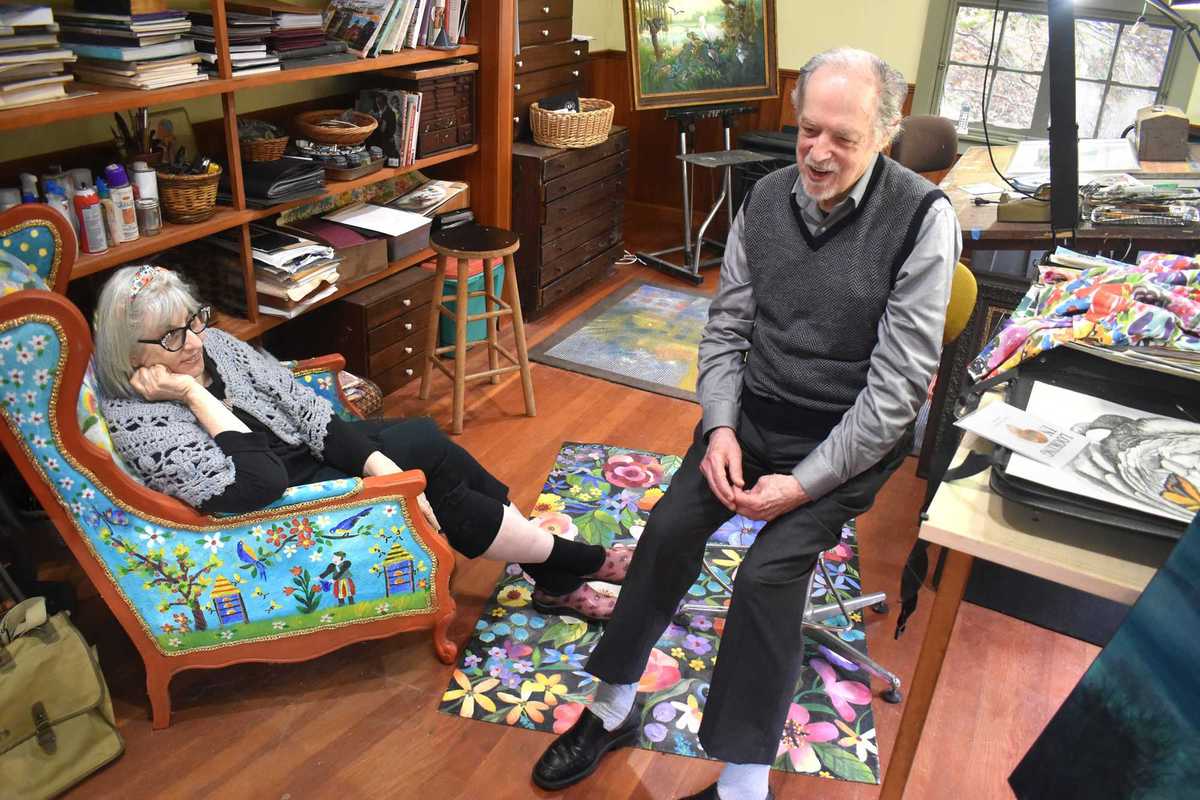
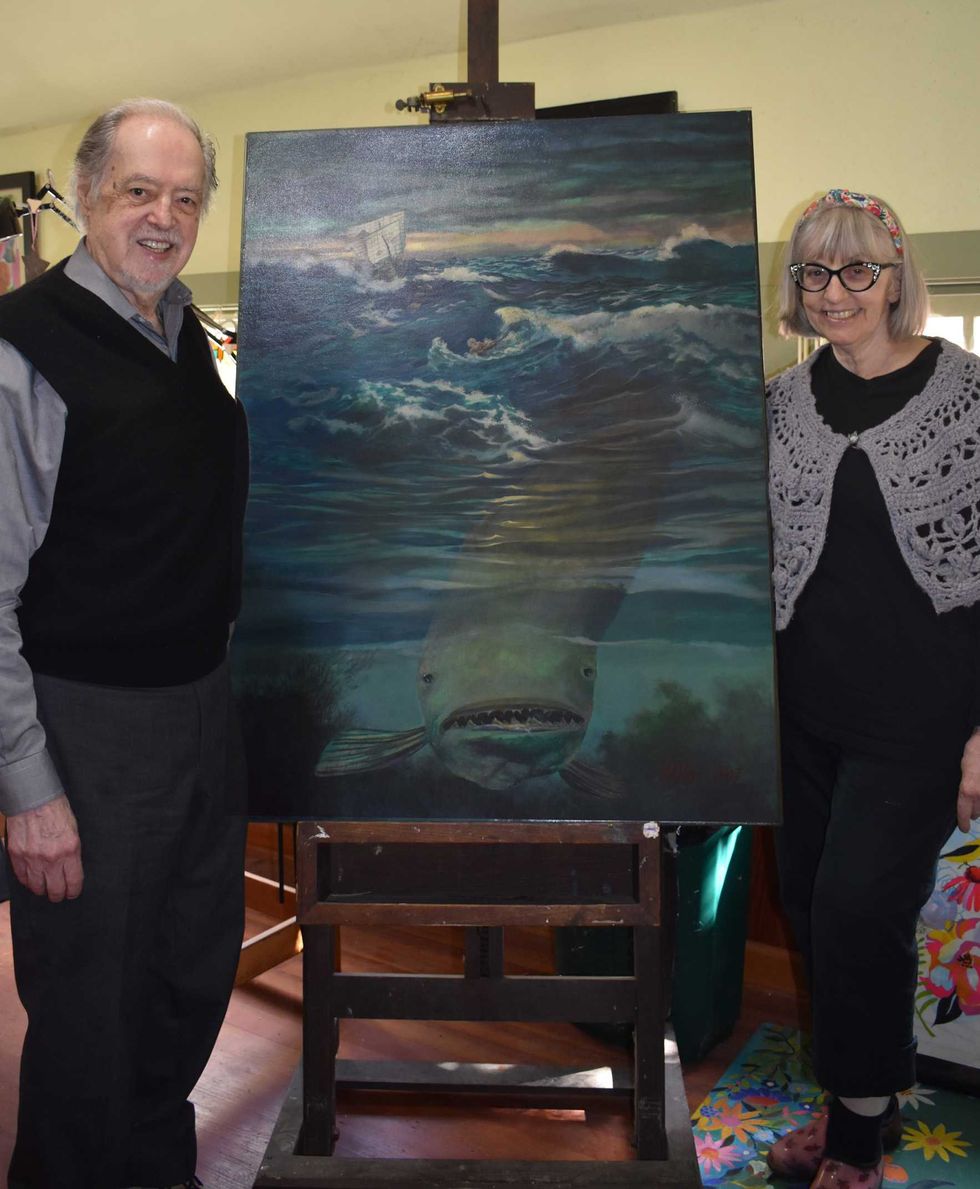 Justine and Victor Valla in their studio with a painting of Victor’s,”Jonah and the Whale.” Robin Roraback

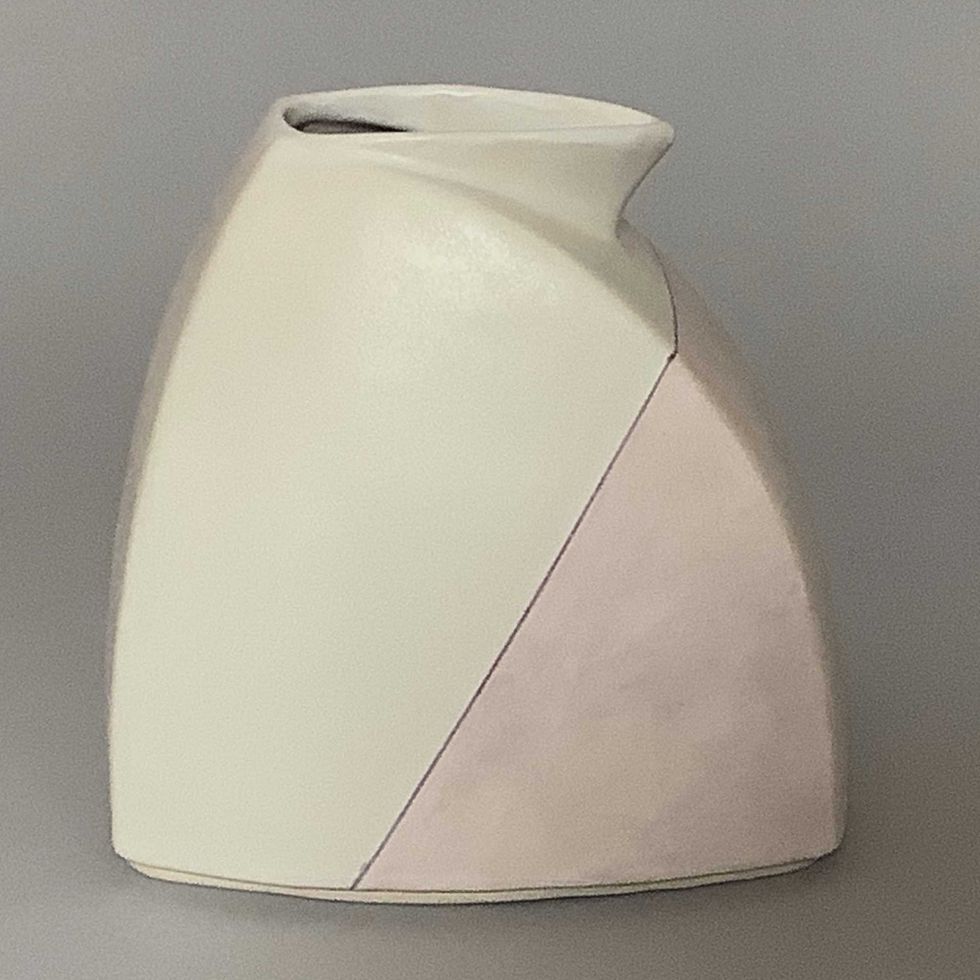 A ceramic vase by Kathleen Heidemann.Provided
 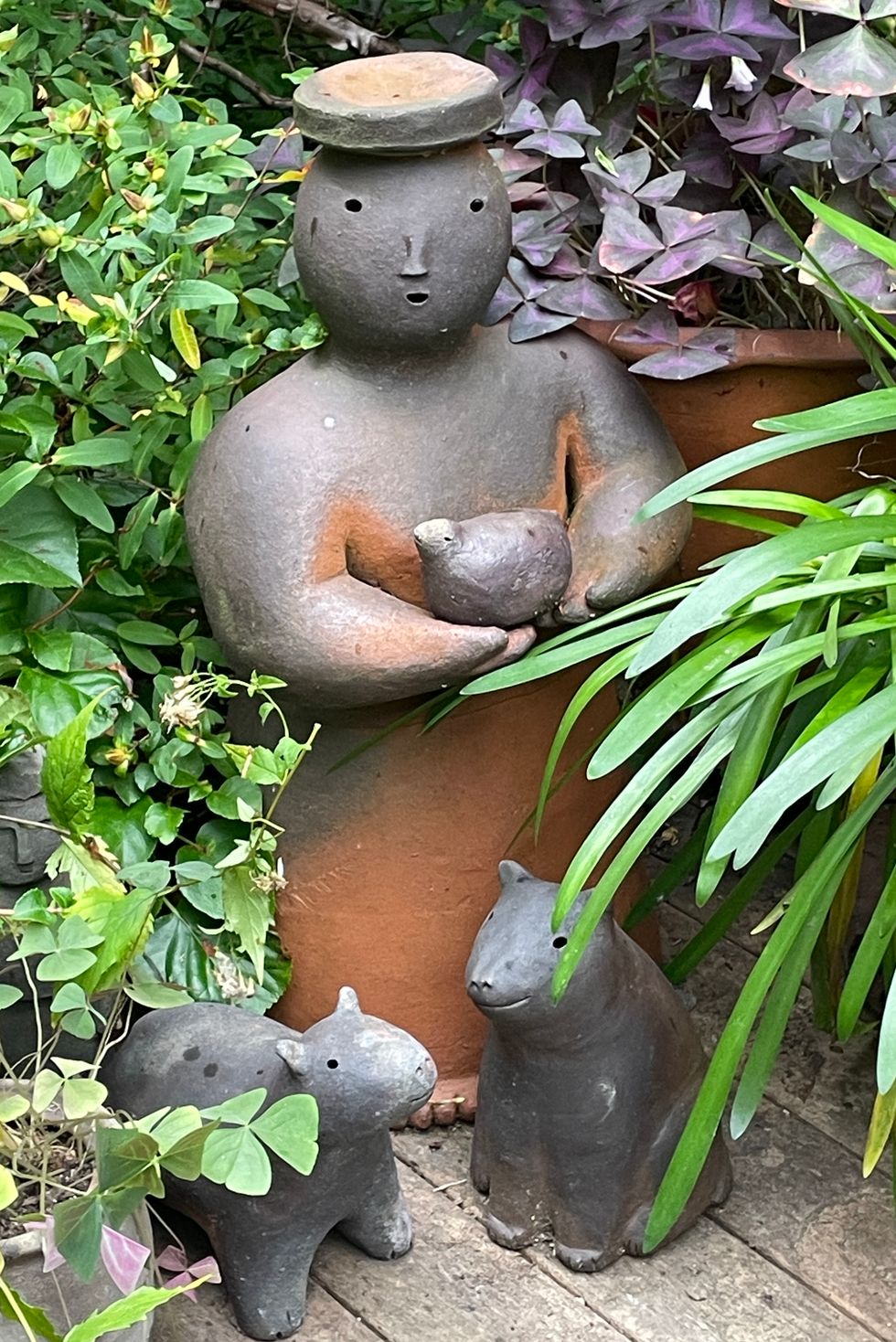 Joy Brown’s delightful ceramic sculptures.Provided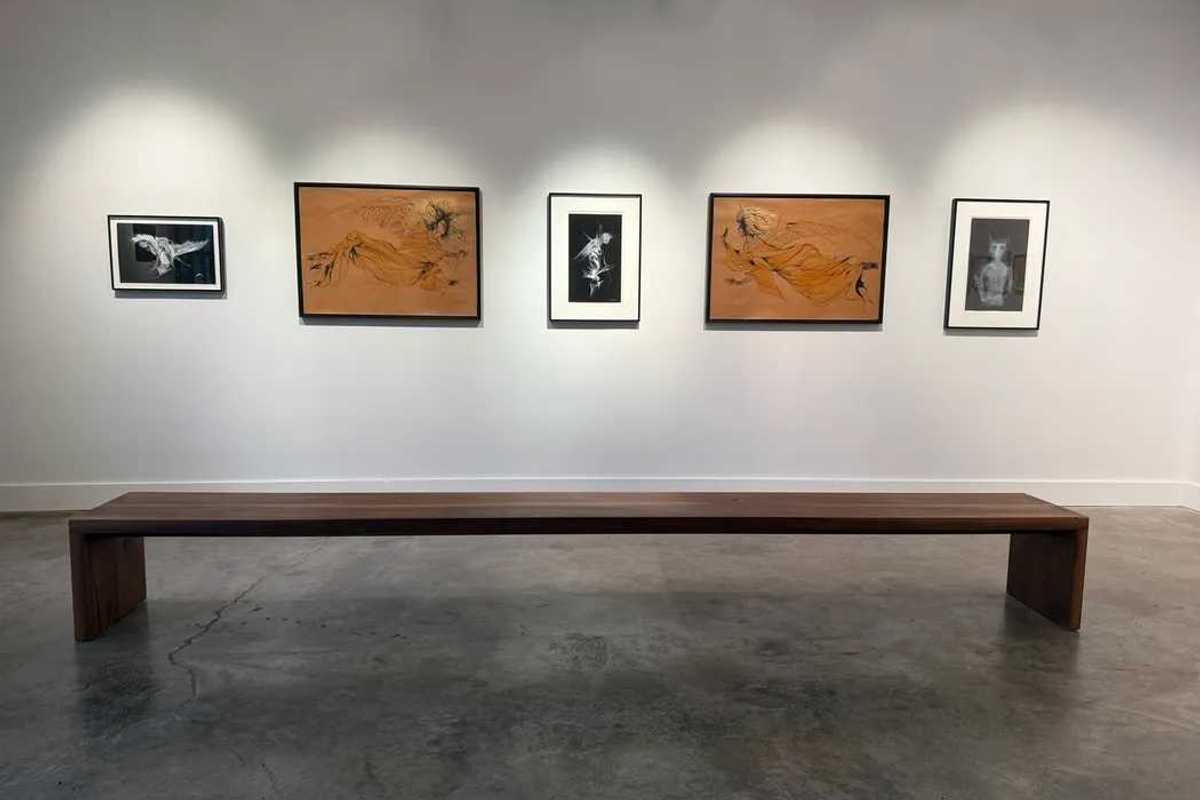
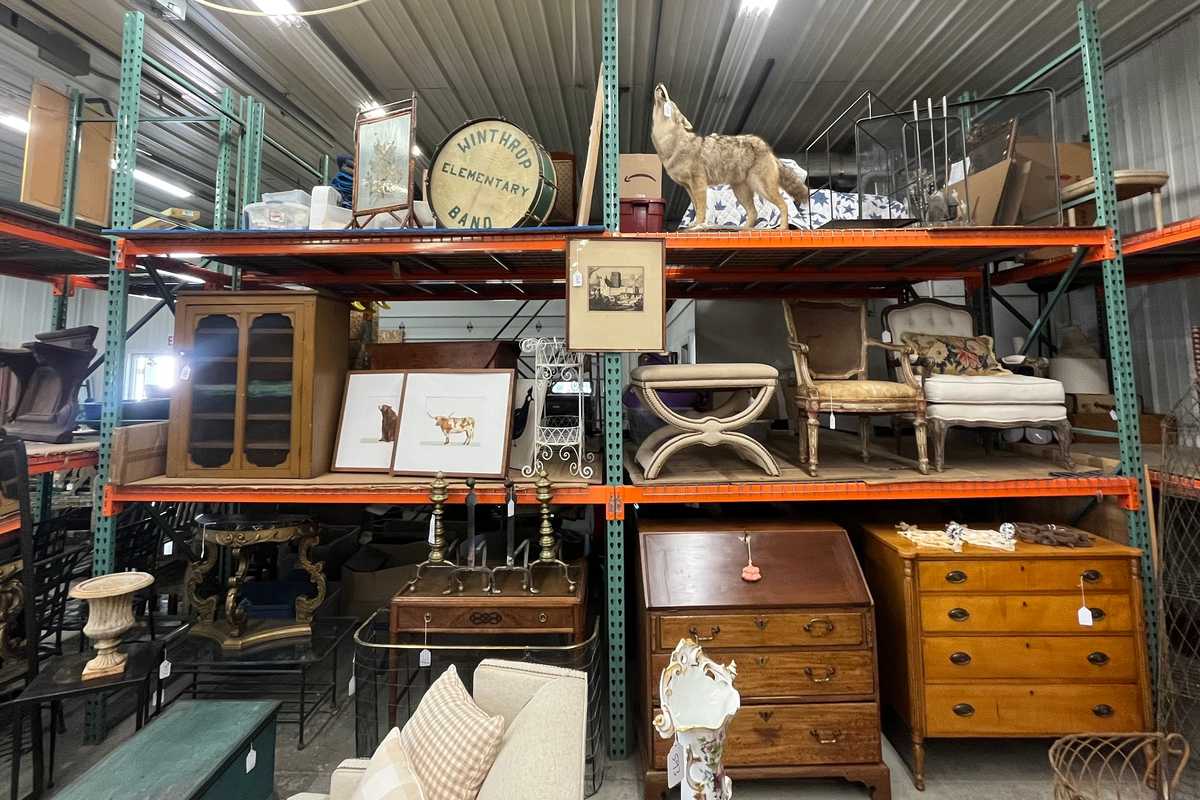
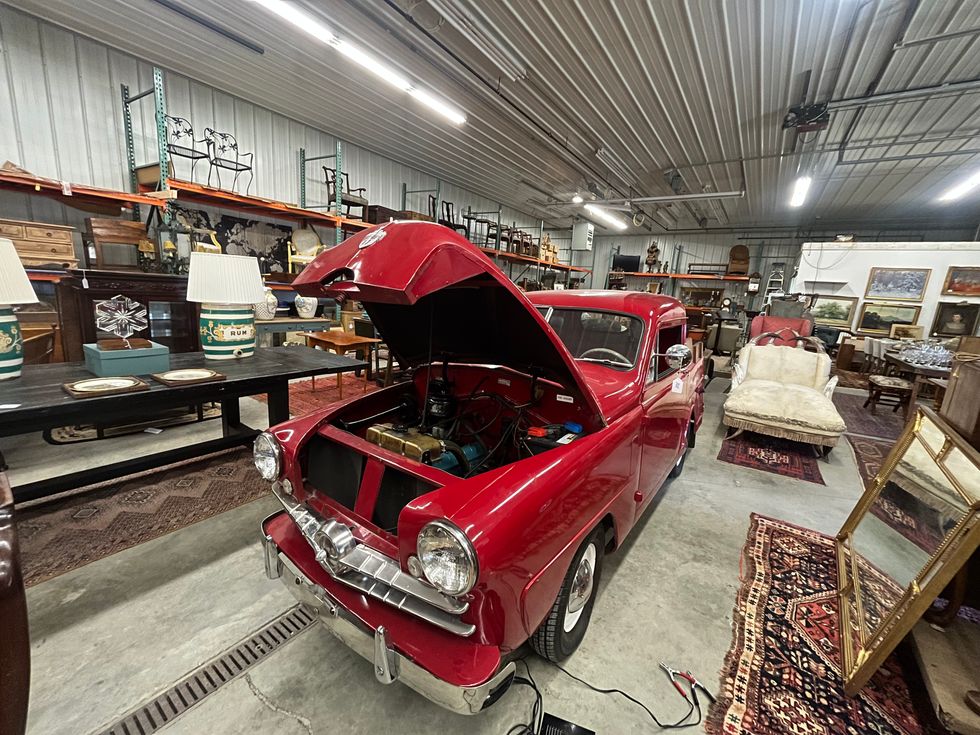 Hundreds of items at Stateline Auctions, including a candy-apple-red Crosley pickup truck.D.H. Callahan