Thank you!
Your support is sustaining the future of local news in our communities.

Historic Scoville mansion is for sale

Down a long, landscaped, tree-lined avenue in Salisbury sits a home in search of an owner. The requirements? Must love character and history, and have $6 million on hand. 

Built for the Social Register-listed Herbert and Orlena Scoville, Hill House has belonged to the Scoville family for four generations, and was until recently available as a rental. In 2013, one summer (Memorial Day through Labor Day) in Hill House cost $120,000. Now listed by Sotheby’s International Realty, the keys to the kingdom are anyone’s for the claiming, as long as you can meet the $6 million price.

French inspirations

Hill House was completed in 1927 and was designed by Joseph D. Leland, a Harvard graduate who studied architecture at the École des Beaux-Arts in Paris. Given his training, it should come as no surprise that the Norman-style mansion draws its European influence not from English manor homes, but from classic French Christian countryside monasteries. Instead of Downton Abbey, think Sénanque Abbey in Provence. 

Recently, Ira Goldspiel, a Sotheby’s real estate associate, invited (let’s be honest, permitted) me to visit Hill House between appointments with potential buyers. We were to be joined by a local historian, whose own family ties to the Scoville’s Hill House staff would have provided keen, personal details as to the comings and goings of running such a sizable estate. (Hill House sits on a 100-acre property, with the home measuring 12,000-plus square feet, with 12 bedrooms.) For details of that “downstairs view” of life in the mansion, look for the Sept. 29 Lakeville Journal.

Goldspiel’s partner, Howard Schissler of Sotheby’s, emerged from the home: breezy, beaming  and fatigued from attending to a couple who had been inspecting the property for the majority of the 90-degree day. 

Schissler guided me swiftly through the house and then left me to my own devices as he began the process of closing it up for the afternoon. I suspect that for many who visit the property with serious consideration of buying, this may be the best way to explore its many little rooms. 

After all, there will (presumably) be no local historian there to explain, daily, the significance of the original ice boxes in the kitchen or the painted coffered ceiling in what looks like a kind of prayer room (Herbert and Orlena Scoville were Protestants — or at least were married by the pastor of the South Congregational Church of Brooklyn). 

With little documented detail regarding the house (and what are we in Connecticut if not good secret keepers?), the new owners will have to create the lore behind the oft-confusing floor plan from their imaginations.

Entering Hill House

My own imagination was racing as soon as my car made its way up the drive. There is no wrought iron gate with a baroque overview, nor an engraved sign announcing the house’s title. 

I turned the corner on Beaver Dam Road, an ordinary spot by Salisbury standards, and Hill House appeared the way Mike Campbell went bankrupt in Hemingway’s novel, “The Sun Also Rises”: “gradually, and then suddenly.” 

Down a lengthy, shaded line of trees, the front courtyard of the house — partially obstructed by red brick walls — comes into view. It’s not quite symmetrical, a round tower topped with a finial at its apex.

Inside, the ceilings are all low, and the rooms are numerous and small. There is no great chamber or ballroom within Hill House, and while the back garden past the two-level terrace extends beautifully into the ideal country setting for a lavish party, the interior floor plan seems to be most fit for a family of many who enjoy hiding away from one another. 

What would it be like, I wondered, to live here with my family full time? To have grown up in Hill House, not just as a summer retreat, but through school years, Februarys, long rainy Sundays … “I Capture The Castle” came to my mind, the British novel by Dodie Smith about an eccentric but destitute family living in isolation in a real castle. Or of course, “We Have Always Lived in the Castle” by Shirley Jackson, in which two eerie sisters live apart from their New England small town, holed up on their family’s great estate. 

You need a map

Hill House is made for storing heat, for closing off rooms in winter, for servants to perform their tasks unseen. I found myself lost within its narrow halls more than once, walking up the Spanish-style circular staircase in the tower and finding a bedroom walled — and walled — with hardcover books. 

The conservatory on the first floor features beautiful wood paneling and a dashing, dandy-like warmth that practically beckons guests to pour a vintage  beverage from the decanter and have a seat. But my imagination, creeping steadily toward the Gothic, took hold once again, and I wondered if night after night in that study, I might start to go mad.

The backyard, however, has a splendor that must be experienced. If you are like me and you have the opportunity, you will find your loafers stepping to a brisk pace, and then practically running to explore the fountains and secret coves as you breathe in the freshest of fresh air from the wooded hundred acres. 

I looked back at the home’s Norman exterior, and my admiration for the property returned like we were old friends. What a wonderful summer might be spent at Hill House, I thought. Just as long as there’s another $6 million to spend on a brownstone in New York. 


For a historian’s reminiscences of Hill House, see the Sept. 29 Lakeville Journal.

Latest News

‘So Little to Do,’ so much to discover at James Barron Art

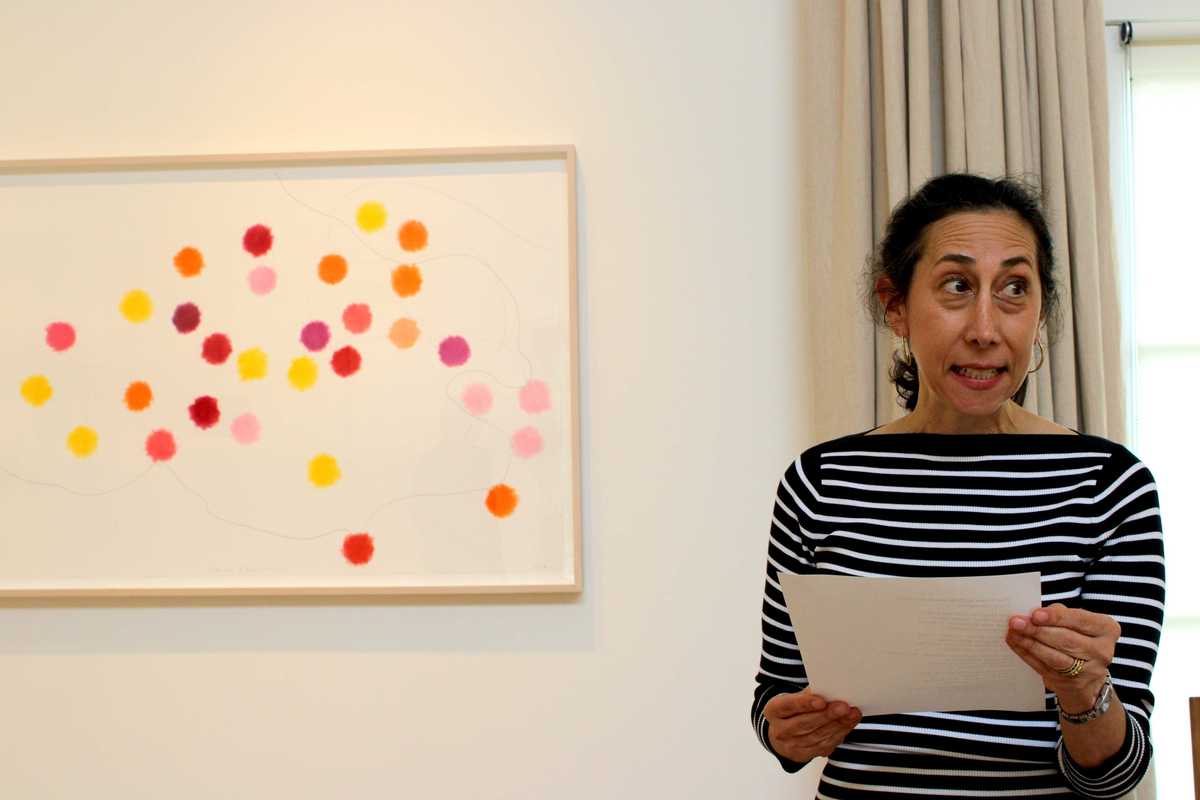
Curator Deborah Goodman Davis reads the Emily Dickinson poem “The Grass So Little Has to Do.” Spencer Finch’s “Following Three Bees (Zinnias)” buzzes in the background.

Photo by Natalia Zukerman

“The Grass Has So Little to Do,” on view at James Barron Art in Kent, takes its title from Emily Dickinson’s poem “The Grass So Little Has to Do,” written in 1862:

“The Grass so little has to do—
A Sphere of simple Green—
With only Butterflies to brood
And Bees to entertain—”

Keep ReadingShow less

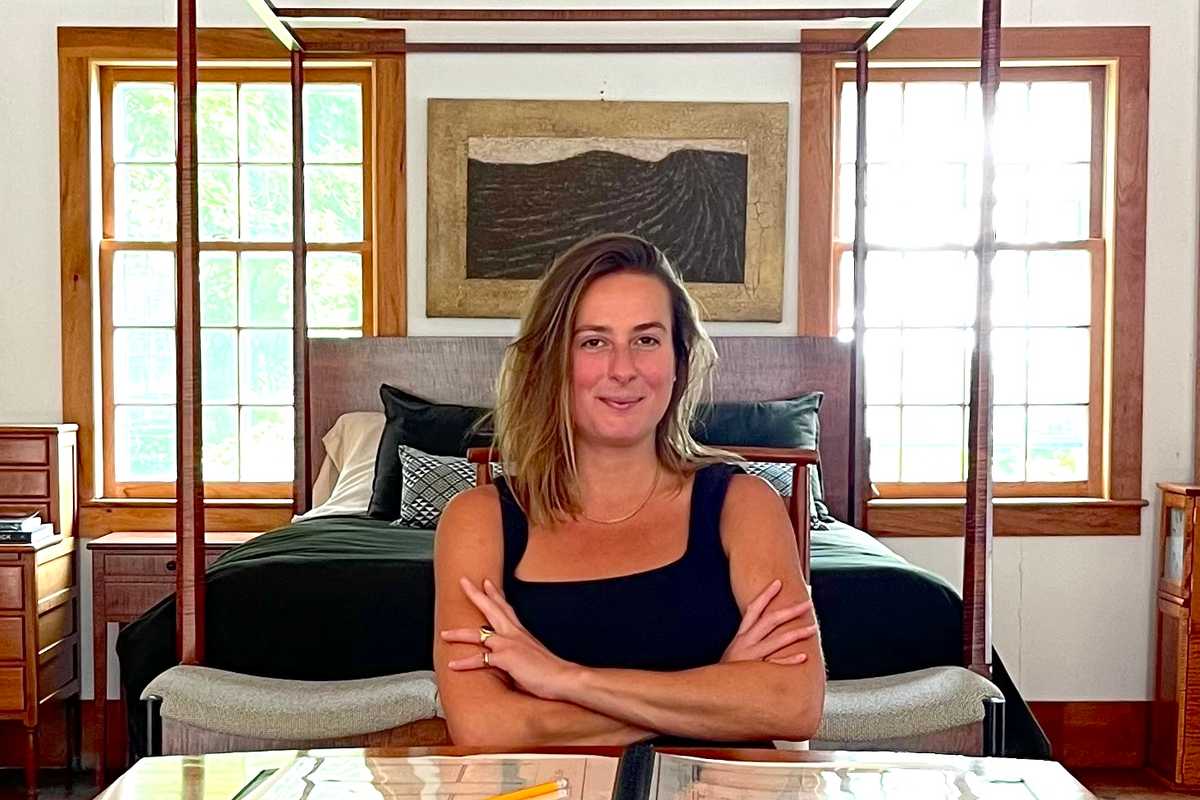
Marina Kotchoubey is not a woodworker

Marina Kotchoubey is not a woodworker

Marina Kotchoubey at the Ian Ingersoll Cabinetmakers showroom in West Cornwall.

Photo by D.H. Callahan

After 40-something years navigating the world of custom fine furniture, Ian Ingersoll was getting ready to retire. Starting off with a little dovetail stool that he sold at a shop in West Cornwall in the 1970s, he’d grown his skill and his business into something he — and the whole town — could be proud of. Shutting down that business was not an option.

Ingersoll built Ian Ingersoll Cabinetmakers, which produced mainly classical Shaker furniture, on passion: the passion he had to make a living through creative challenges and the passion of his employees, who all seem deeply in love with their craft.

Keep ReadingShow less
A legacy of giving at Norfolk Chamber Music Festival

One hundred and twenty years ago, Carl and Ellen Stoeckel commissioned New York architect E.K. Rossiter to design The Music Shed in Norfolk, Connecticut. After nearly a decade of entertaining their friends and neighbors with the finest music of the day, they built a permanent home for their beloved Litchfield County Choral Union.

The commission and full funding of the construction was not unheard of in an era when great fortunes led to public enrichment. Railroad tycoon John D. Rockefeller was instrumental in funding institutes of higher education. Steel baron Andrew Carnegie was building libraries all over the country, and famously said that a man who dies rich is a disgrace, challenging his peers to give their fortunes back to the people.

Keep ReadingShow less
google preferred source

Want more of our stories on Google? Click here to make us a Preferred Source.
Two unique exhibitions at Geary Gallery

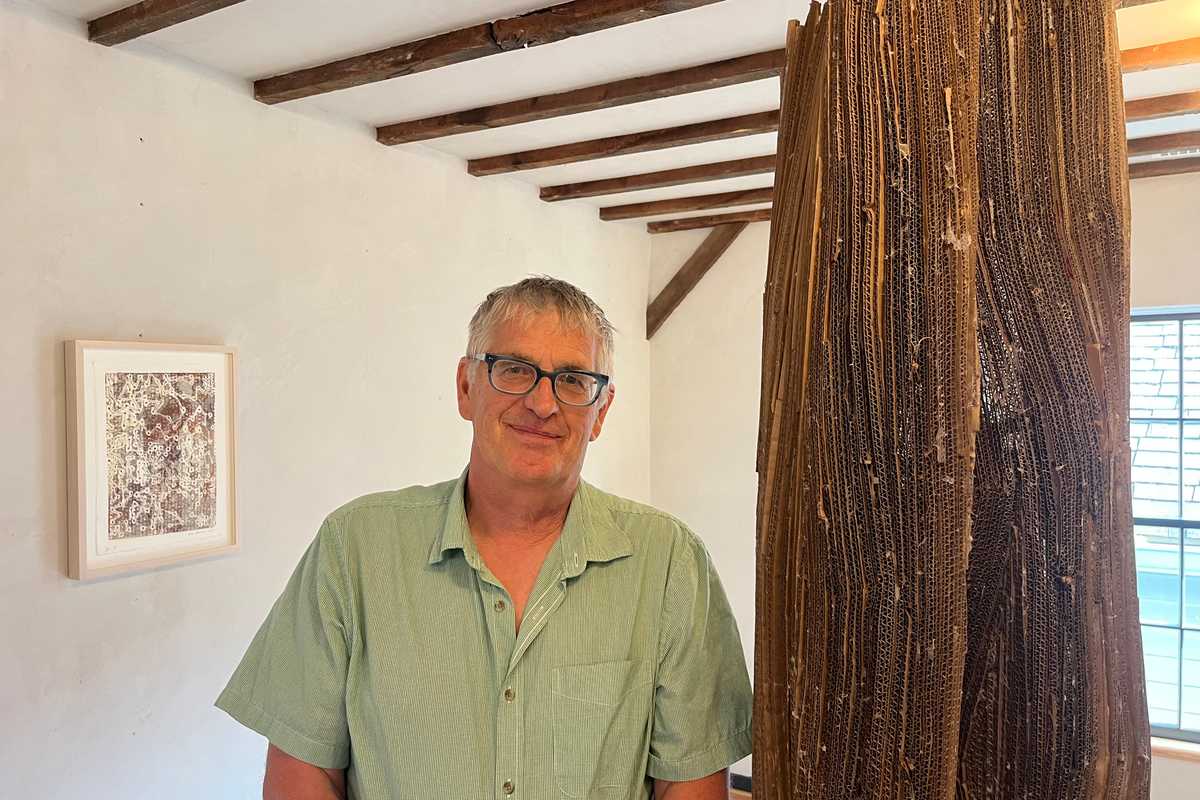
Henry Klimowicz with his sculpture, “Partial Pillar 1”

Photo by D.H. Callahan

On Saturday, Aug. 1, Geary Gallery opened its doors in Salisbury for two unique shows in its first- and second-floor gallery spaces. Art lovers flooded both floors over the course of the afternoon, giving the events a vibrant feeling that enhanced the importance of the art.

On the first floor is a show by Chicago-born, Colorado-based photographer Summers Moore, titled “Lobitos: Pueblo Fantasma,” or “Lobitos: Ghost Town.” The work centers around her daughter’s current hometown in Peru. Moore herself found a home away from home in Colorado in the mid-1980s and encouraged her children to seek out new places outside of their comfort zones.

Keep ReadingShow less

Writer’s retreat in the woods

Writer’s retreat in the woods

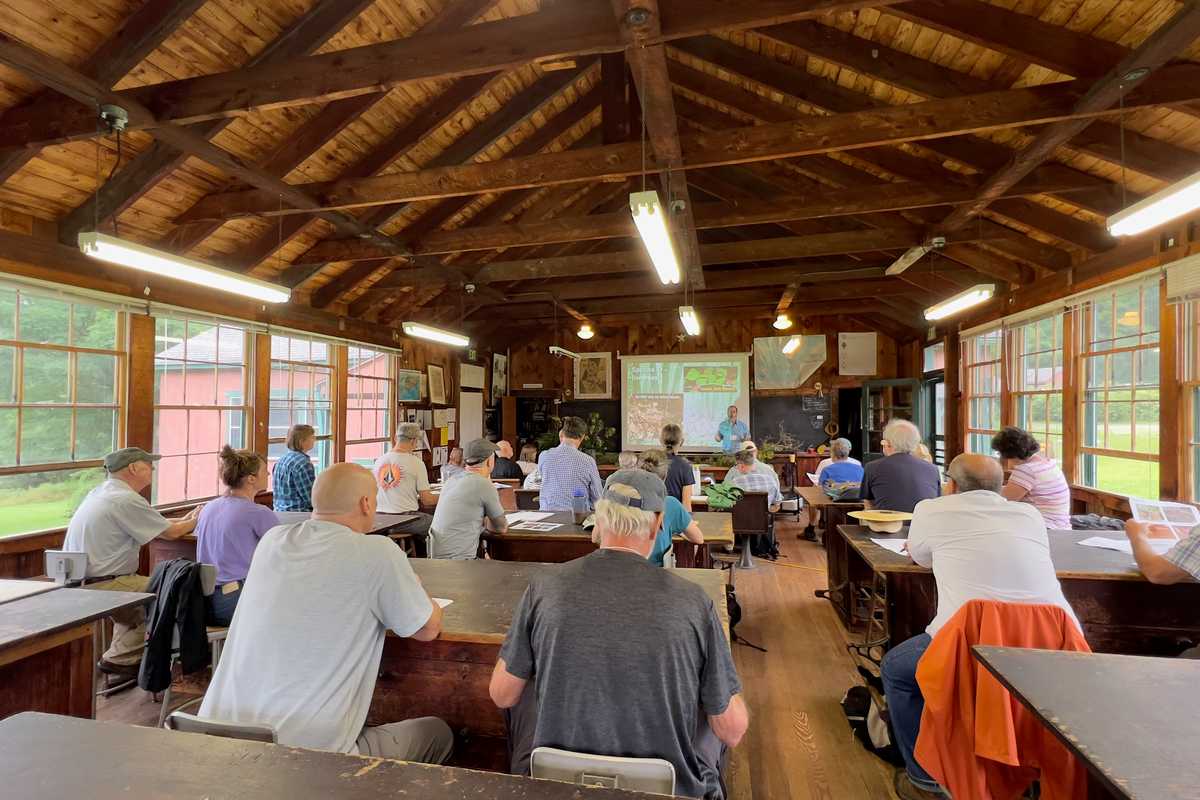
Participants in a 2024 Great Mountain Forest Woodland Academy workshop at Yale Camp.

Photo by Mike Zarfos

Great Mountain Forest (GMF) will host its first Nature Writing Retreat at the historic Yale Camp in Falls Village from Aug. 7-9, 2026. Writers of all levels are invited to draw inspiration from one of New England’s most notable forest landscapes. GMF envisions the retreat becoming an annual event celebrating writing, conservation and the relationship between people and forests.

This immersive three-day retreat reflects on the legacy of Hal Borland, the American writer and New York Times nature columnist whose work was deeply connected to this landscape. The retreat explores how wilderness shapes language, strengthens close observation and fosters environmental consciousness.

Keep ReadingShow less
From Cornwall to Rome, Adam Van Doren at Berkshire Botanical Garden

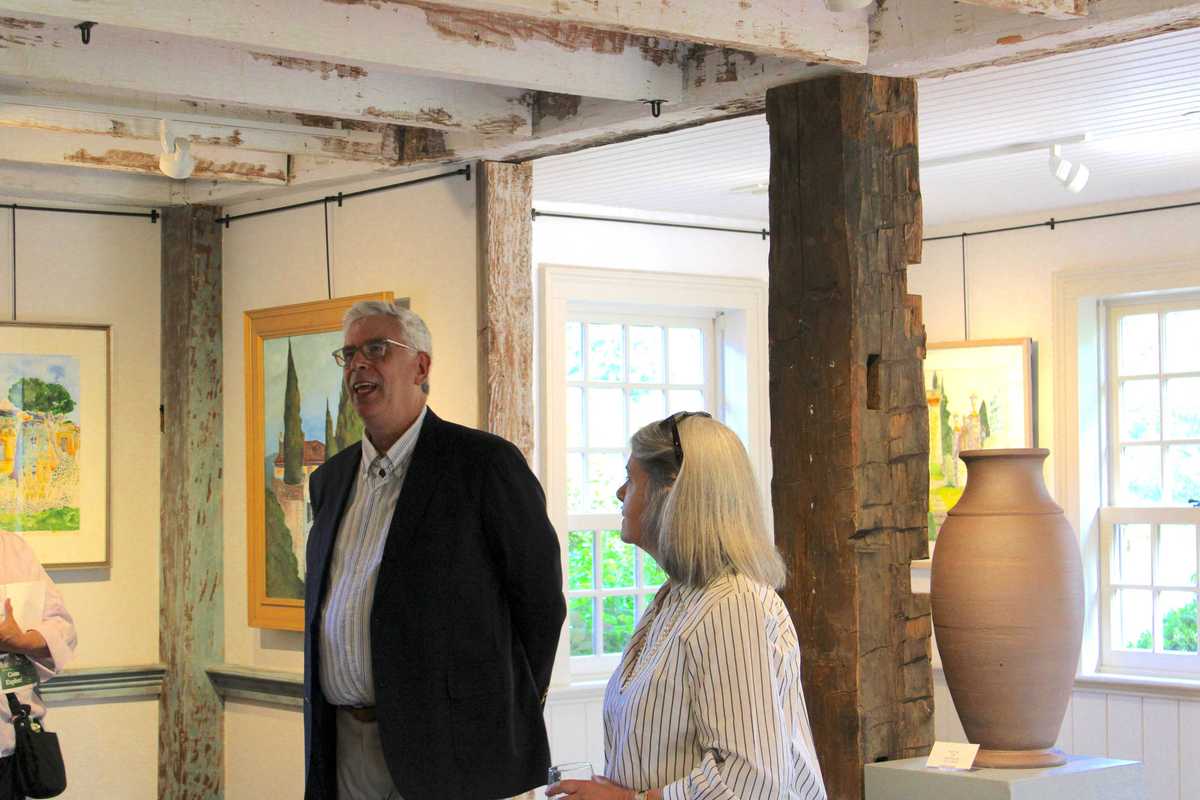
Artist Adam Van Doren and curator Donna Hassler talk to a group of visitors at the Berkshire Botanical Garden. A Stephen Proctor vessel sits to their left.

Photo by Natalia Zukerman

This summer, the Berkshire Botanical Garden in Stockbridge has hosted “Grounded in Nature: Paintings by Adam Van Doren,” an exhibition exploring the intimate relationship between architecture and the natural world.

On view for only a few more weeks in the Leonhardt Galleries, the exhibition features more than 35 watercolor and oil paintings by the New York-based artist, architect, author and Yale professor, curated by art historian Donna Hassler, director emerita of Chesterwood. The works span three distinct places that have shaped Van Doren’s artistic practice: New York City, Cornwall, Connecticut, and his travels throughout Europe.

Keep ReadingShow less
google preferred source

Want more of our stories on Google? Click here to make us a Preferred Source.
google preferred source

Want more of our stories on Google? Click here to make us a Preferred Source.