Thank you!
Your support is sustaining the future of local news in our communities.

An incredible being of lightness

CORNWALL — Sometimes, working with your hands is really about working with your brain. 

For Jeff Jacobson, a retired businessman, it’s the hands that bring his projects to life; and certainly one might say that he is a “handy” guy. But the final products are products of a busy mind that brings the hands along for the ride.

And that ride is usually in some kind of elegant and esthetically pleasing race car. Jacobson loves old cars, and has collected a few and raced a few more. His tastes range from three-wheeled vintage Morgans to similarly aged and quirky Ford pickup trucks. 

He’s not a muscle car guy, he’s not a Ferrari guy, he’s a guy who particularly appreciates the efficiency and simplicity of a well-designed machine. And like many vintage car fans, he likes a vehicle that he can take apart and reassemble.

For that reason, he not only knows intimately the parts of gorgeous old vehicles — he also has a lot of them lying around in the workshop of his home in the Coltsfoot Valley. 

“A lot of times I’ll have a part with a hairline crack that you can’t really see but that makes it unfit to use in a car,” he said.

It’s a shame to throw those things out; but that isn’t really what got Jacobson involved in his new, retirement-era career as an artist and creator of one-of-a-kind lamps.

It was his wife that did it. Gail Jacobson, in addition to being his spouse and his business partner for many years, is a person who, in her words, just can’t stop making things (see her website, www.cantstopmakingthings.com, for proof — and for amazing craft ideas). 

Gail didn’t want to be the one having all the fun, so she took her husband out to a high-end home design shop in the area and piqued his interest with some handsome, handmade lamps.

Jeff was inspired and not long after had completed his first lamp, made from car parts. 

In the hands of the wrong person, that lamp might have looked goofy or kitschy, but in the hands of Jacobson it came out as a graceful, elegant, well-balanced piece of industrial art.

He enjoyed doing it. He immediately found a business partner in Greg and Natalie Randall, owners of R. T. Facts in Kent, a shop that sells architectural salvage and works of art made from and inspired by architectural salvage. The lamps have proved to be strong and steady sellers, despite a price range of $1,500 to $4,000. 

In the past three and a half years, Jacobson estimates that he’s made 40 lamps, which is an impressive number when you realize how much time, effort and (above all) thought goes into each piece. 

First come the mechanical parts. Not all of them are from cars. 

“It’s all types of mechanical components that interest me,” he said. Jacobson has his own old machine odds and ends, friends offer him bits that they’ve retired from use in their vintage cars and the Jacobsons shop together at salvage shops such as P&T Surplus in Kingston, N.Y.

Then comes the thinking. Sometimes an idea arrives right away but “sometimes I’ll sit and stare at them on my worktable until an idea comes up.”

Then the idea has to conform with mechanical exigencies; lamps, after all, run on electricity.

“You have to figure out how to get the wiring into it,” he said. And of course the wiring has to be unobtrusive and has to match the esthetic entirety of the piece. Because these are new lamps made from old parts, Jacobson prefers to use old-fashioned wiring, such as the fabric-covered wire he gets from a company in Waterbury that makes vintage lamps.

Next, the pieces have to be combined into a whole that is lightweight and well-balanced — the head of the lamp can’t be so heavy that it pulls the whole thing over if you move it. Jacobson has figured out ingenious ways to compensate for the shifting weight of the moving parts; these aren’t lamps that one must forever be diving to catch as they fall off the edge of a table. They move smoothly and quietly, like a very good butler, to make sure the parts never overwhelm the whole. 

You don’t need to understand how or why these lamps work so well; you don’t even necessarily need to notice or acknowledge how smart they are.

But most of the people who buy them do indeed notice and care.

“Greg and Natalie told me that most of these lamps end up on the desks of CEOs, architects and designers,” Jacobson said, before adding (for the second or third time) that he isn’t actually making these lamps to sell them. He’s making them because he enjoys the process, and there isn’t room in his house for 40 lamps. 

Like a loving parent who must give up a child for adoption, he sends each lamp away with a “build sheet” that gives an extensive history of the main parts of the lamp. A fixture made with parts from a 1935 Alfa Romeo Grand Prix car doesn’t just come with the name of the car; it also often comes with a history of the notable races and drivers that the car has been involved with.

Not all the parts of every lamp are vintage. To fit all the pieces together, Jacobson custom machines rods and joints and adapts gears and other bits.

“I don’t really solder or glue things together,” he said, adding that, “It’s cheesy to use glue. I put these lamps together as though they were a car.”

A really nice car.

And just as old cars seem simple compared to the new, computerized machines we all drive today, those vintage racers are not in fact simple. They are finely tuned and exquisitely balanced amalgams of heavy parts, held together by ingenuity, obsession and love. Like Jacobson’s lamps.

“I call this line, Light Machinery: Complications in Lamps,” he said, with a grin.

To see photos, go to R.T. Facts’ website at www.rtfacts.com. It’s better, though, to stop at the shop in the Kent Barns area of Kent and touch the lights and see how they work. There will be a show of Jacobson’s work there in November.

Latest News

‘So Little to Do,’ so much to discover at James Barron Art

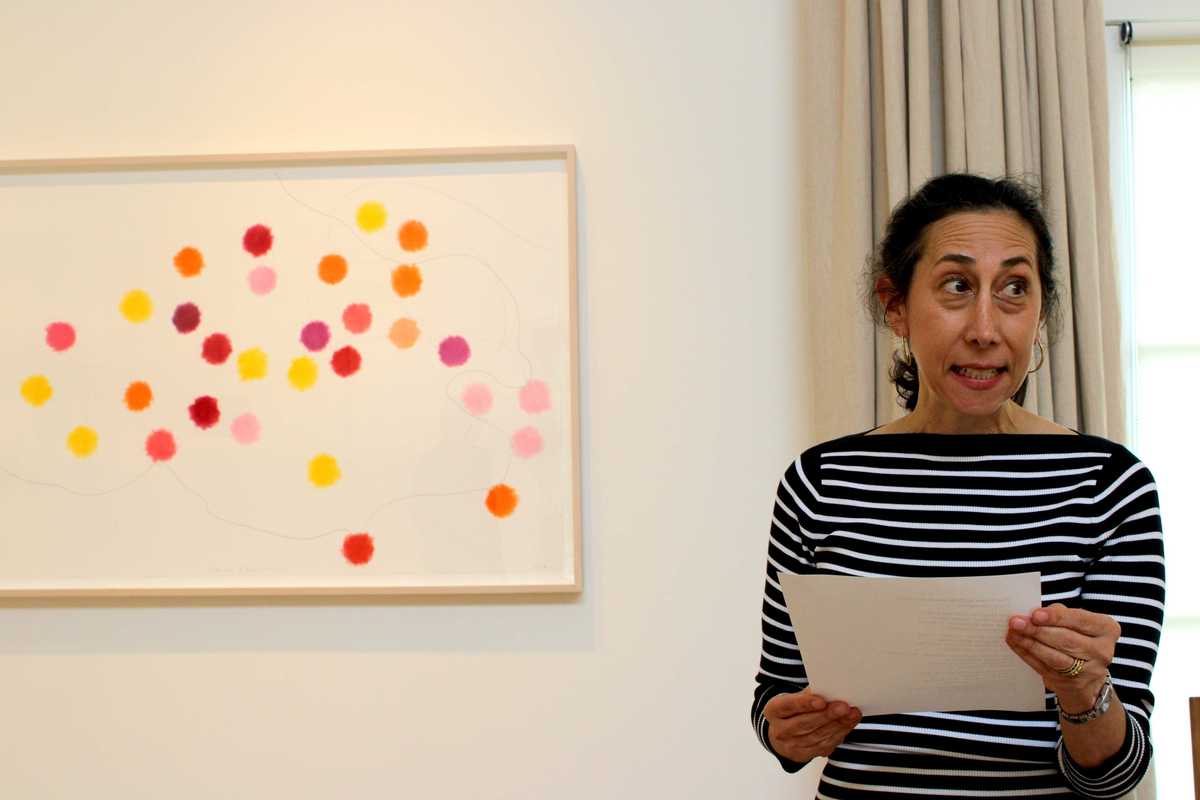
Curator Deborah Goodman Davis reads the Emily Dickinson poem “The Grass So Little Has to Do.” Spencer Finch’s “Following Three Bees (Zinnias)” buzzes in the background.

Photo by Natalia Zukerman

“The Grass Has So Little to Do,” on view at James Barron Art in Kent, takes its title from Emily Dickinson’s poem “The Grass So Little Has to Do,” written in 1862:

“The Grass so little has to do—
A Sphere of simple Green—
With only Butterflies to brood
And Bees to entertain—”

Keep ReadingShow less

Marina Kotchoubey is not a woodworker

Marina Kotchoubey is not a woodworker

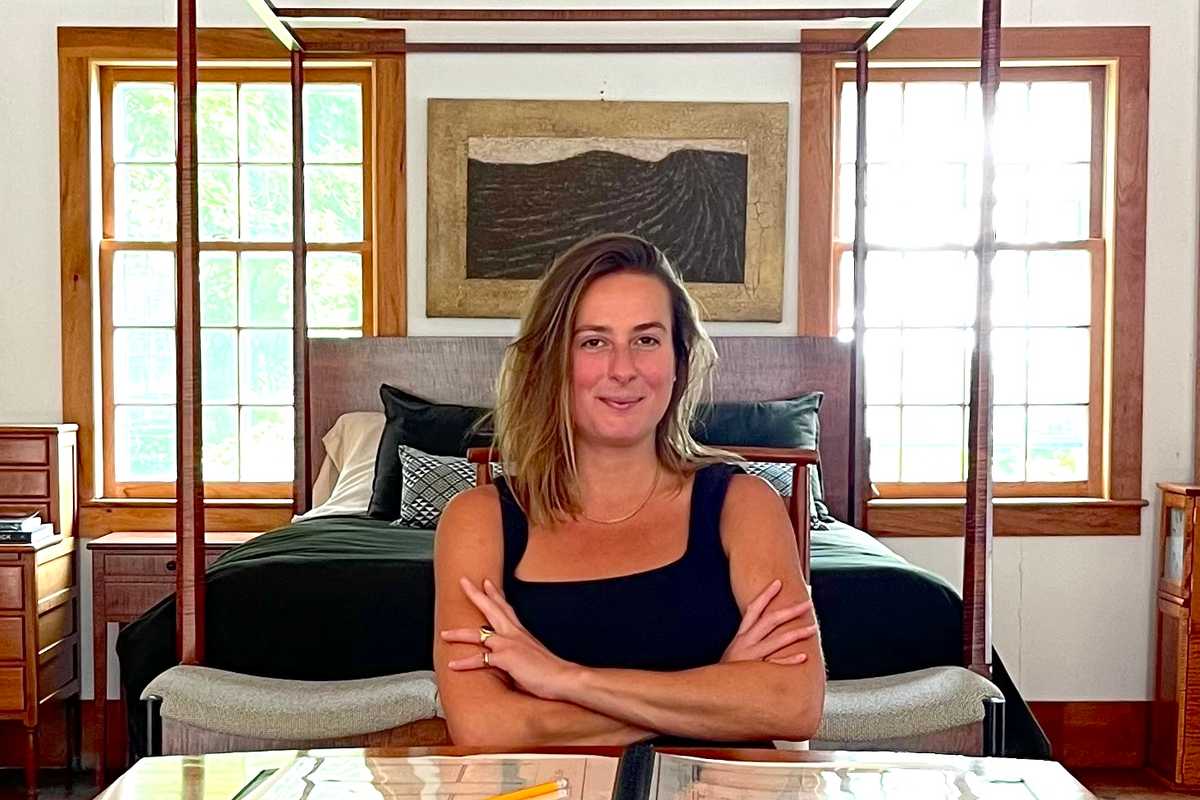
Marina Kotchoubey at the Ian Ingersoll Cabinetmakers showroom in West Cornwall.

Photo by D.H. Callahan

After 40-something years navigating the world of custom fine furniture, Ian Ingersoll was getting ready to retire. Starting off with a little dovetail stool that he sold at a shop in West Cornwall in the 1970s, he’d grown his skill and his business into something he — and the whole town — could be proud of. Shutting down that business was not an option.

Ingersoll built Ian Ingersoll Cabinetmakers, which produced mainly classical Shaker furniture, on passion: the passion he had to make a living through creative challenges and the passion of his employees, who all seem deeply in love with their craft.

Keep ReadingShow less
A legacy of giving at Norfolk Chamber Music Festival

One hundred and twenty years ago, Carl and Ellen Stoeckel commissioned New York architect E.K. Rossiter to design The Music Shed in Norfolk, Connecticut. After nearly a decade of entertaining their friends and neighbors with the finest music of the day, they built a permanent home for their beloved Litchfield County Choral Union.

The commission and full funding of the construction was not unheard of in an era when great fortunes led to public enrichment. Railroad tycoon John D. Rockefeller was instrumental in funding institutes of higher education. Steel baron Andrew Carnegie was building libraries all over the country, and famously said that a man who dies rich is a disgrace, challenging his peers to give their fortunes back to the people.

Keep ReadingShow less
google preferred source

Want more of our stories on Google? Click here to make us a Preferred Source.
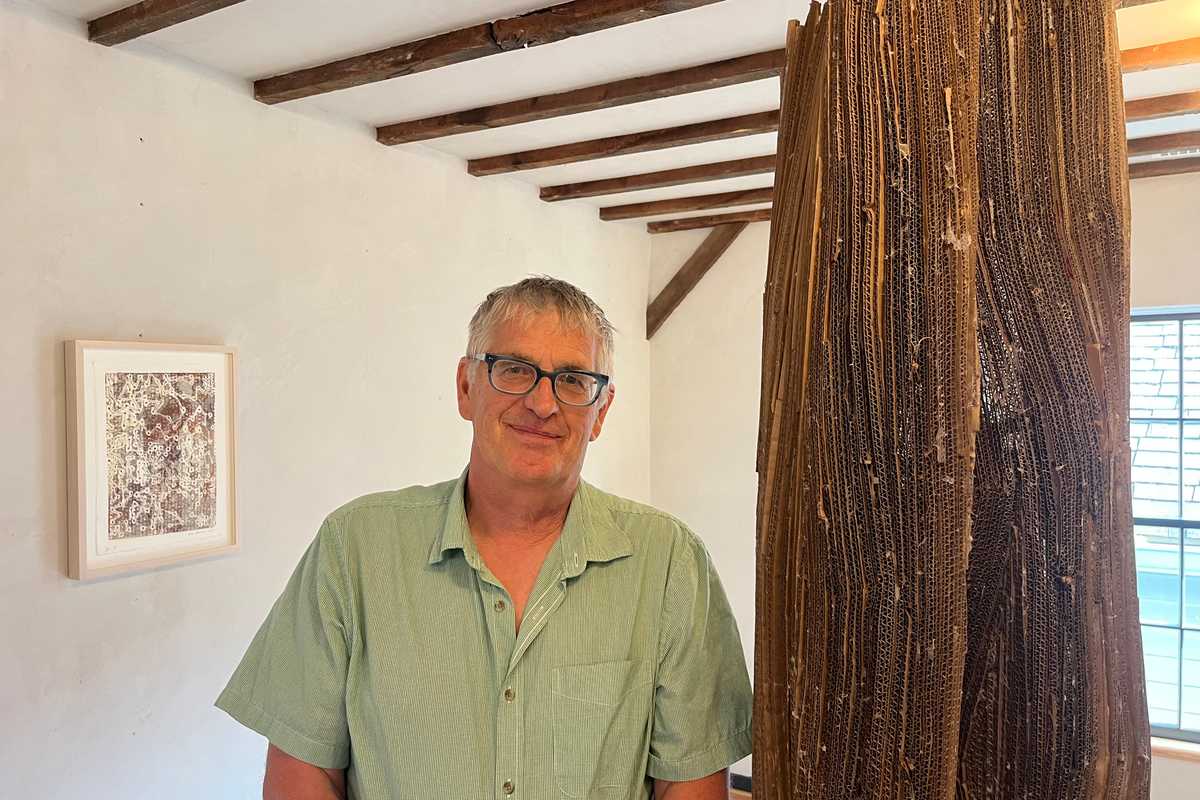
Two unique exhibitions at Geary Gallery

Henry Klimowicz with his sculpture, “Partial Pillar 1”

Photo by D.H. Callahan

On Saturday, Aug. 1, Geary Gallery opened its doors in Salisbury for two unique shows in its first- and second-floor gallery spaces. Art lovers flooded both floors over the course of the afternoon, giving the events a vibrant feeling that enhanced the importance of the art.

On the first floor is a show by Chicago-born, Colorado-based photographer Summers Moore, titled “Lobitos: Pueblo Fantasma,” or “Lobitos: Ghost Town.” The work centers around her daughter’s current hometown in Peru. Moore herself found a home away from home in Colorado in the mid-1980s and encouraged her children to seek out new places outside of their comfort zones.

Keep ReadingShow less

Writer’s retreat in the woods

Writer’s retreat in the woods

Participants in a 2024 Great Mountain Forest Woodland Academy workshop at Yale Camp.

Photo by Mike Zarfos

Great Mountain Forest (GMF) will host its first Nature Writing Retreat at the historic Yale Camp in Falls Village from Aug. 7-9, 2026. Writers of all levels are invited to draw inspiration from one of New England’s most notable forest landscapes. GMF envisions the retreat becoming an annual event celebrating writing, conservation and the relationship between people and forests.

This immersive three-day retreat reflects on the legacy of Hal Borland, the American writer and New York Times nature columnist whose work was deeply connected to this landscape. The retreat explores how wilderness shapes language, strengthens close observation and fosters environmental consciousness.

Keep ReadingShow less
From Cornwall to Rome, Adam Van Doren at Berkshire Botanical Garden

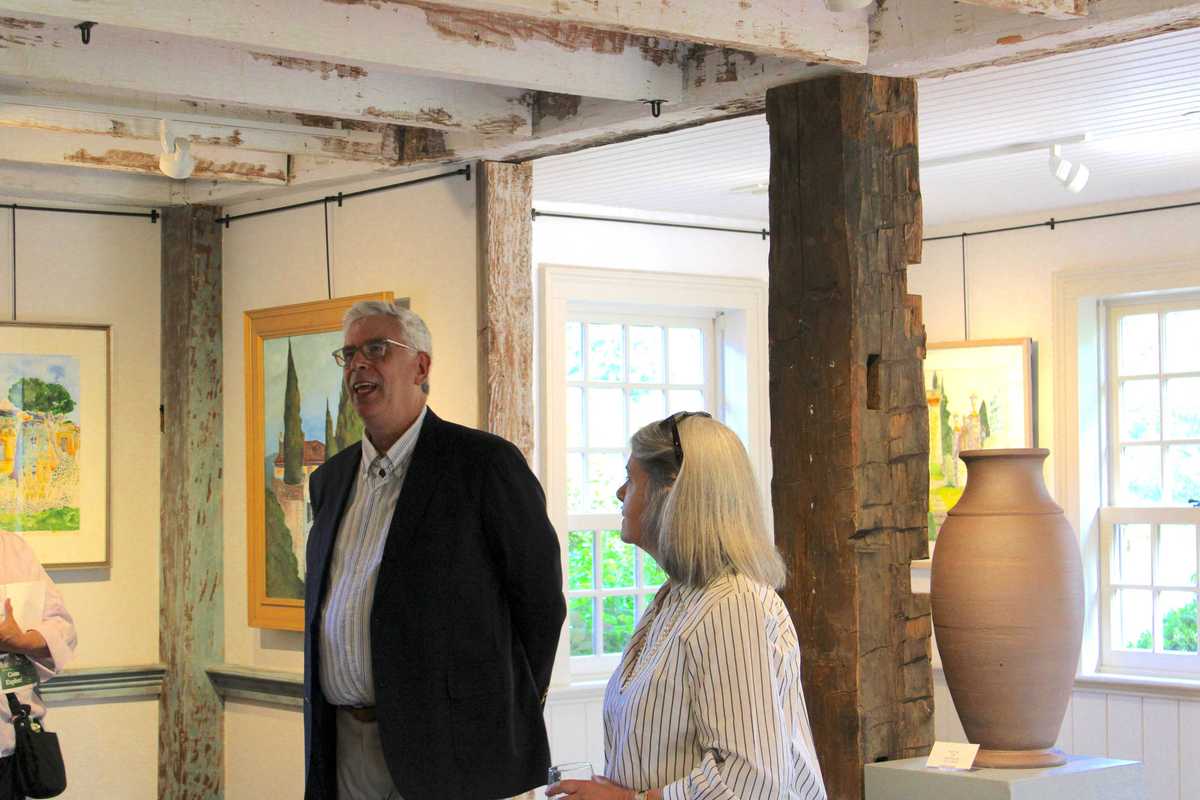
Artist Adam Van Doren and curator Donna Hassler talk to a group of visitors at the Berkshire Botanical Garden. A Stephen Proctor vessel sits to their left.

Photo by Natalia Zukerman

This summer, the Berkshire Botanical Garden in Stockbridge has hosted “Grounded in Nature: Paintings by Adam Van Doren,” an exhibition exploring the intimate relationship between architecture and the natural world.

On view for only a few more weeks in the Leonhardt Galleries, the exhibition features more than 35 watercolor and oil paintings by the New York-based artist, architect, author and Yale professor, curated by art historian Donna Hassler, director emerita of Chesterwood. The works span three distinct places that have shaped Van Doren’s artistic practice: New York City, Cornwall, Connecticut, and his travels throughout Europe.

Keep ReadingShow less
google preferred source

Want more of our stories on Google? Click here to make us a Preferred Source.
google preferred source

Want more of our stories on Google? Click here to make us a Preferred Source.