An Interview With Author Susan Orlean

Journalist Susan Orlean became a household name in the 1990s with her New York Times bestselling non-fiction work, “The Orchid Thief,” a spellbinding crime investigation into a world of flowers and fanaticism in the swamps of southern Florida. As a writer, Orlean possesses a rare twin-gift — the ability to find a good, true story, and the ability to convey that tale with the same colorful detail and personal investment that we attach to soaring fiction. In “The Library Book,” published in October by Simon & Schuster, Orlean returns to reporting on an odd crime, this time an unresolved mystery surrounding the 1986 burning of the Los Angeles Public Library by an attention-seeking would-be actor. Woven within the story is Orlean’s own history with libraries, and why the public library as an institution remains both sacred and deeply human.

Susan Orlean spoke with Compass in anticipation of her talk at The White Hart as part of the “The White Hart Speaker Series” on Dec. 6.

Alexander Wilburn: So I want to start a bit off the beaten path. In September you wrote a piece for New York Magazine about the things you bought that month, and one of the things was a subscription to FilmStruck, the Criterion Collection streaming channel, which officially closed on Nov. 29.

Susan Orlean: Well I got a refund I’m happy to say. But I felt like a person who gets a ticket to the Titanic. But it’s very unfortunate. I got it and hadn’t even begun using it.

AW: Richard Brody wrote a piece in The New Yorker about how streaming movies is too intangible, and anyone who loves film should own a copy of the film. Which got me thinking about the nature of libraries, and your parents’ trust in libraries as opposed to owning books. You write in “The Library Book” that they warned against keeping a book around as a souvenir after the experience of reading it. Do you see any correlation between streaming and libraries?

SO: That’s a very interesting point. I think with film there’s not a direct analogy because some would argue there’s a difference between streaming and a very good quality copy. Certainly my parents never experienced the idea of streaming. E-books existed when my parents were both still alive, but they weren’t into digital media. But they may have appreciated very much that idea that you’re reading to read, and that you didn’t end up with a physical memento that had to be stored indefinitely.

AW: Of course, “The Library Book” is all about those mementos. I wonder if you see the roles of libraries changing the farther we get into the advanced technological age.

SO: I see it as an evolution because libraries have been changing since the day they were founded. Media has changed at enormous rates, we’re just seeing a particularly changeful time. Libraries have adapted to a time when a certain amount of material is not going to require shelf space. There are also events that bring people together and take advantage of the space. Programming is one of the things growing the fastest in libraries. So while the material becomes more ephemeral, there’s a lot that’s happening in real life and real time in the library itself.

AW: Do you think the book, as an object of immortality, will become less sacred to us?

SO: No, I don’t think so. I think the book remains, and will remain, a very precious object. Books will continue being published as books. I don’t think it’s going to happen the way it happened to record albums. I don’t think there’s a desire for that to happen. 

AW: In the book you burn a copy of “Fahrenheit 451.” I wonder, as a writer who feels not only connected to libraries but has works featured in libraries, what’s the feeling that surrounds the idea of your own books being burned?

SO: Terrible, which is why I did it. It was an exploration of this taboo that I felt very strongly about. I found it fascinating because it was not logical. I could replace the copy of “Fahrenheit 451” very quickly. I felt like much of “The Library Book” is my effort to understand why books and libraries are special to us, and have a quality of sacredness that is not logical. It’s not based in some practical sense. The idea of burning a book remains so taboo. I found it incredibly uncomfortable. It was something I came very close to not doing, because it made me so uncomfortable. I was curious about why I found it so distressing to destroy something easily replaced. Especially to burn it — there’s so much resonance throughout history of the idea of burning books, even more than throwing it out or shredding it. Burning a book is a very visceral or disturbing image. 

AW: Libraries are a technological resource for many people, but the idea of burning down a room of computers is not a taboo like a room of books.

SO: I just think it’s something really embedded in us to feel that books are almost human. 

AW: Burning a library especially, as symbol of egalitarianism,  feels like a crime against the people.

SO: One of the questions that really propelled me through the book was: Why are these places and these objects unique in their emotional resonance for us? 

AW: Speaking of humans and books, just for fun — I have this memory of reading a library book at home and coming across a smear of make-up on one of the pages. Have you found anything memorable left in a library book?

SO: There certainly have been library books where someone made a little notation. You still see that, not infrequently, and it always kind of delights me. It’s kind of like the person who checked it out before me, and it may have been 10 years before, was leaving a little note in a bottle. I don’t think the person intended it that way, but the result is a mysterious connection to another person — whomever borrowed it before.


This interview has been condensed.

Susan Orlean will be reading at The White Hart on Dec. 6, 6 p.m. is a fundraiser for The Scoville Memorial Library in Salisbury, Conn. For information go to www.whitehartinn.com.

Latest News

A new life for Barrington Hall

A new life for Barrington Hall

Dan Baker, left, and Daniel Latzman at Barrington Hall in Great Barrington.

Provided

Barrington Hall in Great Barrington has hosted generations of weddings, proms and community gatherings. When Dan Baker and Daniel Latzman took over the venue last summer, they stepped into that history with a plan not just to preserve it, but to reshape how the space serves the community today.

Barrington Hall is designed for gathering, for shared experience, for the simple act of being together. At a time when connection is often filtered through screens and distraction, their vision is grounded in something simple and increasingly rare: real human connection.

Keep ReadingShow less

Gail Rothschild’s threads of time

Gail Rothschild’s threads of time

Gail Rothschild with her painting “Dead Sea Linen III (73 x 58 inches, 2024, acrylic on canvas.

Natalia Zukerman

There is a moment, looking at a painting by Gail Rothschild, when you realize you are not looking at a painting so much as a map of time. Threads become brushstrokes; fragments become fields of color; something once held in the hand becomes something you stand in front of, both still and in a constant process of changing.

“Textiles connect people,” Rothschild said. “Textiles are something that we’re all intimately involved with, but we take it for granted.”

Keep ReadingShow less

Sherman Players celebrate a century of community theater

Sherman Players celebrate a century of community theater

Cast of “Laughter on the 23rd Floor” from left to right. Tara Vega, Steve Zerilli, Bob Cady (Standing) Seated at the table: Andrew Blanchard, Jon Barker, Colin McLoone, Chris Bird, Rebecca Annalise, Adam Battlestein

Provided

For a century, the Sherman Players have turned a former 19th-century church into a stage where neighbors become castmates, volunteers power productions and community is the main attraction. The company marks its 100th season with a lineup that blends classic works, new writing and homegrown talent.

New England has a long history of community theater and its role in strengthening civic life. The Sherman Players remain a vital example, mounting intimate, noncommercial productions that draw on local participation and speak to the current cultural moment.

Keep ReadingShow less
google preferred source

Want more of our stories on Google? Click here to make us a Preferred Source.
Reimagining opera for a new generation

Reimagining opera for a new generation

Stage director Geoffrey Larson signs autographs for some of the kids after a family performance.

Provided

For those curious about opera but unsure where to begin, the Mahaiwe Theater in Great Barrington will offer an accessible entry point with “Once Upon an Opera,” a free, family-friendly program on Sunday, April 12, at 2 p.m. The event is designed for opera newcomers and aficionados alike and will include selections from some of opera’s most beloved works.

Luca Antonucci, artistic coordinator, assistant conductor and chorus master for the Berkshire Opera Festival, said the idea first materialized three years ago.

Keep ReadingShow less
BSO charts future amid leadership transition and financial strain

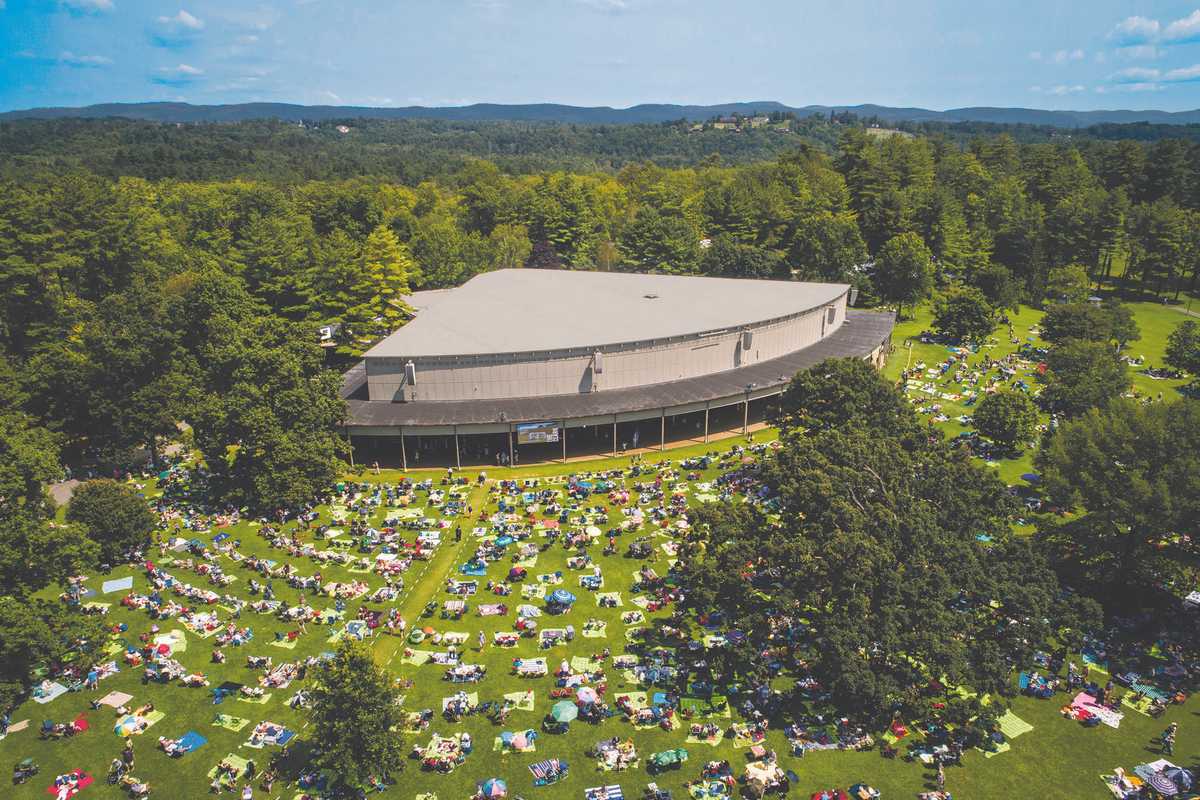
Aerial view of The Shed at Tanglewood in Lenox, Massachusetts.

Provided

The Boston Symphony Orchestra is outlining its path forward following the announcement that music director Andris Nelsons will step down after the 2027 Tanglewood season, closing a 13-year tenure.

In a letter to supporters, the BSO’s Board of Trustees acknowledged that the news has been difficult for many in its community, while emphasizing gratitude for Nelsons’ leadership and plans to celebrate his final season.

Keep ReadingShow less
A tradition of lamb for Easter and Passover

Roasted lamb

Provided

Preparing lamb for the observance of Easter is a long-standing tradition in many cultures, symbolizing new life and purity. For Christians, Easter marks the end of Lenten fasting, allowing for a celebratory feast. A popular choice is roast lamb, often prepared with rosemary, garlic or lemon. It is traditional to serve mint sauce or mint jelly at the table.

The Hebrew Bible suggests that the last plague God inflicted on the Egyptians, to secure the Israelites’ release from slavery, was to kill the firstborn son in every Egyptian home. To differentiate the Israelites from the Egyptians, God instructed them to mark their doorposts with the blood of a lamb. Today, Jews, Christians and Muslims generally believe that God would have known who was Israelite and who was Egyptian without such a sign, but views of God’s omnipotence in the Abrahamic faiths have evolved over the millennia.

Keep ReadingShow less
google preferred source

Want more of our stories on Google? Click here to make us a Preferred Source.
google preferred source

Want more of our stories on Google? Click here to make us a Preferred Source.