Journal: chronicler of change

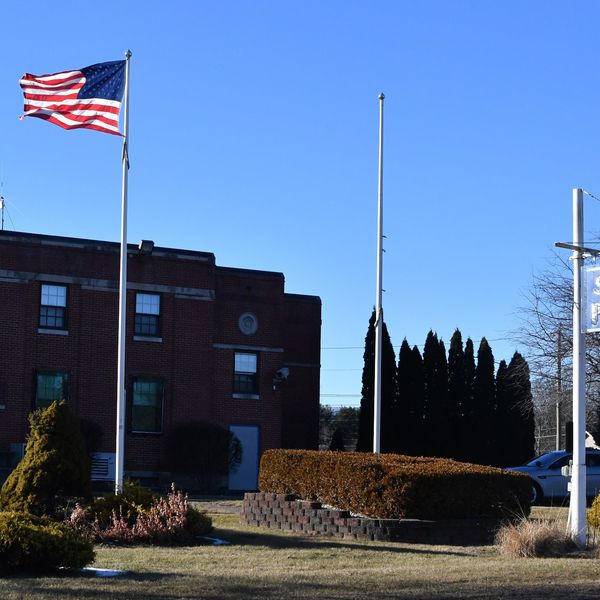
The Lakeville Journal is entering a new era in its 120-year history, with a move to a new office location. 

This special history issue includes photos and pages from the past, a chance for longtime community members to remember the world as it used to be and the people they have known here, and a chance for newer members to get a glimpse at how the Northwest Corner has changed over the decades. Many of these photos and articles were found as we cleaned out our storage spaces in preparation for downsizing and moving to smaller quarters. 

If these bits of ephemera spark memories for you, feel free to come by and chat with us about them at our new office at 64 Route 7 North in Falls Village — but not on our deadline days, which are Monday and Tuesday, please.

No one can really summarize the long history of this newspaper quite as well as our late and beloved former owner, publisher and editor, Bob Estabrook. Here we abbreviate the article he wrote for our 110th anniversary in 2007. At the end, we have added an update explaining the changes that have occurred this year.


By Robert Estabrook (2007)

When Col Card of Millerton published the first issue of The Lakeville Journal on Saturday, Aug. 14, 1897, he described the new enterprise as “A Local Paper Devoted to the Interests of Lakeville and the Towns of Salisbury and Sharon.” It was the twilight of the iron industry, and both towns had started to lose population from their peaks in 1880.

A century later the mines are long since closed, the furnaces that lit the night sky are gone, the mountainsides that had been stripped bare for charcoal have reverted to forests, and there are many more part-time residents in the population, which is again growing. 

Yet the legacy of the iron era is indelibly imprinted on the culture of the three-state corner. The devotion of the newspaper remains strong, and over the years has broadened.

Two other papers were also added, The Millerton News (1972) and The Winsted Journal (1996).

A small, slow press

A casual reader viewing the front page of The Journal’s first issue might well have concluded that this was a national paper despite its local label. Top stories concerned the assassination of the prime minister of Spain and the “Perils of the Klondike.”

The reason for this external emphasis was that the first and last pages of the four-page issue were ready-print, a sort of boiler-plate supplied by a syndicate along with national advertising of patent medicines. Only the two inside pages contained local news.

A paper of their own

The owner, Col (for Colvin) Card, was the editor and publisher of The Millerton Telegram, who concluded that the towns of Salisbury and Sharon, with populations of about 3,500 and 2,000, respectively, needed a paper of their own. The Connecticut Western News had been started in Salisbury in 1871, the same year the Connecticut Western Railroad reached town, but the office of publication had been moved to North Canaan three years later.

Although Card financed and published The Lakeville Journal, he did not take the title of editor. The person first designated for that position was Irving J. Keyes. An article in the opening issue noted that “considerably over” 1,000 copies had been printed and said that “all the editorial and mechanical work involved has been practically done in three days by a force of one man and a boy.”

Within a few months Benjamin D. Jones succeeded Keyes as editor. B.D. Jones, as he signed himself, was to remain for nearly 40 years. He bought out Col Card’s interest in 1905 and as editor and publisher charted the course of the paper until his death in 1937.

Ben Jones chronicled the life and times of Northwest Corner communities into the emergence of electric lights and the automobile, a world war, the demise of the iron industry and finally of the Central New England Railway, and the Great Depression. He plugged away for civic improvements, especially sidewalks, and his editorials and news coverage helped lay the groundwork for the formation of the first regional school district in New England in 1939.

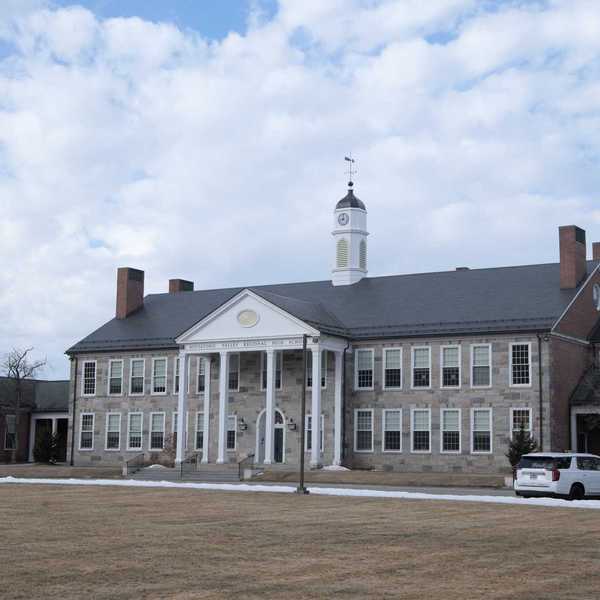
Jones did not live to see it, but the new district amalgamated the formerly separate high schools of six towns: Salisbury, Sharon, Canaan, North Canaan, Cornwall and Kent. 

Upon Jones’ death Dorothy Belcher (Mrs. George Belcher of Salisbury), who had learned to operate the Linotype during the Jones era, kept the paper alive until it was purchased in 1940 by Stewart and Ann Hoskins for less than $10,000. They nurtured, expanded and gave their energies and love to The Journal over more than 30 years.

They learned fast, and with their hard work the paper grew. Pearl Harbor and American entry into World War II soon followed. Stewart’s work in defense industries in North Canaan and Torrington suddenly cast Ann into the new role of editor. After a day on his defense job, Stewart ran the flatbed press, often until early morning hours, to print the Thursday issues.

Embracing the entire region

What provided the impetus for the growth of the paper after the war was the cooperation of the six northwest Connecticut towns in the new regional high school. Soon, in addition to Salisbury and Sharon, the paper had correspondents in North Canaan, Falls Village, Cornwall and Kent. 

By 1958 The Journal had badly outgrown its Main Street quarters. When Frederic Leubuscher rehabilitated the three-story brick building constructed in 1866 that had housed Holley Manufacturing Co., this became the paper’s new home. Ann Hoskins persuaded town authorities to rename the complex Pocketknife Square. The Journal remained there for 25 years. Advertising increased and paid circulation reached 4,000 copies per week.

Estabrooks take on Journal

After a brief unhappy sale of the paper to Robert Francis in 1969, the Hoskinses bought it back. Then the issue of Dec. 23,1970, announced the sale of The Lakeville Journal to Robert and Mary Lou Estabrook. Bob, who had spent 25 years at The Washington Post, on the editorial page and as a foreign correspondent, became editor and publisher. Mary Lou, who was a homemaker turned photographer, became associate publisher.

The Estabrooks sought to build professional news coverage upon the foundations the Hoskinses had provided, with the addition of Mary Lou’s photographs. The Journal took an early editorial interest in opposing the pumped storage reservoir proposed by Northeast Utilities on and under Canaan Mountain. The proposal was eventually withdrawn.

When 18-year-old Peter Reilly of Falls Village was arrested in 1973 and convicted of manslaughter in the slaying of his mother, Barbara Gibbons, The Journal campaigned hard through news stories and editorials to illuminate questionable state police procedures. Residents of the area who believed in Reilly’s innocence contributed strongly to his defense.

After Reilly was granted a new trial and subsequently all charges against him were withdrawn, The Journal’s role in helping win his freedom and bring changes in state police procedures was recognized in a series of state and national awards. Among them were the national John Peter Zenger Award for Freedom of the Press by the University of Arizona, the Golden Quill award of the International Society of Weekly Newspaper Editors and the Horace Greeley award by the New England Press Association.

Technology in the modern age

Upon retirement of the old newspaper flatbed press in 1968, offset printing of the paper had been contracted to other plants in Litchfield, and then Great Barrington. In 1973 The Journal acquired its first web offset newspaper press, a used model superceded in 1976 by a new four-unit press financed with the help of interested investors in the community. Simultaneously the paper completed its transition from hot type to the first generation of cold type computerized composition.

In 1983 The Journal was able to move to its new building at 33 Bissell St. constructed specifically as a newspaper plant. Among the participants at the open house was Hazel Card, the daughter of Col Card, a lady in her 90s who had come from Springfield, Mass., for the occasion. By that time The Journal had a paid circulation in excess of 6,500.

When the Estabrooks retired at the end of 1986 they sold The Lakeville Journal and The Millerton News to Robert A. Hatch, who had done newspaper and public relations work in California and had worked with the public television program “Sesame Street.”

Hatch installed a new desktop publishing typesetting system and made other mechanical improvements. Soon after he took over, however, the area plunged into a lingering economic recession that cut severely into advertising and circulation revenues and forced consolidation of some news functions. In addition, he was beset by serious ill health.

An investor group

After trying to sell The Journal and The News for several years, Hatch reached an agreement in early 1995 with a group of local investors headed by William E. Little Jr. and A. Whitney Ellsworth, whose objective was to keep the papers independent and locally controlled. The sale was concluded in June 1995, with Will Little becoming the chairman of the new limited liability company and Whitney Ellsworth, former publisher of the New York Review of Books, first as publisher, then as managing partner. 

Apart from consolidating operations at The Lakeville Journal, the company concentrated on reviving The Millerton News as a distinctly separate publication. Also sensing a need for an independent community newspaper in Winsted, the company launched TheWinsted Journal in 1996. 

Janet Manko succeeded James Timpano as associate publisher of all three publications in 1998. Initially David Parker served as over-all editor, to be succeeded by Ruth Epstein. There were several changes in the editorship in Millerton before Whitney Joseph took over in January 2004. Michael Marciano succeeded June Peterson in June 2000 as editor of The Winsted Journal. Marsden Epworth edited the arts and entertainment section Compass, which appears in all three newspapers.

In February 2005, Janet Manko was appointed editor-in-chief in addition to publisher of all the Lakeville Journal Company publications. Cynthia Hochswender became executive editor of The Lakeville Journal after serving as a reporter at the paper for six years.

Change in 2017

Bob Estabrook remained a daily presence at The Lakeville Journal office on Bissell Street almost until the day of his death, which came in November 2011. His beloved bride, as he liked to refer to her, Mary Lou Estabrook had died the previous year, in May 2010.

This was a period of great personal and professional loss for The Lakeville Journal; in 2011, the company also lost beloved Managing Partner A. Whitney Ellsworth, who died in June 2011.

The newspaper group was able to emerge from this difficult year revitalized by community members who stepped up to take on the responsibility of owning a community newspaper at a time when print media was no longer generating significant profits.

In 2015, John Baumgardner was elected chairman of the company and its executive group, taking over from longtime and much beloved company head William E. Little Jr. (who remains on the executive committee). 

With a steady hand he has overseen major changes in directions for the company’s three newspapers — including the dissolution of one of those papers, The Winsted Journal, in the summer of 2017 after 22 years of struggling to get community support for that newspaper. The company had discussed the move for several years and made efforts to increase advertising and reader support for the paper, to no avail. The Winsted Journal was folded into The Lakeville Journal in August, with Winsted Editor Shaw Israel Izikson joining the Lake-ville paper as a senior reporter.

Another major change that had been discussed for years but came to fruition this year is the sale of the Bissell Street building (to the Salisbury Bank and Trust Company, which has its main branch and corporate offices on Bissell Street). 

The company’s four-bay Goss Community Press had become obsolete by the early 2000s. After it became nearly impossible to find replacement parts for the machines — and to find pressmen who still knew how to run the vintage machine — the press was sold to a publisher of Russian-language magazines in Brooklyn, N.Y., in 2008.

For nearly a decade, rental tenants used the space that had formerly been home to the printing press (and the many collators, who stuffed together the sections and inserted the standalone advertisements every week). It was for many years the home base of a local company that made houses for American Girl doll collections; there was also an informal skateboard park in the back for many years. 

Meanwhile, the three-decade-old  building was beginning to show its age and was in need of some substantial renovations. Because the large press room was no longer needed, the company’s management decided it was time to move to a newer, smaller space.

An agreement was made with the bank, and the company began the search for new office space — a significant challenge. Space was needed for the 30-or-so employees who are in the building when it’s at its busiest; even more difficult was finding a building that could accommodate the trucks coming in and out of the building with each week’s newspapers and special publications. 

After many false starts, The Lakeville Journal has found a new home on Route 7 in Falls Village, as a rental tenant. The Millerton News staff remains at its Century Boulevard location in its namesake town.

This week’s special issue includes some of the history tidbits that we had found in the building as we prepared for our move. It also was an issue we prepared ahead of time, allowing us time to move into the new space and fix all the inevitable glitches that come with setting up a dozen or more computers, the connection to the internet and the server system connecting all the computers together, an essential part of putting together a newspaper in the modern age.

And then of course there was the need to move in new desks and figure out where everyone will sit. The staff needs of The Lakeville Journal Co. have changed significantly in the past year, and some of those changes  can be seen in the paper’s new format.

For decades, The Lakeville Journal dedicated a single page for each of the six towns in its coverage area (two pages for Salisbury) in each issue, in addition to the obituaries page, health, sports, viewpoints and regional  news. Three reporters covered those six towns and the additional features areas. 

In the past year, the company has switched to more of a freelance format, with two senior reporters on staff (Patrick L. Sullivan covering mainly Falls Village and Salisbury, the Region One School District and state and regional news; and Shaw Israel Izikson covering news and features in Winsted, Colebrook, Norfolk and Barkhamsted). 

The pages were reorganized by topic, with themes that change each week depending on what is happening in the community. Themes include Our Towns (government and businesses), Our World (culture and the environment), Our Farms and Our Schools. This new format allows us to cover the most important and interesting stories each week, rather than trying to fill a town page even on weeks when nothing is happening. It also, we hope, gives residents of our towns a chance to find inspiration in what their neighbors are doing.

A major change in both staff and content came last year with the retirement of longtime Lakeville Journal Co. editor/reporter/photographer Marsden Epworth, who started with the company as a reporter and for many years edited the award-winning Compass arts and entertainment section. Epworth also edited most of the company’s special publications. 

Darryl Gangloff, who had joined The Lakeville Journal several years earlier as associate editor, stepped into Epworth’s role.  Last week, he left The Lake-ville Journal Co. after six years to join the Berkshire Taconic Community Foundation. 

The old saw claims that change is good, and of course it is. But The Lakeville Journal will look forward to a little less change in the coming year. You can have too much of even a good thing.

Latest News

Robin Wall Kimmerer urges gratitude, reciprocity in talk at Cary Institute

Robin Wall Kimmerer inspired the audience with her grassroots initiative “Plant, Baby, Plant,” encouraging restoration, native planting and care for ecosystems.

Aly Morrissey

Robin Wall Kimmerer, the bestselling author of “Braiding Sweetgrass” and a member of the Citizen Potawatomi Nation, urged a sold-out audience at the Cary Institute of Ecosystem Studies on Friday, March 13, to rethink humanity’s relationship with the natural world through gratitude, reciprocity and responsibility.

Introduced by Cary Institute President Joshua Ginsberg, Kimmerer opened the evening by greeting the audience in Potawatomi, the native language of her ancestors, and grounding the talk in a practice of gratitude.

Keep ReadingShow less

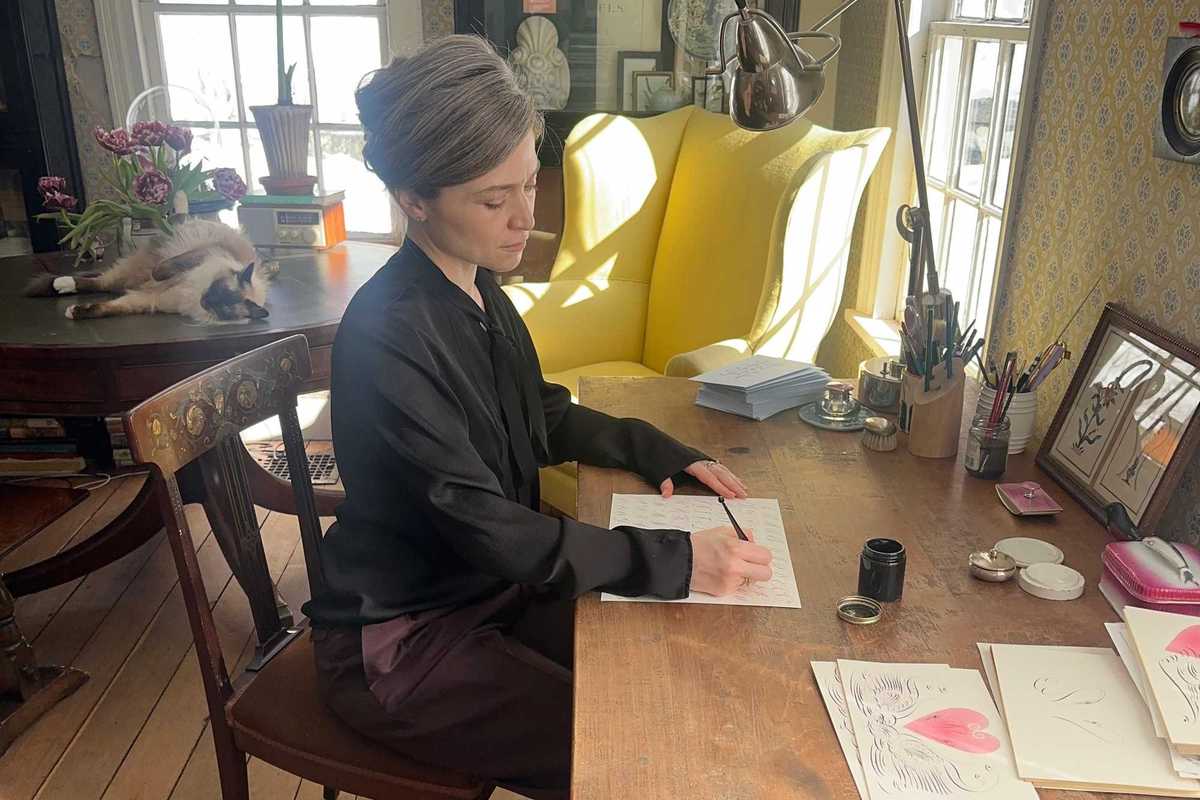
Melissa Gamwell’s handmade touch

Melissa Gamwell’s handmade touch
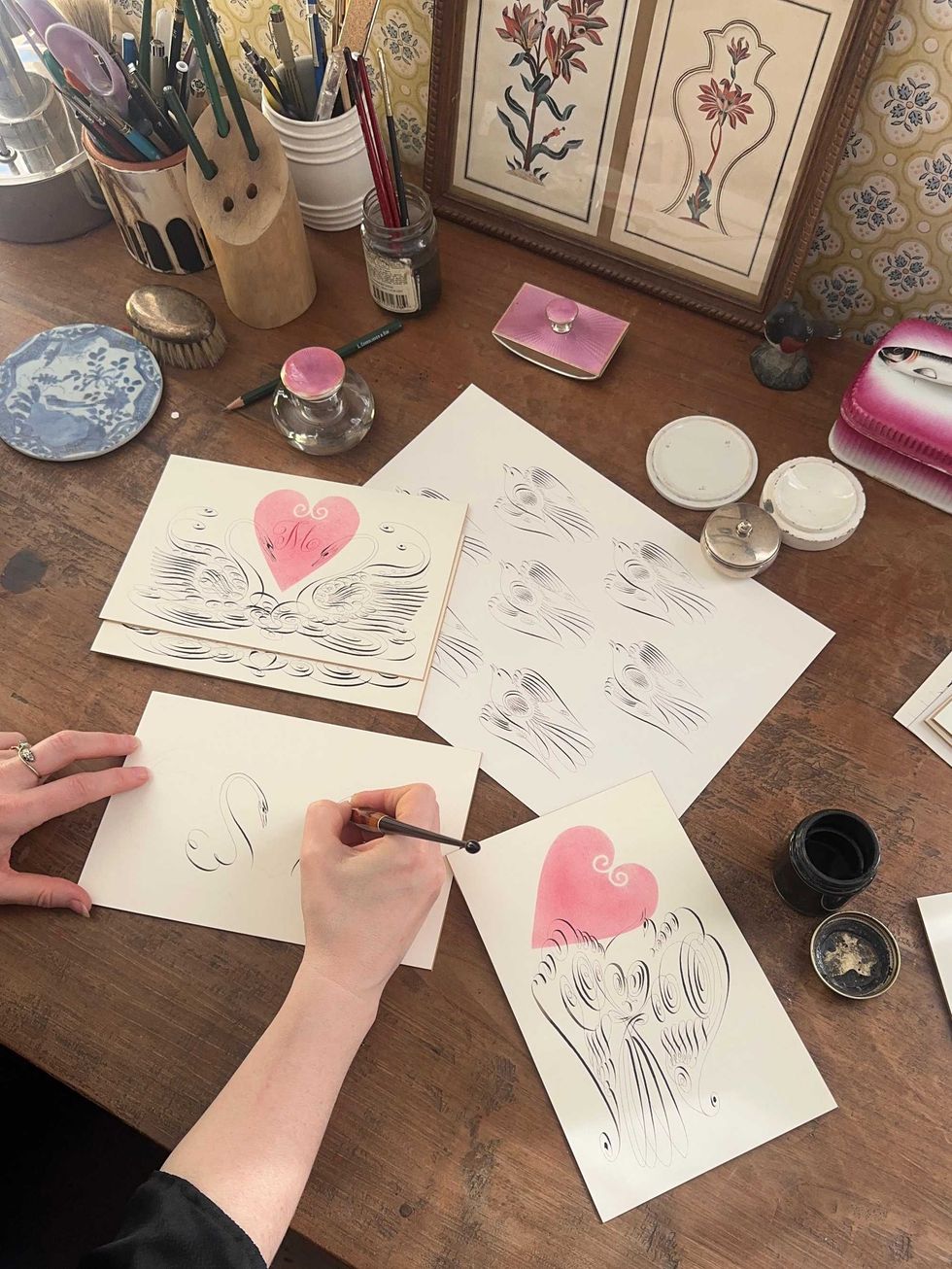
Melissa Gamwell, hand lettering with precision and care.
Kevin Greenberg
"There is no better feeling than working through something with your own brain and your own hands." —Melissa Gamwell

In an age of automation, Melissa Gamwell is keeping the human hand alive.

The Cornwall, Connecticut-based calligrapher is practicing an art form that’s been under attack by machines for nearly 400 years, and people are noticing. For proof, look no further than the line leading to her candle-lit table at the Stissing House Craft Feast each winter. In her first year there, she scribed around 1,200 gift tags, cards, and hand drawn ornaments.

Keep ReadingShow less
Regional 7 students bring ‘The Addams Family’ to the stage

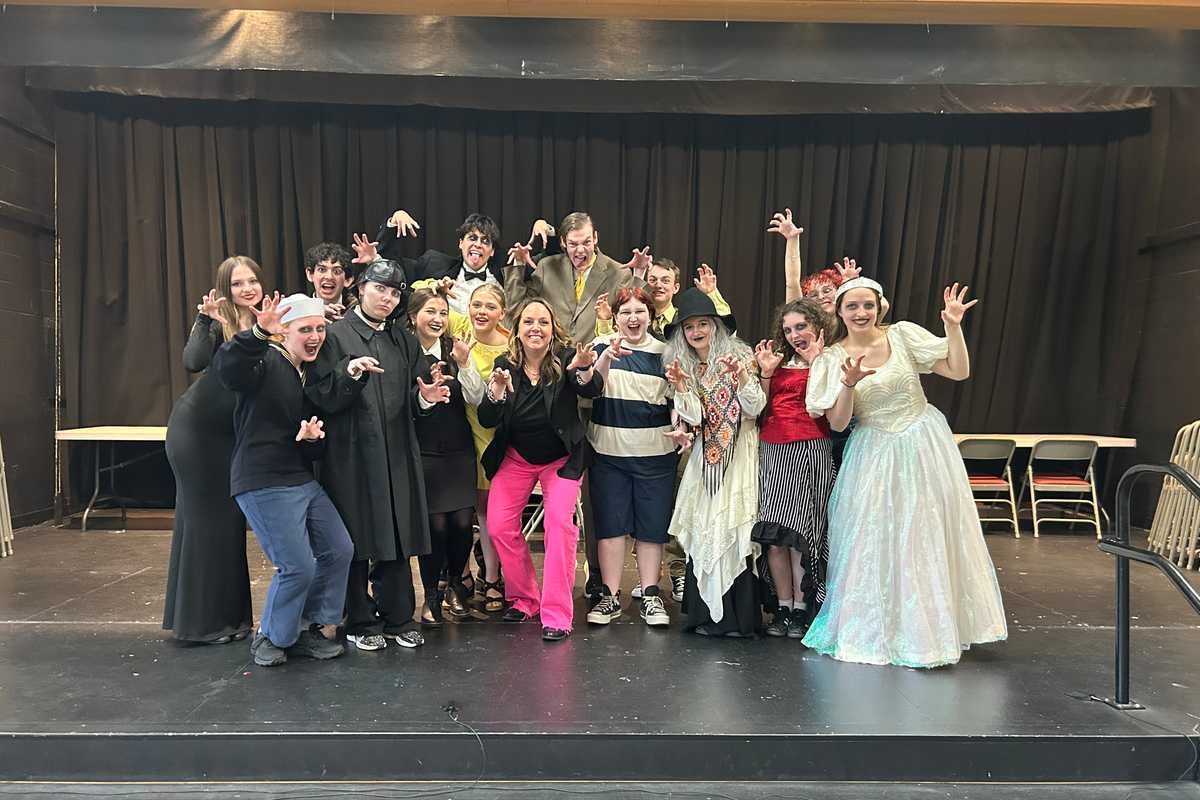
The cast of “The Addams Family” from Northwest Regional School District No. 7 with Principal Kelly Carroll from Ann Antolini Elementary School in New Hartford.

Monique Jaramillo

Nearly 50 students from across the region are helping bring the delightfully macabre world of “The Addams Family” to life in Northwestern Regional School District No. 7’s upcoming production. The student cast and crew, representing the towns of Barkhamsted, Colebrook, New Hartford and Norfolk, will stage the musical March 27 and 28 at 7 p.m., with a 2 p.m. matinee on March 29 in the school’s auditorium in Winsted.

Based on the iconic characters created by Charles Addams, the musical follows Wednesday Addams, who shocks her famously eccentric family by falling in love with a perfectly “normal” young man. When his parents come to dinner at the Addams’ mansion, two very different families collide, leading to an evening of secrets, surprises and unexpected revelations about love and belonging.

Keep ReadingShow less
google preferred source

Want more of our stories on Google? Click here to make us a Preferred Source.

‘Quilts of Many Colors’ opens at Hunt Library

Garth Kobel, Art Wall Chair, Mary Randolph, Frank Halden, Ruth Giumarro, Project Chair, Maria Bulson, Barbara Lobdell, Sherry Newman, Elizabeth Frey-Thomas, Donna Heinz around “The Green Man.”

Robin Roraback

In honor of National Quilt Day, a tradition established in 1991, Hunt Library’s second annual quilt show, “Quilts of Many Colors,” will open Saturday, March 21, with a reception from 5 to 7 p.m. The quilts, made by members of the Hunt Library Quilters, will be displayed through April 17. All quilts will be for sale, and a portion of each sale goes to the library.

At the center of the exhibit is a quilt the Hunt Library Quilters collaborated on called the “Quilt of Many Colors,” inspired by Dolly Parton’s song”Coat of Many Colors.” Each member of the Hunt Library Quilters made two to four 10-inch squares for the twin-size quilt, with Gail Allyn embroidering “The Green Man” for the center square. The Green Man, a symbol of rebirth, is also a symbol of the library, seen carved in stone at the library’s entrance. One hundred percent of the sale of this quilt benefits the library.

Keep ReadingShow less

New in at Kenise Barnes Fine Art

New in at Kenise Barnes Fine Art

New works on display at Kenise Barnes Fine Art in Kent

D.H. Callahan

Since 2018, Kenise Barnes Fine Art in Kent has been displaying an impressive rotation of works across a range of artists and mediums. On Saturday, March 14, art enthusiasts arrived to see a new exhibition at the gallery featuring a wide variety of new pieces.

Large-scale paintings by David Collins and Melanie Parke alongside small 3-by-3 inch oil-on-panel works by Sally Maca.

Keep ReadingShow less
Trailblazing divorce attorney Harriet Newman Cohen to speak at Norfolk Library

Harriet Newman Cohen

Provided

Harriet Newman Cohen weathered many storms in her five-decade-long journey to become one of the nation’s most celebrated divorce attorneys. Voted one of the top 100 attorneys in New York for many years, Cohen served as president of the New York Women’s Bar Association and has been a champion of divorce reform. She and her co-author, journalist David Feinberg, will give a book talk about her memoir, “Passion and Power: A Life in Three Worlds,” at the Norfolk Library on Sunday, March 22 at 2 p.m.

What began as a personal record of her life, intended for her family, grew into a memoir that journalist Carl Bernstein describes in his endorsement as “wise and riveting.” Born in 1932 in Providence, Rhode Island, to parents who immigrated in 1920 from Ukraine and Poland, Cohen traces the arc of her life and the challenges she faced entering a legal profession that was overwhelmingly male at the time, leading to her success as a maverick divorce attorney fighting for women’s rights and equity in the law. She received her Juris Doctor, cum laude, from Brooklyn Law School in 1974, one year after Roe v. Wade was decided. She is a founding partner of Cohen Stine Kapoor LLP in New York City, a family and matrimonial law firm she formed in 2021, at age 88, with her daughter Martha Cohen Stine and Ankit Kapoor.

Keep ReadingShow less
google preferred source

Want more of our stories on Google? Click here to make us a Preferred Source.

google preferred source

Want more of our stories on Google? Click here to make us a Preferred Source.