Thank you!
Your support is sustaining the future of local news in our communities.

History sleuths find fur-trading post
History sleuths find fur-trading post
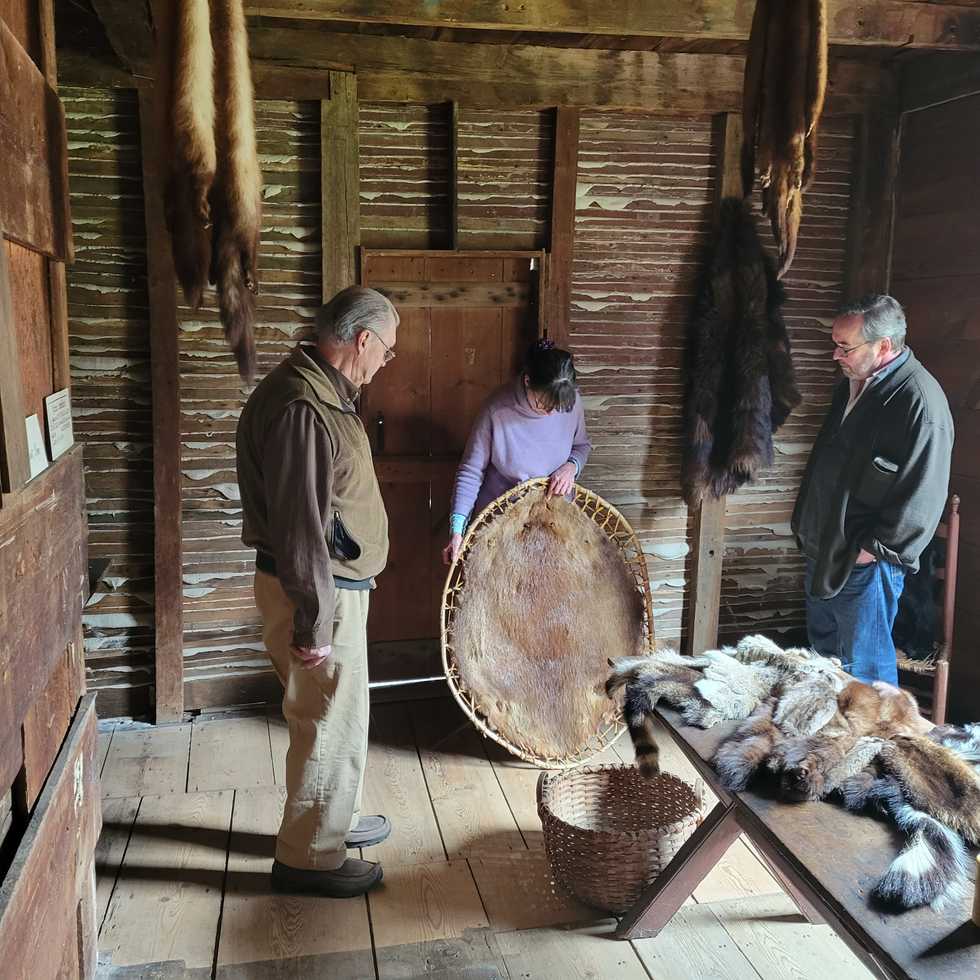
Marge Smith, curator at the Kent Historical Society, inspected a large beaver pelt on a stretcher  at Seven Hearths as KHS trustees Roger Gonzales, left, and Jeffrey Morgan look on. 
Photo by Debra A. Aleksinas
KENT — A recently uncovered pelt room at Seven Hearths, an imposing, pre-Revolutionary house that served as a fur-trading post and general store centuries ago when Kent was a vast wilderness, is now the recipient of a prestigious state preservation award.

“I’ve never heard of such a thing,” said Christopher Wigren, deputy director of Preservation Connecticut, when asked how the 12-foot by 16-foot fur-trading post in Kent compares to others like it around the state.

Wigren’s group announced in early April that the Kent Historical Society (KHS), which owns and operates Seven Hearths as a house museum, will be among the honorees at its 2022 Connecticut Preservation Awards ceremony on May 4 in New Haven.

The nonprofit statewide organization recognizes honorees annually for their outstanding achievements in revitalizing, protecting and nourishing Connecticut’s significant buildings, landscapes and communities.

“What the Kent Historical Society has done through this pelt room is cast a light on a slice of 19th-century economy and lifestyle that you don’t hear much about,” said Wigren. “Clearly, all the nails and markings are still in the building, where animal furs were sorted, traded and stored.”

Marge Smith, KHS curator and archivist, credits the find to meticulous notes kept by the previous homeowner, artist George Laurence Nelson, that hinted of a former pelt room covered up on the second floor by Sheetrock when he built a bathroom and new set of wood stairs to the attic. The restoration effort, she said, “was really the result of a lot of sleuthing.”

Smith also credits the community for its support in funding the project, spearheaded by preservationists Jeffrey Morgan and Roger Gonzales, both of whom are longtime KHS trustees. Work on the preservation project began in 2014 and progressed over the next five years.

‘It was the frontier’

The first homesteads in Kent were established in 1738, with the greatest concentration of them situated between the Berry farm at North Kent and the foot of Cobble Hill at today’s Route 341. Seven Hearths was one of the largest homesteads of its time, built in 1751 by the Beebe family as a combination home and general store/fur-trading post. 

“At the time, this was the biggest building in the area,” said Gonzales. “This is where the first division lots were. The center of Kent, as we know it now, did not exist.”

Noted Smith, “The Schaghticokes were just across the river there, this was kind of the edge. It was the frontier.”

Animal pelts came from members of the tribe looking to trade them for provisions like cloth, firearms, metal tools and ammunition. Even the farmers, said Gonzales, contributed to the trade by killing fur-bearing predators that threatened their livestock.

Boroscope found ‘mink,’ and the process began

In 2009, KHS was awarded a grant from the Connecticut Trust for Historic Preservation to do an Historic Structures Report of Seven Hearths. Hudson Valley Preservation was hired to inspect its condition and seek clues about its history. 

When Nelson bought the house in 1919, there was no indoor plumbing. The artist wrote in his memoir, “New Life for Old Timber,” that the upstairs was “mostly unfinished storage space including a fur-trading post connected with the store by a second back stairs. One could see the names of mink and fox and other skins marked in blue chalk on the beams. Large painted letters indicated bought and sold sections. In part of this space our bathroom took shape.”

With those clues, according to the museum’s curator, “The first thing we asked Hudson Valley Preservation to do was to take a peek above the ceiling for evidence of the beams. Mason Lord spotted the word ‘mink’ right away with his boroscope, and so we made the decision to remove the bathroom and interpret the space as an early fur-trading post.”

Peeling away layers

On the second floor, above what was formerly the general store, is the fur-trading place, where pelts of mink, muskrats, rabbits, beavers, bears and other animals were brought by local trappers for credit in the general store or butcher shop, located in the cellar. The names of some pelts and initials of traders are still visible centuries later, having been chalked on the beams and walls.

On a recent weekend visit, daylight from the room’s one window cast a warm glow on its rustic wood interior. Lush pelts, many donated by the community, hung suspended by the original wrought -iron nails or assembled on tables and chairs. A beefy beaver pelt suspended on a large stretcher was propped against a far wall.

Pelt stretchers made from old shipping crates and marked with the words “Woodrow CT” were among the many donations by families of local trappers that helped bring the original pelt room to life. “People are giving us these things to put in this space” that had been collecting dust in their attics for decades, said the KHS curator.

Morgan’s sleuthing led to the identification of faint, chalked messages on the wallboards, beams and ceiling: the words “mink,” and the initials “R & CW,” which the restoration specialist suspects stood for Cornelius Waldron, who was likely a trapper at the time. 

When early morning light washes the walls just right, other clues emerge: scratched credit marks, “C//////” are faint, but visible, as is the venerable old Kent name of “Root” on a horizontal board. Mr. Root painted his name in black paint and added, “Kent, Conn.”

Smith explained that when the box around the stairs was removed, they discovered the word “BOUGHT” in red letters on the beam above. Once pelts had been bought, they may have been hung from that beam, from nails on the wall or more likely piled nearby on the floor.

The chalk mark that had stymied the restorationists for quite a while was the word “BAR” on the ceiling, which turned out to be the early spelling of bear, which were abundant in the 18th century. “We were discovering things all the time,” said Gonzales. 

A happy accident?

Although Seven Hearths was in dilapidated condition in 1919 when Nelson purchased it, the home was still unspoiled by drastic changes. Over the decades, the artist brought his beloved residence back to life, documenting the process, and his observations, along the way. Upon his death in 1978, he bequeathed Seven Hearths to KHS.

Were it not for Nelson’s clues about the home’s original bones and features, the pelt room may never have seen the light of day, say those involved in the restoration.

“Signs of it just managed to be preserved … probably by accident after being covered up during a remodel,” said Wigren. “The artist turned that area into a bathroom but wrote of what he saw in those words chalked on the beams, and someone went and looked for and managed to find them.” 

Latest News

‘So Little to Do,’ so much to discover at James Barron Art

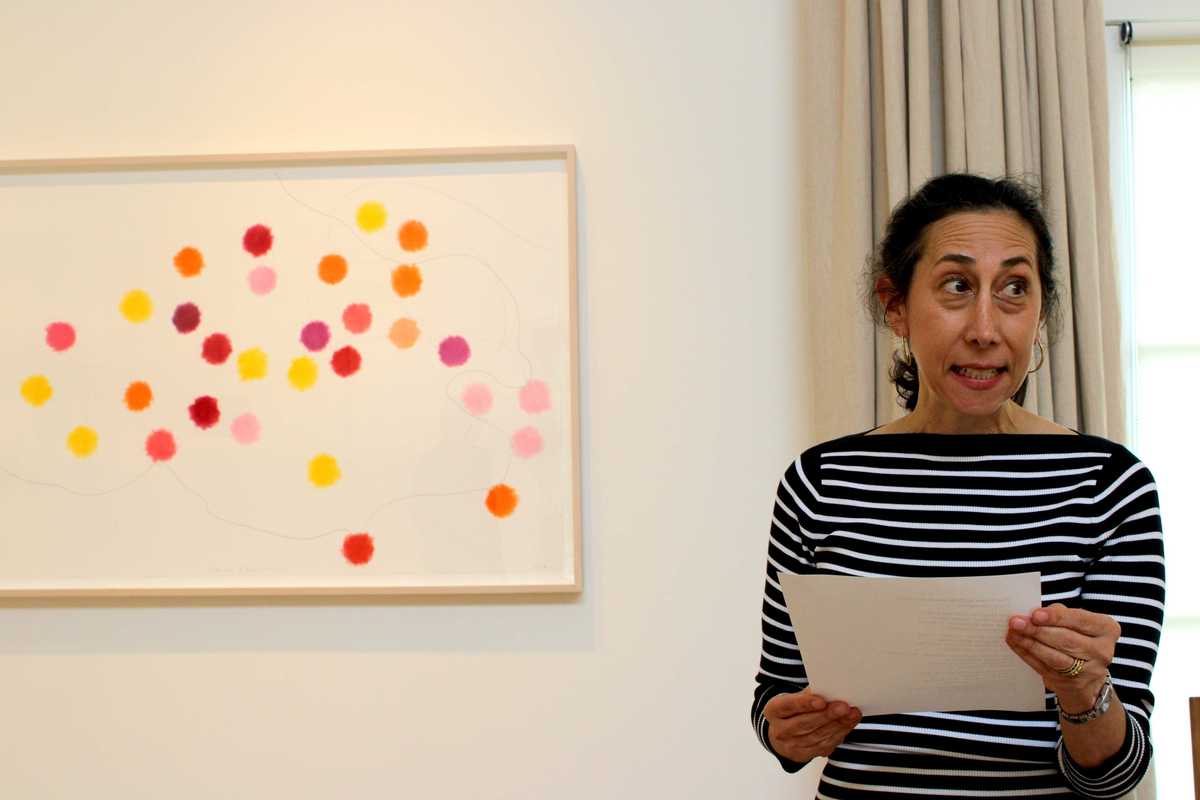
Curator Deborah Goodman Davis reads the Emily Dickinson poem “The Grass So Little Has to Do.” Spencer Finch’s “Following Three Bees (Zinnias)” buzzes in the background.

Photo by Natalia Zukerman

“The Grass Has So Little to Do,” on view at James Barron Art in Kent, takes its title from Emily Dickinson’s poem “The Grass So Little Has to Do,” written in 1862:

“The Grass so little has to do—
A Sphere of simple Green—
With only Butterflies to brood
And Bees to entertain—”

Keep ReadingShow less

Marina Kotchoubey is not a woodworker

Marina Kotchoubey is not a woodworker

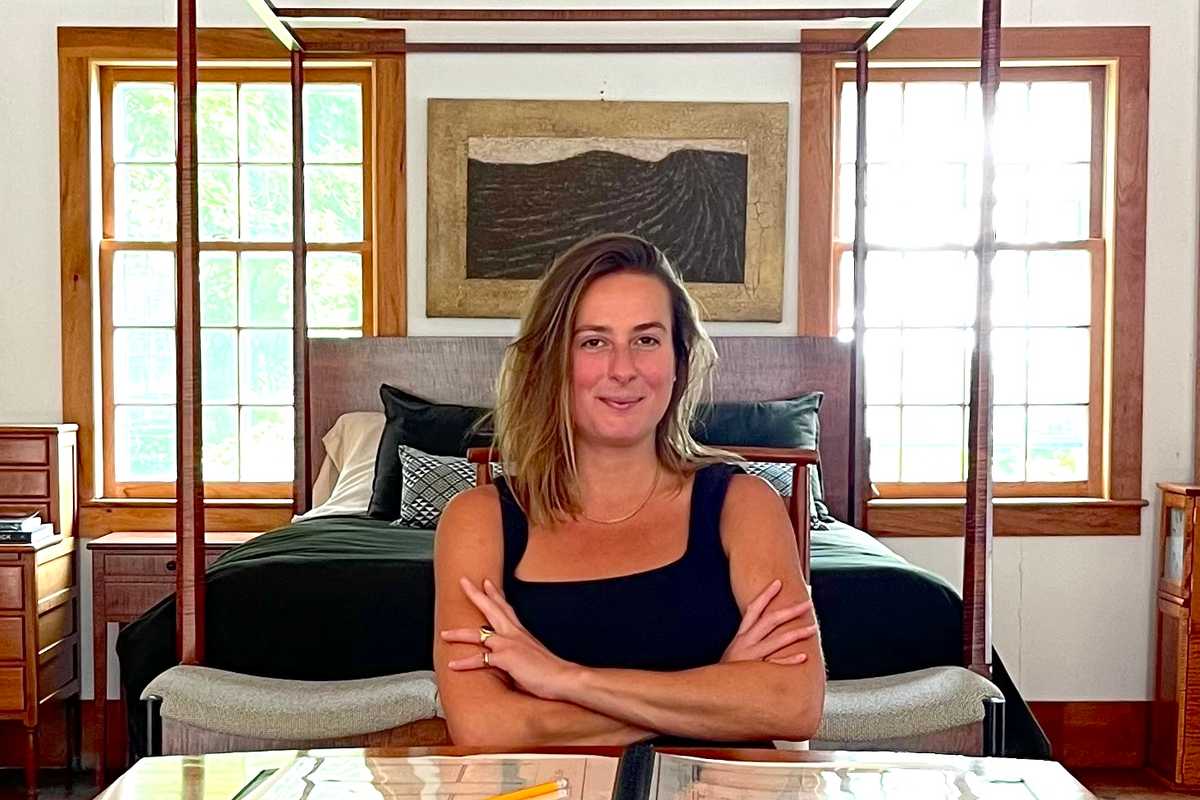
Marina Kotchoubey at the Ian Ingersoll Cabinetmakers showroom in West Cornwall.

Photo by D.H. Callahan

After 40-something years navigating the world of custom fine furniture, Ian Ingersoll was getting ready to retire. Starting off with a little dovetail stool that he sold at a shop in West Cornwall in the 1970s, he’d grown his skill and his business into something he — and the whole town — could be proud of. Shutting down that business was not an option.

Ingersoll built Ian Ingersoll Cabinetmakers, which produced mainly classical Shaker furniture, on passion: the passion he had to make a living through creative challenges and the passion of his employees, who all seem deeply in love with their craft.

Keep ReadingShow less
A legacy of giving at Norfolk Chamber Music Festival

One hundred and twenty years ago, Carl and Ellen Stoeckel commissioned New York architect E.K. Rossiter to design The Music Shed in Norfolk, Connecticut. After nearly a decade of entertaining their friends and neighbors with the finest music of the day, they built a permanent home for their beloved Litchfield County Choral Union.

The commission and full funding of the construction was not unheard of in an era when great fortunes led to public enrichment. Railroad tycoon John D. Rockefeller was instrumental in funding institutes of higher education. Steel baron Andrew Carnegie was building libraries all over the country, and famously said that a man who dies rich is a disgrace, challenging his peers to give their fortunes back to the people.

Keep ReadingShow less
google preferred source

Want more of our stories on Google? Click here to make us a Preferred Source.

Two unique exhibitions at Geary Gallery

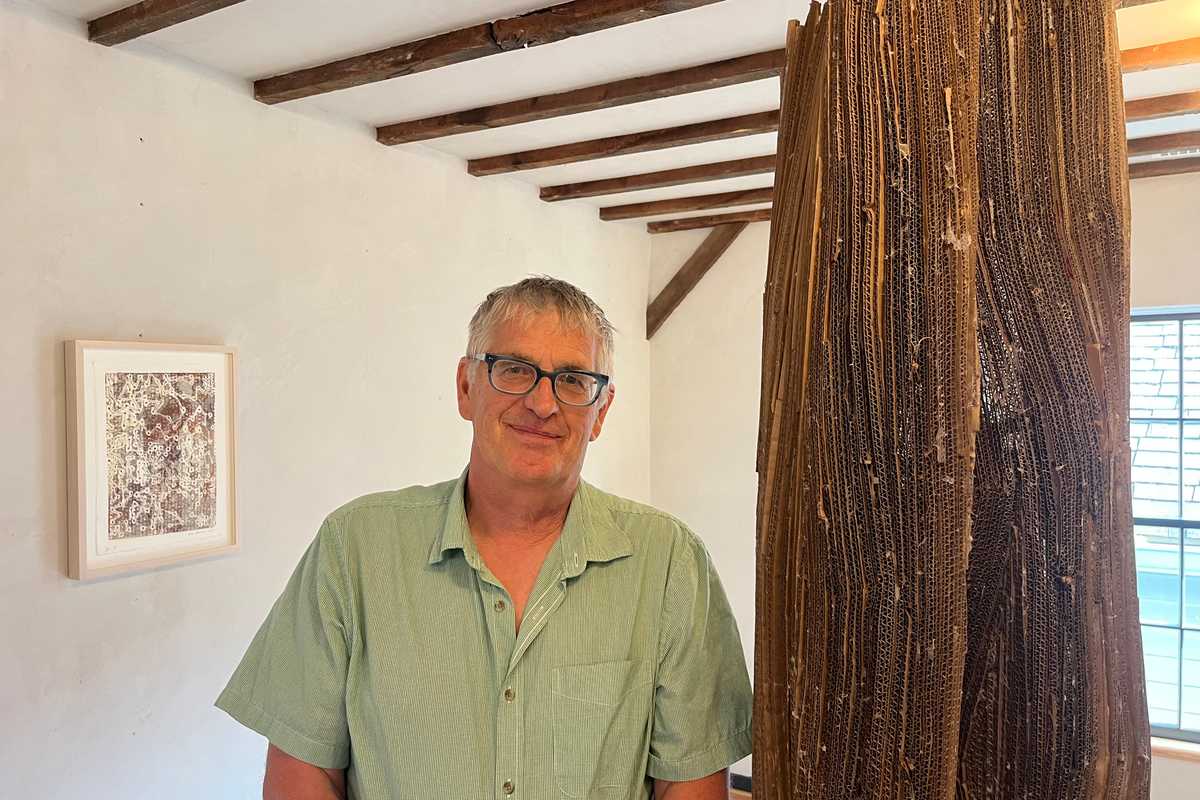
Henry Klimowicz with his sculpture, “Partial Pillar 1”

Photo by D.H. Callahan

On Saturday, Aug. 1, Geary Gallery opened its doors in Salisbury for two unique shows in its first- and second-floor gallery spaces. Art lovers flooded both floors over the course of the afternoon, giving the events a vibrant feeling that enhanced the importance of the art.

On the first floor is a show by Chicago-born, Colorado-based photographer Summers Moore, titled “Lobitos: Pueblo Fantasma,” or “Lobitos: Ghost Town.” The work centers around her daughter’s current hometown in Peru. Moore herself found a home away from home in Colorado in the mid-1980s and encouraged her children to seek out new places outside of their comfort zones.

Keep ReadingShow less

Writer’s retreat in the woods

Writer’s retreat in the woods

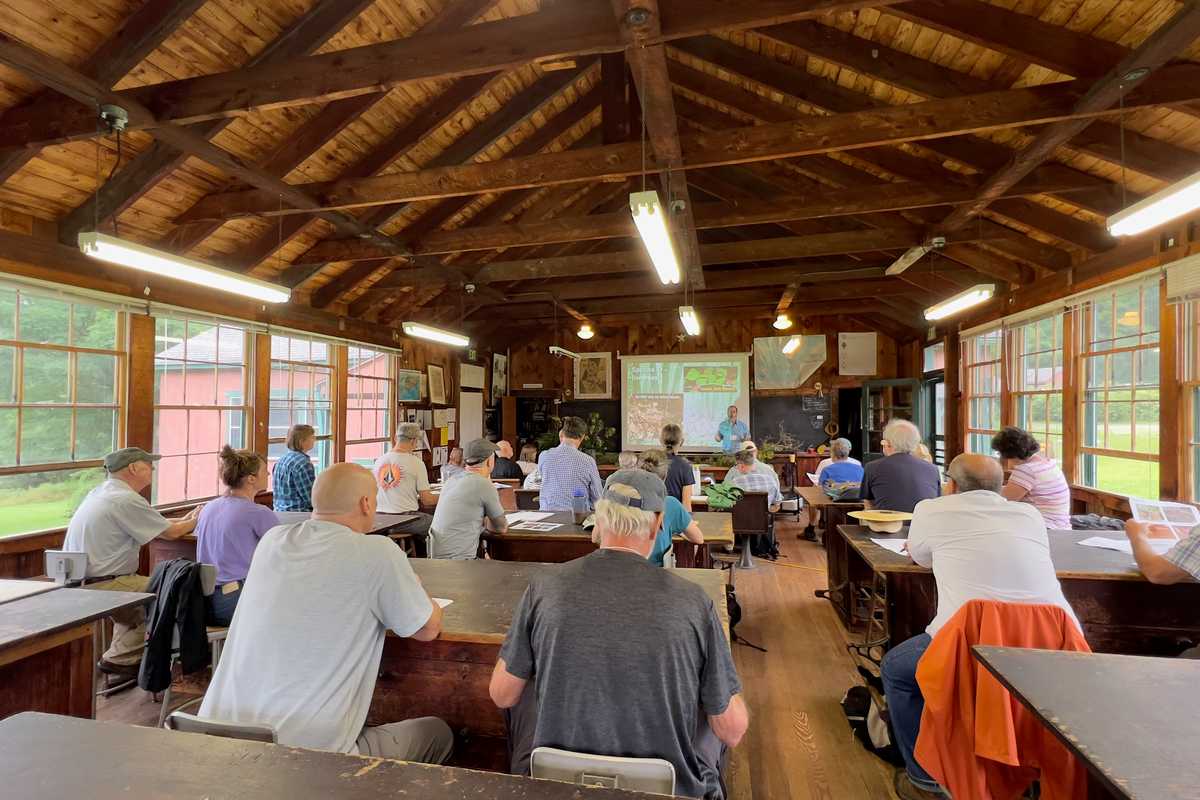
Participants in a 2024 Great Mountain Forest Woodland Academy workshop at Yale Camp.

Photo by Mike Zarfos

Great Mountain Forest (GMF) will host its first Nature Writing Retreat at the historic Yale Camp in Falls Village from Aug. 7-9, 2026. Writers of all levels are invited to draw inspiration from one of New England’s most notable forest landscapes. GMF envisions the retreat becoming an annual event celebrating writing, conservation and the relationship between people and forests.

This immersive three-day retreat reflects on the legacy of Hal Borland, the American writer and New York Times nature columnist whose work was deeply connected to this landscape. The retreat explores how wilderness shapes language, strengthens close observation and fosters environmental consciousness.

Keep ReadingShow less
From Cornwall to Rome, Adam Van Doren at Berkshire Botanical Garden

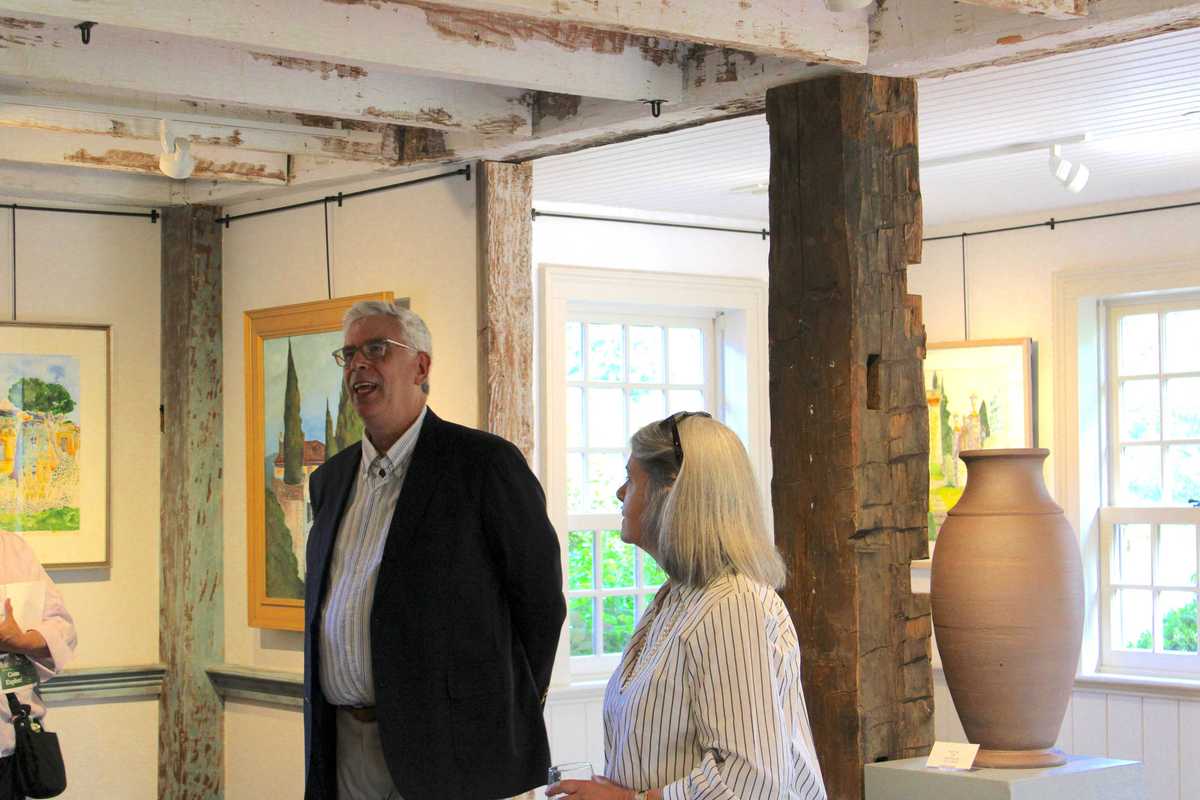
Artist Adam Van Doren and curator Donna Hassler talk to a group of visitors at the Berkshire Botanical Garden. A Stephen Proctor vessel sits to their left.

Photo by Natalia Zukerman

This summer, the Berkshire Botanical Garden in Stockbridge has hosted “Grounded in Nature: Paintings by Adam Van Doren,” an exhibition exploring the intimate relationship between architecture and the natural world.

On view for only a few more weeks in the Leonhardt Galleries, the exhibition features more than 35 watercolor and oil paintings by the New York-based artist, architect, author and Yale professor, curated by art historian Donna Hassler, director emerita of Chesterwood. The works span three distinct places that have shaped Van Doren’s artistic practice: New York City, Cornwall, Connecticut, and his travels throughout Europe.

Keep ReadingShow less
google preferred source

Want more of our stories on Google? Click here to make us a Preferred Source.

google preferred source

Want more of our stories on Google? Click here to make us a Preferred Source.