Over the last century in the United States what has become known as cancel culture has moved from the political right to the political left.
The Red scares of the 1920s and 1950s were a conservative phenomenon that blacklisted, deported, and even imprisoned people for real or suspected leftist political views that were equated, often wrongly, with treason and disloyalty.
Today cancel culture is a leftist phenomenon that contrives no pretense about treason and disloyalty. It seeks to silence conservatives simply because they are politically objectionable. The shooter who assassinated Turning Point USA founder Charlie Kirk, the conservative advocate of free speech and sincere dialogue with the other side, was the exemplar of cancel culture, illuminating where it will take the country.
Being allied with cancel culture, most Democratic officials don’t want to examine the Kirk assassination too closely. Democrats, including Connecticut’s U.S. Sen. Chris Murphy and U.S. Reps. John B. Larson and Jahana Hayes, seem to prefer to attribute the assassination to the country’s gun problem, so as to put Republicans, defenders of Second Amendment rights, on the defensive. During an angry confrontation on the floor of the House of Representatives on Sept. 10, Hayes objected to a call for prayers for Kirk and his family, shrieking, “Pass some gun laws!”
There may be room for more gun laws on the federal level, but the assassination of Kirk is not an argument for them. Kirk appears to have been killed by an ordinary bolt-action hunting rifle, not the sort of semi-automatic rifles Democrats delight in mislabeling as “assault weapons” as they seek to outlaw them. Is the country now to outlaw even rudimentary rifles while nearly all gun crime is committed with handguns?
Connecticut’s gun laws already are nearly the most restrictive in the country and the state’s problem is not that it lacks laws but enforcement.
Connecticut’s gun laws already are nearly the most restrictive in the country and the state’s problem is not that it lacks laws but enforcement. Two years ago the state Office of Legislative Research reported that nearly two-thirds of criminal charges involving guns in Connecticut were routinely dropped in plea bargaining to get convictions on related charges considered more serious, like robbery.
If Connecticut ever took gun crime seriously it would make the gun charges the most serious and upon conviction impose mandatory sentences of life without parole. But then most new imprisonments would involve impoverished members of racial minorities, and legislators might be asked where all the poverty keeps coming from despite all the money they spend in the name of reducing it.
While from the beginning American political rhetoric often has been venomous, it never has been as venomous as it is today.
President Trump is a major perpetrator of it but he is far outnumbered by its perpetrators among the Democratic Party’s looney left in government and academia, and at least Trump hasn’t turned his office into an agency of cancel culture. His many firings of executive branch Democrats are matters of political patronage, explained by the great insight of Kentucky Sen. Alben Barkley, a Democrat, during the 1948 presidential campaign: “What is a ‘bureaucrat’? A ‘bureaucrat’ is a Democrat who holds an office some Republican wants.”
What can stop cancel culture from getting even more murderous and totalitarian? Only a return to what Judge Learned Hand called the spirit of liberty:
“The spirit of liberty is the spirit which is not too sure it is right. The spirit of liberty is the spirit which seeks to understand the minds of other men and women. The spirit of liberty is the spirit which weighs their interests alongside its own without bias. The spirit of liberty remembers that not even a sparrow falls to earth unheeded. The spirit of liberty is the spirit of Him who, near 2,000 years ago, taught mankind the lesson it has never learned but never quite forgotten: that there may be a kingdom where the least shall be heard and considered side by side with the greatest.”
Charlie Kirk pursued the spirit of liberty. May others still dare to follow him.
Chris Powell has written about Connecticut government and politics for many years.




 Tiffany Lemelin, shelter manager, brushing Marsala upon arrival.Provided
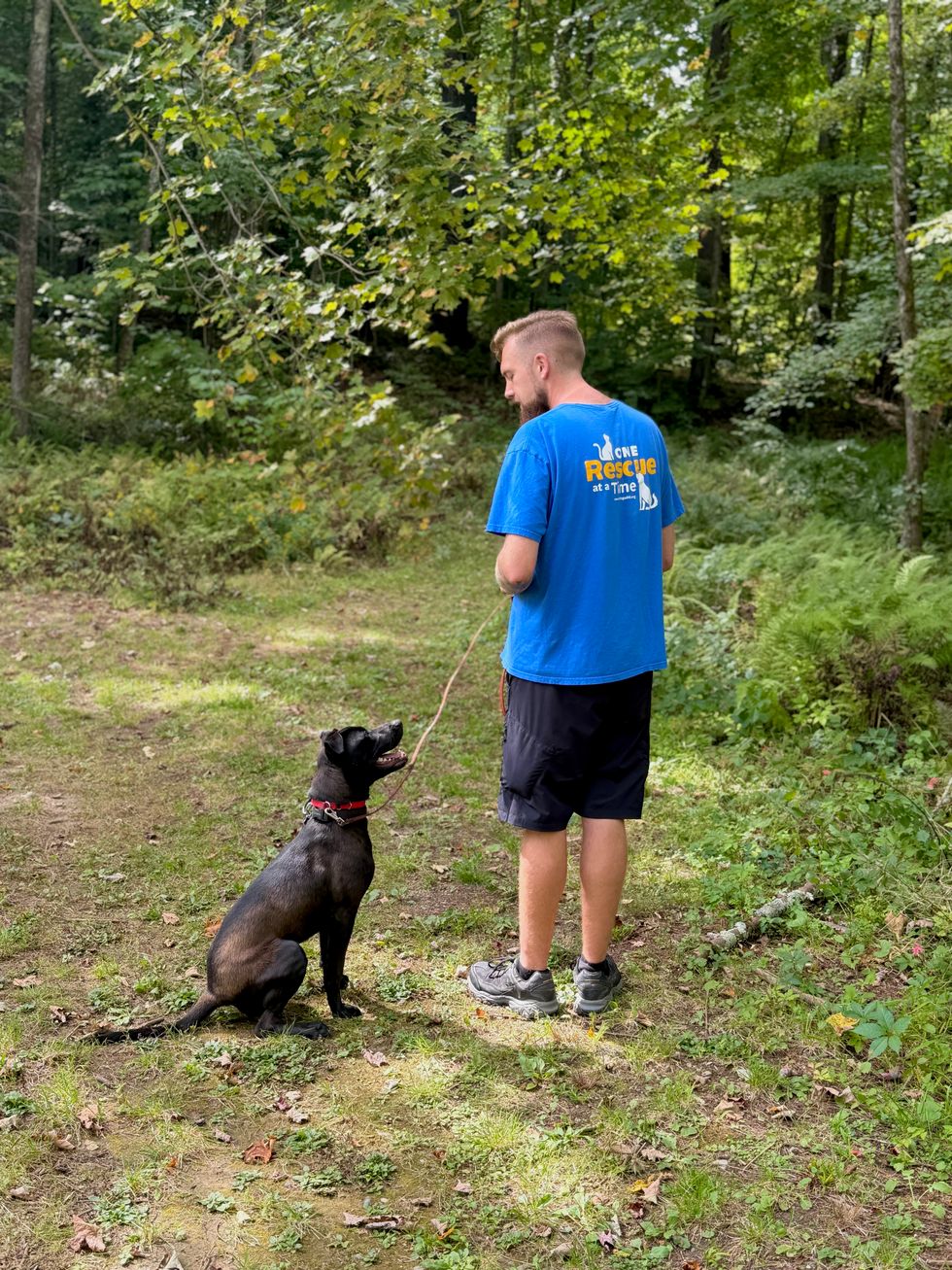 Michael DeBarba, certified dog trainer working with Marsala.Jennifer Almquist
 Marsala wins a heart.Jennifer Almquist

 Sadie, center, a Carolina dog, plays with her friend Negra, a terrier mix. Bella Linda, the small poodle, has since been adopted.L. Tomaino
 Wesley, a young, exuberant mix, is looking for an active home.L. Tomaino
 Bonnie and Clyde, an affectionate terrier pair.L. Tomaino

 Provided