Thank you!
Your support is sustaining the future of local news in our communities.

Does Trump’s budget reallyspell doom for Connecticut?

According to Governor Lamont, the federal budget just enacted by the Republican majority in Congress and President Trump is nearly the end of the world.

The governor says the budget will have “devastating impact on millions of Americans for years to come and was passed for the sole purpose of giving tax cuts to millionaires and billionaires. It will amount to a massive income transfer from the poorest and most vulnerable Americans to the wealthiest.”

But Dan Haar of the Hearst Connecticut newspapers reports that, by quadrupling to $40,000 the federal income tax deductibility of state and local taxes — the “SALT” deduction, which Democratic leaders in Connecticut and other high-tax states long have supported — the new budget will substantially reduce federal income taxes for hundreds of thousands of middle- and upper-middle class Connecticut households.

As for the “massive income transfer from the poorest and most vulnerable Americans to the wealthiest,” the poor don’t pay federal income taxes, nor, in Connecticut, state income taxes. The “income” for the poor about which the governor is worried is actually what in a less politically correct era was called welfare.

The governor says the new budget will “bankrupt” the federal government by running a deficit in the trillions of dollars, requiring borrowing to cover the gap. But the federal government long has run huge deficits under Democratic administrations as well, which never bothered Democrats in Connecticut. Besides, since the government can create money out of nothing, it can never go bankrupt; it can only continue to devalue the dollar — something else that has never bothered Connecticut Democrats.

The new budget, the governor says, “slashes critical safety-net programs, particularly Medicaid and SNAP” — food subsidies — “that so many hard-working American families need for their health and survival.”

Will the cuts be so compelling as to cause the governor to reconsider the pledge he made to the state employee unions in April? “Every year that I’ve been here you’ve gotten a raise,” he told the unions, “and every year I’m here, you’re going to get a raise.”

Yet in recent days there have been reports from all around the country about massive fraud in the Medicaid, Medicare, and SNAP programs — some involving providers in Connecticut.

Indeed, a few months ago the governor’s own public health and social services commissioner retired after it was disclosed that she had countenanced the termination of an audit of Medicaid fraud in which the governor’s former deputy budget director and a former Democratic state representative have been indicted and a Bristol doctor has pleaded guilty.

Just last week state prosecutors charged an acupuncturist from Milford with defrauding Medicaid of $123,000.

All this fraud doesn’t mean that the Republican administration in Washington or the Democratic administration in Connecticut will be competent and determined enough to substantially reduce fraud in Medicaid, Medicare, and food subsidies. But maybe a reduction in those appropriations is necessary to provide some incentive to look harder.

“With a federal administration insistent on eliminating critical safety nets,” the governor said, “it is going to be nearly impossible for any state to backfill the billions in federal cuts we are going to face. …We will be meeting with our colleagues in the General Assembly to discuss next steps.”

Those next steps may be interesting.

Will the federal cuts in Medicaid and food subsidies be so compelling as to cause the governor and legislators to cancel any of the grants they grandly announce practically every week for all sorts of inessential projects around the state?

Will the cuts be so compelling as to cause the governor to reconsider the blank check his administration has issued for illegal immigration?

Will the cuts be so compelling as to cause the governor to reconsider the pledge he made to the state employee unions in April? “Every year that I’ve been here you’ve gotten a raise,” he told the unions, “and every year I’m here, you’re going to get a raise.”

Raises despite the cuts in the safety net? Despite natural disasters? Despite plague? Despite nuclear war?

Or will the cuts prompt the governor to call the legislature into special session, proclaim that state government simply can’t economize, and propose to raise taxes going into an election year?

Chris Powell has written about Connecticut government and politics for many years.

The views expressed here are not necessarily those of The Lakeville Journal and The Journal does not support or oppose candidates for public office.

Latest News

A life reshaped by clay in “Matin”

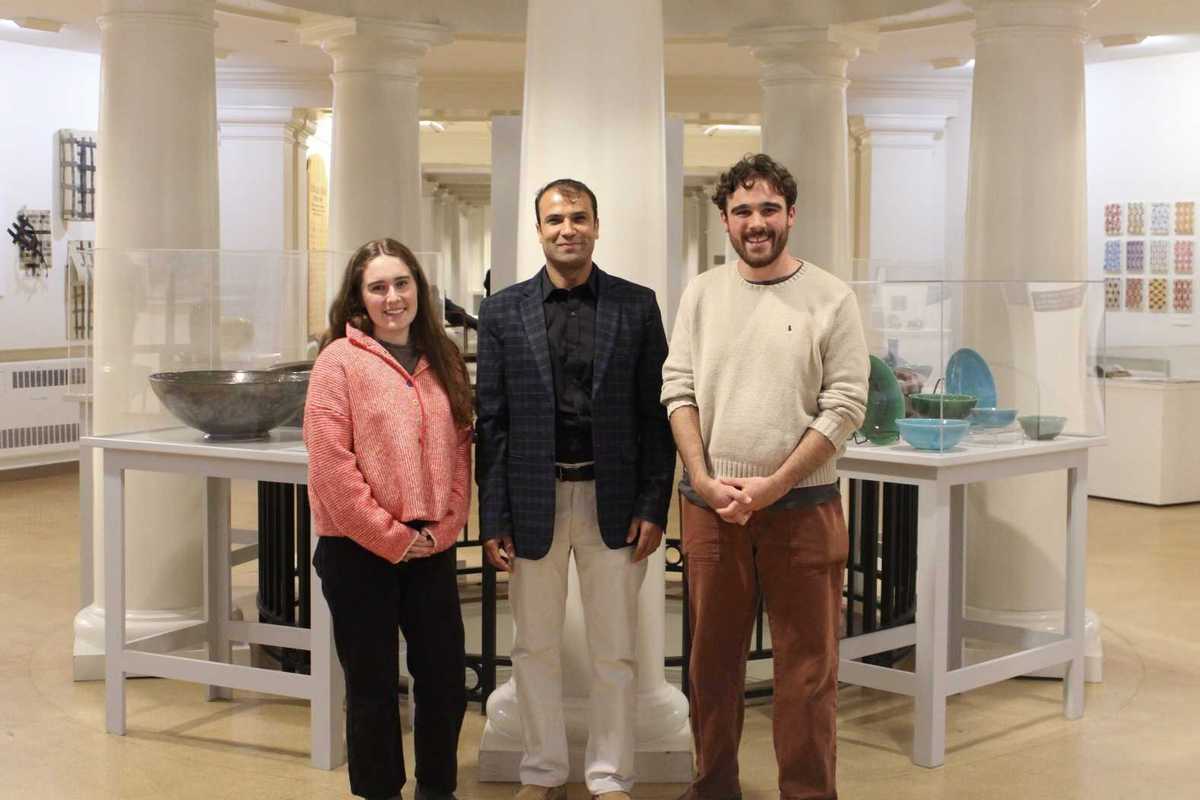
Left to right: Hannah Wheeler, Matin Malikzada and Yonah Sadeh.

D.H. Callahan

On Monday, Oct. 26, a group of students, teachers and local residents gathered at the Hotchkiss School in Lakeville for a screening of the new short documentary “Matin.” The film tells the story of Matin Malikzada, a seventh-generation Afghani potter making a new life in New Milford, Connecticut. The film was made by local filmmaker Yonah Sadeh, creator of the Video Wall at the David M. Hunt Library, and Berkshires-based potter Hannah Wheeler, who were both present for the screening, along with Malikzada himself.

As a member of the seventh generation of his family to master the art of pottery, Malikzada had done things the way his family had for over a century. Istalif, the village where his family has lived for generations, was known throughout Afghanistan for its pottery, with wares sent across the country for use as everyday cups, bowls, plates and other vessels. The pottery-making families of Istalif gathered clay from the same mountain, about 30 to 45 minutes away by donkey. Every July, they would head north toward the Uzbekistan border to gather ishkar, a plant they processed by hand to make their signature glazes.

Keep ReadingShow less
Meg Sher finds her calling among the stacks

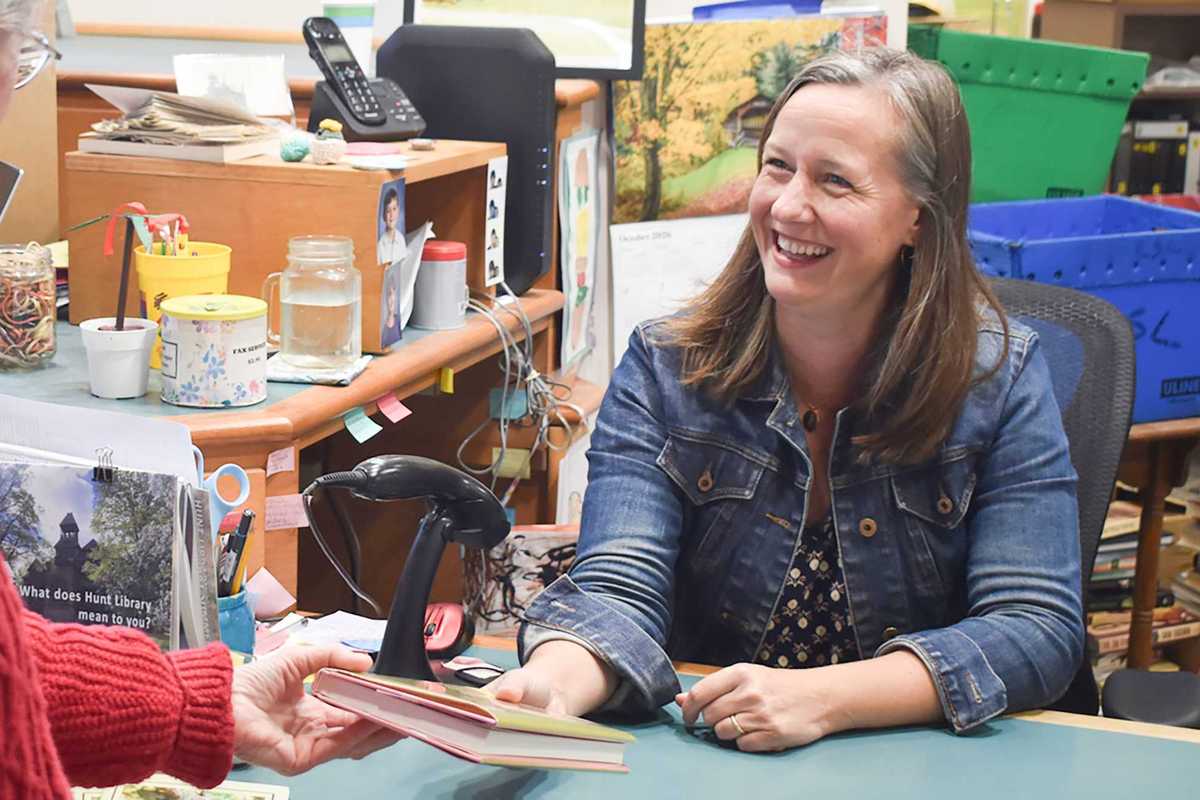
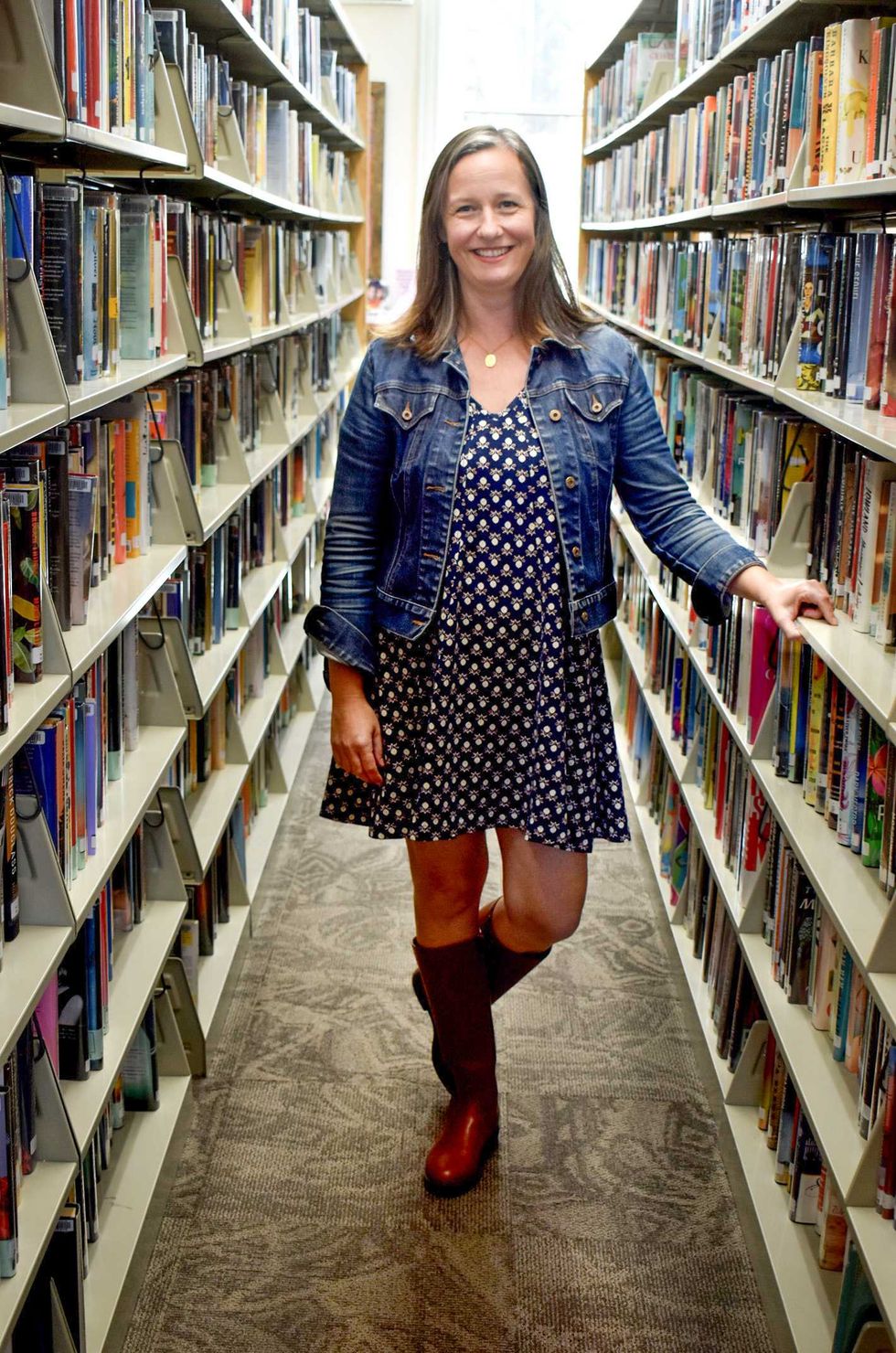
Meg Sher, executive director of the David M. Hunt Library in Falls Village.

L. Tomaino

When Meg Sher came to Falls Village in 2006 from Old Lyme, Connecticut, where she grew up, she never imagined she’d someday be the executive director of the David M. Hunt Library.

Although, in hindsight, perhaps it makes sense.

Keep ReadingShow less
Crescendo’s 23rd season speaks to the heart and mind

Christine Gevert, founding artistic director of Crescendo, conducts the audience at a performance.

Steve Potter

For Christine Gevert, founding artistic director of Crescendo, music from centuries past is anything but a relic. It is a living, breathing art form, full of drama, emotional complexity and, occasionally, surprises. As the regional choral and period-instrument ensemble launches its 23rd season, Gevert is once again bringing forgotten masterpieces into the present.

“Early Music has been my lifelong passion and the focus of my specialization in Europe and South America,” Gevert said. “Bringing this repertoire to our audiences in a nuanced way that does justice to its incredible depth, intensity, and beauty is deeply important to me.”

Keep ReadingShow less
google preferred source

Want more of our stories on Google? Click here to make us a Preferred Source.

Close Encounters with Music celebrates 35 years of musical discovery

Close Encounters with Music’s 35th season opens with “Saluting the Clarinet” featuring clarinetist Alexander Fiterstein.

Provided

For 35 years, cellist Yehuda Hanani has been inviting audiences to experience classical music in unexpected ways. As founder and artistic director of Close Encounters with Music, Hanani has built a concert series that goes beyond the music itself, exploring connections to literature, history, politics and the human experience.

This year, Close Encounters celebrates its 35th season with “Celebration & Discovery,” a seven-concert series that opens Sunday, Nov. 1, at the Mahaiwe Performing Arts Center in Great Barrington.

Keep ReadingShow less
Shinbone Alley brings spooky songs to Spencertown

Seeing isn’t always believing. Sometimes it’s the lack of a defined picture that can be the most compelling. And when Alex Harvey of Shinbone Alley sings his supernaturally charged sea shanties and street ballads, the unseen will be downright scary. On Oct. 30, the historically inclined storyteller and performer will create a spooky evening of forbidden tales and yarns through a carefully chosen series of songs at Spencertown Academy of Arts.

The repertoire for the performance is a bit fraught. Over the years, Shinbone Alley has explored the world of folklore through music. Though the group usually features two musicians, Harvey, a multi-instrumentalist and singer, will be performing solo. That is, of course, unless you include the spirits.

Keep ReadingShow less
Malian blues and Moroccan Gnawa meet in Sheffield
Vieux Farka Touré
Proivded

Desert winds rarely blow into the Berkshires, but on Nov. 5, they will carry the Malian blues and Moroccan Gnawa music to Race Brook Lodge.

That evening, Malian guitarist Vieux Farka Touré, often called “the Hendrix of the Sahara,” and Moroccan musician Samir LanGus will play at the lodge’s Event Barn in Sheffield, Massachusetts, at a benefit for the foundation Touré directs.

Keep ReadingShow less
google preferred source

Want more of our stories on Google? Click here to make us a Preferred Source.

google preferred source

Want more of our stories on Google? Click here to make us a Preferred Source.